
If you are checking the gold price in Vietnam today, you are probably trying to answer one simple question: is now a good time to buy, sell, or just watch from the sidelines. Vietnamese gold moves fast, and it rarely moves in the same direction as the world market. Understanding why that happens, and knowing exactly which number to trust, makes all the difference.
This guide walks you through today’s SJC gold rate, how the buy and sell spread works, why Vietnam’s price often sits far above the international benchmark, and what that gap actually means for your wallet. Along the way, we will look at practical examples, common units like the lượng and chỉ, and the questions Vietnamese buyers ask most often.
Gold Price in Vietnam Today at a Glance
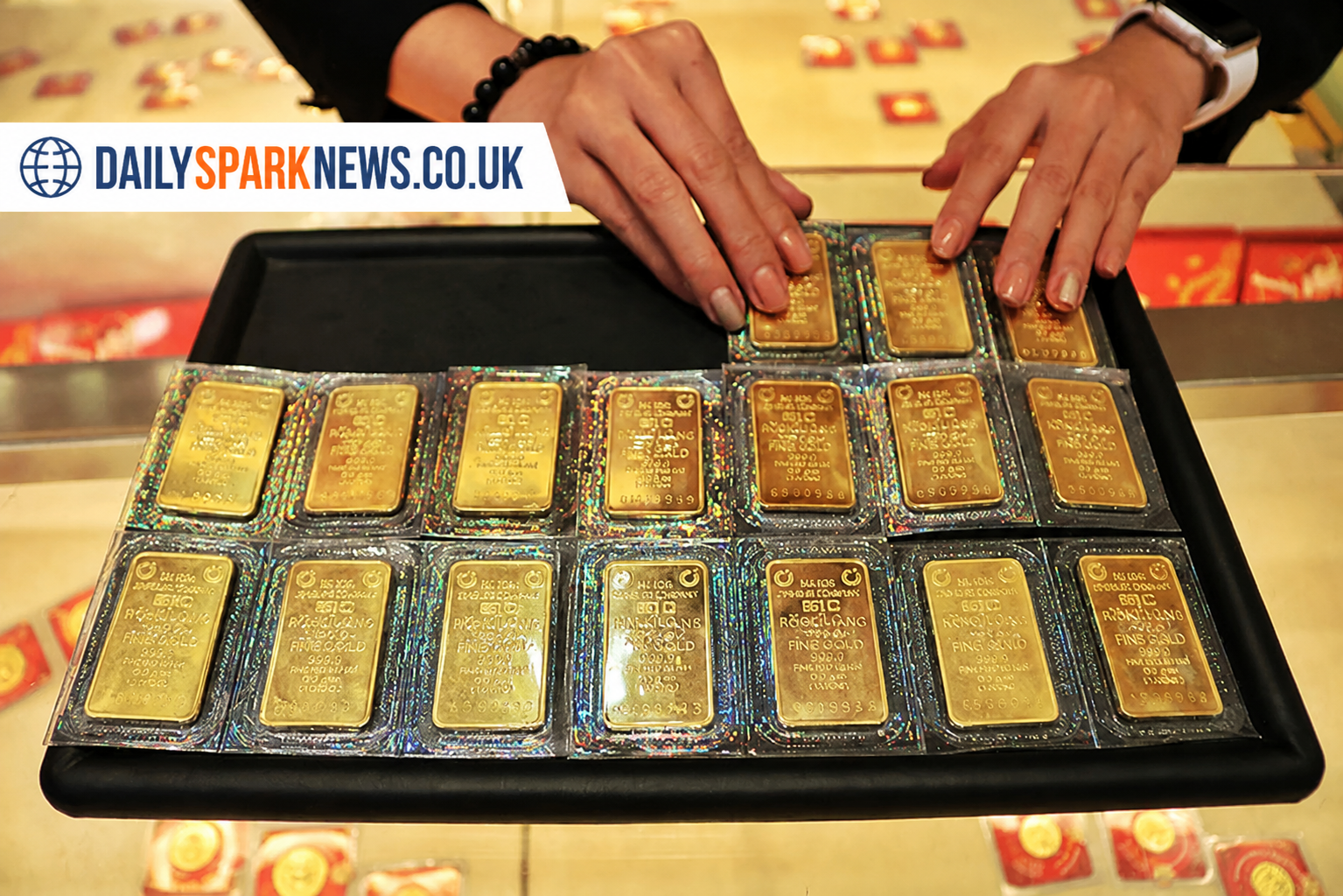
On a typical trading day this year, SJC gold bars have been quoted somewhere between 135 million and 142 million VND per lượng, depending on the branch, the time of day, and how fast the market is moving. Gold rings marked 9999, sold under names like Hưng Thịnh Vượng at DOJI or the plain 1 to 5 chỉ rings at SJC, usually trade a few million dong below the bar price.
Meanwhile, the international spot price has been hovering around 4,000 to 4,070 US dollars per ounce, a level that would have seemed unthinkable just a couple of years ago. When you convert that figure into VND using the Vietcombank exchange rate, the domestic price still comes out noticeably higher than the imported equivalent. That gap, sometimes 10 million dong or more per lượng, is the single most important thing to understand before you walk into a gold shop.
Because prices shift several times a day, the smartest habit is to check a live source right before you transact rather than relying on a number from this morning. Banks, jewelry chains and financial news sites all publish updates, often multiple times before noon alone.
Understanding SJC, DOJI, PNJ and Other Major Brands
Not all gold in Vietnam is priced the same, even when the purity is identical. The brand stamped on the bar or ring genuinely affects the price you pay and the price you get when selling.
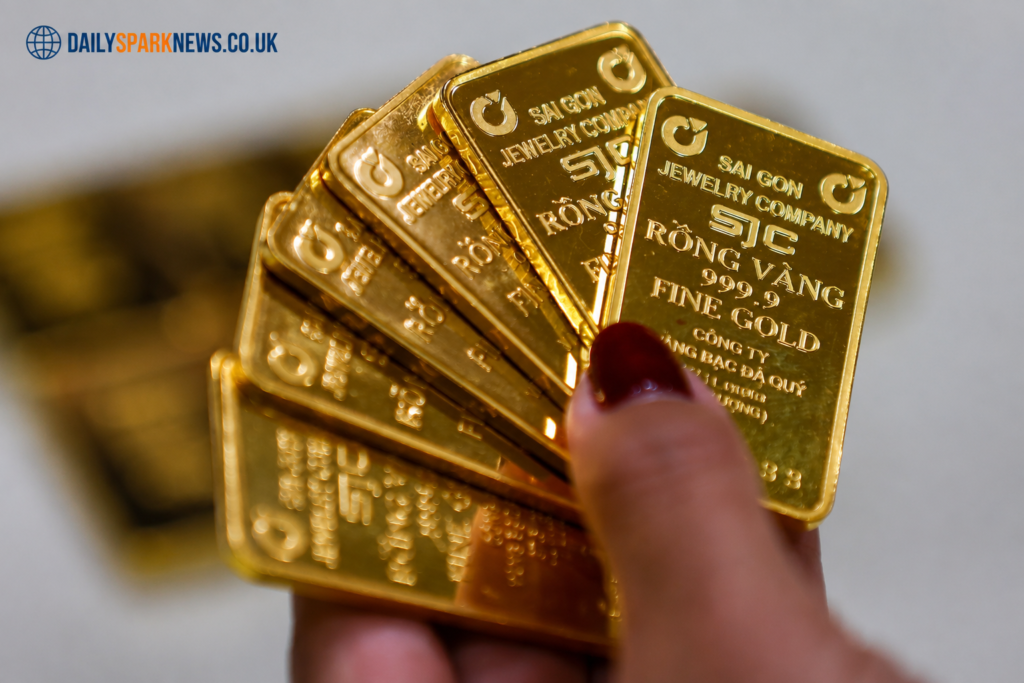
- SJC is the state recognized gold bar brand, produced exclusively by Saigon Jewelry Company since the government centralized bullion production in 2012. It typically commands the highest premium because of its brand trust and because it is the only bar the State Bank actively manages supply for.
- DOJI and PNJ are large private jewelry groups that sell both bars and 9999 rings. Their ring products often trade closer to the true bullion value than SJC bars do, since rings are not subject to the same supply restrictions.
- Bảo Tín Minh Châu and Bảo Tín Mạnh Hải are well known Hanoi based brands, particularly for rings and jewelry gold, with pricing that can differ from SJC by a small but noticeable margin.
- Phú Quý and Mi Hồng round out the group of retailers that most Vietnamese buyers compare before making a purchase.
If you are simply looking to preserve savings, many buyers now prefer 9999 rings over SJC bars because the spread between buying and selling tends to be smaller, which reduces the cost of getting in and out of the position.
Buy Price Versus Sell Price: Why the Spread Exists
Every quote you see for gold in Vietnam actually contains two numbers: the price the shop pays you when buying gold from you, and the price you pay when buying gold from the shop. The difference between these two figures is the spread, and it is not a minor detail. It is the real cost of trading.
On a typical day, SJC bars might be quoted at something like 135.5 million dong on the buy side and 140.5 million dong on the sell side, a spread of about 5 million dong per lượng. Rings usually carry a tighter spread, sometimes closer to 3 to 4 million dong, because they are more liquid and less tied to import restrictions.
Here is the part many new buyers miss: if you buy gold today and try to sell it back an hour later with no price movement at all, you already lose the entire spread. That is why gold works best as a medium to long term store of value rather than a short term trading instrument for most ordinary savers.
A quick way to think about it. If a lượng costs 141 million to buy and the shop only offers 137 million to buy it back, you need the price to rise by roughly 3 percent just to break even. Keep that math in mind before treating gold like a quick flip.
Why Vietnam’s Gold Price Runs Above the World Price
This is the question every foreign observer and plenty of locals keep asking, and it deserves a proper answer rather than a vague mention.
Import restrictions. The State Bank of Vietnam tightly controls who is allowed to import gold bullion. Since 2012, SJC has effectively been the only licensed producer of gold bars, which limits supply and gives the brand pricing power that a freely traded commodity would never have.
Strong domestic demand. Gold is deeply woven into Vietnamese culture. It is given as wedding gifts, used to store savings outside the banking system, and treated as a hedge during periods of currency uncertainty. When the dong weakens or inflation worries rise, buying often surges faster than supply can respond.
Limited hedging tools. Vietnam does not currently offer a national gold exchange or easy access to gold backed financial products for individual investors. Without ETFs or futures markets to absorb excess demand, price pressure shows up directly in the physical bar and ring market instead.
Exchange rate effects. Because the world price is quoted in US dollars, any movement in the USD to VND exchange rate feeds directly into the local price, sometimes amplifying swings that started elsewhere.
Put together, these forces explain why the premium over world price has, at times, exceeded 10 to 13 million dong per lượng. Analysts and the State Bank have both acknowledged this gap, and periodic interventions, such as direct gold sales through state owned banks, have been used to try to narrow it, though the effect tends to be temporary.
How to Read a VND Gold Price Chart
A price chart tells a story that a single number cannot. When you look at a gold price chart in Vietnam, pay attention to three things.
First, look at the overall trend over the past thirty days rather than a single day’s spike. Gold has had sharp rallies followed by equally sharp pullbacks this year, and reacting to one day’s move alone can lead to poor timing.
Second, compare the domestic chart against the world price chart side by side. If the two lines are moving together, the local market is behaving normally. If the domestic line pulls away sharply, that usually signals a demand spike or a supply squeeze rather than a genuine change in the value of gold itself.
Third, note the buy and sell lines separately if the chart provides them. A widening gap between the two often shows up right before or during periods of high volatility, since dealers protect themselves by widening spreads when prices are moving fast.
Common Gold Units Used in Vietnam
International sites usually quote gold in grams or ounces, but that is not how most Vietnamese buyers actually think about their gold. Knowing the local units will help the numbers make sense.
- Lượng, sometimes called a tael, is the standard unit for gold bars and is equal to 37.5 grams, or about 1.2057 troy ounces.
- Chỉ is one tenth of a lượng, or 3.75 grams, and is commonly used for smaller purchases like rings or gifts.
- Phân is one tenth of a chỉ, used mainly for very small jewelry pieces.
- Gram and ounce appear mostly on financial sites and international comparisons rather than in everyday retail transactions.
When comparing prices across sources, always double check which unit is being used. A price quoted per gram will look dramatically smaller than one quoted per lượng, even though they may represent the same underlying value.
Practical Tips for Buying or Selling Gold in Vietnam
A few habits separate confident gold buyers from those who get caught off guard by a bad transaction.
- Check the live price right before you go, not the number from the news the night before, since rates can move several times before noon.
- Compare at least two or three brands such as SJC, DOJI and PNJ, since the spread between them can be worth a real amount of money on a full lượng purchase.
- Ask about the buy back policy before purchasing, especially at smaller shops, since not every retailer buys back every brand of gold at a fair rate.
- Keep your receipt and any purity certificate, particularly for rings and jewelry gold, since documentation affects resale value.
- Think in terms of holding periods, not daily trades. Given the size of the buy sell spread, gold generally rewards patience over quick turnarounds.
Gold as a Savings Tool: Culture, Habits and Risk
For generations, Vietnamese households have treated gold as a parallel currency, something that holds value when the dong or the banking system feels uncertain. It is common for families to lend or borrow gold directly rather than cash, particularly for home construction or major life events, with the debt expected to be repaid in gold rather than its cash equivalent at the time of borrowing.
This tradition has real upside during periods of high inflation, since gold has historically preserved purchasing power better than cash sitting idle. But the recent run up in prices has also created new stress for households who borrowed gold when it was cheaper and now owe far more in dong terms than they originally expected.
The lesson here is not to avoid gold, but to treat it with the same discipline you would apply to any other significant asset. Understand the spread, understand the premium over world price, and avoid borrowing more gold than you can comfortably repay if prices keep climbing.
Conclusion
The gold price in Vietnam today is shaped by far more than the global spot market. Import restrictions, strong cultural demand, limited hedging options and currency swings all combine to push local prices, especially SJC bars, well above the world benchmark.
Before you buy or sell, take a moment to compare the buy and sell prices across a few trusted brands, understand which unit you are looking at, and remember that the spread itself is a real cost that only patience can offset. Whether you are buying a ring for a wedding, building long term savings, or simply curious why Vietnam’s gold behaves so differently from the rest of the world, keeping these fundamentals in mind will help you make a far more informed decision than watching the headline number alone.
Frequently Asked Questions
What is the current SJC gold price in Vietnam?
SJC bar prices change several times a day and have recently traded in a broad range between roughly 135 million and 142 million VND per lượng, depending on the buy or sell side and the specific branch. Always confirm the live rate before transacting.
Why is gold in Vietnam more expensive than the world price?
Import restrictions that limit official gold supply, strong domestic demand rooted in cultural savings habits, and the absence of easy hedging tools like a national gold exchange all combine to push local prices above the international benchmark.
What is the difference between the buy price and the sell price? The buy price is what a shop pays you for your gold, while the sell price is what you pay to purchase gold from them. The gap between the two is the dealer’s spread, and it represents a real cost if you plan to trade gold in and out over a short period.
How many grams are in one lượng of gold?
One lượng, also called a tael in Vietnam, equals 37.5 grams, which is roughly 1.2057 troy ounces.
Is it better to buy SJC bars or 9999 rings?
It depends on your goal. SJC bars carry strong brand recognition but often a wider buy sell spread, while 9999 rings from brands like DOJI or PNJ tend to trade with a tighter spread, making them slightly more efficient for buyers focused on preserving value rather than brand prestige.
