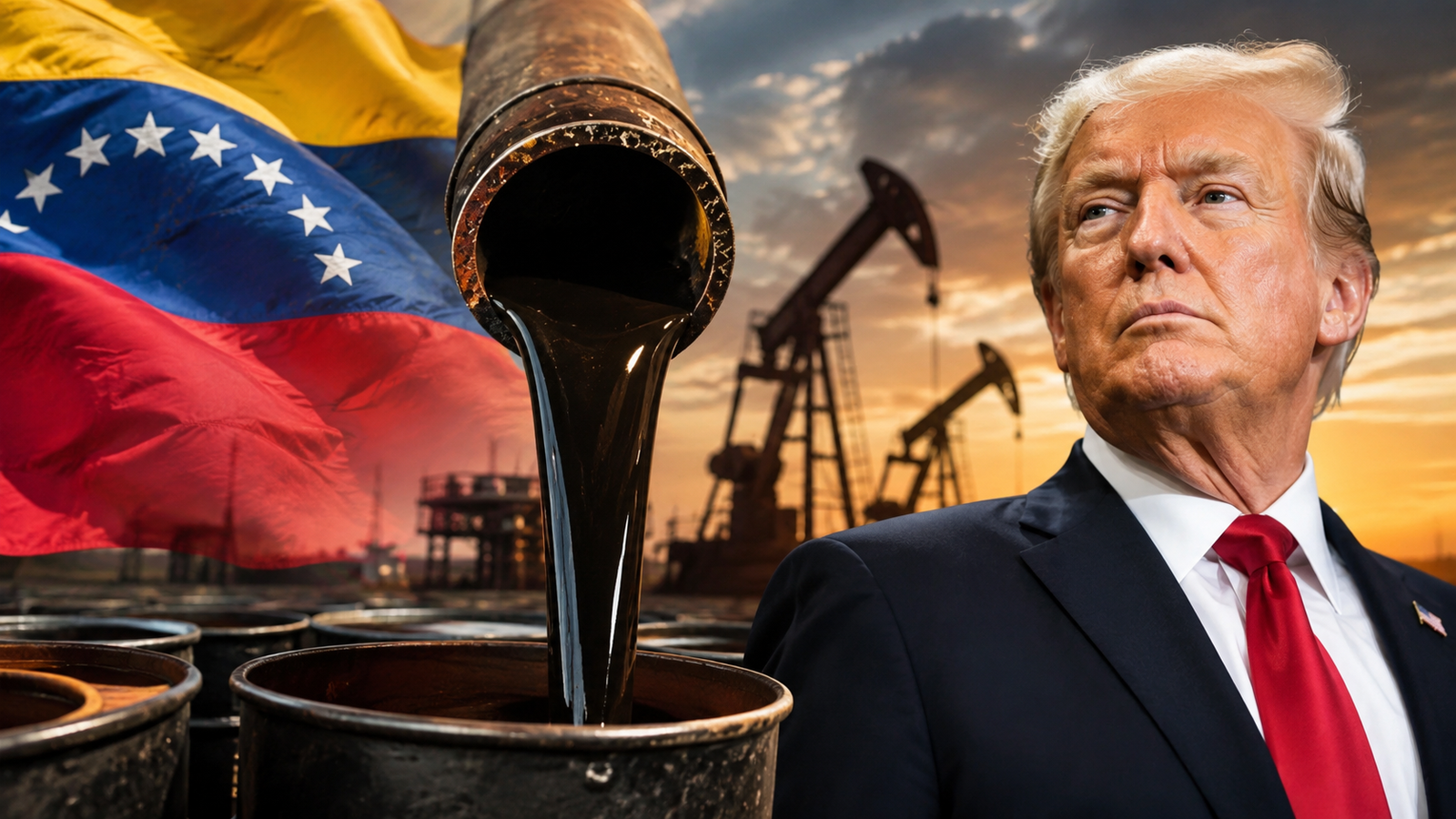
If you have been following the headlines this week, you have probably seen the phrase Trump Venezuela Oil Deal splashed across nearly every major news outlet. President Donald Trump announced what he called the biggest oil deal in world history, and it involves control over 65 billion barrels of Venezuelan crude reserves. For everyday Americans watching gas prices climb, that announcement raises an obvious question: what does this actually mean for the price at the pump?
This article breaks down the deal in plain language. We will cover who negotiated it, how the ownership structure works, why it happened now, and what experts are saying about the realistic timeline for any impact on fuel costs. No political spin, just a clear look at the facts as they stand.
What Is the Trump Venezuela Oil Deal
The Trump Venezuela Oil Deal refers to a newly announced agreement between the United States and Venezuela’s interim government that grants American interests majority control over a significant share of Venezuela’s untapped oil reserves. Trump revealed the news in a social media post, describing it as an agreement that would strengthen the relationship between the two countries while easing pressure on domestic fuel costs.
At its core, the deal is structured as a public private partnership rather than a straightforward government purchase. The United States is not buying the oil outright. Instead, it is taking an equity stake in a newly formed joint venture that will operate several of Venezuela’s largest oil fields.
This distinction matters because it shapes how quickly, or slowly, any real world benefits might appear for American consumers.
The Numbers Behind the Deal
Every major report on this story centers around one striking figure: 65 billion barrels of proven oil reserves. To put that in perspective, the entire United States currently holds under 50 billion barrels in proven reserves. This single agreement, if fully realized, would more than double the amount of oil that American interests have direct access to.
Here is a quick snapshot of the key figures being reported:
- 65 billion barrels of proven reserves across 17 strategic oil fields
- A 55 percent stake for the United States in the new joint venture
- A 100 year lease granted by Venezuela’s government to the operating company
- An estimated 100 billion dollars in private investment flowing into Venezuela
- Roughly 209 billion dollars in projected tax revenue for the Venezuelan government over time
Venezuela itself sits on the largest proven oil reserves of any country in the world, estimated at over 300 billion barrels according to the US Energy Information Administration. Despite that staggering resource base, the country currently produces only a small fraction of global oil output because of years of underinvestment and aging infrastructure.
Who Negotiated the Agreement
The deal was brokered through cooperation between several key figures on both sides. Secretary of State Marco Rubio led diplomatic negotiations, while Defense Secretary Pete Hegseth was also directly involved, reflecting the unusual national security dimension of this arrangement.
On the Venezuelan side, interim President Delcy Rodriguez signed off on the agreement and issued a public statement praising it as a historic milestone for her country’s recovery.
Rubio described the deal as a major win for both nations, emphasizing that it would bring substantial private investment into Venezuela while helping stabilize energy supply for the United States. Rodriguez, for her part, framed the agreement as a turning point for Venezuela’s economy after years of crisis.
The Pentagon’s Unusual Role
One detail that stands out is the involvement of the Pentagon’s Office of Strategic Capital in overseeing the arrangement. This office typically finances projects tied to national defense priorities, which signals that Washington views stable oil access from Venezuela as a matter of strategic importance rather than a purely commercial transaction.
How the Ownership Structure Actually Works
Understanding the mechanics of this deal helps explain why it is more complicated than a simple oil purchase. According to officials familiar with the arrangement, the structure works like this.
A new private joint venture has been formed between the US government and an experienced private operator already active in Venezuela. Rather than the US government owning oil fields directly, it holds equity in this joint venture, which in turn holds the rights to develop and produce from the 17 designated fields.
The United States controls 55 percent of this venture. That stake is split between two components: actual equity ownership in the company, and the right to purchase oil produced by the venture at cost, a mechanism officials are calling off take oil.
In simple terms, the US is not simply handed barrels of crude. It becomes a majority shareholder in a company that pumps the oil, with the added benefit of being able to buy that oil without paying market markups. Officials say this structure makes the new venture the second largest private holder of proven oil reserves in the world, trailing only Saudi Aramco.
Why Venezuela and Why Now
Timing is everything in a story like this, and there are several factors that explain why this deal materialized when it did.
First, the political landscape in Venezuela changed dramatically earlier this year. In January, US military forces carried out an operation that led to the capture of longtime Venezuelan leader Nicolas Maduro, who now faces narco terrorism and drug trafficking charges in a New York courtroom. His removal paved the way for interim leadership under Delcy Rodriguez, who has taken a markedly different approach toward foreign investment and cooperation with Washington.
Second, global oil markets have been under strain. The ongoing conflict involving Iran has disrupted oil movement through the Strait of Hormuz, a corridor that historically carried around one fifth of the world’s petroleum supply. That disruption has pushed prices upward and put pressure on the Trump administration to find alternative sources of supply.
Third, Venezuela’s government has actively courted this kind of investment. Rodriguez signed legislation reopening the country’s oil sector to private companies, reversing decades of state control that dated back to the nationalization policies of former leader Hugo Chavez. That legal shift created the opening for a deal of this scale to even be possible.
What This Means for US Gas Prices
This is the question most people actually care about, and the honest answer requires some patience. Trump has claimed the deal will substantially lower gas prices for Americans over time, and the added supply certainly points in that direction on paper.
However, most energy analysts caution against expecting quick relief at the pump. There are a few reasons for this.
Venezuela’s oil infrastructure has been neglected for close to two decades. Pipelines, refineries, and extraction equipment need significant repair and modernization before production can meaningfully increase. That kind of infrastructure overhaul typically takes years, not months, and requires billions of dollars in additional capital beyond what has already been pledged.
There is also a track record of caution among major oil companies. Executives from firms like ExxonMobil have previously described Venezuela as an uninvestable environment due to a history of asset seizures. ExxonMobil had its Venezuelan assets nationalized twice, once in the 1970s and again in the 2000s, and its leadership has been clear that meaningful legal and economic guarantees are needed before large scale reinvestment happens.
That said, some independent operators have already begun moving in. Companies like the Texas based Hunt Oil Company have reportedly signed early agreements with Venezuela’s state oil company, suggesting that smaller and mid sized players may be quicker to test the waters than the industry giants.
For now, the most realistic outlook is that any noticeable dip in gas prices tied specifically to this deal is a medium to long term prospect rather than something that shows up at your local gas station next month.
The History Behind US Venezuela Oil Relations
To fully appreciate why this deal is such a big deal, it helps to understand the backstory. Venezuela has one of the richest oil histories of any country on earth. For decades, American companies played a major role in developing its fields.
That relationship fractured in the 2000s when Hugo Chavez, pursuing a socialist economic agenda, nationalized hundreds of foreign owned oil assets. Companies including ConocoPhillips and ExxonMobil lost significant investments and largely exited the country. Chevron remained the lone major American company to maintain a continuous presence in Venezuela through the sanctions era that followed.
Years of US sanctions, combined with government mismanagement under Chavez and later Maduro, left Venezuela’s oil sector in a state of steady decline. Despite sitting on the world’s largest reserves, the country’s output shrank to a fraction of its former capacity because of crumbling infrastructure and a lack of new investment.
The events of this year, from Maduro’s removal to the passage of new investment friendly oil legislation, represent the most significant shift in this dynamic in a generation. This deal is effectively the largest test yet of whether that shift can translate into real economic results for both countries.
Reactions From Officials and Industry Leaders
Reaction to the announcement has been notably positive from those directly involved in negotiating it, while independent voices have offered a more measured take.
Secretary Rubio described the agreement as demonstrating how bold foreign policy can deliver what he called America First wins, pointing to stable reserves, lower cost oil, and reduced gas prices as the intended outcomes.
Energy trader Phil Flynn called the deal a generational win for American families, arguing that the scale of new reserves entering the US sphere of influence could reshape energy markets for years to come.
On the Venezuelan side, Rodriguez struck an optimistic tone, framing the agreement as ushering in what she described as a new era of recovery and prosperity for her country’s people.
Not everyone has been quick to celebrate, however. Analysts covering the story have pointed out that important details, including the identity of the private operator involved in the joint venture, have not yet been made public. Some administration officials also reportedly disagreed initially over whether the deal was truly finalized before Rodriguez’s public confirmation settled the matter.
Risks and Unanswered Questions
No agreement of this size comes without complications, and this one has several worth keeping an eye on.
The private operator involved in the joint venture has not been officially named, which makes it difficult to fully evaluate the deal’s structure and long term viability. Transparency around this detail will likely shape how seriously the market takes the arrangement going forward.
There are also broader questions about political stability in Venezuela. The interim government under Rodriguez is still relatively new, and the long term durability of the current legal and economic reforms remains untested.
Neighboring oil producing nations, including Canada, have raised concerns that increased Venezuelan exports could eventually compete directly with their own crude in key markets like the US Gulf Coast, potentially reshaping regional trade flows in ways that are not yet fully understood.
Finally, the human and economic backdrop in Venezuela cannot be ignored. The country is still recovering from severe earthquakes earlier this year that caused significant loss of life and infrastructure damage, adding another layer of complexity to any large scale industrial rebuilding effort.
What Happens Next
In the immediate term, expect more details to emerge about the private operator involved and the specific timeline for ramping up production at the 17 designated oil fields. Analysts will also be watching closely to see whether other major oil companies follow the lead of smaller firms like Hunt Oil in re-entering the Venezuelan market.
On the diplomatic front, this deal is likely to be viewed as a template for how the current administration approaches energy focused foreign policy in the region. If early production milestones are met, it could open the door to further partnerships with Venezuela or similar arrangements elsewhere.
For everyday consumers, the most practical approach is to treat this as a long term development rather than an immediate fix. Keep an eye on quarterly updates about production levels at these fields, since that data will offer the clearest signal of whether the promised benefits are materializing.
Conclusion
The Trump Venezuela Oil Deal marks one of the most significant energy agreements in recent memory, granting the United States majority control over a joint venture holding 65 billion barrels of Venezuelan oil reserves. The arrangement reflects a dramatic shift in US Venezuela relations following the capture of Nicolas Maduro earlier this year and Venezuela’s subsequent move to reopen its oil sector to private investment.
While the scale of the deal is genuinely historic, the practical impact on US gas prices will likely take years rather than months to materialize, given the state of Venezuela’s oil infrastructure and the caution still being exercised by major international oil companies. The key takeaway for anyone following this story is to watch for concrete signs of production growth and infrastructure investment rather than relying on the headline figures alone. Those details, more than the initial announcement, will determine whether this deal truly lives up to its billing as the biggest oil deal in world history.
Frequently Asked Questions
How many barrels of oil are involved in the Trump Venezuela oil deal?
The agreement covers 65 billion barrels of proven oil reserves spread across 17 strategic fields in Venezuela.
Will this deal lower gas prices immediately?
Not right away. Experts widely agree that meaningful price relief will take years because Venezuela’s oil infrastructure needs substantial repair and investment before production can significantly increase.
Who owns the new joint venture created by this deal?
The United States holds a 55 percent stake in the joint venture, split between direct equity and the right to purchase oil at cost, while a private operator and Venezuela’s government hold the remainder.
Why did Venezuela agree to this deal?
Venezuela’s interim government under Delcy Rodriguez has actively sought foreign investment to rebuild the country’s oil sector and broader economy, especially after passing legislation that reopened the industry to private companies.
Is Chevron involved in the new deal?
Chevron has remained the primary US oil company operating in Venezuela through recent years, but as of this announcement it has not publicly confirmed a role in the newly formed joint venture.