
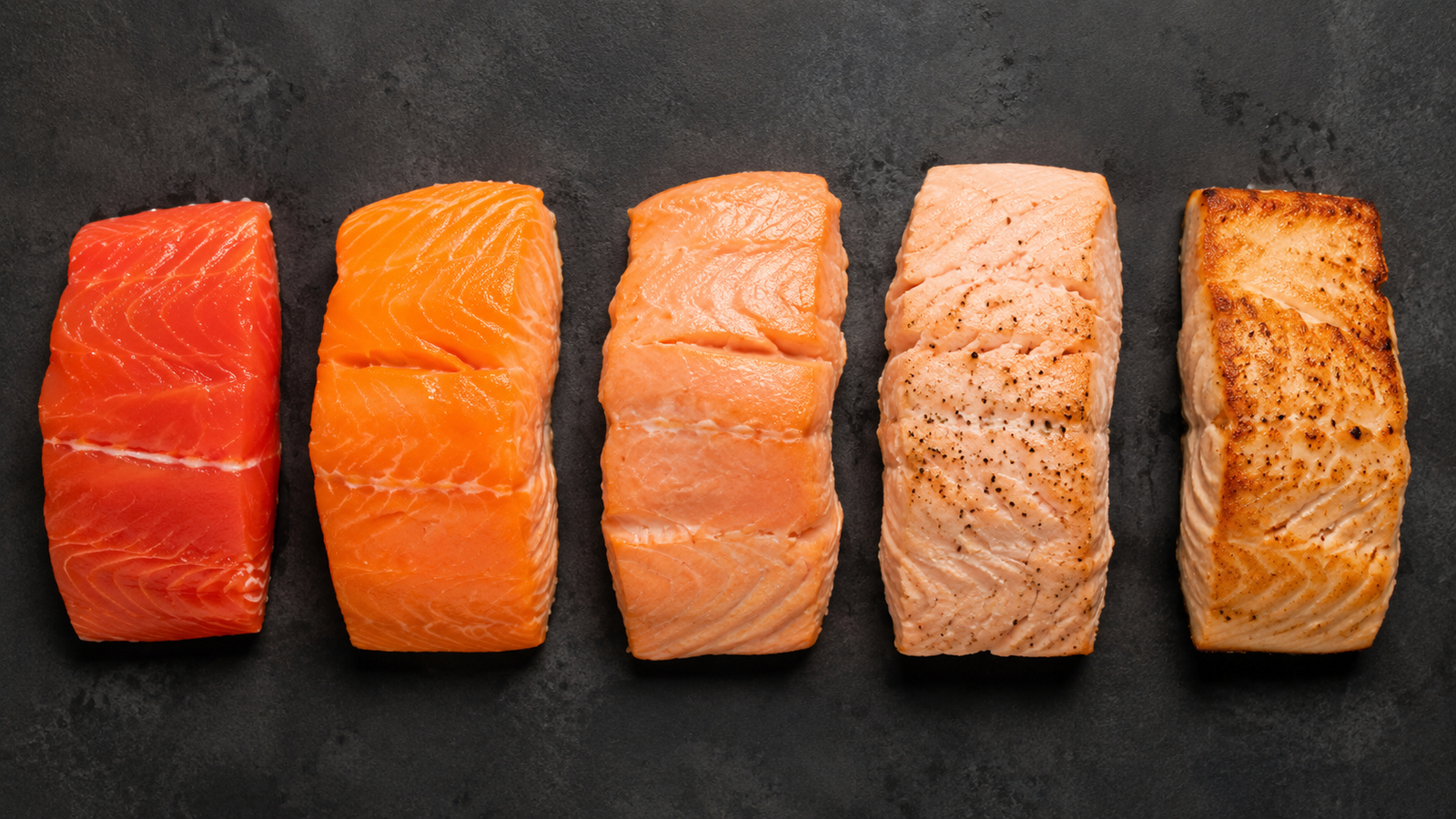
Salmon is one of those foods that leaves even confident cooks second guessing themselves. You pull the fillet off the heat, cut into it, and stare at the color trying to decide if it is ready or if you just ruined dinner.
That hesitation is completely normal. Color is the first thing your eyes notice, but it is also one of the most misunderstood signals in cooking. This color chart cooked salmon color guide breaks down exactly what each stage of doneness should look like, why the color changes the way it does, and how to avoid the common mistakes that lead to dry, overcooked fillets or a plate you are not quite sure is safe to eat.
By the end, you will be able to look at a piece of salmon and know, with real confidence, what stage it is in.
Why Color Alone Can Be Tricky
Most guides treat color like a simple traffic light system. Dark pink means stop, light pink means go. In reality, salmon’s color depends on more than just how long it has been on the heat.
The species of salmon, its diet, how it was raised, and even the thickness of the fillet all influence the final shade. Two perfectly cooked pieces of salmon from different fish can look noticeably different sitting side by side.
That does not mean color is useless. It is still one of the fastest and most reliable visual cues you have in the kitchen. You just need to know what to actually look for at each stage, which is exactly what this color chart covers.
The Cooked Salmon Color Chart by Doneness Stage
Salmon does not simply switch from raw to cooked. It moves through a gradual color shift as the proteins inside the flesh change structure. Here is what that progression looks like from rare to well done.
Rare: Around 110°F
At this stage, the center of the salmon is still cool and has a deep, almost translucent pink color, similar to the raw fillet before it hit the pan. The outer edges may show a light sear, but the interior has barely started cooking.
This stage carries food safety risk, since the fish has not reached a temperature high enough to reliably kill harmful bacteria or parasites. It is generally only appropriate when using very fresh, high quality salmon intended for rare preparations, and it is worth checking with your fishmonger about sushi grade or sashimi grade sourcing before eating salmon this underdone.
Medium Rare: Around 120°F to 125°F
The center turns a richer, slightly less translucent pink. It is still soft to the touch, but you will notice the flesh starting to firm up compared to the rare stage.
Many chefs consider this the sweet spot for flavor and texture, since the fish stays moist and silky rather than dry. The color here is often described as a warm, glossy pink, with a visible but shrinking translucent core.
Medium: Around 130°F
This is where a lot of home cooks aim to land. The salmon turns a light, even pink throughout, with no obvious translucent or wet looking patches left in the center.
The texture becomes noticeably flakier while still holding onto moisture. If you press it gently with a fork, it should separate into soft, distinct flakes rather than staying dense and rubbery.
Medium Well: Around 135°F to 140°F
At this point, the color fades further into a pale, almost peachy pink. The exterior may look slightly beige or tan, especially if it was seared or grilled.
Texture wise, the fillet firms up considerably and starts to lose some of its natural moisture. It is still enjoyable, but you are noticeably closer to a dry result than at the medium stage.
Well Done: 145°F and Above
This is the temperature the USDA recommends for food safety. The flesh turns a pale beige or light cream color throughout, with no pink remaining, and the texture becomes firm and fully flaky.
Well done salmon is the safest option, particularly for pregnant women, young children, older adults, or anyone with a weakened immune system. The tradeoff is that it is the most prone to drying out if you go even a minute or two past this point.
What Actually Causes Salmon’s Color
The pink, orange, and red tones in salmon come primarily from a pigment called astaxanthin. This compound belongs to a family of natural pigments known as carotenoids, and it is the same group responsible for the color in shrimp, crab, and lobster once cooked.
Wild salmon get astaxanthin naturally through their diet, mainly by eating krill and small shellfish. Farmed salmon are typically given a diet supplemented with astaxanthin to achieve a similar color, since without it their flesh would appear much paler or greyish.
Here is the part many articles skip entirely: astaxanthin does not break down when salmon is cooked. This is exactly why fully cooked salmon can still look pink in the middle without being unsafe. The color you see is not raw fish, it is simply the natural pigment holding steady through the cooking process.
Wild Salmon vs Farmed Salmon: Why the Shades Differ
If you have ever compared two salmon fillets and wondered why one looks deep red and the other looks pale pink, the answer usually comes down to species and farming versus wild sourcing.
- Sockeye salmon tends to have the deepest red orange color, both raw and cooked, due to a diet particularly rich in krill.
- Atlantic salmon, which is almost always farmed, typically shows a softer, more uniform pink.
- Coho salmon sits somewhere in the middle, with a moderate orange pink tone.
- Pink and chum salmon are naturally leaner and paler, often looking almost light salmon or blush colored even when perfectly cooked.
None of these differences mean one fish is more or less done than another. It simply means a color chart cooked salmon color guide has to account for species, not just temperature, to be genuinely useful.
How Your Cooking Method Changes the Color You See
Two fillets cooked to the exact same internal temperature can still look different depending on how they were cooked, particularly on the outside.
Pan searing or grilling exposes the surface to direct, high heat, which creates a golden brown or slightly charred crust while the interior stays pink and moist. Baking tends to produce a more even color throughout, since the heat surrounds the fillet gently rather than concentrating on one side.
Poaching, which cooks salmon gently in liquid, usually results in the palest, most uniform pink color of any method, since there is no browning reaction happening on the surface. Sous vide cooking gives you the most predictable and consistent color of all, since the fish cooks at a precisely controlled temperature for an extended time.
If you are trying to judge doneness by color alone, always check the center of the thickest part of the fillet, not the exterior, since the outside will almost always look more cooked than the inside regardless of method.
Undercooked vs Overcooked: Spotting the Difference
Learning to recognize the two extremes makes it much easier to hit the stage you actually want.
Undercooked salmon looks glossy, wet, and translucent, particularly near the center. It resists flaking, and if you press it with a fork, the flesh feels soft and almost gelatinous rather than firm.
Overcooked salmon tells the opposite story. The color turns pale, sometimes with a slightly grey or chalky tone, and you may notice a white, curdled looking substance on the surface. That white material is called albumin, a protein that gets pushed out of the flesh under high heat, and while it looks unappetizing, it is completely harmless to eat.
Once you see albumin forming in noticeable amounts, it is a strong sign the salmon has passed its ideal window and is heading toward dry and tough territory.
Common Color Mistakes Home Cooks Make
A few recurring mistakes tend to throw people off when judging salmon by sight.
- Judging doneness from the outside of the fillet instead of cutting into or checking the thickest interior point.
- Assuming all salmon should look the same shade of pink, without accounting for species differences.
- Panicking over a pink center, even when the fish has reached a safe internal temperature.
- Ignoring resting time, which allows carryover cooking to finish the process and can shift the color slightly even after the fillet leaves the heat.
- Relying on color in poor kitchen lighting, which can make pink tones look either more vivid or more washed out than they really are.
Being aware of these habits alone will make your judgment noticeably more accurate over time.
Checking Doneness Beyond Just Looking
Color gives you a strong starting point, but pairing it with one more check removes almost all the guesswork.
An instant read meat thermometer inserted into the thickest part of the fillet is the most reliable method available. If you do not own one, the fork test is a solid backup: gently twist a fork into the thickest section, and if the flesh separates into clean flakes without resistance, it is ready.
Combining a visual check with either of these methods means you are no longer relying on color in isolation, which is exactly where most cooking mistakes happen.
Frequently Asked Questions
Is it safe for cooked salmon to still be pink in the middle?
Yes. The pink color comes from a natural pigment called astaxanthin, which does not disappear when the fish is fully cooked. As long as the salmon has reached a safe internal temperature, a pink center is completely normal.
What does undercooked salmon look like compared to properly cooked salmon?
Undercooked salmon looks glossy, wet, and translucent, especially near the center, and it will not flake easily. Properly cooked salmon looks matte and evenly colored throughout, with flesh that separates cleanly.
Why does my salmon look grey instead of pink after cooking?
A greyish tone usually points to overcooking, since prolonged heat breaks down the natural pigments and dries out the flesh. It can also happen with older fish that was not perfectly fresh before cooking.
Does wild salmon really cook to a different color than farmed salmon?
Yes. Wild salmon, particularly sockeye, tends to hold a deeper red or orange color due to its natural diet, while farmed salmon usually cooks to a softer, lighter pink.
What is the white substance that appears on top of my cooked salmon?
That is albumin, a natural protein that gets pushed to the surface under heat. It is completely safe to eat and simply means the fish has been cooked at a fairly high temperature.
Final Thoughts
Reading salmon by color becomes second nature once you know what you are actually looking for at each stage. Rare and medium rare keep a deep, glossy pink center, medium settles into an even light pink, and medium well through well done fades toward pale beige with a firmer, flakier texture throughout.
Remember that species, farming versus wild sourcing, and cooking method all influence the exact shade you see, so use this color chart cooked salmon color guide as a strong visual reference rather than an exact science. Pair what you see with a quick temperature check or the fork test, and you will consistently land on a fillet that is both safe and genuinely enjoyable to eat.
