
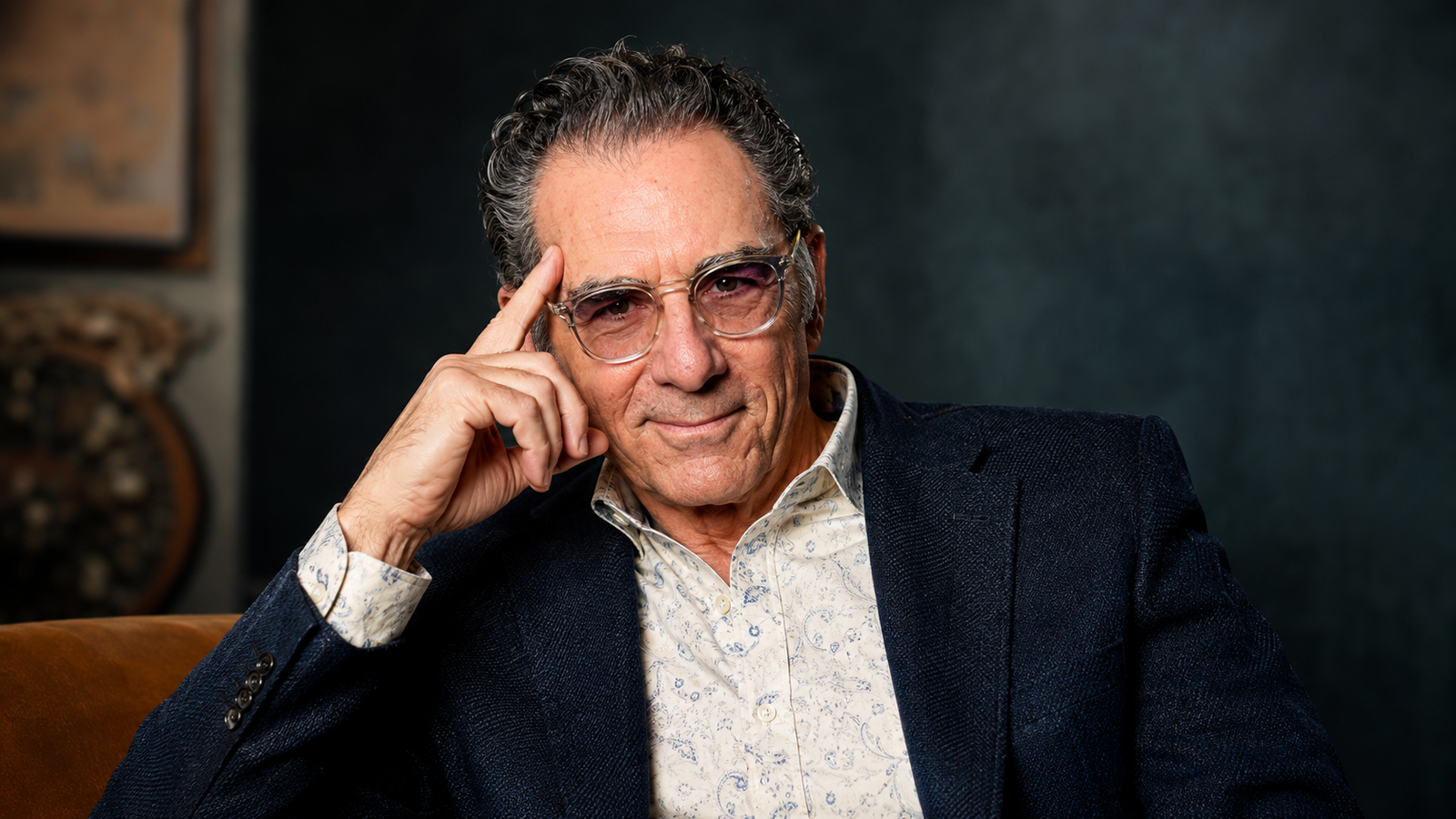
If you grew up watching Seinfeld, you already know the entrance. A door bursts open. A lanky figure slides into frame, and the room erupts before he even says a word. That was Michael Richards as Cosmo Kramer. For nine seasons, he turned physical comedy into an art form.
Michael Richards is more than a single character, though. His story includes a stint in the Vietnam era Army, years of grinding through stand up clubs, and a career defining sitcom role. It also includes one of the most talked about public falls from grace in entertainment history, followed by a quiet, deliberate return to public life through a 2024 memoir. This article walks through all of it, from his early years to where he stands today, with context you will not find pieced together anywhere else.
Who Is Michael Richards
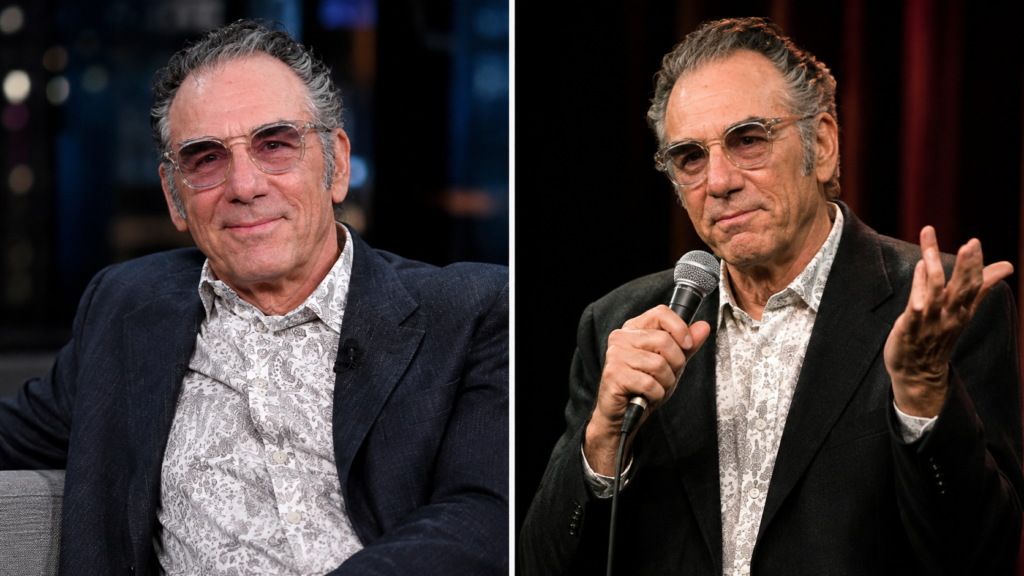
Michael Anthony Richards is an American actor and comedian born on July 24, 1949, in Culver City, California. He is best known for playing Cosmo Kramer on Seinfeld, a role that earned him three Primetime Emmy Awards and turned him into one of the most recognizable comedic performers of his generation.
His career stretches well beyond Kramer, though. Richards built a body of work spanning stand up comedy, sketch television, film, and drama. He is also known for a 2006 incident that temporarily ended his public career, and for a 2024 memoir that reintroduced him to audiences on his own terms.
Early Life and the Road to Comedy
Richards had a childhood shaped by hardship long before fame found him. He was raised by his mother in Los Angeles after being told his father died in a car accident when he was two years old. Years later, he learned a fuller and more painful truth about his origins, something he did not publicly address until his memoir decades later.
At Thousand Oaks High School, Richards was an ordinary student with no obvious path to stardom. Like many young men of his generation, he was drafted into the United States Army in 1970. He trained as a medic and served in West Germany, where he found an unexpected creative outlet performing with a military theatrical group called The Training Road Show.
After his honorable discharge, Richards used the G.I. Bill to study at the California Institute of the Arts. He later completed a Bachelor of Arts in drama at Evergreen State College in Washington. This period is where the foundation of his comedic instincts, particularly his gift for physical performance, really took shape.
Finding His Comedic Voice
While building his craft, Richards worked odd jobs, including as an ambulance attendant and hospital orderly. He also briefly partnered with actor Ed Begley Jr. in an improv act. Around Los Angeles Valley College, he found repeated stage time that let him refine the exaggerated, unpredictable physicality that would later define Kramer.
Breaking Into Show Business
Richards got his first major break in 1979, appearing in a Billy Crystal television special. That appearance led to a regular spot on ABC’s sketch series Fridays in 1980, where he worked alongside a young writer and cast member named Larry David.
His time on Fridays produced one of the strangest moments in live television history. During a sketch with guest Andy Kaufman, Kaufman refused to say his lines. Richards responded by bringing cue cards out on air, and Kaufman threw a drink in his face, sparking a brief on set commotion. Actor Norm Macdonald later dramatized the moment in the film Man on the Moon.
Through the 1980s, Richards worked steadily in small but memorable roles. He appeared in shows like Cheers, Miami Vice, St. Elsewhere, and Night Court, along with a supporting turn in the cult film UHF as the endearingly clumsy janitor Stanley Spadowski.
Cosmo Kramer and the Seinfeld Years
In 1989, Richards was cast in a new NBC sitcom created by Larry David and Jerry Seinfeld. The show got off to a slow start. By the mid 1990s, though, Seinfeld had become one of the most watched and most quoted sitcoms in television history.
As Cosmo Kramer, Richards played the eccentric neighbor across the hall, a character defined less by his dialogue and more by how he moved through a room. The slide through the apartment door became iconic television shorthand. Kramer’s unpredictable energy balanced the show’s more grounded, neurotic leads.
Richards won more Emmy Awards than any other Seinfeld cast member. He took home the Outstanding Supporting Actor in a Comedy Series award in 1993, 1994, and 1997, and he also earned a Screen Actors Guild Award as part of the ensemble.
Why Kramer Worked So Well
Part of what made the character endure is that Richards treated physical comedy with the same seriousness most actors reserve for dramatic work. In interviews over the years, he has described staying deliberately out of his own way on set, letting instinct rather than calculation guide Kramer’s movements. That discipline is a big reason the character still feels fresh in reruns decades later.
Seinfeld ended its run in 1998 at number one in the Nielsen ratings, with a finale watched by tens of millions of viewers. For Richards, the show’s conclusion opened a new and considerably more difficult chapter.
Life After Seinfeld
Following Seinfeld, Richards attempted to headline his own series. The Michael Richards Show premiered on NBC in October 2000, casting him as a bumbling private investigator. It struggled with test audiences, was retooled before it aired, and was canceled after only eight episodes.
Critics at the time noted the show leaned heavily on Kramer style physical comedy, which made it feel derivative rather than original. Richards has since referenced the so called Seinfeld curse, a pattern where former cast members struggled to find similar success in new projects, as part of why the show did not connect.
Interestingly, Richards was also considered for the lead role in the ABC series Monk, a part built around an obsessive compulsive detective. He turned it down, and the role eventually went to Tony Shalhoub, who won multiple Emmys for it.
The 2006 Laugh Factory Incident
No discussion of Michael Richards is complete without addressing November 17, 2006, the night that changed the course of his career.
While performing stand up at the Laugh Factory in Hollywood, Richards was heckled by a small group of audience members. He responded by launching into a racist tirade, repeatedly using a racial slur and making references to lynching and Jim Crow era history. Days later, a cell phone recording of the outburst surfaced publicly, and the fallout was swift and severe.
Jerry Seinfeld invited Richards to appear via satellite on Late Show with David Letterman shortly after the video surfaced, and Richards attempted to explain and apologize. Public reaction was overwhelmingly negative. A Gallup poll taken that same month found that only 41 percent of Americans still viewed him favorably, compared to ratings in the 70s and 80s for his former castmates.
Richards later reached out privately to civil rights leaders Al Sharpton and Jesse Jackson. He formally retired from stand up comedy in early 2007, stepping away from the spotlight almost entirely for several years.
How the Industry and Public Responded
The incident became a defining early example of what would later be called cancel culture. The speed and permanence of internet video amplified the consequences in a way earlier scandals had not experienced. It was referenced and parodied across television, including on Mad TV, South Park, and Family Guy, and it followed Richards into nearly every subsequent interview for years.
Rebuilding in Private
After stepping back from stand up, Richards largely avoided the public eye. In 2009, he appeared as himself in the seventh season of Curb Your Enthusiasm, joining his former Seinfeld castmates for the first time since the finale, a moment that also let him address the incident within the show’s fictional framework.
He voiced a supporting character in the 2007 animated film Bee Movie, produced by and starring Jerry Seinfeld. In 2013, he took a starring role in the TV Land sitcom Kirstie, which was canceled after a single season. Occasional appearances followed, including guest spots on Comedians in Cars Getting Coffee and a supporting film role in 2019’s Faith, Hope and Love.
Throughout this period, Richards has said he was doing quieter, more personal work: examining the anger that fueled the 2006 outburst rather than simply trying to rehabilitate his public image.
The 2024 Comeback and Entrances and Exits
In June 2024, Richards released a memoir titled Entrances and Exits, marking his most significant public reappearance in nearly two decades. The book covers his difficult early childhood, his military service, and his creative development. It also gives his most detailed public account of the 2006 incident to date.
To promote the memoir, Richards made the media rounds, including appearances on The Today Show and The View, where he discussed the outburst candidly. He has said in interviews that he considers himself the one who ultimately ended his own career that night, rather than framing himself purely as a victim of public backlash.
He has also spoken about surviving stage one prostate cancer in 2018. In the memoir, he revealed that he underwent a full prostatectomy, a detail that added another layer to the personal narrative behind his public silence during those years.
A More Reflective Public Voice
What distinguishes this chapter from his earlier career is tone. Rather than performing, Richards has used recent interviews to talk openly about anger, accountability, and what he describes as a long personal process of coming to terms with his past. It is a notably different posture than the deflection many public figures adopt after controversy.
Michael Richards Net Worth and Career Earnings
Public estimates place Michael Richards net worth at approximately 30 million dollars as of 2026. Much of that wealth traces back to his nine seasons on Seinfeld, one of the most lucrative sitcom deals in television history for its principal cast.
Industry observers have suggested his earnings could have been considerably higher had the 2006 incident not effectively ended his acting and stand up opportunities for years afterward. Endorsement deals, hosting opportunities, and additional sitcom work that might have followed a Seinfeld star of his stature simply did not materialize in the years right after the scandal.
Personal Life, Health, and Family
Richards was married to his first wife, a family therapist, for eighteen years. They share a daughter born in 1975 and have two grandchildren through her. The couple separated in 1992 and divorced the following year.
In 2010, Richards married his longtime girlfriend, and the couple welcomed a son in 2011. He has described fatherhood later in life as a grounding experience, one that shifted his priorities considerably from his younger years focused almost entirely on career.
On the health front, Richards revealed in his 2024 memoir that he was diagnosed with stage one prostate cancer in 2018. He underwent surgery to remove his prostate entirely, a procedure he has credited with likely saving his life.
What Michael Richards Is Doing Now
As of 2026, Richards remains largely out of the traditional spotlight but is no longer fully reclusive. He has made occasional public appearances, including a widely reported outing in West Hollywood after roughly two years away from public view, where he spoke candidly with reporters about how he has grown since 2006.
Social media has become part of his current presence, too. He shares updates tied to his acting career, his memoir, and moments from his Seinfeld legacy. He and Jerry Seinfeld have remained close, appearing together publicly as recently as the 2024 premiere of Netflix’s Unfrosted.
Richards has stated he is not actively pursuing a major comeback in the traditional sense. Instead, his public reappearances seem intentional and measured, focused on reflection rather than reclaiming his former level of fame.
Lessons From His Career
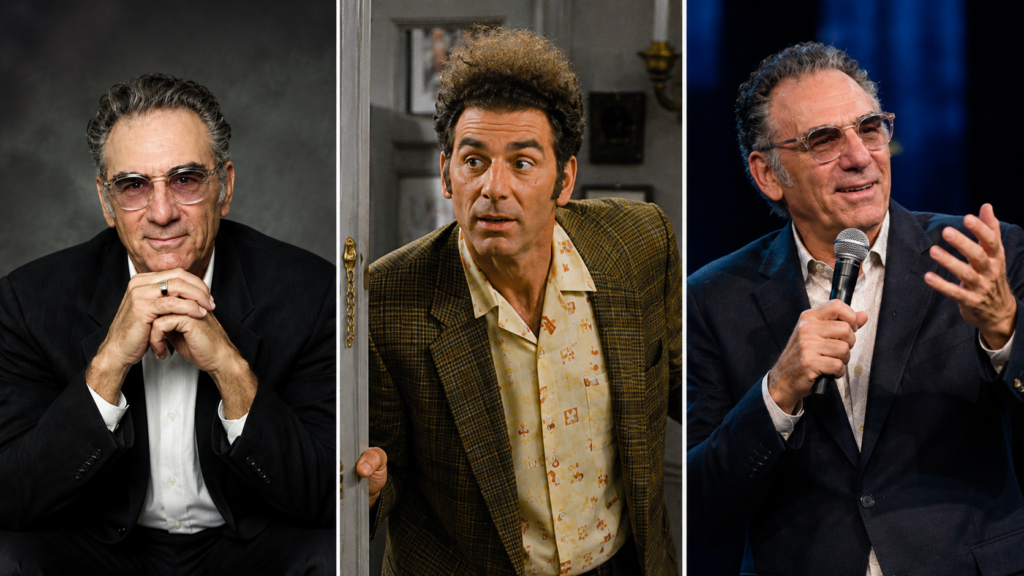
Michael Richards’ story offers a few honest takeaways that go beyond typical celebrity biography content.
- Talent alone does not guarantee a smooth career. Even an actor with three Emmy Awards struggled to find a second act that matched his earlier success.
- Public accountability often takes far longer than audiences expect. Richards’ most detailed public reflection came nearly two decades after the incident itself.
- Personal reinvention rarely looks like a dramatic comeback. For Richards, it looked like years of quiet work followed by a memoir written on his own terms.
- Physical comedy is a genuine craft. His approach to Kramer, treating instinct and movement as seriously as dialogue, is part of why the character still holds up.
Conclusion
Michael Richards’ career cannot be reduced to one scene, one Emmy speech, or one bad night in 2006. It spans a difficult childhood, military service, and years of hard won stage experience. It also spans one of the most beloved sitcom performances in television history, a very public fall, and a slow, deliberate return to telling his own story.
Whether you came here because of Seinfeld reruns, curiosity about his net worth, or questions about what happened after 2006, the throughline is the same. Michael Richards built something genuinely remarkable as Cosmo Kramer. He faced real and lasting consequences for a moment of profound failure, and he has spent the years since trying to understand rather than simply outrun that history. That combination of achievement and accountability is ultimately what makes his story worth understanding in full, not just in highlight reel form.
FAQ
Is Michael Richards still acting?
Richards has largely stepped back from regular acting work. His most recent film role was in 2019’s Faith, Hope and Love, and his public appearances since have focused more on promoting his memoir than pursuing new acting projects.
What is Michael Richards net worth in 2026?
Public estimates place his net worth at approximately 30 million dollars, largely built from his salary during Seinfeld’s nine season run.
What actually happened at the Laugh Factory in 2006?
Richards was performing stand up comedy when he responded to heckling by launching into a racist tirade that included a repeated racial slur and references to lynching. The incident was filmed and released publicly, leading to significant public backlash and his eventual retirement from stand up.
Did Michael Richards apologize for the incident?
Yes. He apologized publicly via satellite on Late Show with David Letterman shortly after the video surfaced, and he later contacted civil rights leaders Al Sharpton and Jesse Jackson privately. He has continued to address the incident in interviews over the years, most extensively in his 2024 memoir.
Is Michael Richards close with the other Seinfeld cast members?
Yes. He has appeared alongside Jerry Seinfeld and other castmates on Curb Your Enthusiasm and at public events, including the 2024 premiere of Unfrosted, suggesting the relationships have remained intact since the show ended.
