
If you have shopped for furniture in the last few years, chances are you have come across acacia wood more than once. It shows up in dining tables, cutting boards, outdoor patio sets, and even flooring. But acacia is not one single material with one fixed set of properties. It is a name that covers more than a thousand tree species, and that detail changes everything about how you should shop for it.
This guide breaks down what acacia wood actually is, which species you are most likely to encounter, how it holds up over time, what it costs, and whether it deserves a spot in your home. No fluff, just the practical information you need before you buy.
What Is Acacia Wood
Acacia wood comes from trees in the genus Acacia, part of the pea family, Fabaceae. With more than a thousand species spread across Australia, Africa, and parts of Asia, acacia is one of the most widespread tree genera on the planet.
What makes this tree so successful is its resilience. Acacia trees grow in punishing environments, including dry savannahs and nutrient poor soil where many other species would struggle. That toughness in the wild translates directly into the wood itself, which is why acacia furniture has a reputation for being sturdy and long lasting.
Because the acacia label covers so many species, no two boards are guaranteed to look or perform exactly the same. This is the single most important thing to understand before buying anything made from this wood.
The Main Acacia Species Used in Furniture
Most commercial acacia wood you will find in stores comes from a handful of species, and each one has a slightly different personality.
Acacia Mangium
This is one of the most commonly farmed species for furniture production, especially in Southeast Asia. It grows quickly, which keeps costs relatively low, and it has a warm, honey toned color with a fairly straight grain.
Australian Blackwood (Acacia Melanoxylon)
Native to Australia, this species is prized for its rich, dark tones and dramatic figure. It tends to be denser and more expensive than mangium, and it is a favorite among instrument makers because of its tonal qualities.
Babul (Acacia Nilotica)
Common in South Asia and parts of Africa, babul acacia is known for being especially hard and durable, which makes it a good candidate for flooring and heavy use furniture.
Hawaiian Koa
Technically a member of the acacia family, koa is one of the most prized and expensive acacia varieties, prized in guitar making and fine woodworking for its curly grain and golden red color.
Knowing which species is used in a product you are considering matters more than most retailers let on. A budget dining table made from fast growing mangium will not perform the same way as a piece built from denser blackwood, even though both are technically acacia wood.
Acacia Wood Characteristics
Color and Grain
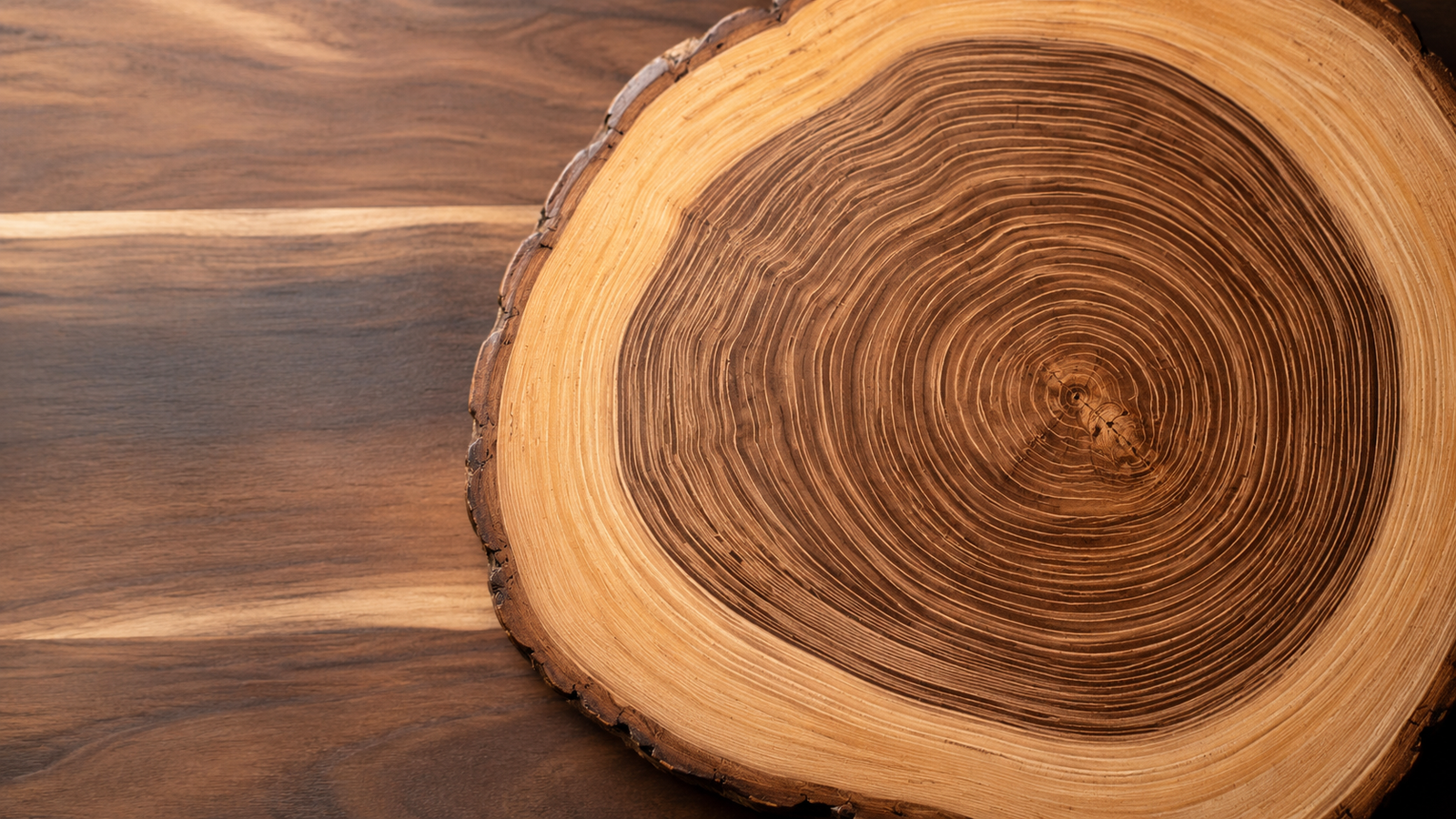
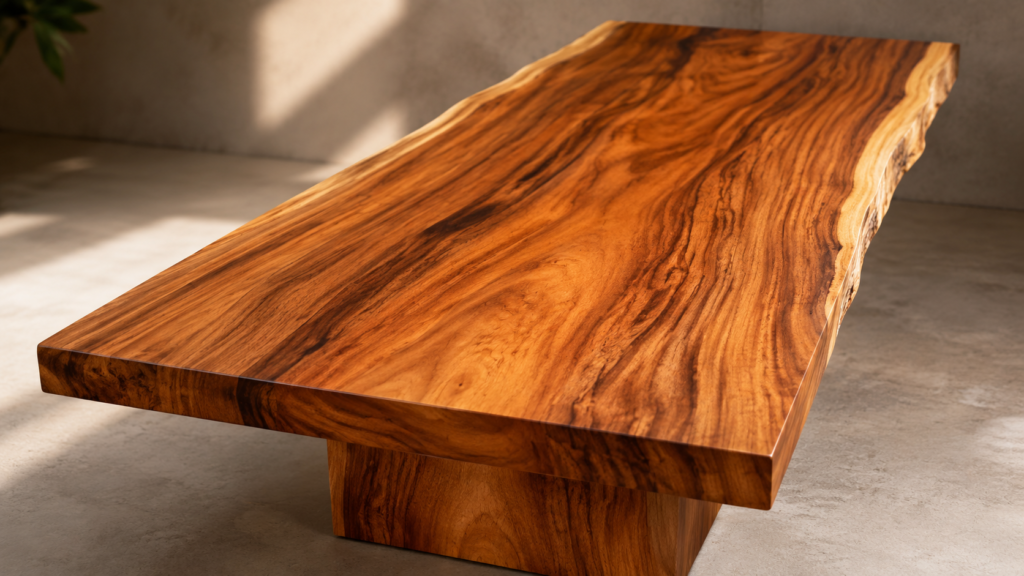
Acacia wood ranges from pale honey gold to deep reddish brown, and color often deepens with age and light exposure. The grain is rarely straight and predictable. Instead, it tends to be wavy, interlocked, or irregular, giving each piece a one of a kind look.
This visual variation is part of the appeal. If you want furniture with a uniform, matched grain like you often see in oak, acacia is not the right choice. If you like the idea of natural imperfection and character, it is hard to beat.
Texture and Luster
Acacia has a medium to coarse texture that feels distinctly organic under your hand. Left unfinished, it carries a soft, subtle sheen. Once sealed with oil or a clear finish, that sheen deepens into a rich, warm glow that photographs beautifully in both rustic and modern interiors.
Weight and Density
Acacia is a genuinely heavy wood. Furniture built from it feels substantial, which many buyers associate with quality, and that association is largely accurate. The density is also part of why acacia resists dents and daily wear so well.
How Durable Is Acacia Wood
Durability is where acacia wood earns most of its reputation, and it is worth breaking down exactly why.
Hardness
Wood hardness is typically measured using the Janka hardness test, which records the force required to embed a steel ball halfway into a sample of wood. Common acacia species used in furniture generally fall somewhere between 1,700 and 2,300 pounds force, depending on the exact species and growing conditions.
For context, red oak sits around 1,290 and hard maple around 1,450. Teak, often considered the gold standard for outdoor furniture, ranges around 1,000 to 1,155 depending on the source. This means many acacia species are actually harder than teak, even though teak carries a stronger premium reputation.
Keep in mind that Janka ratings vary by species, by individual tree, and by testing source, so treat any single number as a general guide rather than an exact promise.
Moisture and Rot Resistance
Acacia wood contains natural tannins that give it a built in resistance to moisture and decay. This is a major reason it shows up so often in outdoor furniture, kitchen cutting boards, and countertops, all applications where water exposure is a daily reality.
It is important to be clear that resistant is not the same as waterproof. Acacia can handle occasional moisture and humidity swings far better than softer woods, but standing water left on the surface for extended periods can still cause warping or discoloration over time.
Pest and Insect Resistance
The same tannins that help acacia resist moisture also make it naturally unappealing to many insects and fungi. This built in resistance reduces the need for chemical treatments, which is a meaningful advantage for buyers who prefer more natural materials in their homes.
Acacia Wood vs Other Popular Hardwoods
Acacia vs Teak
Teak has more natural oils and slightly better long term water resistance, which is why it remains the top choice for premium marine and outdoor furniture. Acacia, however, often matches or exceeds teak in hardness and costs noticeably less, making it an excellent value alternative for most households.
Acacia vs Oak
Oak has a more traditional, straight grained appearance and has been a furniture staple for centuries. Acacia is generally harder and offers a bolder, more dramatic grain pattern, appealing to buyers who want a statement piece rather than a classic, understated look.
Acacia vs Walnut
Walnut is known for its deep chocolate brown tones and smoother, more even grain. Acacia tends to run harder and shows greater color variation within a single board, so the choice between the two often comes down to whether you want visual consistency or natural variety.
Acacia vs Mango Wood
Mango wood is softer and less expensive than acacia, and while it still looks attractive, it does not hold up as well to heavy daily use. If budget is the deciding factor and durability matters less, mango is worth considering, but acacia will simply last longer under normal household stress.
Common Uses for Acacia Wood
Acacia’s combination of strength, beauty, and moisture resistance makes it genuinely versatile across the home.
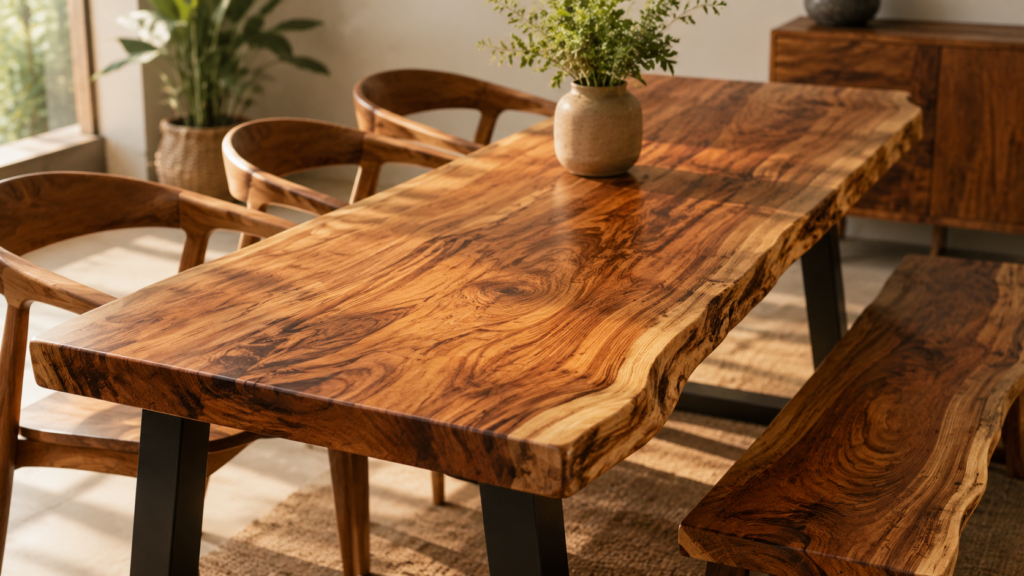
- Dining tables and dining chairs, where daily wear and occasional spills are unavoidable
- Outdoor patio furniture, thanks to its natural resistance to weather and decay
- Cutting boards and kitchen accessories, since it resists bacteria and holds up to knife use
- Flooring, where its hardness stands up well to foot traffic
- Bedroom furniture such as dressers, nightstands, and bed frames
- Musical instruments, particularly guitars and ukuleles, where certain species offer desirable tonal properties
- Decorative bowls, trays, and small home accents
This range is exactly why acacia has become such a common name in furniture stores. Few woods perform this well across so many different categories at a similar price point.
Is Acacia Wood Expensive
Acacia sits comfortably in the middle of the hardwood price spectrum. It typically costs less than teak, walnut, and rosewood, but more than softer or faster growing options like pine, rubberwood, or mango.
Pricing also depends heavily on the specific species and the piece itself. A mass produced dining table made from farmed acacia mangium will cost significantly less than a handcrafted piece using dense Australian blackwood or rare Hawaiian koa.
Solid acacia flooring generally runs a few dollars per square foot, positioning it as a mid range option compared to premium exotic hardwoods. For furniture, expect to pay a bit more than comparable pieces made from oak or pine, but noticeably less than teak or walnut equivalents.
Pros and Cons of Acacia Wood
Pros
- Excellent hardness and resistance to dents and scratches
- Natural resistance to moisture, rot, and insects
- Striking, one of a kind grain patterns
- Grows quickly, making it a more renewable choice than slow growing hardwoods
- Works well both indoors and outdoors
- Relatively low maintenance compared to many other solid woods
Cons
- Irregular grain will not appeal to buyers who prefer a uniform, matched look
- Density makes it harder to work with for DIY projects
- Quality varies significantly between species, so not all acacia products are equal
- Not truly waterproof despite strong moisture resistance
- Can be pricier than domestic softwoods, though still cheaper than premium exotics
Caring for Acacia Wood
Acacia is genuinely low maintenance once you understand its basic needs.
Dust it regularly with a soft, dry cloth to prevent buildup that can dull the finish over time. Wipe up spills as soon as they happen rather than letting liquid sit on the surface, even though the wood resists moisture reasonably well.
Every six to twelve months, apply a food safe mineral oil or a wood conditioner designed for hardwoods. This keeps the surface hydrated and helps maintain that rich, warm luster acacia is known for. Avoid harsh chemical cleaners, silicone based polishes, and abrasive scrubbers, since these can strip the natural finish and dull the grain.
If you use acacia outdoors, seal it with an exterior grade oil or varnish and reapply as needed based on your climate. Direct, constant sun exposure will gradually fade or gray untreated acacia, so a bit of seasonal upkeep goes a long way toward preserving its color.
With reasonable care, indoor acacia furniture can realistically last several decades, while well maintained outdoor pieces often hold up for well over a decade despite constant exposure to the elements.
Is Acacia Wood Worth Buying
For most households, yes. Acacia wood delivers a rare combination of genuine durability, natural beauty, and reasonable pricing that is difficult to find in a single material.
It makes the most sense if you want furniture that can handle real daily life, including kids, pets, spills, and the occasional bump, without demanding constant babying. It is also a strong choice if you are drawn to natural variation and character rather than a perfectly uniform, factory made look.
Where acacia may not be the right fit is if you specifically want a completely even, predictable grain pattern, or if you need furniture with zero maintenance whatsoever, since even low upkeep woods benefit from occasional oiling.
Before buying, it helps to ask the retailer which specific acacia species was used, since that single detail affects hardness, appearance, and long term performance more than almost anything else on the spec sheet.
Frequently Asked Questions
Is acacia a hardwood?
Yes. Acacia has a tight grain structure and high density that place it firmly in the hardwood category, and many species are harder than common hardwoods like oak.
Is acacia wood good for outdoor furniture?
Generally yes, thanks to its natural resistance to moisture, rot, and insects. For best results, choose acacia that has been properly kiln dried and sealed with an exterior finish.
Does acacia wood scratch easily?
No. Its density and hardness make it fairly resistant to everyday dents and scratches compared to softer woods like pine or mango.
How long does acacia wood furniture last?
With regular care, indoor acacia furniture can last thirty years or longer, while sealed and maintained outdoor pieces typically last ten to twenty years.
Is acacia wood sustainable?
It can be. Many acacia species grow quickly and are farmed on managed plantations, making them more renewable than slow growing hardwoods, though it is still worth checking for certifications like FSC when sustainability is a priority.
Acacia wood earns its popularity honestly. It is hard, handsome, and adaptable enough to work in almost any room of the house, as long as you understand which species you are actually buying and give it the small amount of care it asks for in return.
