

Few true crime cases in recent memory have captured public attention the way the story of Kouri Richins has. A Utah mother of three, a real estate agent, and the self published author of a children’s book about grief, Kouri Richins became the center of a murder investigation that unraveled over several years and ended with a life sentence.
If you are trying to understand how this case unfolded, from the night her husband died to the moment a jury delivered its verdict, this timeline breaks down every major development in plain language. No legal jargon left unexplained, no confusing jumps between dates. Just a clear, accurate walk through one of Utah’s most talked about criminal cases.
Who Is Kouri Richins
Kouri Darden Richins grew up in Utah and later built a career as a real estate agent, running her own company, K Richins Realty, which she started in 2019. She specialized in buying homes, renovating them, and reselling for a profit, a business that kept her juggling multiple properties at once.
In June 2013, she married Eric Richins in a backyard ceremony at their Utah home. The couple already had one son together, and they would go on to have two more, raising three boys as their family grew. On paper, they appeared to be a busy, ambitious young family building a life in the Utah mountains near Kamas.
Eric ran his own masonry business and was known among family and friends as an outdoorsman who loved hunting and spending time on his family’s cattle ranch. Behind the scenes, though, the marriage was reportedly strained by financial disagreements that would later become central to the case against Kouri Richins.
The Night Eric Richins Died
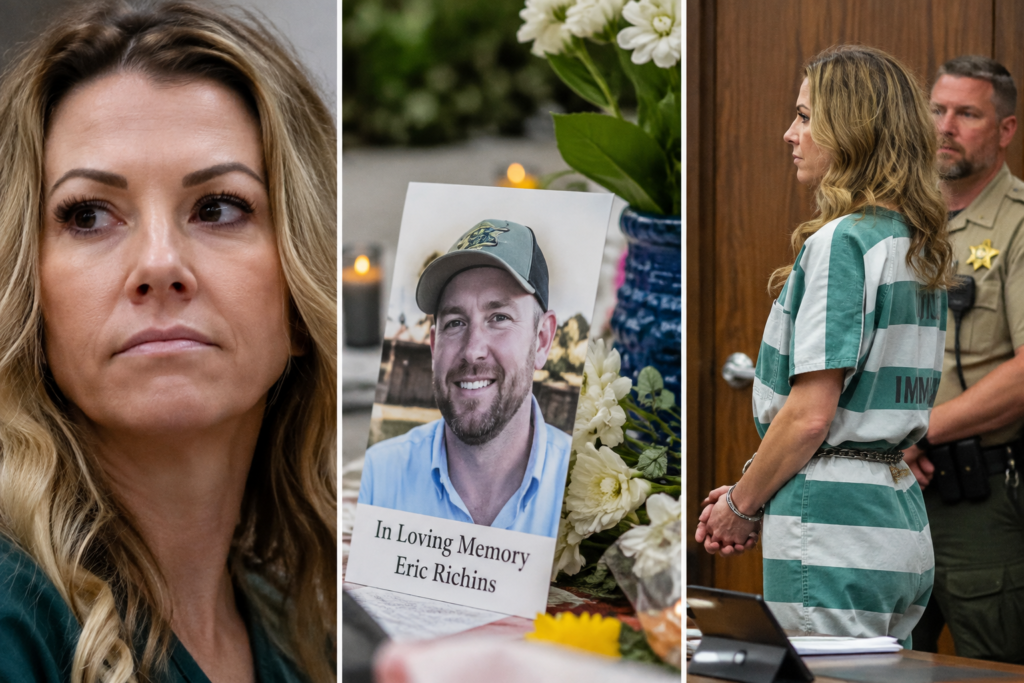
On March 4, 2022, Kouri Richins called authorities to report that her husband was unconscious in their Kamas, Utah home. According to her initial account, the couple had spent the evening celebrating the closing of a real estate deal, and she had made Eric a Moscow Mule cocktail before the two went to bed.
First responders were unable to revive him. Eric Richins was pronounced dead at 39 years old. At the time, his death was treated as a tragic, sudden loss, and there was no immediate indication of foul play to the public.
An autopsy later told a very different story. Toxicology results showed that Eric had ingested a fentanyl dose roughly five times higher than what is considered lethal. The drug had been consumed orally, a detail that would become critical once investigators began examining whether Eric had been poisoned deliberately.
The Investigation Begins
Once the autopsy results came back, what had looked like a private family tragedy turned into a criminal investigation. Detectives began digging into Eric and Kouri’s finances, their communications, and the events leading up to his death.
Investigators later revealed that Eric had expressed concerns to friends and family before his death, telling them he suspected his wife might be trying to poison him after he became seriously ill on at least two earlier occasions. That detail, combined with the toxicology findings, shifted the investigation squarely toward Kouri.
Digital forensics also played a major role. Analysts recovered search history from Kouri’s phone that included queries like “what is a lethal dose of fentanyl” and searches related to luxury prisons for wealthy individuals in the United States, queries that prosecutors would later present as evidence of premeditation.
Writing a Children’s Book While Under Suspicion
Perhaps the most unusual and widely discussed part of this story is the timing of Kouri Richins’ children’s book. In March 2023, while the investigation into her husband’s death was still active but before any charges had been filed, she self published a book titled “Are You With Me?”
The book was written for her three sons and centered on a child wondering whether his late father was still present during meaningful moments like birthdays, Christmas, and the first day of school. Kouri described writing it as something therapeutic for her boys, a way to help them process losing their father.
She promoted the book publicly, appearing on local television programs and speaking about grief and healing. Prosecutors would later argue that this public image, a grieving widow helping other families cope with loss, was a carefully maintained facade that helped divert attention away from her.
The Arrest and Formal Charges
Kouri Richins was arrested and formally charged with the murder of her husband on May 8, 2023, just weeks after her book had started gaining attention. The charges initially included aggravated murder, attempted murder, and drug possession.
As the case developed over the following two years, prosecutors added and refined charges. Financial charges were added in June 2025, and the murder charges themselves were amended in October 2025 to reflect the full scope of the evidence investigators had gathered. Kouri spent roughly three years in custody awaiting trial.
What Prosecutors Said Was the Motive
At the heart of the prosecution’s case was money. Kouri Richins had taken out multiple life insurance policies on her husband without his knowledge, policies that could have paid out around two million dollars combined had his death gone unquestioned.
Prosecutors also pointed to significant personal debt, more than two million dollars by some estimates, along with allegations that Kouri had been misappropriating funds from Eric’s business accounts for years before his death. According to court filings, this pattern began as early as 2019.
There was also a personal element to the motive prosecutors described. Evidence presented at trial suggested Kouri had been involved with another man, and that she was planning a future with him. Combined with the financial pressure, prosecutors argued this gave her a clear incentive to want her husband gone.
Notably, in late 2020, Eric had met with an estate planning attorney to protect his assets, specifically naming his sister rather than Kouri as the person who would manage his estate if he died. Court documents show the attorney stated Eric’s goal was to protect himself from what he believed was ongoing financial misuse by his wife, and to ensure Kouri would never control his property or his sons’ inheritance.
Building the Case: Key Evidence

Several pieces of evidence became central to the prosecution’s argument during the trial:
- Testimony from a supplier who confirmed selling fentanyl pills to Kouri Richins in the weeks before her husband’s death
- Forged documents showing an attempt to change the beneficiaries on Eric’s will without his knowledge
- The searches found on Kouri’s phone regarding lethal fentanyl doses and luxury incarceration options
- A recorded jailhouse letter, referred to during the trial as the “walk the dog” letter, which investigators say hinted at efforts to influence witnesses
- Evidence of an earlier, non fatal poisoning attempt on Valentine’s Day, weeks before Eric’s death, in which prosecutors said Kouri gave him a fentanyl laced sandwich that left him unconscious
Defense attorneys pushed back against much of this narrative. They argued that Eric struggled with an addiction to painkillers and that he had personally asked his wife to purchase opioids for him, suggesting his death may have resulted from his own drug use rather than deliberate poisoning.
The Trial: What Happened in Court

The trial took place in Summit County, Utah, in a courtroom that stayed packed throughout the proceedings given the intense public interest. Chief prosecutor Brad Bloodworth led the state’s case, while defense attorney Wendy Lewis represented Kouri Richins.
One particularly striking moment came when prosecutors played Kouri’s original 911 call from the night Eric died. Bloodworth told the jury the call was not the sound of a wife becoming a widow, but the sound of a wife becoming what he called a black widow. The defense countered that the prosecution was determined to see a killer where the facts actually pointed to a grieving spouse.
Over the following weeks, jurors heard testimony from forensic experts, financial analysts, friends and family of both Eric and Kouri, and law enforcement officers who had worked the case since 2022. The prosecution’s strategy relied heavily on connecting individual pieces of circumstantial and digital evidence into a single, coherent picture of motive and opportunity.
The Verdict
On March 16, 2026, the jury reached its decision. Kouri Richins, then 35 years old, was found guilty on all major charges, including aggravated murder. She was also convicted of attempted murder related to the earlier Valentine’s Day incident, along with forgery and insurance fraud connected to her attempts to collect on Eric’s life insurance policies after his death.
The verdict brought a sense of closure to Eric Richins’ family, who had waited nearly four years for the case to reach trial. Family representatives described the outcome as a relief, saying the truth had finally come out after years of uncertainty and public speculation.
Sentencing and Life in Prison
Kouri Richins was sentenced on May 13, 2026, a date that happened to fall on what would have been Eric’s 44th birthday. Judge Richard Mrazik handed down the maximum available penalty for her aggravated murder conviction: life in prison without the possibility of parole.
During the sentencing hearing, statements from the couple’s three sons were read aloud by therapists, since the boys themselves did not appear in court. Each of them reportedly said they would fear for their safety if their mother were ever released from prison, a detail that underscored just how personal and painful this case had become for the family left behind.
Kouri Richins also addressed the court directly before sentencing, reading a lengthy statement to her sons in which she denied any involvement in their father’s death and described the accusations against her as an absolute lie.
Life After Sentencing: Appeals and Legal Motions
The legal process did not end with sentencing. In the months that followed, Kouri Richins’ defense team filed a motion for a new trial, arguing there had been irregularities during the proceedings and that the prosecution had relied on unproven allegations to build parts of its case.
Her attorneys also requested that Judge Mrazik be disqualified from the case, describing his conduct during the trial as impatient, critical, and hostile toward the defense. That request was ultimately denied by a presiding judge, who ruled that the motion had not been filed within the required 21 day window after the alleged conduct occurred.
As of now, Kouri Richins remains in custody serving her life sentence while additional post conviction motions continue to work their way through the Utah court system.
Common Legal Terms in This Case, Explained
If you have been following coverage of this case, you have likely come across several legal terms that are not always clearly defined. Here is a quick breakdown:
Aggravated murder refers to a murder charge that involves specific factors that make it more serious than standard murder, such as evidence of premeditation or a financial motive. It typically carries the harshest possible sentencing options.
Attempted murder applies to actions intended to cause death that did not ultimately succeed, which in this case referred to the earlier fentanyl poisoning that left Eric unconscious but alive.
Forgery involves creating or altering a document with the intent to deceive, in this instance related to changes made to beneficiary designations without the account holder’s knowledge or consent.
Insurance fraud covers any attempt to deceive an insurance company for financial gain, which here referred to efforts to collect on life insurance policies tied to Eric’s death.
Understanding these distinctions helps clarify why Kouri Richins faced multiple separate convictions rather than a single murder charge.
Why This Case Resonated So Widely
Part of what made this story spread so far beyond Utah is the contrast at its center. A mother writes a tender children’s book about coping with the loss of a parent, promotes it publicly as a source of healing, and is later convicted of causing that very loss herself.
That contrast, combined with details like the fentanyl laced cocktail, the suspicious search history, and the sheer scale of the life insurance payout at stake, gave the case the kind of narrative arc that true crime audiences tend to follow closely. It also raised broader questions about how well people can mask serious harm behind an image of grief and normalcy, something that resonates far beyond this single family’s tragedy.
Final Thoughts
The case of Kouri Richins is a sobering reminder of how complex and slow moving the justice system can be, even when evidence eventually points clearly in one direction. From the night Eric Richins died in 2022 to the guilty verdict delivered nearly four years later, this case moved through digital forensics, financial investigations, and courtroom testimony before reaching its conclusion.
For anyone trying to make sense of the headlines, the timeline comes down to this: a husband’s sudden death, a wife’s public image as a grieving author, and an investigation that ultimately uncovered a financial motive strong enough to convince a jury beyond a reasonable doubt. Kouri Richins now serves a life sentence, while the legal process surrounding her case continues with ongoing post conviction motions.
Frequently Asked Questions
Who is Kouri Richins?
Kouri Richins is a Utah real estate agent and mother of three who was convicted in March 2026 of murdering her husband, Eric Richins, by poisoning him with fentanyl.
What happened to Eric Richins?
Eric Richins died on March 4, 2022, after ingesting a fentanyl dose roughly five times higher than a lethal amount, administered without his knowledge in a cocktail.
Why did Kouri Richins write a children’s book?
She published “Are You With Me?” in March 2023 to help her three sons cope with their father’s death, though the book’s release came while she was still under investigation for his murder.
What was Kouri Richins convicted of?
She was found guilty of aggravated murder, attempted murder, forgery, and insurance fraud related to her husband’s death and the events surrounding it.
What sentence did Kouri Richins receive?
On May 13, 2026, she was sentenced to life in prison without the possibility of parole.
