
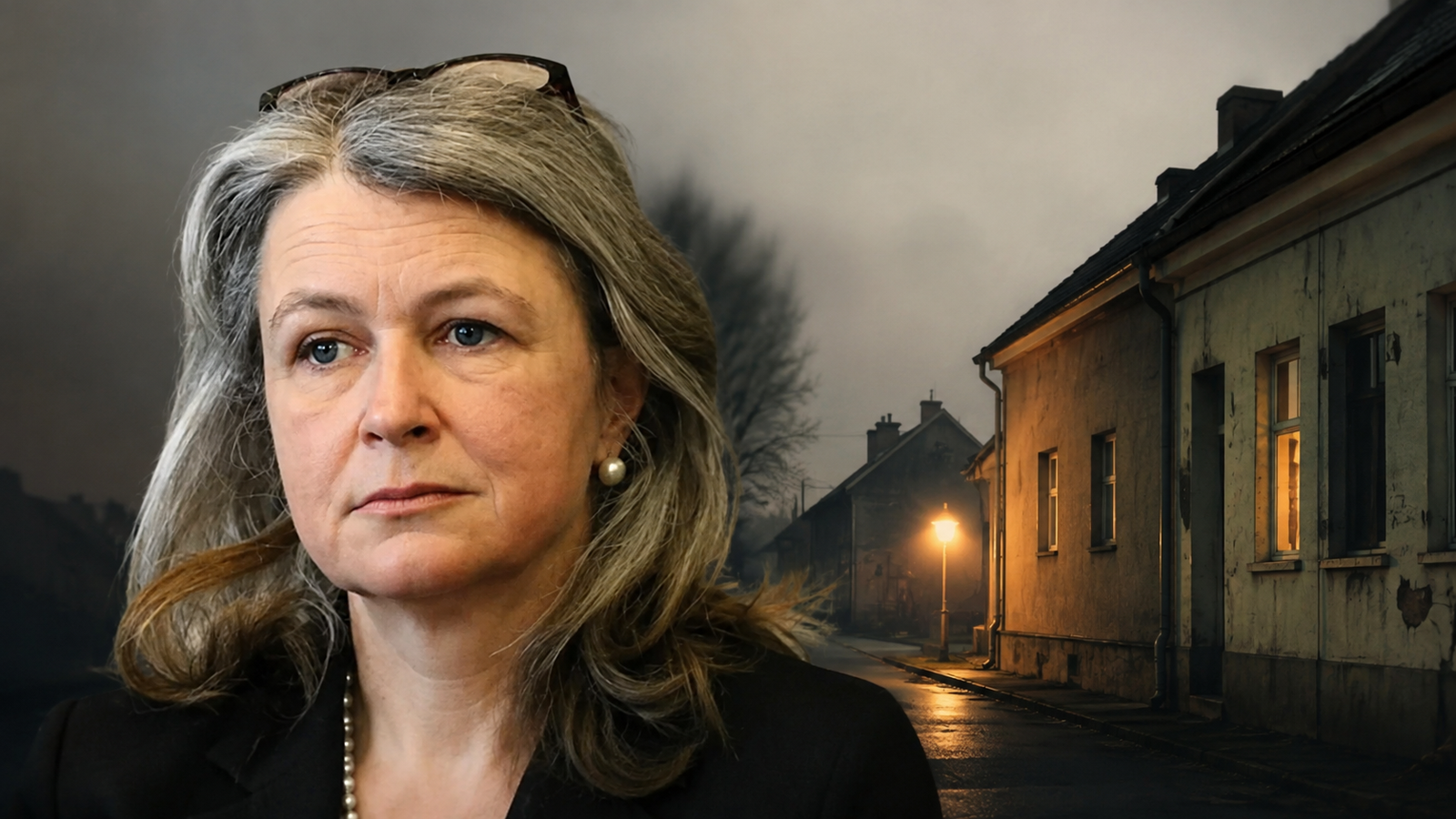
Elisabeth Fritzl is a name that most people recognize from one of the most disturbing criminal cases in modern European history. For 24 years, she was held captive by her own father in a hidden cellar in Amstetten, Austria. Her story shocked the world in 2008 and continues to be searched, discussed, and studied today.
This article brings together the verified facts of the Fritzl case in one clear, organized place. You will find the full timeline, the legal outcome, what happened to Elisabeth’s children, and what is publicly known about her life since her rescue. The goal here is accuracy and respect, not sensationalism.
Who Is Elisabeth Fritzl
Elisabeth Fritzl was born on April 6, 1966, in Amstetten, a town in Lower Austria. She was one of seven children raised by Josef and Rosemarie Fritzl in a large family home that, unknown to the outside world, contained a secret underground cellar built by her father.
Elisabeth grew up in what appeared, from the outside, to be an ordinary Austrian household. That appearance hid a pattern of control and abuse that started when she was still a child, long before the world learned her name in 2008.
Today, Elisabeth Fritzl is known internationally not because of anything she did, but because of what was done to her. Her case became a symbol of how abuse can remain hidden for decades, even within a family and a community.
The Fritzl Case Timeline
Understanding the Fritzl case means understanding the sequence of events that unfolded over more than two decades. Here is the timeline broken into its key phases.
How the Abuse Began
Reports indicate that Josef Fritzl began abusing Elisabeth when she was still a child, years before her formal imprisonment. This early period of abuse set the stage for what would eventually become one of the longest documented cases of captivity in recent history.
In August 1984, when Elisabeth was 18 years old, her father lured her into the cellar under the family home, claiming he needed help installing a heavy door. Once she was inside, he trapped her there and began her decades long imprisonment.
Twenty Four Years in Captivity
From 1984 until 2008, Elisabeth Fritzl was confined to a windowless, soundproofed cellar beneath the family home. The space was small, poorly ventilated, and completely cut off from natural light or the outside world.
During this period, Josef Fritzl controlled every aspect of her existence. He brought her food, controlled her contact with the outside world, and continued to sexually abuse her repeatedly over the years. As a result of this abuse, Elisabeth gave birth to seven children while in captivity.
Not all of her children stayed in the cellar with her. Josef Fritzl took three of the children upstairs, presenting them to his wife Rosemarie as foundlings that Elisabeth had supposedly abandoned on the family’s doorstep. The other children remained in the cellar with Elisabeth, growing up without sunlight, medical care, or any contact with the outside world. Tragically, one infant died shortly after birth due to complications and lack of medical attention.
The Rescue in April 2008
The case came to light in April 2008 after Kerstin, one of Elisabeth’s daughters who had been raised in the cellar, became seriously ill. Josef Fritzl eventually took her to a hospital for treatment, which set off a chain of events that led investigators to Elisabeth.
Hospital staff grew suspicious about Kerstin’s condition and background, and police began investigating. Elisabeth was eventually able to come forward to authorities, revealing the truth about her imprisonment and the identity of her captor. On April 26, 2008, Josef Fritzl was arrested, and Elisabeth and her children were freed after 24 years underground.
The Trial and Sentencing of Josef Fritzl
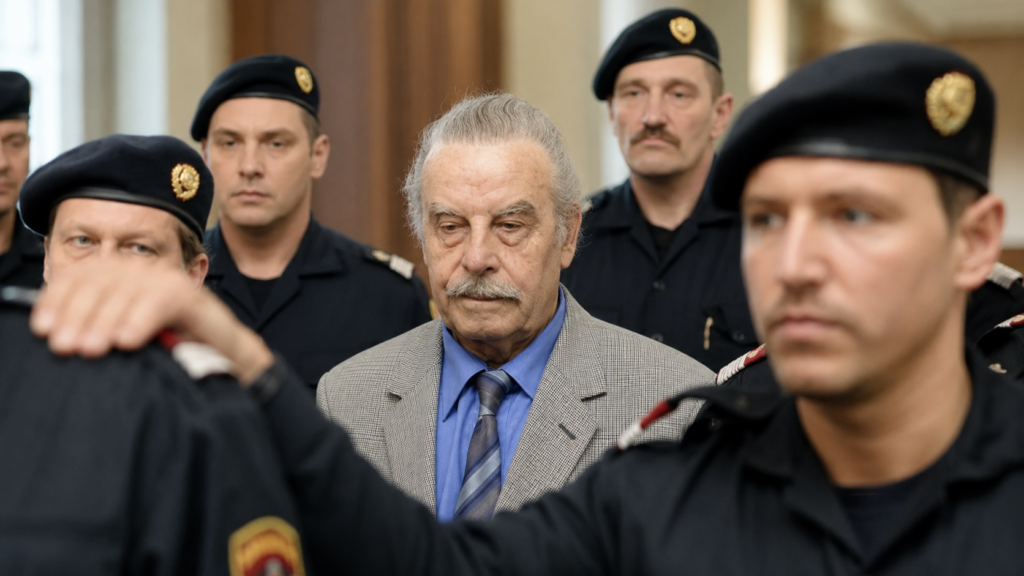
Josef Fritzl’s trial began in March 2009 in St. Poelten, Austria. He faced multiple serious charges, including murder by negligence related to the infant who died in captivity, enslavement, rape, coercion, deprivation of liberty, and incest.
He pleaded guilty to several of the charges, including false imprisonment and incest, but initially contested the murder and enslavement charges, which carried the heaviest potential penalties. As the trial progressed and evidence mounted, including recorded testimony from Elisabeth herself, he changed his plea to guilty on all counts.
The court sentenced Josef Fritzl to life imprisonment, with the possibility of parole after 15 years under Austrian law. He was later moved to a facility for offenders requiring psychiatric care. Reports have indicated he legally changed his name in the years since his conviction, though he remains incarcerated.
One important detail that is often overlooked is how central Elisabeth’s own testimony was to securing this conviction. She provided extensive video testimony describing her ordeal in detail, which was used in court so that she would not have to face her father in person during the proceedings.
The Children of the Fritzl Case
Elisabeth gave birth to seven children during her captivity. Understanding what happened to each of them is one of the parts of the story that receives the least clear coverage elsewhere, so it deserves careful attention here.
- Three children, Lisa, Monika, and Alexander, were raised upstairs by Josef and Rosemarie Fritzl as their own, without ever knowing the truth of their origins until the case broke in 2008.
- Three children, Kerstin, Stefan, and Felix, remained in the cellar with Elisabeth for their entire lives until the rescue, meaning they had never seen daylight or experienced life outside the confined space.
- One infant did not survive infancy due to a lack of medical care during a difficult birth.
After the rescue, all of the surviving children were reunited with Elisabeth. The family received extensive medical and psychological support as they adjusted to life outside the cellar, a transition that involved learning basic experiences most people take for granted, such as walking outdoors, understanding daylight cycles, and socializing with people beyond their immediate family.
Elisabeth Fritzl’s Life After Rescue
Following her rescue, Elisabeth and her children were taken into care at a specialized clinic in Amstetten, where a dedicated medical and psychiatric team worked with the family. Authorities and medical staff made a deliberate decision to shield the family from media exposure to protect their recovery and long term wellbeing.
Austrian authorities also gave Elisabeth and her children new identities in the years following the case, a step taken to allow them to rebuild their lives away from public scrutiny. For this reason, very little verified information about her current location, occupation, or day to day life has been made public, and that is by design rather than by accident.
Some sources online claim to know detailed personal information about her current lifestyle, appearance, or finances. Much of this circulating content is unverified or speculative, and readers should treat such claims with caution. Respecting her privacy has been treated as a priority by both Austrian authorities and credible news organizations since 2008.
The Psychological Impact of Extreme Captivity
While no article can speak to Elisabeth Fritzl’s personal psychological experience without speculation, the broader field of trauma psychology offers useful context for understanding what survivors of extreme, prolonged captivity typically face.
Survivors of long term captivity and repeated abuse often experience complex trauma, which can include symptoms that go beyond typical post traumatic stress. This may involve difficulties with trust, disrupted attachment patterns, and challenges adjusting to normal social environments after years of isolation.
Children raised in isolation, as several of Elisabeth’s children were, often require specialized developmental support, since they missed foundational experiences like sunlight exposure, social interaction, and basic education during critical growth periods. Recovery in cases like this typically involves long term, multidisciplinary care rather than a single treatment approach, and experts in trauma recovery generally stress that healing timelines vary significantly from person to person.
This context matters because it helps readers understand why the family’s recovery has remained largely private. Trauma specialists widely agree that survivors of extreme captivity benefit from controlled, low pressure environments during reintegration, which is consistent with the approach Austrian authorities and clinicians took with the Fritzl family.
How the Fritzl Case Changed Public Awareness
The Fritzl case had an impact that extended well beyond Austria. It prompted broader public conversations about how abuse can remain hidden within families and communities for extended periods.
In the years following the case, there was increased attention across Europe on:
- Community awareness around signs of hidden abuse and coercive control within families.
- Building and property inspection practices, given how effectively the cellar was concealed for decades.
- Support systems and long term care models for survivors of extreme, prolonged trauma.
The case is frequently referenced in discussions about coercive control, a term used to describe the pattern of psychological manipulation and restriction that allows an abuser to dominate a victim over long periods, often without immediate physical confinement being the only tool used.
The Fritzl Case in Documentaries and Culture
The Fritzl case has been referenced and explored across multiple forms of media in the years since 2008. Several documentaries have covered the case in detail, examining both the criminal investigation and the broader questions it raised about hidden abuse.
The case has also been cited as a point of cultural reference in discussions of other captivity cases, most notably in comparisons to the Jaycee Dugard kidnapping in the United States, where similarities in prolonged isolation and eventual reintegration drew public attention. Some commentators have also noted thematic similarities between the Fritzl case and the acclaimed novel and film Room, although that work is a fictional story inspired broadly by real world captivity cases rather than a direct retelling of Elisabeth’s experience.
It is worth noting that responsible coverage of the case tends to focus on factual accuracy and survivor dignity rather than graphic detail, a standard this article aims to follow as well.
Elisabeth Fritzl Today
Because Elisabeth Fritzl and her children were given new identities after their rescue, there is no verified public information about her current name, location, or daily life. This is intentional and reflects a broader principle in cases involving survivors of severe trauma: privacy protection is often essential to genuine recovery.
What is publicly confirmed is that Elisabeth and her surviving children received years of coordinated psychological and medical support, and that Austrian authorities considered their long term wellbeing a higher priority than public curiosity. Any website or article claiming detailed, specific knowledge of her current circumstances should be viewed with skepticism unless it cites a credible, named source.
Frequently Asked Questions
How long was Elisabeth Fritzl held captive? Elisabeth Fritzl was held captive for 24 years, from August 1984 until her rescue in April 2008.
How many children did Elisabeth Fritzl have? She gave birth to seven children during her captivity. One died in infancy, three were raised upstairs by her parents, and three remained with her in the cellar until the rescue.
What happened to Josef Fritzl? Josef Fritzl was arrested in April 2008 and pleaded guilty to multiple charges including enslavement, rape, incest, coercion, and murder by negligence. He was sentenced to life imprisonment with parole eligibility after 15 years and remains incarcerated.
How was the Fritzl case discovered? The case came to light after one of Elisabeth’s daughters, Kerstin, became critically ill and was taken to a hospital. Medical staff and investigators grew suspicious, which eventually led Elisabeth to come forward and reveal the truth of her imprisonment.
Is Elisabeth Fritzl’s story connected to the film Room? The novel and film Room are works of fiction that many critics and commentators have linked thematically to real world captivity cases, including the Fritzl case, but it is not a direct depiction of her story.
Final Thoughts
Elisabeth Fritzl’s story remains one of the most sobering examples of how abuse can be hidden in plain sight for decades. Her case reshaped public conversations about coercive control, survivor privacy, and the long road of recovery after extreme trauma.
What stands out most, beyond the shocking details, is the resilience shown by Elisabeth and her children in rebuilding their lives after such prolonged suffering. Their privacy today is not secrecy for its own sake, but a protective choice supported by the same experts who helped guide their recovery.
If you take one thing away from the Fritzl case, let it be this: awareness and community attention matter. Cases like this continue to inform how societies think about protecting vulnerable individuals and recognizing signs of hidden abuse before they go unnoticed for years.
Frequently Asked Questions
How long was Elisabeth Fritzl held captive? Elisabeth Fritzl was held captive for 24 years, from August 1984 until her rescue in April 2008.
How many children did Elisabeth Fritzl have?
She gave birth to seven children during her captivity. One died in infancy, three were raised upstairs by her parents, and three remained with her in the cellar until the rescue.
What happened to Josef Fritzl?
Josef Fritzl was arrested in April 2008 and pleaded guilty to multiple charges including enslavement, rape, incest, coercion, and murder by negligence. He was sentenced to life imprisonment with parole eligibility after 15 years and remains incarcerated.
How was the Fritzl case discovered?
The case came to light after one of Elisabeth’s daughters, Kerstin, became critically ill and was taken to a hospital. Medical staff and investigators grew suspicious, which eventually led Elisabeth to come forward and reveal the truth of her imprisonment.
Is Elisabeth Fritzl’s story connected to the film Room?
The novel and film Room are works of fiction that many critics and commentators have linked thematically to real world captivity cases, including the Fritzl case, but it is not a direct depiction of her story.
