
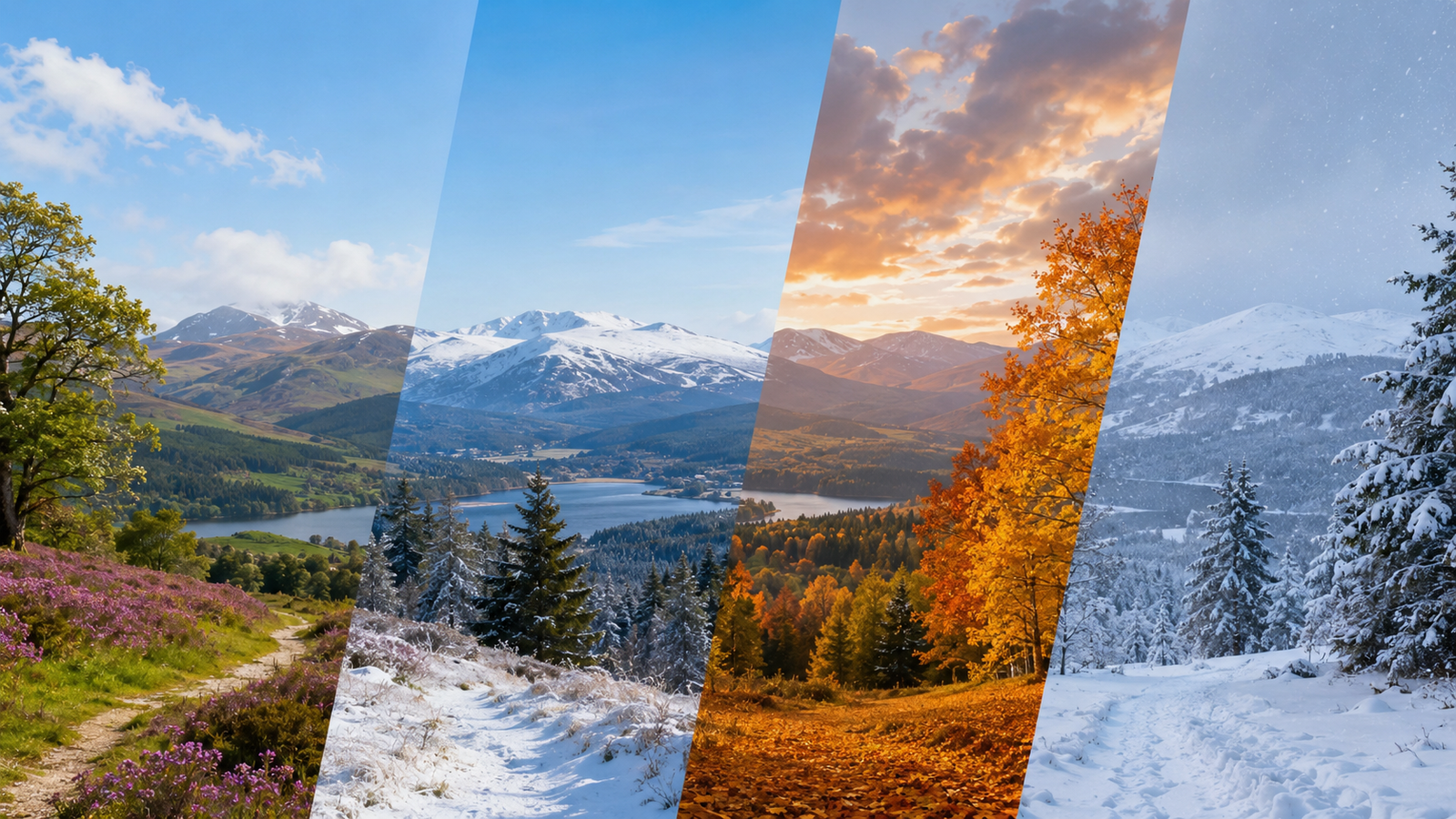
Aviemore weather has a reputation, and honestly, most of it is deserved. Sitting in the Cairngorms National Park with mountains on almost every side, this small Highland town can serve up sunshine, rain and a light dusting of snow within the same afternoon.
If you are planning a trip, checking today’s forecast, or simply trying to work out what to pack, you need more than a string of temperature numbers. You need to understand why the weather behaves the way it does here and how to prepare for it properly.
This guide walks through Aviemore’s climate season by season, explains what drives its famously changeable conditions, and gives you a practical packing list built around real Highland weather, not generic travel advice copied from a different part of the country.
Why Aviemore Weather Feels So Different From the Rest of Scotland
Aviemore sits at around 220 metres above sea level in Strathspey, right on the edge of the Cairngorms mountain range. That location is the single biggest reason its weather feels so unpredictable.
The Cairngorms are the highest and coldest plateau in Britain, and they create their own microclimate. Weather systems rolling in from the Atlantic get squeezed and lifted by the mountains, which means rain and snow can form quickly even when the forecast for the wider Highlands looks mild.
At the same time, Aviemore is more sheltered than exposed coastal towns like Ullapool or Wick. This gives it slightly less wind on average, but it also means moisture gets trapped against the hills, leading to sudden showers that pass through fast and then clear just as quickly.
Locals often say you can experience four seasons of weather in a single day here. That is not an exaggeration. Bright sunshine, a hail shower, thick cloud and a rainbow can genuinely happen within the space of a few hours, especially in spring and autumn.
Aviemore Weather by Season
Winter (December to February)
Winter is when Aviemore truly earns its reputation as Scotland’s snow sports capital. Daytime highs typically sit between 2 and 6 degrees Celsius, with nights regularly dropping below freezing.
Snow is common, particularly from January onward, and the nearby Cairngorm Mountain ski area relies on this. However, snow at Aviemore’s own elevation is less reliable than snow higher up the mountain, so a white Christmas in the town itself is never guaranteed.
Daylight is short, with only around seven hours of usable light in December. Icy pavements and roads are a genuine consideration, so proper footwear matters just as much as a warm coat.
Spring (March to May)
Spring brings longer days and a noticeable lift in mood, but the weather itself stays changeable. Average daytime temperatures climb from around 8 degrees in March to 13 degrees by May.
This is also one of the driest periods of the year in the Cairngorms, though sudden cold snaps and even late snow showers are still possible into April. Wildlife watchers love this season, as ospreys return to the area and the landscape starts turning green again.
Summer (June to August)
Summer is Aviemore’s most popular season, and for good reason. Daytime temperatures average between 16 and 18 degrees, with long daylight hours stretching close to 18 hours at the solstice.
Rain is still a regular visitor even in peak summer, so do not expect a dry week just because it is July. Midges also become a factor in calm, humid conditions, particularly near woodland and water in the early morning and evening.
Autumn (September to November)
Autumn is when the Cairngorms landscape turns spectacular, with heather and birch woodland shifting into deep gold and russet tones. Temperatures fall steadily from around 14 degrees in September to closer to 7 degrees by November.
Rainfall increases through this period, and by November the first proper snow of the season often starts appearing on higher ground. It is a favourite time for photographers, but layers become essential again.
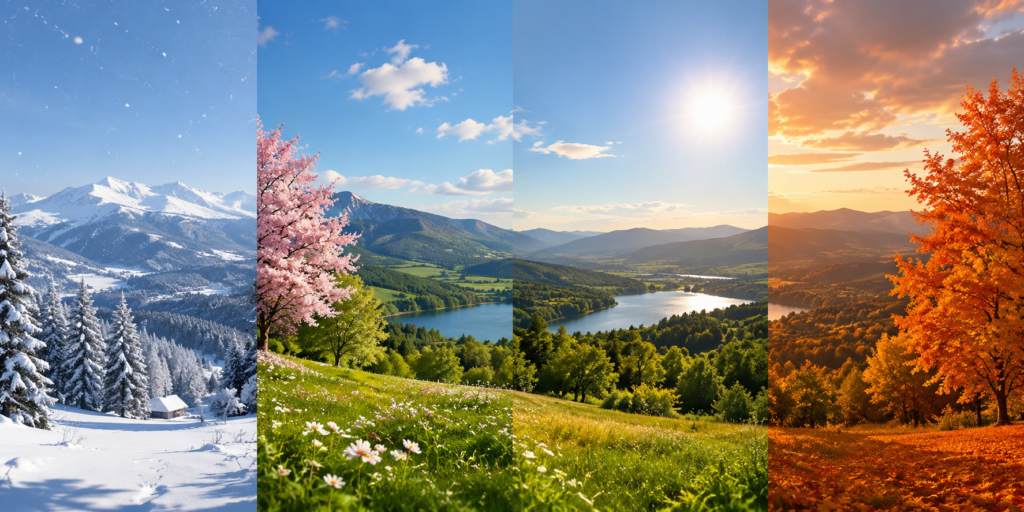
Aviemore Weather Month by Month
| Month | Typical Daytime High | Typical Overnight Low | Approximate Rainy Days |
|---|---|---|---|
| January | 5°C | -1°C | 18 |
| February | 5°C | -2°C | 17 |
| March | 8°C | 0°C | 16 |
| April | 11°C | 3°C | 15 |
| May | 13°C | 5°C | 17 |
| June | 16°C | 8°C | 14 |
| July | 18°C | 10°C | 16 |
| August | 17°C | 10°C | 18 |
| September | 14°C | 6°C | 19 |
| October | 11°C | 4°C | 17 |
| November | 7°C | 0°C | 21 |
| December | 5°C | -1°C | 19 |
These figures are long term averages, so any single day can vary considerably. They are useful for planning purposes but should not replace checking a short range forecast closer to your travel dates.
Rain, Snow and Sunshine: What to Actually Expect
Rain is a near constant feature of Aviemore weather, with some rainfall recorded on roughly half the days of the year. This is not unusual for the Scottish Highlands, and it rarely means an entire day is washed out.
Most rain here arrives as short, sharp showers rather than prolonged downpours. It is common to see rain clear within thirty minutes, followed by clear skies and strong sunshine.
Snow reliability varies enormously by elevation. While Aviemore town itself might only see a handful of proper snow days each winter, Cairngorm Mountain a few miles away can hold snow cover for months, which is exactly why the ski centre exists where it does.
Sunshine hours peak in May and June, often exceeding five hours a day on average. Even in the depths of winter, clear cold days with brilliant blue skies over snow covered peaks are one of the region’s genuine highlights.
Checking the Aviemore Weather Forecast: Which Sources to Trust
For short term planning, the UK Met Office provides the most locally accurate hourly and seven day forecasts for the Highlands, drawing on detailed terrain modelling that generic global services sometimes miss.
For longer range trip planning, look at historical averages rather than trying to predict exact conditions weeks in advance. No forecast, however sophisticated, can reliably predict Highland weather more than about five days out.
If you are heading into the Cairngorms themselves for hiking or climbing, always check a dedicated mountain weather forecast in addition to the town forecast. Conditions at altitude can be dramatically colder, windier and more dangerous than what you experience in Aviemore itself.
What to Pack for Aviemore in Any Season
Packing well for Aviemore comes down to one principle: layers. The temperature swing between morning and afternoon, or between sunshine and a passing shower, can be significant regardless of the season.
Core items for every season:
- A waterproof, breathable outer jacket. This matters more than an umbrella, which is nearly useless in Highland wind
- A warm mid layer such as fleece or a light insulated jacket that can be added or removed easily
- Sturdy, waterproof footwear with good grip, even for casual walks around town
- A hat and gloves, since evenings cool down quickly even in summer
Additional winter items:
- Thermal base layers
- A heavier insulated coat
- Waterproof trousers if you plan to be outdoors for extended periods
- Insulated, waterproof boots suitable for snow and ice
Additional summer items:
- Insect repellent for midges, particularly if visiting woodland or lochside areas
- Sunglasses and sun protection, since UV can be surprisingly strong on clear days
- A light waterproof that packs down small, since rain can still appear with little warning
Whatever the season, avoid packing purely for the forecast you saw online a week before travel. Bring options and you will be comfortable no matter what the sky decides to do.
Best Time to Visit Aviemore Based on What You Want to Do
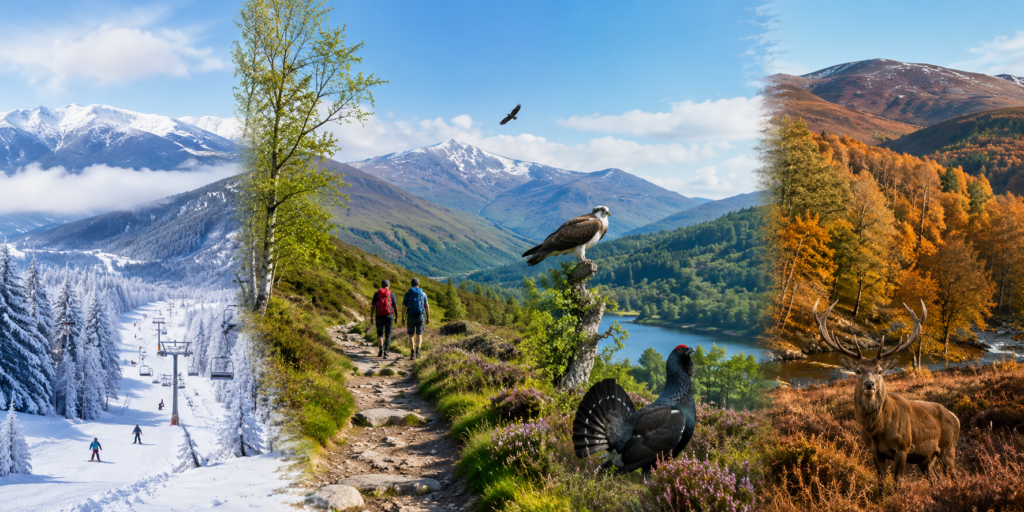
If skiing or snowboarding is the goal, aim for late December through March, when Cairngorm Mountain typically has the most reliable snow cover. Always check the mountain’s own snow reports rather than relying on town temperatures alone.
For hiking and Munro walking, late spring through early autumn offers the most stable conditions and the longest daylight windows. May and June in particular tend to combine lower rainfall with pleasant temperatures.
If wildlife watching is your priority, spring is excellent for ospreys and capercaillie, while autumn brings the red deer rut, a genuinely dramatic spectacle in the surrounding glens.
Photographers often favour autumn for colour and winter for dramatic snow covered scenery, while families with young children tend to find summer the most forgiving season for outdoor activities.
How Aviemore Compares to Nearby Highland Towns
Aviemore is noticeably colder than Inverness, which sits closer to sea level and benefits from some coastal moderation. Expect Aviemore to run two to three degrees cooler on an average day.
Compared to Grantown on Spey, a short drive away, Aviemore sees slightly more rainfall due to its closer proximity to the highest Cairngorm peaks, which draw in more precipitation as air rises over them.
Against Edinburgh or Glasgow, the difference is more pronounced. Aviemore’s winters are colder and snowier, its summers are cooler, and its weather changes more rapidly throughout any given day due to the surrounding mountain terrain.
Conclusion
Aviemore weather is shaped by its unique position on the edge of the Cairngorms, and that mountain influence is exactly what makes the town so changeable, so scenic, and so popular throughout the year. Understanding the seasonal patterns, from snowy winters to bright, unpredictable summers, makes it far easier to plan a trip that actually matches what you want to do there.
The key takeaway is simple: pack in layers, check a proper local forecast close to your travel dates, and never underestimate how quickly conditions can shift once you leave the town and head into the hills. Do that, and Aviemore’s weather becomes part of the adventure rather than an obstacle to it.
Frequently Asked Questions
Does it snow a lot in Aviemore?
Aviemore town sees some snow most winters, though it is often light and short lived. The nearby Cairngorm Mountain holds much heavier and more reliable snow cover due to its higher elevation.
Is Aviemore colder than the rest of Scotland?
Yes, generally. Its elevation and proximity to the Cairngorm plateau make it several degrees colder than lowland cities like Glasgow or Edinburgh, especially overnight.
What is the sunniest month in Aviemore?
May and June typically offer the most sunshine hours, combining longer daylight with comparatively lower rainfall than other months.
Do I need a raincoat in Aviemore even in summer?
Yes. Showers can appear with little warning at any time of year, and a packable waterproof jacket is more useful than an umbrella in the often breezy conditions.
Is Aviemore weather safe for hiking year round?
The town itself is manageable in most seasons with the right clothing, but higher ground in the Cairngorms can turn dangerous quickly. Always check a dedicated mountain forecast before heading onto the hills, particularly in winter.
