
If you have spent any time researching solar installation companies, you have probably noticed something frustrating. Almost every “best of” list online is run by a site that gets paid when you click through and request a quote. That does not automatically make the advice bad, but it does mean the rankings are shaped by business relationships, not just merit.
This guide takes a different approach. Instead of pushing you toward a specific installer, it walks you through how solar installation companies actually differ, what separates a trustworthy installer from a risky one, and how to evaluate quotes like someone who has done this before. You will still see some well known companies mentioned by name, but only as examples, not paid placements.
By the end, you should feel confident enough to compare quotes on your own terms and ask the right questions before signing anything.
What Solar Installation Companies Actually Do
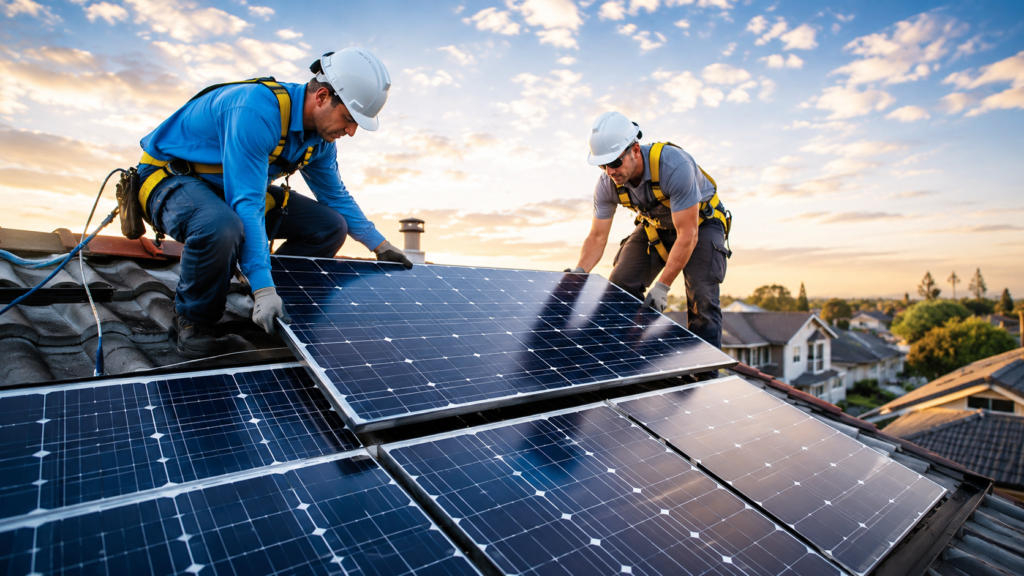
A solar installation company handles the entire process of putting a photovoltaic system on your roof or property, from the first consultation to the moment your panels are producing power. That includes designing the system, pulling permits, coordinating with your utility, installing the hardware, and scheduling the final inspection.
Some companies manufacture their own equipment. Most do not. Instead, they source panels, inverters, and batteries from established manufacturers and specialize in the design and installation side of the business. This distinction matters because a company’s reputation often has more to do with its installation quality and customer service than with the panels themselves.
It is also worth knowing that not every company you get a quote from will install your system with its own crew. Many use subcontractors, especially in markets where they are expanding quickly. That is not automatically a dealbreaker, but it is something you should ask about directly.
Types of Solar Installers You Will Run Into
Understanding the different categories of solar installation companies makes it much easier to compare apples to apples.
National Installers
These are large companies operating in a dozen or more states, often backed by significant capital and marketing budgets. They tend to offer more financing options, including leases and power purchase agreements, and their processes are usually standardized from state to state.
The tradeoff is that service quality can vary a lot by region, since national companies frequently rely on local subcontractors to handle the physical installation.
Regional and Local Installers
Local solar companies typically operate in one state or a handful of nearby markets. Many use their own in-house crews rather than subcontractors, which tends to produce more consistent workmanship and more accountability if something goes wrong.
Local companies often understand regional permitting quirks, utility interconnection rules, and state specific incentives better than a national brand juggling dozens of markets at once.
DIY Solar Retailers
A smaller category of companies sells solar kits and equipment directly to homeowners who want to handle installation themselves or hire their own electrician. This route can save money, but it requires more technical comfort and is not realistic for most homeowners with a standard grid tied residential system.
What Separates a Great Installer From a Mediocre One
Not all solar installation companies are created equal, even within the same city. Here is what actually distinguishes the good ones.
In House Crews Versus Subcontractors
Companies that employ their own certified installers generally deliver more consistent results. When something goes wrong, whether it is a leaky roof penetration or a wiring issue, you are dealing directly with the company that did the work instead of chasing down a third party contractor who may no longer be under contract with the installer.
NABCEP Certification
The North American Board of Certified Energy Practitioners is widely considered the gold standard credential in residential solar. It is not legally required in most states, but a company with NABCEP certified installers on staff has demonstrated a real commitment to technical competency, not just sales volume.
Years in Business and Financial Stability
Solar warranties are only as good as the company standing behind them. The industry saw meaningful consolidation over the past few years, with several well known installers filing for bankruptcy and leaving customers with unhonored warranties. A company’s longevity and financial health matter just as much as its sales pitch.
Transparent, Itemized Pricing
Reputable solar installation companies will give you a detailed, itemized quote that separates equipment costs, labor, permitting fees, and any add ons like battery storage. If a company is vague about pricing or pressures you to sign before you have seen a full breakdown, treat that as a warning sign rather than a quirk.
How Much Solar Installation Really Costs in 2026
Pricing varies by system size, location, roof complexity, and equipment choice, but most homeowners can expect to land somewhere in a predictable range.
A typical residential system falls between 6 and 8 kilowatts, and average installed costs before any incentives generally run from about 2.20 to 3.20 dollars per watt. That puts a common 7 kW system somewhere around 17,000 to 22,000 dollars before incentives.
Here is a rough breakdown by system size, based on current national averages:
- 5 kW system: roughly 13,000 to 16,000 dollars
- 6 kW system: roughly 16,000 to 19,000 dollars
- 7 kW system: roughly 18,000 to 22,000 dollars
- 8 kW system: roughly 21,000 to 25,000 dollars
- 10 kW system: roughly 26,000 to 31,000 dollars
Keep in mind that adding a battery, such as a Tesla Powerwall or Enphase system, typically adds another 7,000 to 18,000 dollars depending on capacity. Roof condition, shading, and the complexity of your electrical panel can also push costs up or down.
One important 2026 update: the 30 percent federal solar investment tax credit for residential systems expired at the end of 2025. Many states still offer their own rebates, tax credits, or performance based incentives, but the federal cushion that homeowners relied on for years is no longer part of the equation. This changes the math on payback periods more than most articles online currently acknowledge, so it is worth confirming what, if anything, your state still offers before assuming a quote reflects your final cost.
Payment Options: Cash, Loans, Leases, and PPAs
How you pay for your system affects both your upfront cost and your long term savings.
Cash purchase gives you the lowest lifetime cost since you avoid interest payments entirely, and you own the system outright, which matters if you ever sell your home.
Solar loans let you spread the cost over several years while still owning the system and qualifying for any available incentives. Rates and terms vary significantly between lenders, so it is worth shopping around rather than accepting the first financing option a sales rep offers.
Leases involve a fixed monthly payment to use a system owned by the installer or a third party financier. You never own the equipment, and you typically will not qualify for state incentives tied to ownership, but the upfront cost is usually minimal or zero.
Power purchase agreements, or PPAs, work similarly to leases except you pay for the electricity the system generates rather than a flat monthly fee. This can be appealing if you want predictable savings without owning hardware, though rate escalators built into some contracts can erode those savings over time.
If your monthly solar payment ends up higher than your current electric bill, the deal may not actually save you money, regardless of what a sales presentation promises.
Warranties That Actually Matter
Solar systems come with several layers of warranty coverage, and understanding the difference protects you from unpleasant surprises years down the road.
Equipment or Product Warranty
This covers manufacturing defects in the panels themselves, typically for 25 to 30 years. It is backed by the panel manufacturer, not the installer, which is worth remembering if your installer goes out of business.
Performance Warranty
This guarantees the panels will still produce a minimum percentage of their original output after a set number of years, usually around 80 to 92 percent after 25 years. Degradation is normal, but a strong performance warranty protects you if panels degrade faster than expected.
Workmanship Warranty
This covers the actual installation labor, wiring, and mounting hardware. Workmanship warranties from reputable solar installation companies typically range from 10 to 25 years, and this is the warranty most directly tied to installer quality rather than equipment quality.
Roof Penetration Warranty
Since mounting hardware physically penetrates your roof, a separate warranty usually covers leaks related to those penetration points, often for around 10 years. This is frequently shorter than the other warranties, so do not assume it automatically matches your 25 year equipment coverage.
Red Flags to Watch For
The solar industry has a well earned reputation for aggressive sales tactics, particularly among door to door and telemarketing based companies. Watch for these patterns.
- Promises that solar will be “free” or that savings are guaranteed regardless of your energy usage
- Pressure to sign the same day without time to review the contract or compare other quotes
- Vague answers about whether installation will use in house crews or subcontractors
- Reluctance to explain what happens if the company is acquired or goes out of business
- Contracts with rate escalators or long term commitments that are not clearly explained upfront
If a sales representative cannot or will not answer specific questions about equipment, financing terms, or timelines in writing, that hesitation tells you something important about how the company operates after the sale is closed.
How to Compare Quotes Without Losing It
Getting three or more quotes is standard advice, but comparing them properly is where most homeowners struggle. Line up each quote by these categories rather than just looking at the bottom line price:
- System size in kilowatts and expected annual production in kilowatt hours
- Panel and inverter brand, along with their individual warranty terms
- Total installed cost per watt, so you are comparing efficiency of pricing, not just totals
- Financing terms, including interest rate, term length, and any escalator clauses
- Workmanship and roof penetration warranty length
- Whether installation uses in house crews or subcontractors
Two quotes that look similar in total price can differ enormously once you account for equipment quality, warranty coverage, and financing terms. A slightly higher upfront quote from a company with in house installers and a 25 year workmanship warranty is often the better long term value compared to a cheaper quote from a company using short term subcontractors.
Questions to Ask Before You Sign

Before committing to any solar installation company, get clear answers to these questions in writing, not just verbally from a sales rep:
- Who will physically install the system, and are they employees or subcontractors?
- What happens to my warranty if the company is sold or goes out of business?
- What is the expected annual production, and what happens if the system underperforms?
- Are permitting, inspection, and utility interconnection fees included in the quoted price?
- What maintenance or monitoring is included after installation, and for how long?
A company confident in its work will have no problem putting these answers in writing before you sign anything.
Final Thoughts
Choosing among solar installation companies is less about finding a single “best” option and more about matching a company’s strengths to your specific priorities. Someone focused purely on long term savings should weigh cash purchases and workmanship warranties heavily. Someone who wants minimal upfront cost might lean toward a lease, understanding the tradeoffs that come with it.
The most reliable signals of a good installer are consistent across every market: certified installers, transparent pricing, strong workmanship warranties, and a track record that predates this year’s marketing budget. Take your time, gather multiple quotes, and do not let a same day discount rush a decision you will be living with for the next 25 years.
FAQ
How long does solar installation typically take?
The physical installation usually takes one to three days, but the full process, including permitting, utility approval, and inspection, often takes four to twelve weeks depending on your local jurisdiction.
Do I need a solar battery with my system?
Not necessarily. Grid tied systems work fine without a battery for most homeowners. A battery becomes more valuable if you experience frequent power outages, have limited net metering compensation, or specifically want backup power during outages.
Is it better to choose a local installer or a national company?
Both can be excellent choices. Local installers often provide more consistent in house installation quality and regional expertise, while national companies typically offer broader financing options and more standardized processes. The right choice depends on which factors matter most to you.
What happens to my solar warranty if the installer goes out of business?
Equipment warranties from the panel manufacturer usually remain valid regardless of installer status. Workmanship warranties, however, are typically backed by the installer directly, so if that company closes, that coverage may become difficult or impossible to enforce.
How many solar panels does an average home need?
Most homes need somewhere between 15 and 25 panels, depending on electricity usage, roof space, sunlight exposure, and panel efficiency. An installer can calculate your specific needs based on your past utility bills.
