
That sinking feeling when you open the oven and see it. A lake of mozzarella has slid off the edge of your pizza and fused itself to the oven floor. Now every time you bake, the kitchen smells like a campfire and the smoke alarm keeps you company. Take a breath. Your oven is almost certainly fine, and this guide will show you exactly how to remove burnt cheese from bottom of oven without damaging anything.
You will learn why cheese bonds so tightly to hot surfaces, the safest order of methods to try, and what to avoid. Everything here uses simple supplies you probably already own, plus a little patience. No harsh chemicals are required, and you do not need to be an expert cleaner to get a great result.
Why Burnt Cheese Sticks So Stubbornly to Your Oven
Cheese is basically a tight bundle of protein, fat, and milk sugars. When it drips onto a surface heated past 400 degrees Fahrenheit, three things happen at once. The proteins tighten and grab the surface, the sugars caramelize and then carbonize into a black crust, and the fat melts outward and soaks into every tiny imperfection in the enamel.
That is why burnt cheese feels welded in place while a spill of plain water just evaporates. The carbonized sugars act like glue, and ordinary wiping only smears the layer around. This matters because heat and elbow grease alone rarely work on this kind of mess. You need something that can loosen the carbonized layer chemically, which is exactly what the methods below do.
Pizza is the most common culprit. Cheese slides off a pizza that was loaded too close to the edge, or the crust tears and the filling pours out. Lasagna, enchiladas, mac and cheese, and stuffed peppers all cause the same problem. Any dish with a generous layer of cheese near the rim of the pan can leave you with a mess on the oven floor.
What to Do Before You Start Cleaning
A few minutes of preparation makes the whole job easier and keeps you safe. Do not skip this part, especially if the oven is still warm from cooking.
Let the Oven Cool Down Completely
Never clean an oven while it is warm. A cool surface is safer to touch, and cleaning products behave unpredictably on hot metal. If the cheese is still soft and warm, you can lift the biggest globs with a wooden spoon or a silicone spatula while they are pliable. Once the oven is cool to the touch, the real work begins.
Gather Your Supplies
For the methods in this guide, you need:
- Baking soda
- White distilled vinegar
- Dish soap
- Warm water
- A plastic scraper or an old credit card
- A non scratch sponge or several soft cloths
- Rubber gloves
- An old towel for the floor in front of the oven
Notice what is missing. There is no steel wool, no metal brush, and no caustic spray. Those tools remove burnt cheese along with the oven finish underneath it, which is how a ten minute cleanup turns into a permanent eyesore.
Take Out the Racks and Check the Lining
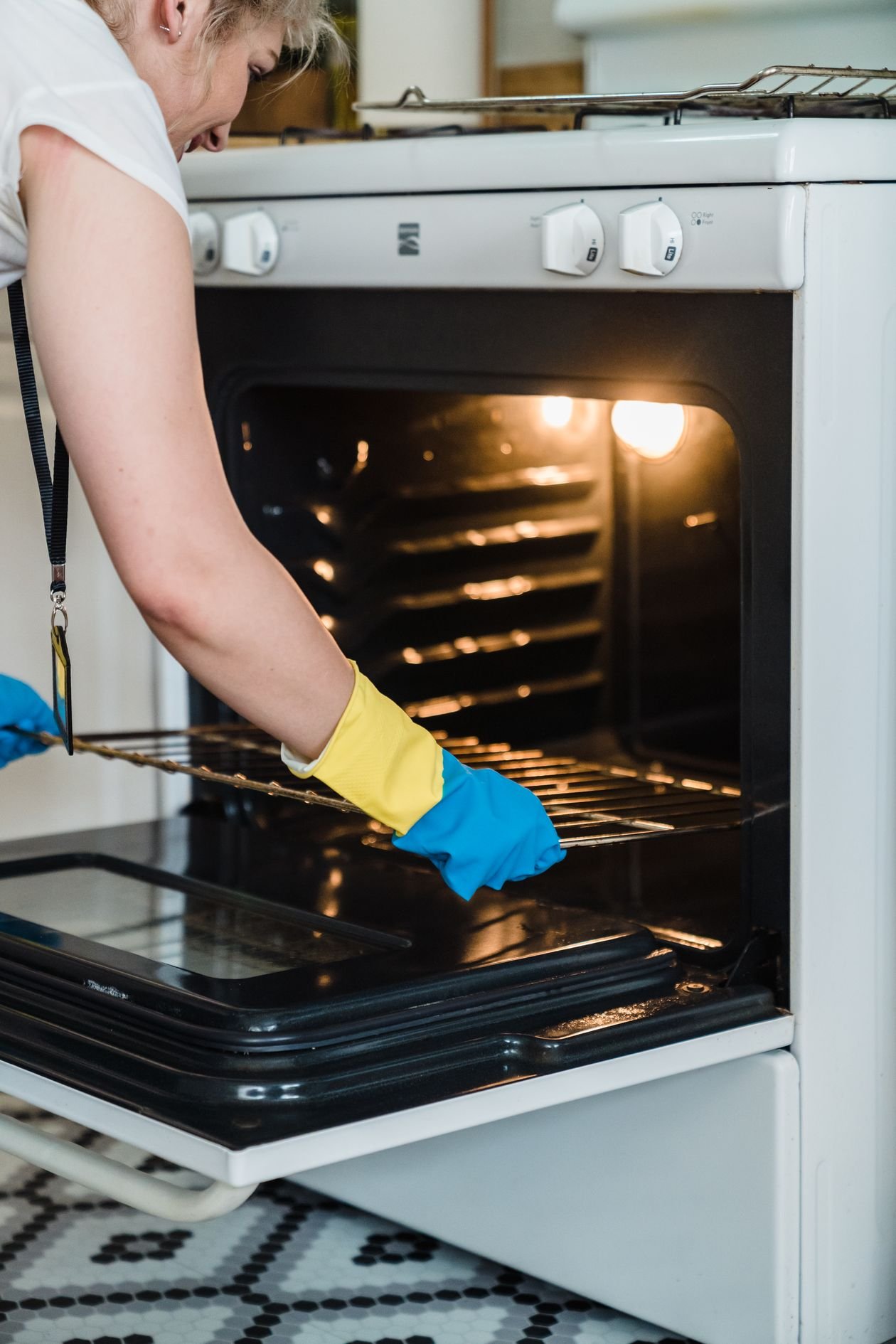
Slide the racks out before you start. They get in the way, and they are much easier to clean in the sink with warm soapy water anyway. While you are at it, look at the oven floor. Most American ovens have a smooth porcelain enamel floor, which handles baking soda and vinegar safely. If your oven has a rough, textured coating that is meant to absorb grease on its own, skip the pastes and use only the steam method below. Those special liners break grease down through heat, and heavy scrubbing can ruin them.
How to Remove Burnt Cheese From Bottom of Oven: Three Methods
There are three methods below, ordered from gentlest to most forceful. Start with the first one and work your way down only if you need to. Most burnt cheese surrenders to the first method alone.
Method 1: The Baking Soda Paste Soak
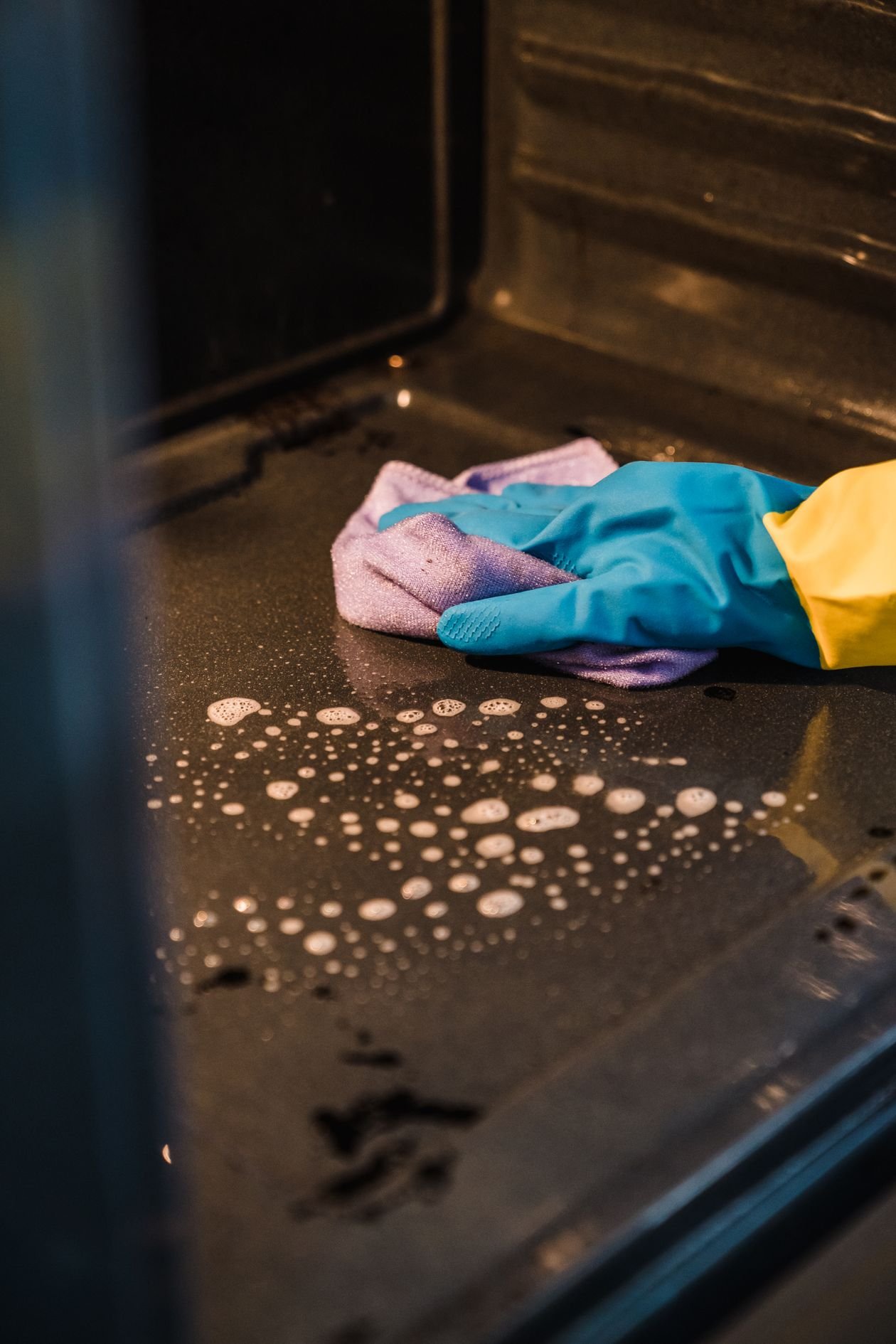
This is the method to try first for any cheese that has turned black and rock hard. Baking soda is mildly abrasive and slightly alkaline, which softens carbonized food without scratching enamel. The long wait does most of the work for you, so this method is mostly hands off.
- Mix about half a cup of baking soda with a few spoonfuls of water until you get a thick paste, roughly the texture of toothpaste.
- Spread the paste generously over every patch of burnt cheese. Do not be shy. A thick layer works far better than a thin smear, because it stays moist longer and keeps working.
- Close the oven door and let the paste sit for at least 4 hours. Overnight is better, and for really stubborn patches you can leave it up to 12 hours.
- Wipe the paste away with a damp cloth. Much of the cheese should lift off with it.
- For any spots that remain, press the damp cloth onto them for a minute to rehydrate the paste, then rub gently in circles.
- Rinse the floor with a clean damp cloth to remove all the baking soda residue, then dry it with a towel.
If a shadow of discoloration remains after all of this, it is usually just staining in the enamel, not food. Stains do not smoke or smell, and they fade over time with normal use. Do not chase a perfect white floor with stronger chemicals. That is where most oven damage happens.
Method 2: Vinegar Steam for Fresh and Moderate Spills
If the spill happened today or yesterday, or if only a thin film remains after the paste treatment, steam is the gentle option. The idea is simple. Hot moisture rehydrates the burnt layer and loosens it from the outside in, so you can wipe it away instead of scraping it.
- Fill a heat safe bowl with 2 cups of water and add 1 cup of white distilled vinegar.
- Place the bowl on the middle rack of the cold oven.
- Heat the oven to 350 degrees Fahrenheit and leave the door closed for about 45 minutes.
- Turn the oven off and let it cool completely before you touch anything inside.
- Wipe the oven floor with a damp cloth. Residue that resisted dry scrubbing should now slide off easily.
This is the same principle behind our guide on how to clean a microwave with lemon and vinegar, where hot acidic steam does the hard work so your arm does not have to. For the oven, vinegar alone is plenty. The larger space does not need the lemon, and vinegar costs less.
Method 3: Gentle Scraping for Thick Crusts
Sometimes a thick raft of cheese survives both the paste and the steam. This is where a plastic scraper earns its place. Hold it at a low angle, almost flat against the oven floor, and push steadily rather than digging. Work from the edge of the crust toward the center so you lift it in flakes instead of gouging underneath it. Follow up with a baking soda paste on the thin shadow that remains, and it should wipe away clean.
Two things to avoid here. Do not use a metal knife or a razor blade on the oven floor. They scratch enamel, and every scratch becomes a new home for future spills. And do not use steel wool or harsh scouring pads on the floor for the same reason. The racks can take a little more punishment, but the floor coating cannot.
Getting Rid of the Burnt Cheese Smell
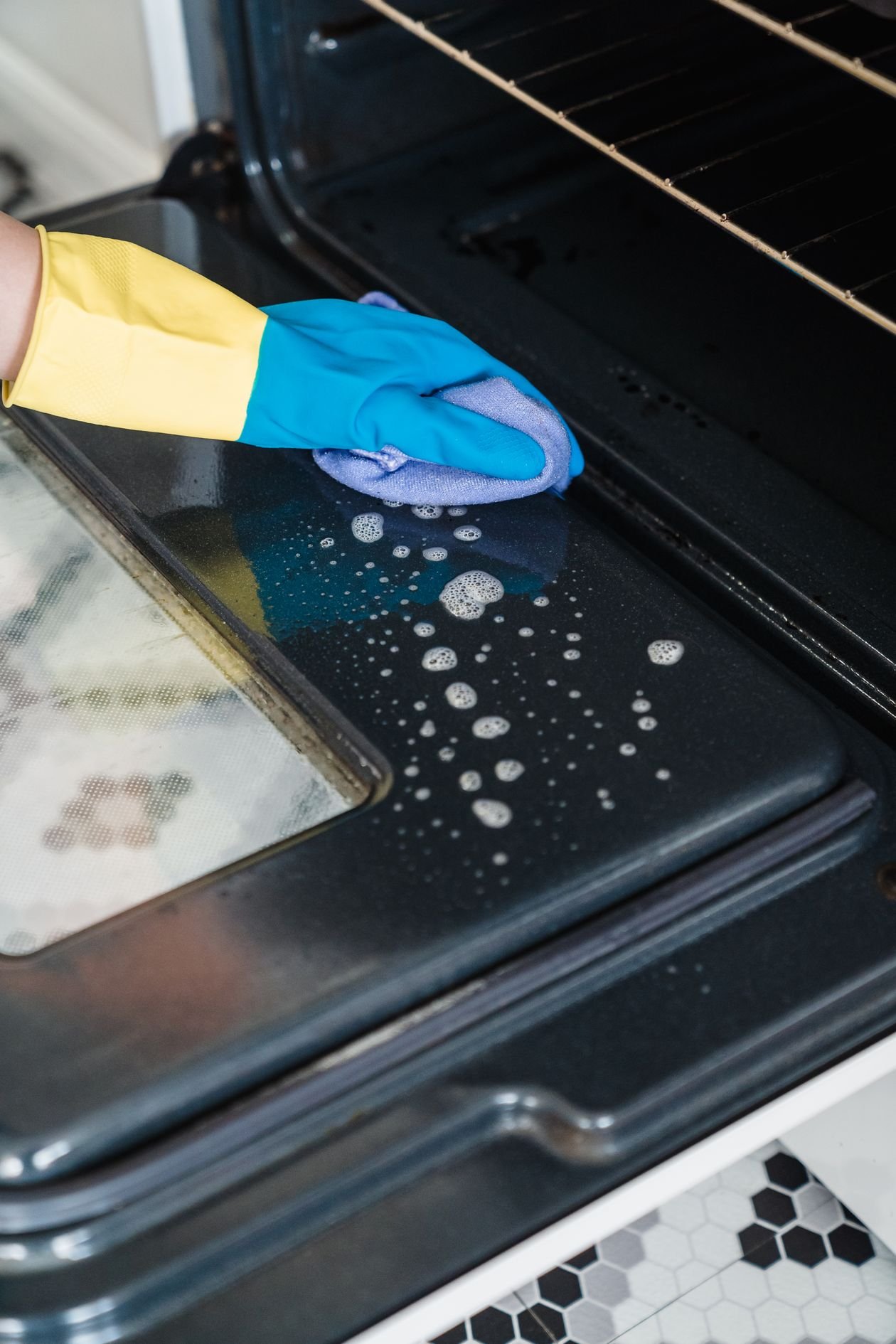
Cheese is rich in proteins and fats, and burnt cheese leaves an odor that can survive the visible mess. Once the floor is clean, set a small oven safe bowl of baking soda on the middle rack and leave the door closed overnight. Baking soda absorbs odor molecules instead of just masking them. In the morning, wipe the oven floor once more with a cloth dampened with a little vinegar and water, then leave the door open for an hour to air everything out.
If the smell has drifted through the house, open the windows and run the kitchen exhaust fan for about 30 minutes. For smells that have settled into fabrics, curtains, and other rooms, our guide on how to remove cooking smells from your house fast walks through a full 30 minute reset, room by room.
What NOT to Do
A few popular shortcuts cause more harm than help. Keep these in mind before you reach for anything stronger.
- Do not run the automatic clean cycle with thick chunks of cheese still in the oven. The extreme heat turns leftover grease into smoke, fills the kitchen with fumes, and can trip the thermal fuse on some models. Always remove the bulk of the mess by hand first.
- Do not spray commercial oven cleaner into a warm oven. Most of these products need good ventilation and must only be used on a completely cool oven. Read the label carefully, and treat them as a last resort for enamel ovens only.
- Do not pour cold water into a hot oven to cool it down faster. Thermal shock can crack the enamel or the oven glass in a single instant.
- Do not use a wire brush on the oven floor. It removes the cheese and the coating underneath it, leaving bare metal that rusts and stains far worse.
- Do not soak the oven floor by pouring in a bucket of water. Water seeps into seams and around the heating element, which can cause electrical problems.
How to Keep Cheese From Burning Onto Your Oven Again
Prevention takes about 30 seconds and saves you an hour of scrubbing. These habits make burnt cheese a rare event instead of a regular one.
- Slide a baking sheet onto the lowest rack when you bake pizza, lasagna, or anything loaded with cheese. It catches drips before they ever reach the floor.
- For casseroles and pies, set the dish on a sheet of aluminum foil with the edges turned up slightly to make a shallow tray.
- Do not pile cheese right up to the edge of your pizza. A margin of about an inch around the crust keeps the cheese where it belongs as it melts.
- Bake at the temperature the recipe gives you. Cheese that bubbles over at 475 degrees is far more likely to drip than cheese that melts calmly at 425.
- Place a silicone baking mat on the rack under cheesy dishes. It catches drips, washes in seconds, and protects the rack from baked on messes too.
- If a spill does happen, wipe it up as soon as the oven is cool enough to touch safely. Fresh cheese lifts in seconds. Week old cheese needs the full paste treatment.
Final Takeaways
Burnt cheese on the oven floor looks permanent, but it almost never is. Knowing how to remove burnt cheese from bottom of oven comes down to a simple order of operations. Start with the baking soda paste for heavy crusts, use vinegar steam for fresh or thin spills, and finish the thickest spots with a plastic scraper held at a low angle. Keep metal tools, steel wool, and harsh chemicals away from the enamel, and never run the automatic clean cycle with big chunks still inside. A baking sheet on the lowest rack prevents the whole mess the next time you bake. Follow this order, give the paste time to work, and your oven floor will look new again with far less scrubbing than you feared.
Frequently Asked Questions
Is it safe to use my oven if there is burnt cheese on the bottom?
Yes, in most cases. Burnt cheese is a cosmetic problem, not a safety one. It can cause smoke and a bad smell when the oven heats up, and in rare cases heavy grease buildup can flare briefly. Clean it off at your earliest convenience, and avoid long high heat bakes until you do.
Can the automatic clean cycle burn off the cheese?
It can, but only after you remove the thick chunks by hand. Running the cycle with a lot of food debris inside creates heavy smoke and can overwork the oven’s safety systems. Scrape off the worst of it first, then use the cycle if you like.
Will burnt cheese damage my oven floor?
Usually not. Porcelain enamel is built to handle high heat and the occasional spill. Damage happens when people attack the mess with metal tools or steel wool, which scratch the coating. As long as you stick to baking soda, vinegar, and plastic scrapers, the floor should be fine.
How do I clean cheese that melted onto the heating element?
Leave the element alone until the oven is completely cool. Gently brush off any loose flakes with a dry cloth or a soft brush, and do not scrape the element or pour liquids onto it. If thick cheese is fused around it, call the manufacturer’s support line or a local appliance technician rather than forcing it.
Why does my oven still smell like burnt cheese after cleaning?
Odor hides in the racks, the door seal, and any grease film you missed. Clean the racks in the sink, wipe the seal with a damp cloth, and leave a bowl of baking soda in the closed oven overnight. If the smell persists after that, a vinegar wipe down of the walls usually finishes the job.
