
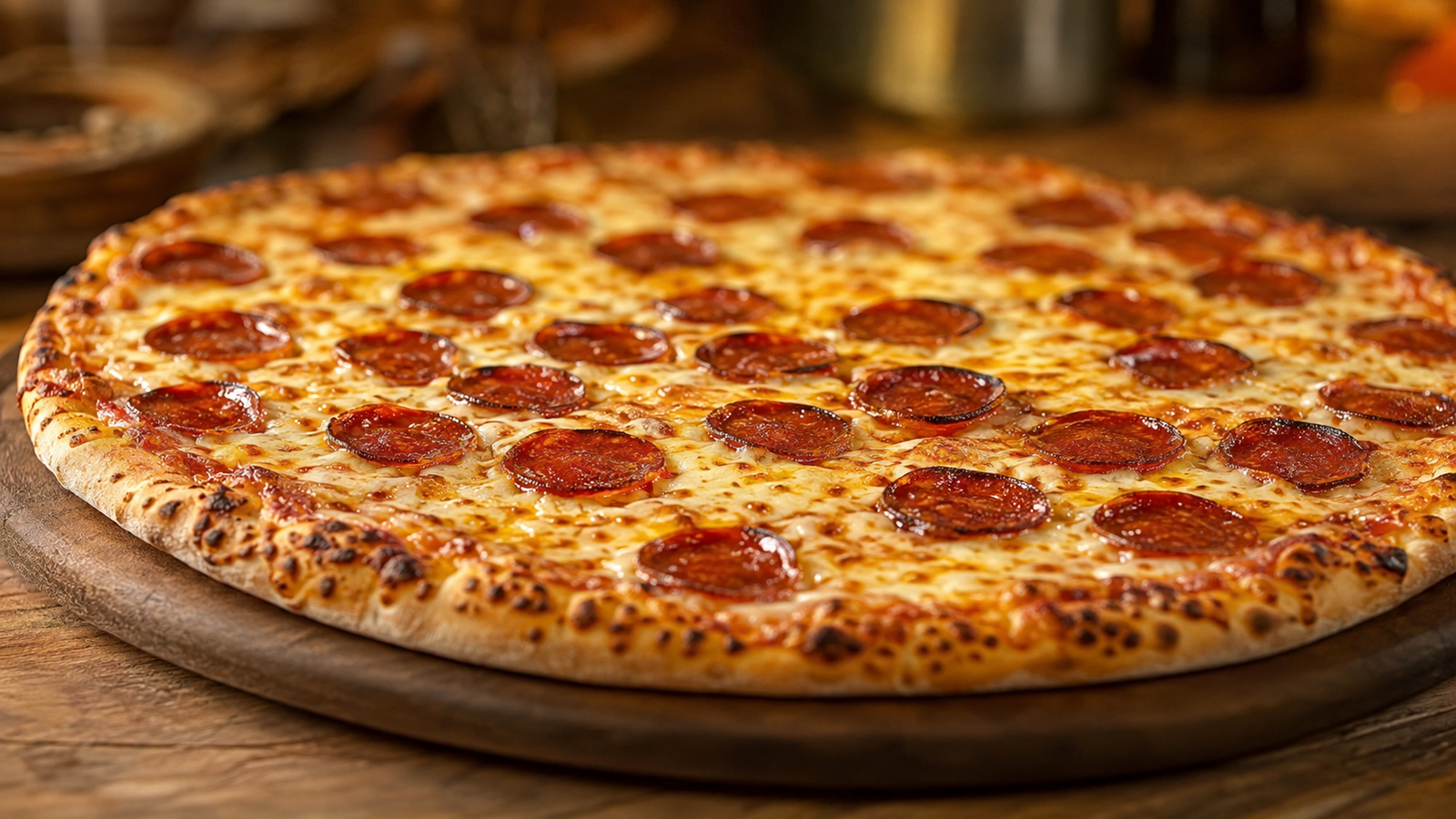
If you have typed best pizza porteña near me into Google, there is a good chance you already know exactly what you are craving. You have probably had it before, maybe on a trip to Buenos Aires or at a friend’s family gathering, and nothing else quite compares. Thick, cheesy, slightly sweet in the sauce, and served in generous slices that barely fit on a plate.
The honest truth is that this style of pizza is still rare outside Argentina, and the UK is no exception. Rather than send you on a wild goose chase or pad this guide with vague advice, this article gives you a realistic picture of where authentic pizza porteña actually exists in Britain right now, what to do if there is nothing near you, and how to recreate it in your own kitchen so you are never left disappointed.
What Pizza Porteña Actually Is
Pizza porteña takes its name from the word porteño, which refers to someone or something from the port city of Buenos Aires. It is the pizza style that developed among Argentina’s large Italian immigrant community, and over more than a century it grew into something distinctly its own.
The base sets it apart immediately. Instead of a thin, blistered Neapolitan crust, pizza porteña uses a thick, airy dough that behaves more like focaccia. It is proofed for longer, baked in a well oiled pan rather than directly on stone, and comes out soft in the middle with a crisp, almost fried edge where it meets the tin.
Cheese is the star of the show. Argentine pizzerias use an enormous amount of mozzarella, often piled so high that the tomato sauce underneath is barely visible until you take a bite. The sauce itself tends to be simple and slightly sweet, made from ripe tomatoes with very little seasoning, so it complements the cheese instead of competing with it.
Why It Is So Hard to Find in the UK
There is no getting around it. Genuine pizza porteña is still a niche product in Britain, and most people searching for it locally will come up short. A handful of reasons explain this gap.
Argentine restaurants in the UK tend to focus on the parrilla, the traditional grill experience built around steak, chorizo, and morcilla. Pizza is often an afterthought on these menus rather than the main attraction, and even when it appears, it may lean closer to a generic Italian style to suit a broader crowd.
There is also a simple supply issue. The high moisture mozzarella and the specific style of pan baking used in Buenos Aires require equipment and ingredients that most UK pizzerias, understandably, have not invested in for a dish with limited local demand.
None of this means you are out of luck. It just means your search needs a slightly different approach than typing a generic phrase into Google and hoping a map pin appears.
What to Look For When Searching Best Pizza Porteña Near Me
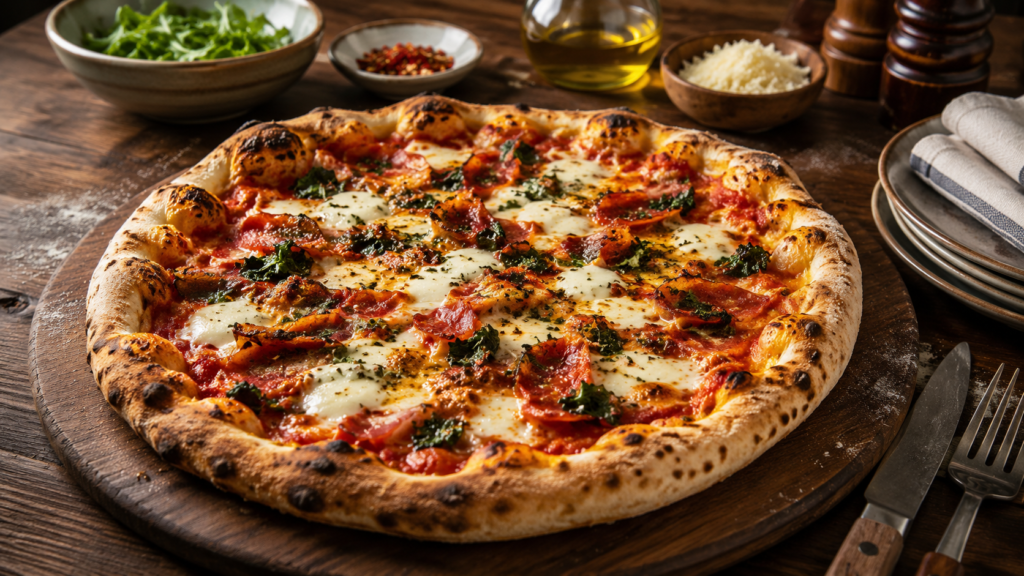
Since dedicated pizza porteña specialists are rare in the UK, the smartest strategy is to broaden your search toward Argentine and South American restaurants generally, then narrow down using specific signals.
Start with Argentine steakhouses and parrillas in your city. Many of these keep a small pizza selection for regulars who want a lighter option alongside the grill, and it is often the most authentic version you will find locally. Search directly for Argentine restaurant plus your city name rather than relying only on pizza specific searches.
When you find a candidate, check the menu for telltale names. Muzzarella, fugazzeta, and jamón y morrones are strong indicators that the kitchen understands the style rather than simply borrowing the name for marketing.
Reviews are worth reading in detail rather than skimming star ratings. Comments mentioning a thick, bready base, a heavy layer of cheese, or fainá served alongside the pizza are reliable signs that you have found the real thing. Photos uploaded by other diners are often more honest than the restaurant’s own marketing images.
Finally, do not underestimate a direct phone call. Asking a restaurant whether their pizza is made in the Buenos Aires style, or whether they serve fugazzeta, takes thirty seconds and saves you a wasted trip.
Pizza Porteña vs Neapolitan vs American Pizza
Understanding how pizza porteña compares to styles you already know makes it much easier to recognise the real thing when you see it.
| Feature | Pizza Porteña | Neapolitan | American |
|---|---|---|---|
| Crust | Thick, airy, focaccia like | Thin, soft, slightly charred | Medium, chewy |
| Cheese | Very generous mozzarella layer | Light, often fresh buffalo mozzarella | Moderate, often processed blend |
| Sauce | Simple, slightly sweet tomato | Bright, minimal, San Marzano tomato | Herbed, sometimes sugary |
| Baking method | Pan baked, sometimes in a wood oven | Wood fired, very high heat | Oven baked, varied heat |
| Typical serving | Cut into large squares or wedges, shared | Whole personal pizza | Sliced into triangles |
The biggest giveaway for pizza porteña is the sheer amount of cheese combined with a crust that is closer to bread than cracker. If a menu photo shows a thin, minimally topped pizza, it is almost certainly not the style you are after.
The Classic Varieties You Should Know
Learning a few key names will help you order with confidence and spot genuine pizza porteña wherever you find it.
Muzzarella is the baseline order, built from little more than tomato sauce, a thick layer of mozzarella, and sometimes a scattering of dried oregano. It is the version locals judge every pizzeria by, so it is a great first order if you want to test a new place.
Napolitana, despite the name, is an Argentine invention rather than an Italian import. It typically adds sliced tomato, garlic, and herbs on top of the standard muzzarella base for extra freshness.
Jamón y morrones combines ham with roasted red peppers, offering a slightly sweeter and heartier take that pairs well if you are sharing a table with several people who want variety.
Fugazzeta is arguably the most distinctive variety, made with a thick layer of caramelised onions and, in many versions, cheese stuffed between two layers of dough. If you only try one unusual style, this is the one to seek out.
Where You Are Most Likely to Find It in the UK
While a dedicated pizza porteña specialist chain does not yet exist nationwide, a few practical avenues consistently produce results.
Argentine steakhouses in major cities such as London, Manchester, and Edinburgh are your strongest bet, particularly those with a strong South American community following rather than a purely tourist focused menu. These venues often keep at least one or two pizza options that stay close to the traditional recipe.
South American food markets and pop up events are another good source. Vendors at these events are frequently cooking for homesick Argentine and Uruguayan communities, which means authenticity tends to matter far more than presentation for a general audience.
Community Facebook groups and forums for Argentine expats in the UK are genuinely one of the best resources available. Members often share recommendations for the handful of spots that get the crust and cheese ratio right, information that rarely surfaces in a standard search engine result.
What to Order and How to Eat It Like a Local
If you manage to find a spot serving genuine pizza porteña, a little local knowledge goes a long way toward getting the full experience.
Start simple with a classic muzzarella. It lets you judge the fundamentals, the crust texture, the cheese quality, and the sauce balance, without other flavours getting in the way. Once you have a sense of the kitchen’s skill, branch out into fugazzeta or jamón y morrones on a return visit.
Order fainá if it is on the menu. This thin, savoury chickpea flour flatbread is traditionally placed on top of a pizza slice before eating, adding a nutty flavour and extra substance that Argentines consider essential rather than optional.
Expect large, shareable portions rather than an individual sized pizza. Pizza porteña is social food, typically ordered for the table and cut into generous squares, so come with an appetite and a friend or two.
Making Pizza Porteña at Home
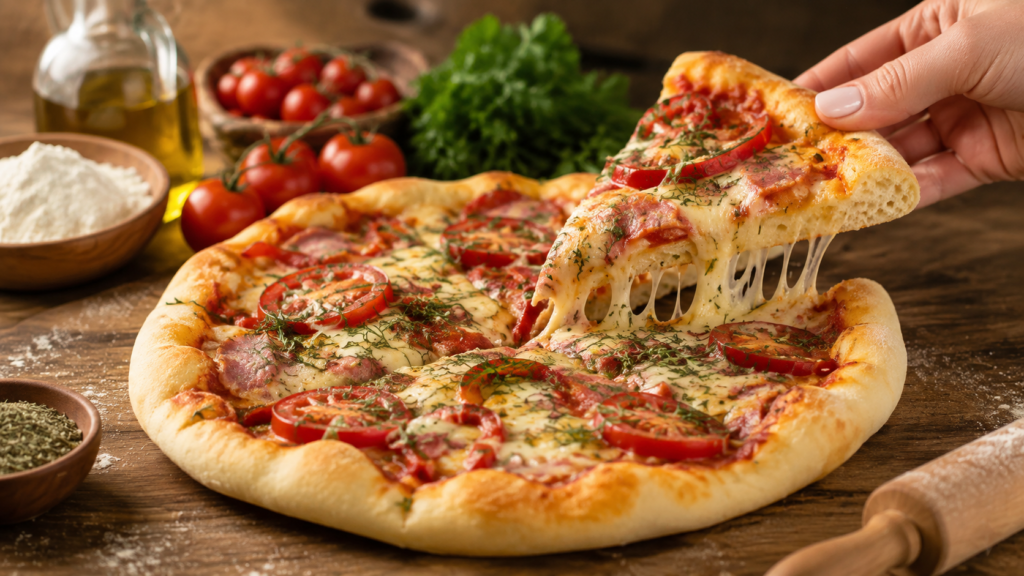
If your search for the best pizza porteña near me keeps coming up empty, cooking it yourself is a genuinely satisfying alternative, and it is more forgiving than most home baking projects.
Use a high hydration dough and let it proof slowly, ideally overnight in the fridge, to develop the airy, bread like texture that defines the style. Press it into a well oiled metal pan rather than stretching it thin, since the oil is what creates that crisp, almost fried bottom crust.
Layer on far more mozzarella than instinct tells you to. Argentine bakers are famously generous, and skimping on cheese is the single most common mistake home cooks make when attempting this style. A simple, lightly seasoned tomato sauce underneath is all you need to balance it out.
Bake at a high but not extreme temperature, around 220 to 230 degrees Celsius, for slightly longer than you would a thin crust pizza, giving the thick base time to cook through without burning the cheese on top.
The History Behind the Style
Pizza porteña exists because of one of the largest waves of migration in modern history. Millions of Italians settled in Argentina between the late 1800s and mid 1900s, bringing pizza with them and adapting it to local tastes, ingredients, and dining habits over generations.
Buenos Aires pizzerias such as Güerrín and El Cuartito, both still operating today, helped cement the thick, cheese heavy style as the city’s own rather than a copy of anything from Naples or Rome. Eating pizza standing at a counter, ordering by the slice, and pairing it with fainá all became rituals unique to the Argentine capital.
Understanding this background is part of what makes tracking down authentic pizza porteña feel worthwhile. You are not just looking for a meal, you are looking for a small piece of Buenos Aires culture that has only recently begun to travel beyond Argentina’s borders.
Final Thoughts
Finding the best pizza porteña near you in the UK takes a bit more effort than a quick search, simply because this Buenos Aires classic has not yet spread widely outside Argentina. Your best results will come from seeking out genuine Argentine restaurants, asking direct questions about how the pizza is made, and leaning on community recommendations rather than generic search results.
And if your local options fall short, remember that a thick, cheese laden pizza porteña is well within reach in your own kitchen. With a properly proofed dough, a generous layer of mozzarella, and a little patience, you can bring a genuine taste of Buenos Aires to your table any night of the week.
Frequently Asked Questions
What does porteña actually mean?
Porteño or porteña describes someone or something from Buenos Aires, referring to the city’s history as a major port. When applied to pizza, it simply means the Buenos Aires style.
Is pizza porteña the same as fugazzeta?
No. Fugazzeta is one specific variety of pizza porteña, defined by its thick layer of caramelised onions, while pizza porteña refers to the broader style and dough technique used across many different toppings.
Can I find pizza porteña at a regular Italian restaurant?
It is unlikely. Italian restaurants in the UK typically serve Neapolitan or Roman style pizza, which uses a thinner base and far less cheese, so your best chance is an Argentine or South American restaurant instead.
What is fainá and why is it served with pizza?
Fainá is a savoury flatbread made from chickpea flour, baked until firm, and traditionally placed on top of a pizza slice in Buenos Aires. Argentines eat it this way for the added texture and nutty flavour it brings.
Is pizza porteña difficult to make at home?
Not particularly. The technique relies on a well oiled pan, a generously proofed dough, and a heavy hand with the mozzarella, all of which are achievable in a standard home oven with a little patience.
