
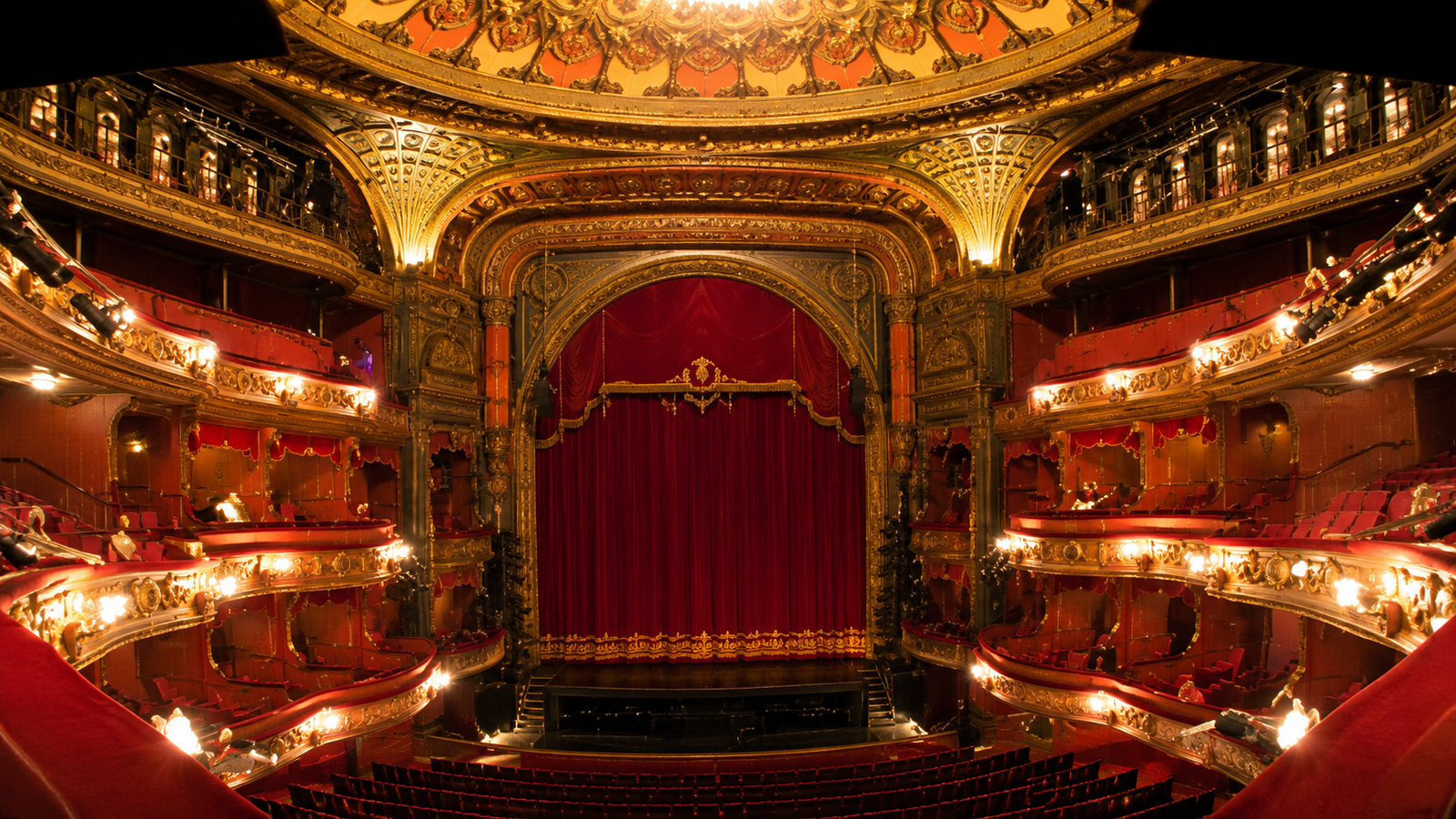
If you are planning a night out in Yorkshire’s cultural capital, Leeds Grand Theatre deserves a spot at the top of your list. This Victorian venue on New Briggate has been welcoming audiences since 1878, and it remains one of the busiest and most loved theatres outside London. Whether you are booking tickets for the first time, trying to work out which seats to choose, or simply curious about the building’s past, this guide brings everything together in one place.
Leeds Grand Theatre is home to Opera North and Northern Ballet, and it regularly hosts West End musicals, touring plays, comedy nights and family shows throughout the year. It is also a Grade II listed building, which means every visit comes with a bit of architectural theatre before the curtain even rises. Let’s walk through what makes the venue special, how to plan your visit, and how to pick the best seat in the house.
A Brief History of Leeds Grand Theatre
The story of Leeds Grand Theatre begins with a passing comment. Prince Albert, visiting the city with Queen Victoria, remarked that Leeds needed a proper theatre because nothing did more to raise the cultural tone of a place. That comment eventually inspired a group of local investors to fund the project.
Construction began in 1877 on a plot of land on New Briggate, and the theatre opened its doors on 18 November 1878 with a production of Shakespeare’s Much Ado About Nothing. The building was designed by architect George Corson, with detailing by his assistant James Robinson Watson, and it originally held an astonishing 2,600 seated guests plus standing room for 200 more.
Since then, the theatre has lived through two world wars, a proposed demolition in 1969, and a major roof restoration completed in 2016. Locals often refer to it affectionately as the Grand Old Lady of Leeds, a nickname that captures both its age and its enduring charm.
Key Historical Milestones
- 1878: Official opening with a performance of Much Ado About Nothing
- 1963: Awarded Grade II listed status
- 1969: Saved from demolition following a public campaign
- 1971: A major refurbishment modernises the lighting and orchestra pit
- 2016: Multi million pound roof restoration completed
These milestones matter because they explain why the building still feels so intact today. Every renovation has been carried out with the goal of preserving the original character rather than replacing it.
Architecture and Design Worth Noticing
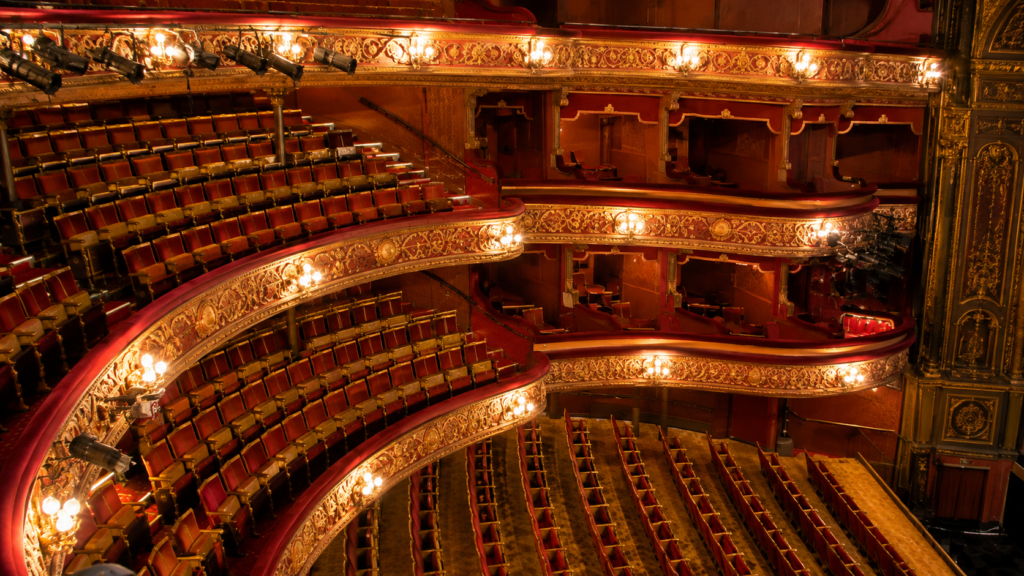
Leeds Grand Theatre is often described in guidebooks simply as beautiful, but it is worth understanding what that beauty is actually made of. The exterior blends Romanesque arches with Scottish baronial touches, giving the red brick facade a slightly fortress like presence on New Briggate. Step inside and the mood changes entirely.
The interior leans into Gothic Revival style, with fan vaulting on the ceilings and clustered columns that echo medieval church design. It is an unusual combination for a theatre, and it sets the venue apart from the more classical, symmetrical auditoriums found in many other British cities.
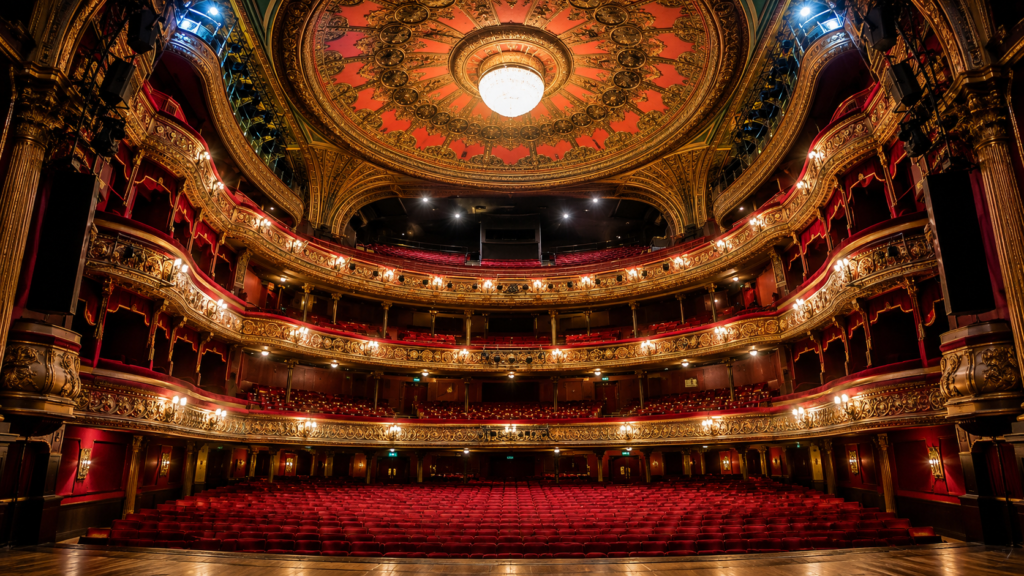
The centrepiece for most visitors is the auditorium chandelier, crafted from Waterford Crystal and made up of 6,389 individual crystals. When the house lights dim before a performance, it is one of those small moments that makes attending in person feel genuinely special, something photographs never quite capture.
Because the building holds Grade II listed status, any structural changes are carefully regulated. That protection is part of why the theatre has retained so much of its original plasterwork, tiling and joinery, even after nearly a century and a half of continuous use.
What to Expect from the Programme
Leeds Grand Theatre is not a single genre venue. Its programming spans opera, ballet, musical theatre, drama, comedy and family entertainment, which means the audience on any given night can look quite different depending on what is showing.
Opera North, the resident opera company, stages full seasons here, bringing everything from classic Italian opera to newer, more experimental productions. Northern Ballet, the other resident company, is known for narrative heavy performances that tell a complete story through movement rather than relying purely on abstract choreography.
Beyond the resident companies, the theatre regularly hosts touring West End productions. In recent years it has welcomed world premieres of major new musicals before they moved on to other UK cities, giving Leeds audiences a genuine first look at shows that later become national hits.
Types of Shows You Might Catch
- Full scale opera productions from Opera North
- Contemporary and classical ballet from Northern Ballet
- Touring West End musicals and plays
- Stand up comedy and live music events
- Pantomime and family friendly shows during school holidays
If you are choosing a show for the first time, checking whether a production is a resident company piece or a touring show can help set expectations. Resident productions often run for shorter, more concentrated bursts, while touring shows may stay for a week or more.
Getting There and Planning Your Visit
Leeds Grand Theatre sits at 46 New Briggate, right in the heart of the city centre, roughly a fifteen minute walk from Leeds railway station. For anyone arriving by train, this makes it one of the easier venues in the city to reach without needing a car.
If you are driving, there is no dedicated theatre car park, so most visitors use one of the multi storey car parks nearby, such as those around the Merrion Centre or Trinity Leeds. Booking a space in advance during busy show periods, particularly pantomime season, can save a lot of frustration.
Public transport is straightforward too. Leeds has a well connected bus network, and the city centre location means most services drop passengers within a short walk of New Briggate. For evening performances, it is worth allowing extra time, since the surrounding streets can get busy with pre theatre diners and other events happening nearby.
Before You Go
- Check the theatre’s website for the latest showtimes and any last minute changes
- Arrive at least twenty minutes early to collect tickets and find your seat
- Note that the box office phone line and email are the quickest way to resolve booking questions
- Consider eating nearby beforehand, since the immediate area has a good mix of casual and formal dining options
A Practical Seating Guide
This is where many visitor guides fall short, so it is worth spending real time on it. Leeds Grand Theatre’s auditorium is arranged across several levels: the Stalls, the Circle, the Upper Circle and the Balcony, plus a small number of Boxes to the sides of the stage.
The Stalls offer the closest, most immersive view and tend to suit anyone who wants to feel part of the action, particularly for musicals with a lot of movement and staging. Front stalls seats can occasionally have a slightly restricted view of the very top of the set due to the angle of the stage, so if that matters to you, seats further back in the Stalls or in the Circle often give a more complete picture.
The Circle is generally considered the sweet spot by regular theatregoers. It offers a clear, elevated view of the full stage without being too far from the performers, and it usually comes at a more moderate price point than premium Stalls seating.
The Upper Circle and Balcony sit higher up and further back. The theatre’s original design includes a notably steep rake in these upper levels, a common feature of Victorian theatres built to maximise capacity. If you have concerns about steps or height, it is worth mentioning this when booking, since staff can advise on the most manageable seats.
Quick Seating Tips
- Choose the Circle for the best overall balance of view and price
- Sit centrally in any level for the most complete sightline of the stage
- Avoid the very front row of the Stalls if you are sensitive to looking upward for long periods
- Ask about restricted view seats before booking if budget is a priority, since discounted seats are sometimes available
Accessibility at Leeds Grand Theatre
Leeds Heritage Theatres, the charity that runs the venue, has invested significantly in access provisions over the years. There are wheelchair accessible spaces available, along with induction loop systems for visitors with hearing impairments.
The theatre also runs dedicated accessible performances throughout the year, including audio described shows, captioned performances and relaxed performances designed for audiences who benefit from a more relaxed environment, such as those with autism or sensory sensitivities.
Given the building’s age, some areas involve stairs, so anyone with mobility concerns should contact the box office ahead of their visit to confirm the best route and seating options. Staff are generally well practised at helping visitors plan around these details.
Tips for First Time Visitors
A first visit to Leeds Grand Theatre tends to leave a strong impression, partly because the building itself is as much a part of the experience as whatever is on stage. A few small habits can make that first trip smoother.
Arrive with enough time to actually look around. The foyer and staircases carry a lot of original detailing that is easy to miss if you rush straight to your seat. Many visitors also enjoy a pre show drink at the bar, which tends to get busy in the final ten minutes before curtain up, so ordering early is a good idea.
If you are attending a longer production such as an opera or a full length ballet, check the running time and interval length in advance. This is particularly useful if you are coordinating dinner plans or need to catch a specific train home afterward.
Finally, dress codes at Leeds Grand Theatre are relaxed. There is no formal requirement, and audiences range from casual to smart depending on the occasion, so comfort is generally the better guide than formality.
How It Compares to Other Leeds Venues
Leeds is fortunate to have several strong performance venues, and knowing how they differ can help you pick the right one for a given night out.
- Leeds Grand Theatre focuses on opera, ballet, large scale musicals and touring drama, in a traditional Victorian setting.
- City Varieties Music Hall, also run by Leeds Heritage Theatres, offers a smaller, more intimate space suited to comedy, music hall style entertainment and cabaret.
- Leeds Playhouse leans more toward contemporary drama, new writing and community focused productions in a modern building.
- First Direct Arena handles large scale concerts and arena tours rather than traditional theatre productions.
If you want the full grandeur of a historic theatre combined with world class opera and ballet, Leeds Grand Theatre is the clear choice among these options.
Conclusion
Leeds Grand Theatre offers something genuinely rare: a working Victorian theatre that has managed to stay relevant, well maintained and full of life for nearly a century and a half. From its origins in a passing comment by Prince Albert to its current role as home to Opera North and Northern Ballet, the venue has earned its reputation as one of Yorkshire’s most important cultural landmarks.
Whether you are drawn in by the chandelier, the architecture, or simply the chance to see a brilliant show, a visit here rewards a bit of planning. Choose your seats with the venue’s layout in mind, arrive early enough to enjoy the building itself, and check accessibility needs ahead of time if they apply to you. Do that, and Leeds Grand Theatre is likely to become a regular fixture on your calendar rather than a one off outing.
Frequently Asked Questions
Is Leeds Grand Theatre the same as Leeds Playhouse?
No, they are separate venues. Leeds Grand Theatre focuses on opera, ballet and large touring musicals, while Leeds Playhouse specialises in contemporary drama and new writing in a more modern building.
How old is Leeds Grand Theatre?
The theatre opened on 18 November 1878, making it well over 140 years old. It holds Grade II listed status in recognition of its historic architecture.
What companies perform at Leeds Grand Theatre regularly?
Opera North and Northern Ballet are both resident companies, meaning they stage full seasons at the venue throughout the year alongside touring productions.
Which seats offer the best view at Leeds Grand Theatre?
The Circle is generally considered the best balance of price and view, offering a clear sightline of the full stage. Central seats in any level tend to give the most complete view overall.
Is Leeds Grand Theatre accessible for wheelchair users?
Yes, the venue provides wheelchair accessible spaces, an induction loop system, and dedicated accessible performances including audio described and captioned shows. Contacting the box office ahead of your visit is recommended to arrange the best options.
