
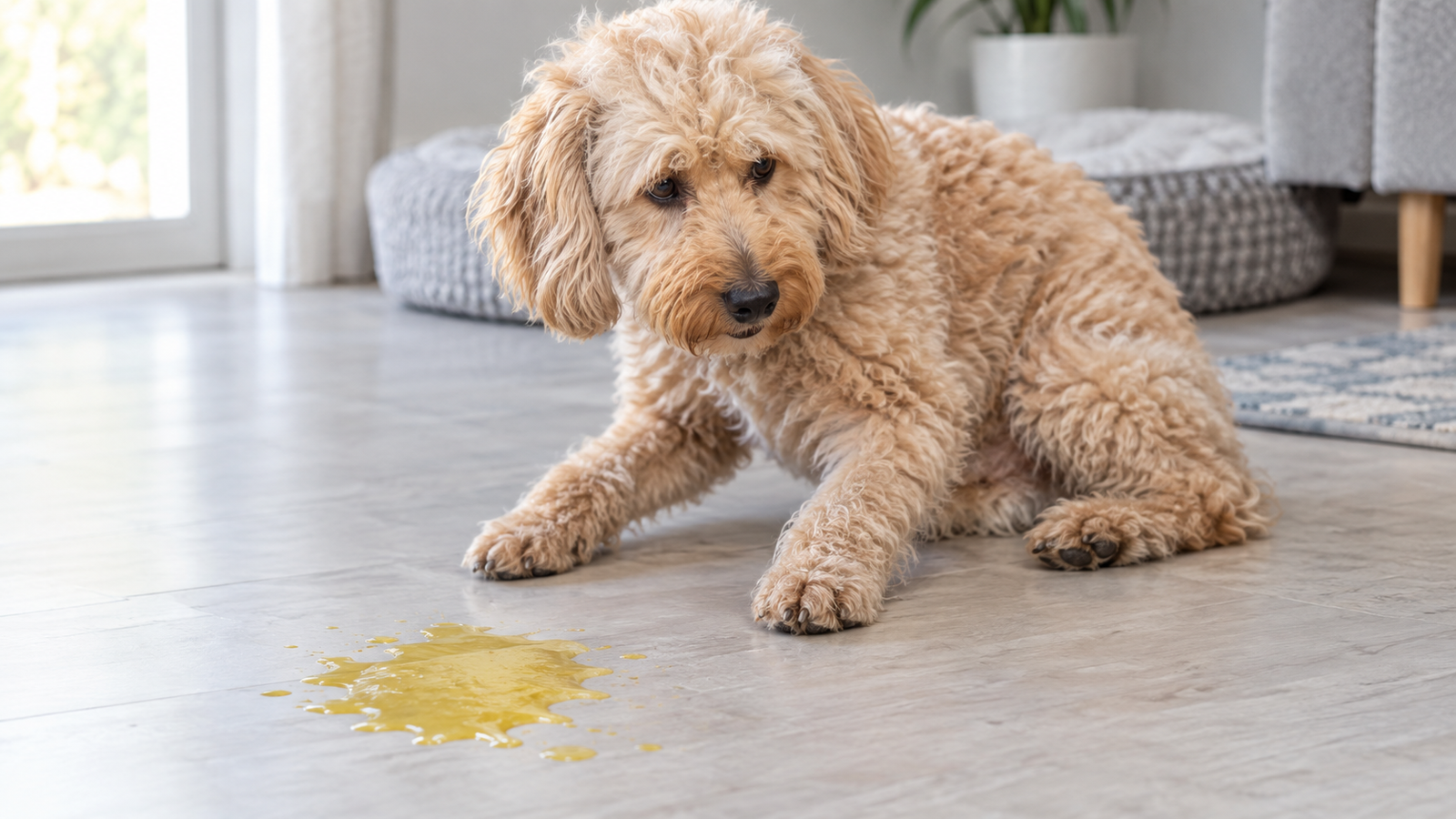
Watching your dog vomit yellow liquid or foam is one of those moments that can turn a calm afternoon into a stressful one. Your mind starts racing through possibilities, and Google becomes your first stop for answers.
The good news is that dog throwing up yellow is often less alarming than it looks. In most cases, that yellow color comes from bile, a natural digestive fluid, and a single episode does not always mean something is seriously wrong.
That said, there are situations where yellow vomit is your dog’s way of telling you something needs attention. This guide walks you through what causes it, what you can do at home, and the specific signs that mean a trip to the vet should not wait.
What Yellow Vomit in Dogs Actually Means
The yellow tint you see is almost always bile. Bile is a digestive fluid made by the liver and stored in the gallbladder until it is released into the small intestine, where it helps break down fats.
Under normal conditions, bile stays in the small intestine and never touches the stomach. When a dog’s stomach is empty for an extended stretch, bile can move backward into the stomach and irritate the lining. That irritation is what triggers vomiting.
This backward flow has a name in veterinary medicine: bilious reflux. It explains why so many dogs vomit yellow first thing in the morning or late at night, right when their stomach has had the longest time without food.
Yellow vomit can look watery, foamy, or slightly thick, and the shade can range from pale lemon to a deeper mustard color. On its own, color alone does not tell you how serious the situation is. Frequency, timing, and accompanying symptoms matter just as much.
Common Causes of Yellow Vomit in Dogs
There is rarely a single explanation. Dogs vomit yellow bile for a handful of common reasons, and figuring out which one applies to your dog usually comes down to pattern and context.
Empty Stomach and Bilious Vomiting Syndrome
This is by far the most frequent cause. Veterinarians often call it bilious vomiting syndrome, or BVS for short.
Dogs fed once a day, or dogs with a long gap between dinner and breakfast, are especially prone to this. The stomach sits empty for too long, bile creeps upward, and the result is a dog vomiting yellow foam on an empty stomach, often with no other symptoms at all.
Signs that point to BVS include vomiting shortly after waking up, normal energy and appetite otherwise, and no blood, mucus, or unusual odor in the vomit.
Dietary Indiscretion and Sudden Food Changes
Dogs explore the world with their mouths, and that curiosity sometimes leads to trouble. Grass, garbage, table scraps, or something picked up on a walk can irritate the stomach lining and trigger vomiting in dogs, sometimes tinted yellow if the stomach was already low on food.
Switching food brands too quickly, introducing a new treat, or feeding something rich and unfamiliar can have a similar effect. The digestive system simply needs time to adjust.
Mild Stomach Upset or Food Sensitivities
Some dogs have sensitive stomachs that react to specific ingredients, additives, or even stress. A single stressful event, such as a car ride, boarding stay, or loud thunderstorm, can be enough to upset digestion and lead to a yellow vomiting episode.
This cause is often overlooked, yet it explains a fair number of one off cases that resolve without any lasting issue.
Intestinal Blockages
This is the cause that deserves real attention. If a dog has swallowed something that cannot pass through the digestive tract, whether it is a toy, a sock, or a bone fragment, food and bile can back up behind the obstruction.
A blockage often comes with repeated vomiting, visible discomfort, a bloated abdomen, and a noticeable drop in appetite or energy. If you suspect your dog swallowed a foreign object, this is not a wait and see situation.
Underlying Gastrointestinal or Organ Conditions
Chronic or recurring yellow vomiting can point to something deeper, such as inflammatory bowel disease, pancreatitis, gastritis, or in rarer cases liver or kidney disease.
These conditions usually come with a broader set of symptoms over time, including weight loss, changes in stool, lethargy, or a reduced appetite that does not bounce back. A dog with these signs needs a proper veterinary workup rather than home management alone.
Does Age or Breed Change the Picture
Age and breed are two factors that competing articles rarely mention, yet they genuinely change how you should interpret yellow vomiting.
Puppies have smaller stomachs and less developed digestive systems, so they are more sensitive to skipped meals and can dehydrate faster if vomiting continues. A puppy vomiting yellow more than once should be checked sooner rather than later.
Senior dogs are more likely to have underlying conditions such as kidney disease, liver changes, or dental issues that affect eating patterns, all of which can contribute to bile buildup. Age related bloodwork can rule out issues that are easy to miss otherwise.
Certain breeds also carry specific risks worth knowing:
- Deep chested breeds like Great Danes and German Shepherds have a higher risk of bloat, a true emergency that can involve vomiting attempts without producing much.
- Breeds prone to pancreatitis, including Miniature Schnauzers, may show yellow vomiting alongside abdominal pain after a fatty meal.
- Small breeds with fast metabolisms sometimes develop BVS more easily due to quicker digestion between meals.
None of this means every dog in these categories will have problems. It simply means these dogs deserve a slightly closer watch when yellow vomiting shows up.
When Yellow Vomit Becomes an Emergency
Most cases of dog throwing up yellow resolve on their own with a little care and monitoring. Still, certain signs mean you should call your vet or an emergency clinic right away rather than waiting.
Seek immediate care if you notice any of the following alongside yellow vomiting:
- Vomiting more than two or three times within a few hours
- Blood in the vomit, whether bright red or resembling coffee grounds
- A swollen, hard, or painful abdomen
- Extreme lethargy or collapse
- Repeated retching with little or nothing coming up
- Known or suspected ingestion of a toxic substance, medication, or foreign object
- Vomiting combined with diarrhea for more than a day
- Yellowing of the gums, eyes, or skin, which can point to liver involvement
If your dog is otherwise bright, playful, eating normally, and has vomited yellow just once, it is usually safe to monitor at home for the next twelve to twenty four hours before deciding on a vet visit.
What to Do at Home When Your Dog Throws Up Yellow
If your dog seems fine aside from the vomiting, a calm and measured approach at home is often all that is needed.
Immediate Steps
Start by withholding food for a short period, usually six to twelve hours for adult dogs, to give the stomach a chance to settle. Puppies should not go this long without food, so check with a vet if a puppy is involved.
Offer small amounts of water frequently rather than a large bowl all at once, since gulping water on an upset stomach can trigger another round of vomiting.
Keep your dog calm and limit activity for the rest of the day. Write down the time of each vomiting episode, what the vomit looked like, and anything unusual your dog ate recently. This record becomes genuinely useful if you do end up calling the vet.
Reintroducing Food Safely
Once your dog has gone a few hours without vomiting, start with a bland diet in small portions. A simple combination of boiled, skinless chicken and plain white rice, given in small amounts every few hours, is easy on the stomach.
Gradually increase portion size over the next day or two, and slowly mix in your dog’s regular food once things seem stable. If vomiting returns during this process, pause and call your veterinarian for guidance.
Avoid giving human medications such as anti nausea drugs or antacids without veterinary approval, since some common medications are unsafe for dogs even in small doses.
What Happens During a Vet Visit
If yellow vomiting continues or comes with warning signs, knowing what to expect at the clinic can ease some of the anxiety.
Your vet will typically start with a physical exam and a detailed history, including when the vomiting started, how often it happens, and what your dog eats. From there, diagnostics may include:
- Bloodwork to check organ function, hydration, and signs of infection or inflammation
- Abdominal X rays to look for blockages, foreign objects, or bloat
- An ultrasound for a closer look at the stomach, intestines, pancreas, or liver
- Fecal testing if parasites are suspected
Costs vary widely depending on location and the extent of testing needed, but a basic exam with bloodwork often falls in a moderate range, while imaging and hospitalization for something like a blockage will cost significantly more. Pet insurance or a vet payment plan can help if advanced testing becomes necessary.
How to Prevent Future Episodes
Many cases of yellow vomiting, especially those tied to an empty stomach, are genuinely preventable with a few adjustments.
Feeding your dog two or three smaller meals spread through the day, rather than one large meal, reduces the long gaps that allow bile to build up. A small snack before bed can also help dogs prone to early morning bilious vomiting syndrome.
Introduce new foods gradually over seven to ten days instead of switching all at once, and keep an eye on what your dog has access to during walks or yard time to reduce the chances of dietary indiscretion.
Routine veterinary checkups also play a role, since they catch underlying conditions before they progress to the point of frequent vomiting.
Frequently Asked Questions
Is it normal for a dog to throw up yellow once and then act completely fine?
Yes, a single episode in an otherwise healthy dog is usually linked to an empty stomach and is not typically a cause for alarm.
Can stress alone cause a dog to vomit yellow?
It can. Anxiety from travel, boarding, loud noises, or big changes at home can disrupt digestion enough to trigger occasional vomiting.
Should I feed my dog immediately after they throw up yellow?
It is generally better to withhold food for several hours first, then reintroduce a bland diet in small amounts rather than feeding a full meal right away.
How long should I wait before calling the vet?
If your dog is bright, eating, and has vomited only once, waiting twenty four hours while monitoring is usually reasonable. Repeated vomiting or other symptoms should prompt a call sooner.
Can diet alone stop recurring yellow vomiting?
For dogs with bilious vomiting syndrome, adjusting meal timing and frequency often resolves the issue. Recurring vomiting that continues despite these changes should be evaluated by a vet to rule out other causes.
Final Thoughts
A dog throwing up yellow is usually your dog’s stomach telling you it has gone too long without food, and in most cases a simple adjustment to feeding habits is enough to solve it. Pay attention to patterns rather than a single event, and treat repeated episodes, unusual symptoms, or visible discomfort as your cue to involve a veterinarian.
Trust your instincts as a pet owner. You know your dog’s normal behavior better than anyone, and that awareness is often the most valuable diagnostic tool you have.
