
Nothing tests a homeowner’s patience quite like a furnace that quits on the coldest night of the year. One minute the house is warm and quiet, the next you’re standing over a vent that’s blowing cool air, wondering whether you’re looking at a fifteen minute fix or a repair bill that rivals your car payment.
Furnace repair does not have to feel like a mystery, and it definitely should not feel like a gamble. This guide walks through the warning signs worth paying attention to, what repairs actually cost in the real world, and the practical steps that keep contractors honest so you never feel like you overpaid for peace of mind.
Why Furnace Problems Always Seem to Happen at the Worst Time
Furnaces rarely fail out of nowhere. Most breakdowns are the final chapter of a slow decline that started weeks or months earlier with a small, easy to ignore symptom. A furnace that struggles through a mild October is far more likely to fail outright once temperatures drop into the twenties and the system has to run nonstop.
That is the real reason furnace repair calls spike in the dead of winter. It is not bad luck. It is the point where a minor inefficiency finally becomes a full system failure, usually on the one weekend your regular HVAC company is booked solid.
Understanding this pattern is useful because it means most furnace repair situations are preventable, or at least predictable, if you know what to watch for.
Warning Signs Your Furnace Needs Repair
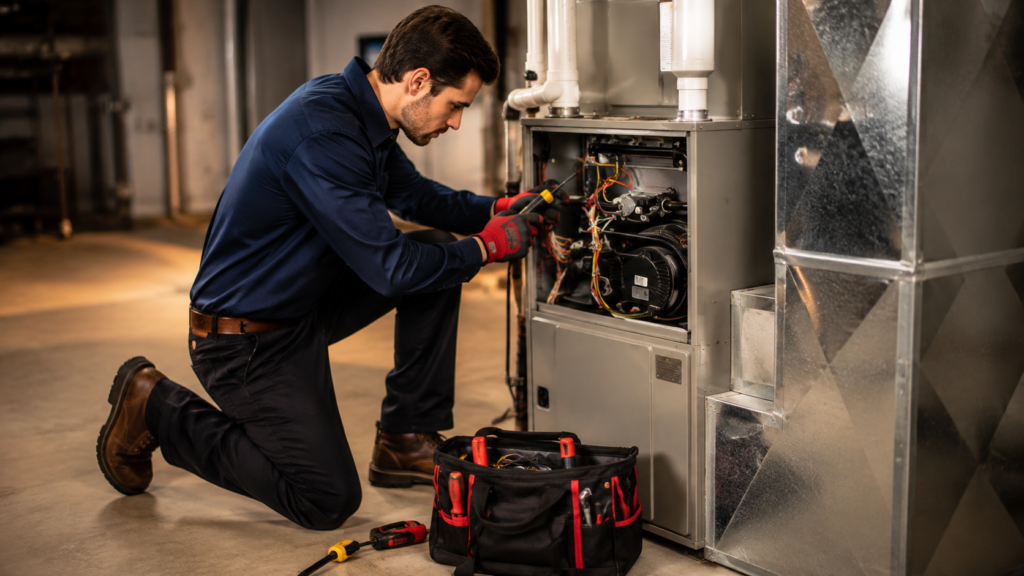
Catching a problem early is the single best way to keep a furnace repair simple and affordable. Here are the signs that consistently show up before a breakdown.
No Heat or Inconsistent Heating
If your furnace runs but the air coming out is lukewarm, or some rooms stay cold while others heat normally, something in the system is not working the way it should. This often points to a failing igniter, a dirty flame sensor, or a thermostat that is miscommunicating with the furnace.
Strange Noises
A healthy furnace hums quietly in the background. Banging, rattling, squealing, or grinding noises are the furnace equivalent of a car making an odd sound under the hood. Squealing often means a worn blower belt or motor bearing. Banging can indicate a delayed ignition, where gas builds up before finally igniting.
Frequent Cycling
If your furnace turns on and off every few minutes instead of running through a full heating cycle, it is short cycling. This wastes energy, wears down components faster, and is commonly caused by a clogged air filter, a failing thermostat, or an oversized furnace that was never properly matched to the home.
Rising Energy Bills
A furnace that is losing efficiency has to work harder to produce the same amount of heat. If your heating bill climbs noticeably without a change in weather or usage, the system is likely compensating for a mechanical issue somewhere in the cycle.
Unusual Smells
A faint burning smell when you first turn on the furnace for the season is normal, as dust burns off the heat exchanger. A smell that lingers, or one that resembles rotten eggs, is not normal. Rotten egg odor is the additive in natural gas and should be treated as an emergency.
Yellow or Flickering Pilot Flame
A healthy gas furnace burns with a steady blue flame. A yellow, orange, or flickering flame can indicate incomplete combustion, which produces carbon monoxide. This is one of the clearest signs that a professional needs to look at the system right away.
Frequent Cycling of the Circuit Breaker
If your furnace trips the breaker repeatedly, the blower motor or electrical components may be drawing more current than they should. This is not something to reset and ignore repeatedly, since it usually points to a developing fault.
What a Furnace Repair Visit Actually Looks Like
Most homeowners have never actually watched a technician work through a furnace repair, which is part of why the process feels intimidating. Here is a realistic walkthrough of what typically happens once a technician arrives.
Initial diagnostic and safety check. The technician starts by checking for gas leaks, verifying carbon monoxide levels, and confirming the system is safe to operate before doing anything else.
Visual and mechanical inspection. This includes checking the air filter, examining the flame sensor and igniter, listening to the blower motor, and inspecting the heat exchanger for cracks or corrosion.
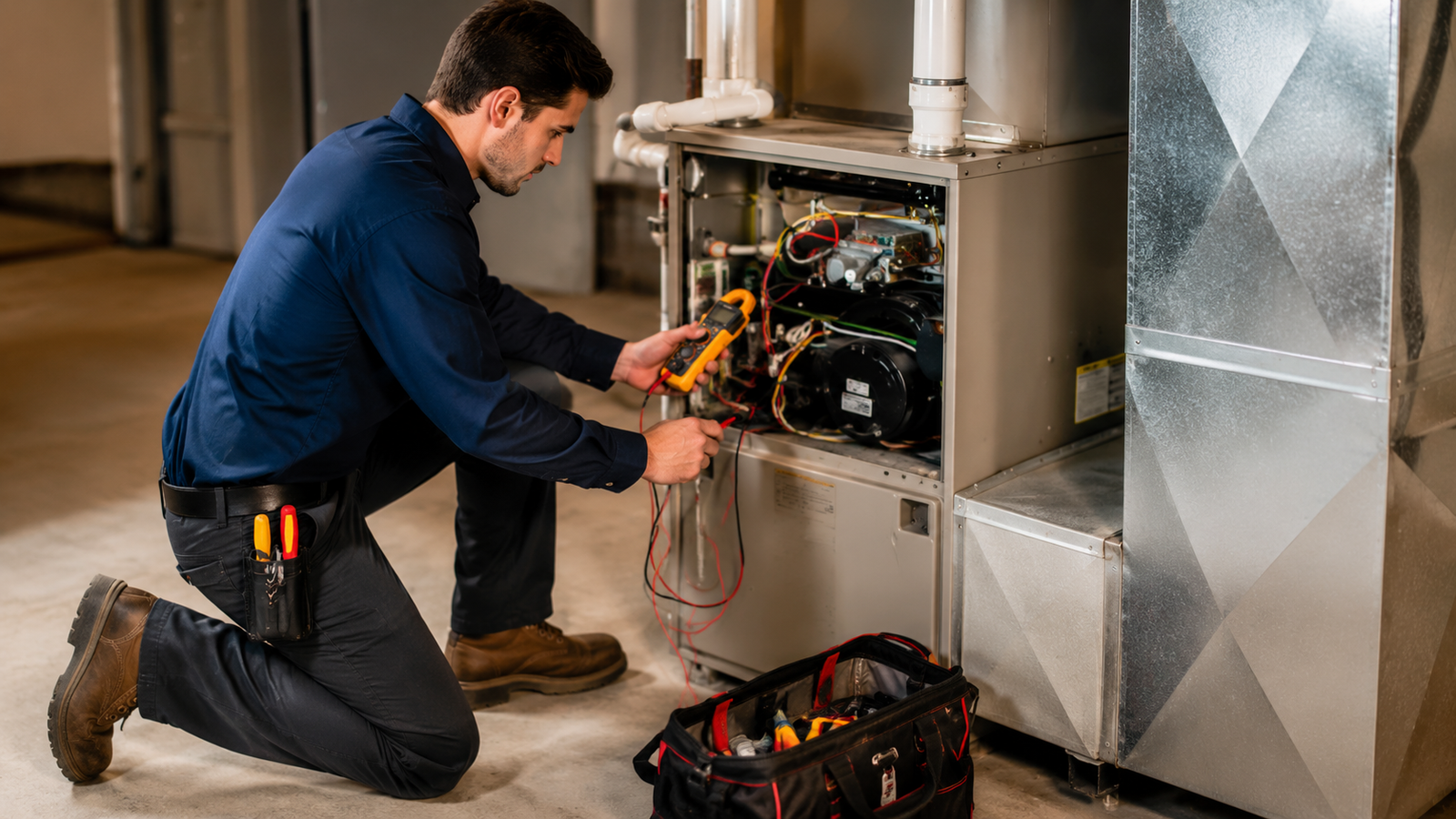
Electrical testing. Using a multimeter, the technician checks voltage at the thermostat, control board, and various components to pinpoint exactly where the failure is occurring rather than guessing.
Explaining the diagnosis. A trustworthy technician will explain what they found in plain language, show you the failing part if possible, and walk through the repair options before doing any work.
Providing a written estimate. You should receive a clear, itemized quote covering parts and labor before any repair begins, not after the work is already done.
Completing the repair and testing the system. Once you approve the work, the technician replaces the part, restarts the furnace, and runs it through a full cycle to confirm the fix actually resolved the issue.
A visit that skips the explanation and estimate steps, and jumps straight to a large invoice, is a signal worth paying attention to.
Furnace Repair Costs: What You Should Really Expect to Pay
Furnace repair pricing varies widely depending on the part involved, your location, and whether the repair happens during regular hours or as an emergency call. Below is a realistic breakdown based on common furnace issues.
| Repair Type | Typical Cost Range |
|---|---|
| Diagnostic or service call | $75 to $150 |
| Thermostat repair or replacement | $100 to $300 |
| Flame sensor cleaning or replacement | $150 to $250 |
| Igniter replacement | $150 to $350 |
| Blower motor capacitor | $150 to $275 |
| Blower motor replacement | $300 to $800 |
| Control board replacement | $200 to $600 |
| Gas valve replacement | $200 to $600 |
| Heat exchanger replacement | $500 to $1,500 |
| Emergency or after hours repair | $300 to $1,200 |
Most homeowners end up spending somewhere between $150 and $650 for a standard furnace repair, with the total depending heavily on which component failed. Simple fixes like a filter change or a thermostat adjustment can cost next to nothing, while a major component like a heat exchanger or blower motor pushes the bill much higher.
A few factors that influence the final number include the age and brand of your furnace, how accessible the unit is in your home, regional labor rates, and whether the repair is happening during a normal weekday appointment or a late night emergency call.
Why Emergency Repairs Cost More
Emergency furnace repair, meaning after hours, weekend, or holiday service, typically costs significantly more than a scheduled daytime visit. Companies charge a premium because they are pulling technicians away from personal time to handle urgent calls.
If your furnace stops working but the house is not dangerously cold and there is no safety concern like a gas smell, it is often worth waiting for a regular business hours appointment to avoid the emergency rate.
Repair or Replace: How to Make the Right Call
At some point, every furnace owner faces the same decision. Do you keep repairing an aging system, or is it time to invest in a new one? A few practical guidelines can help make that call easier.
Consider the age of your furnace. Most furnaces last between 15 and 20 years, with gas units on the lower end and electric furnaces often lasting longer. If your furnace is past the 15 year mark and needs a costly repair, replacement usually makes more financial sense long term.
Use the 50 percent rule. If the cost of the repair is more than half the price of a new furnace, replacement is typically the smarter investment, since you would otherwise be pouring money into a system on borrowed time.
Factor in repair frequency. A furnace that needs a repair call every heating season is telling you something. Frequent breakdowns usually mean the system as a whole is wearing out, even if each individual repair seems manageable.
Think about efficiency gains. Furnaces built more than a decade ago are often significantly less efficient than current models. A new high efficiency furnace can lower monthly heating costs enough to help offset the upfront investment over time.
If your furnace is under 10 to 12 years old, well maintained, and the issue is a single failed component, repair is almost always the more sensible choice.
How to Avoid Getting Overcharged for Furnace Repair
This is where a lot of guides stop short, but it is one of the most important parts of the entire process. Overpaying for furnace repair is a real and common problem, and a little preparation goes a long way toward avoiding it.
Get More Than One Quote
For anything beyond a simple, inexpensive fix, get at least two or three quotes before committing. Prices for the same repair can vary dramatically between companies, and a second opinion is one of the fastest ways to spot an inflated estimate.
Ask for a Written, Itemized Estimate
A legitimate contractor will break down the cost of parts and labor separately, in writing, before starting the repair. Vague verbal quotes or a single lump sum figure with no explanation are worth questioning.
Verify Licensing and Certification
Look for technicians who are licensed in your state and hold NATE certification, which requires passing industry exams and maintaining ongoing training. This does not guarantee a fair price, but it does indicate a baseline level of competence and accountability.
Understand the Diagnostic Fee Structure
Many companies charge a diagnostic or service call fee separate from the repair cost. Ask upfront whether that fee is waived if you proceed with the repair, since some companies apply it as a credit toward the final bill.
Be Wary of Pressure Tactics
If a technician pushes hard for an immediate decision, warns that prices will “go up tomorrow,” or insists on full replacement for what sounds like a minor issue, slow down. A reputable company will give you room to think, especially for anything beyond an emergency safety repair.
Check Reviews Beyond the Star Rating
Read a handful of recent reviews rather than just the overall score. Look specifically for mentions of pricing transparency, whether the company honored their quote, and how they handled disagreements. Patterns in complaints tell you far more than a star average ever will.
Ask What the Repair Actually Fixes
Before agreeing to a repair, ask the technician to explain in plain terms what part failed and why. If the explanation feels vague or you are told it is “just how furnaces are,” that is a reasonable moment to pause and get a second opinion.
Simple Maintenance That Prevents Most Furnace Repairs
A large share of furnace repair calls trace back to a handful of preventable causes. Building a few habits into your routine can meaningfully reduce how often you need to call for service.
- Replace or clean the air filter every one to three months, since a clogged filter is one of the most common causes of furnace strain and overheating.
- Schedule a professional tune up once a year, ideally in early fall before the heating season begins.
- Keep the area around your furnace clear of boxes, storage items, and clutter to maintain proper airflow and ventilation.
- Install carbon monoxide detectors near sleeping areas and test them regularly, since this is your first line of defense against a cracked heat exchanger or venting issue.
- Pay attention to your thermostat settings and replace batteries proactively rather than waiting for a malfunction.
None of these steps require special tools or expertise, yet together they prevent a significant portion of the repairs homeowners end up paying for every winter.
Final Thoughts on Furnace Repair
Furnace repair does not need to be a source of dread. Most issues give off warning signs well before a full breakdown, and understanding those signs means you can act early instead of scrambling during an emergency.
Knowing realistic cost ranges protects you from sticker shock and makes it much easier to recognize a fair quote versus an inflated one. And taking a few extra minutes to compare estimates, verify credentials, and ask direct questions puts you back in control of a process that can otherwise feel rushed and confusing.
The bottom line is simple. Pay attention to how your furnace sounds, smells, and performs, address small issues before they become expensive ones, and choose a contractor who is transparent about pricing from the very first phone call. That combination is what separates a stressful furnace repair experience from a straightforward one.
Frequently Asked Questions
How much does furnace repair typically cost?
Most furnace repairs cost between $150 and $650, depending on the part involved. Simple fixes like a filter swap cost very little, while major components such as a heat exchanger or blower motor can push costs closer to $1,000 or more.
Is it worth repairing an old furnace?
It depends on the age and condition of the unit. If your furnace is under 12 years old and the repair is minor, fixing it usually makes sense. If it is older than 15 years and the repair cost is more than half the price of a new system, replacement is typically the better long term investment.
Can I do any furnace repairs myself?
Basic tasks like replacing the air filter, checking the thermostat batteries, or resetting a tripped breaker are safe for most homeowners. Anything involving gas lines, electrical wiring inside the furnace, or the heat exchanger should always be handled by a licensed professional.
Why do emergency furnace repairs cost more?
Emergency or after hours service requires technicians to work outside normal business hours, which typically comes with a premium rate. If the situation is not a safety emergency, waiting for a standard appointment often saves money.
How can I tell if a furnace repair quote is fair?
Compare it against at least one other estimate, confirm the quote is itemized rather than a vague lump sum, and check that the company is licensed and can clearly explain what part failed and why. A significant gap between quotes for the same repair is usually a sign to ask more questions.
