
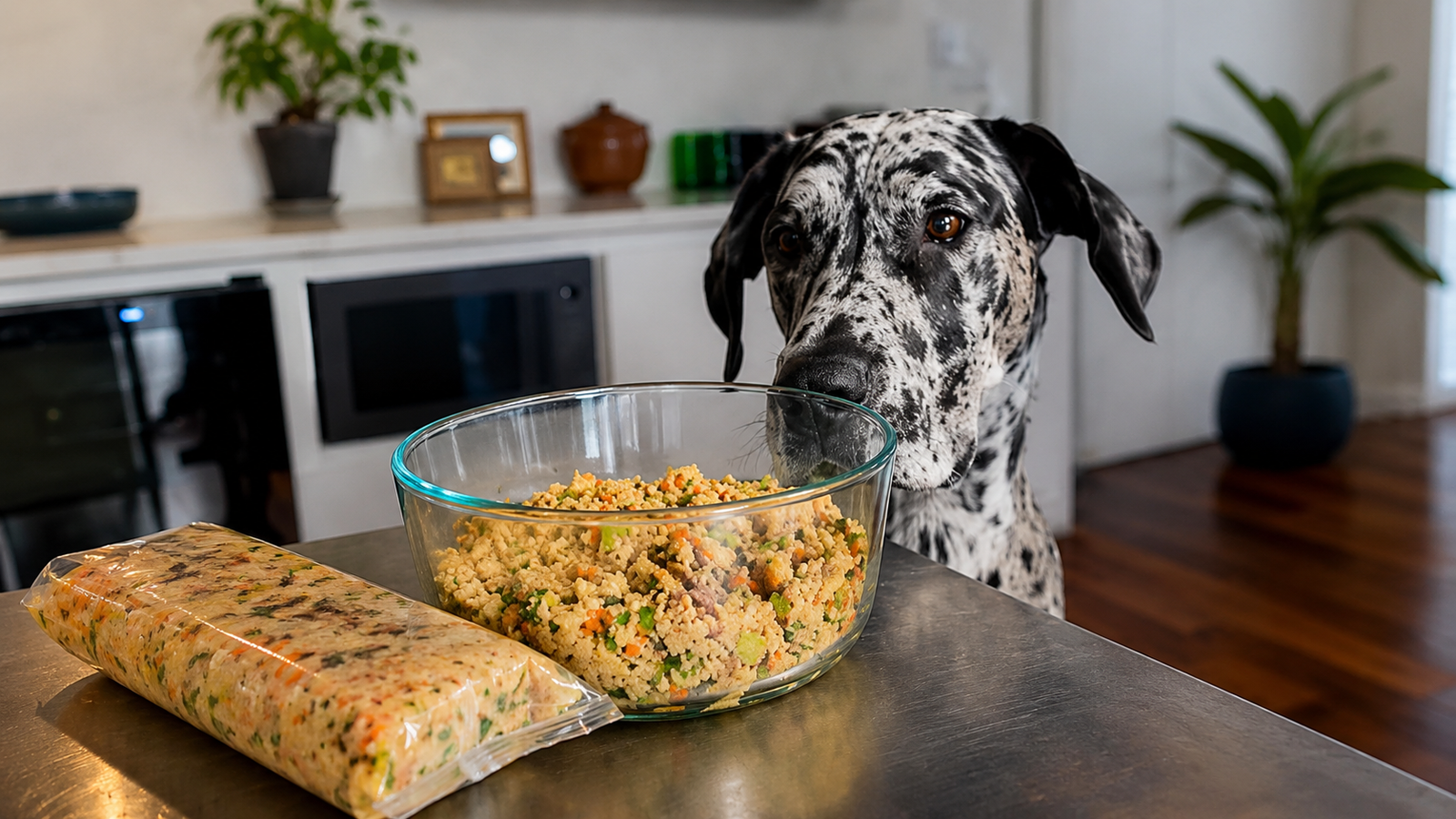
If you own a dog and spend any time on social media, you have probably seen an ad for The Farmer’s Dog. The bright packaging, the happy pups, the promise of real, human grade food instead of processed kibble. It is one of the most talked about names in fresh dog food, and that popularity naturally raises a fair question: is it actually worth the price, or is this just clever marketing?
This review breaks down everything you need to know about The Farmer’s Dog, based on how the service actually works, what goes into the food, how much it costs, and where it falls short. Whether you are switching from kibble for the first time or comparing fresh food delivery services, this guide will help you decide if it fits your dog and your budget.
What Is The Farmer’s Dog
The Farmer’s Dog is a subscription based fresh dog food company that delivers pre portioned, gently cooked meals straight to your door. The company was founded by two dog owners, Brett Podolsky and Jonathan Regev, after Brett’s dog struggled with chronic digestive issues that improved once she was switched to a homemade diet.
That personal experience became the foundation of the business. Instead of relying on rendered meals or heavily processed ingredients common in most commercial pet food, the company built its recipes around whole, human grade ingredients formulated by veterinary nutritionists.
Since launching, The Farmer’s Dog has grown into one of the most recognized names in the fresh pet food space, and it regularly appears in comparisons and recommendations from veterinarians and pet publications alike.
How The Farmer’s Dog Works
Getting started with The Farmer’s Dog is straightforward, and the entire experience is built around personalization rather than a one size fits all approach.
The Sign Up Process
New customers begin by filling out a short questionnaire about their dog. This includes details like:
- Age, breed, and weight
- Activity level and body condition
- Any known allergies or health issues
- Current diet and feeding habits
Based on those answers, the platform calculates a recommended daily calorie intake and suggests recipes that suit your dog’s specific needs.
Choosing Recipes and Portions
You can select up to a few recipes to rotate through each delivery, and adjust the quantity based on how frequently you want food shipped. Most people opt for either a two week or monthly delivery cycle, which can be paused, skipped, or changed at any time.
Delivery and Storage
Meals arrive frozen in individually labeled pouches, packed with insulation and ice packs to keep everything cold during transit. Once your box arrives, food should go into the freezer, with only a few days’ worth kept in the fridge for immediate use.
Each pouch is portioned for a specific meal, so there is no measuring or guesswork involved at feeding time.
What Is Actually In the Food
This is where the farmers dog reputation really comes from. The recipes rely on whole protein sources, vegetables, and minimal additional ingredients, all made in facilities that follow human food safety standards rather than the lower bar set for typical pet food manufacturing.
Protein Sources
Recipes are built around a handful of core proteins, including chicken, beef, turkey, and pork. Each one is paired with organ meat, like liver, to naturally boost nutrient density.
Vegetables and Whole Foods
Depending on the recipe, you will find ingredients such as:
- Broccoli and Brussels sprouts for fiber and antioxidants
- Sweet potatoes for digestible carbohydrates
- Kale and spinach for vitamins A and K
- Chickpeas or lentils, depending on whether the recipe is grain inclusive or grain free
Cooking Method
Ingredients are gently cooked at temperatures high enough to eliminate harmful bacteria, but low enough to retain most of the natural nutrients. This is a meaningful difference compared to kibble, which is typically extruded at very high heat, a process that can degrade nutritional value and often requires synthetic vitamins to compensate.
All recipes are formulated to meet AAFCO nutrient standards for complete and balanced nutrition, and the company also references World Small Animal Veterinary Association guidelines in how it approaches recipe development.
The Farmer’s Dog Pricing Explained
Cost is often the biggest hesitation people have before trying fresh dog food, and it is a fair concern since fresh meals will always cost more than a bag of kibble.
Pricing depends heavily on your dog’s size, activity level, and how many recipes you choose. As a general guide:
- Small dogs typically start around 80 dollars per month
- Medium dogs often fall somewhere between 150 and 250 dollars per month
- Large dogs, especially those over 60 pounds, can run 300 dollars or more per month
New customers are usually offered a discounted trial box, which is a helpful way to test how your dog responds before committing to a full subscription.
If the full cost feels like a stretch, many owners use The Farmer’s Dog as a topper mixed with regular kibble rather than a complete replacement, which lowers the monthly spend while still adding fresh nutrition to your dog’s diet.
Pros of The Farmer’s Dog
After looking at how the service performs across ingredients, convenience, and customer experience, a few clear strengths stand out.
Genuinely high quality ingredients. The use of human grade meat and vegetables is not just a marketing claim. Meals are made in USDA regulated facilities, and the ingredient lists are short and recognizable.
Strong personalization. Portions are calculated specifically for your dog rather than relying on generic feeding charts, which helps with both proper nutrition and weight management.
Convenient delivery and packaging. Pre portioned, labeled pouches make daily feeding simple, and the included storage container helps keep things organized in your fridge.
Responsive customer service. Many long term customers highlight quick, human replies when adjusting orders, pausing deliveries, or handling unexpected issues like travel or loss of a pet.
Vet backed formulation. Recipes are developed with input from board certified veterinary nutritionists, which adds a layer of credibility that budget fresh food brands sometimes lack.
Where The Farmer’s Dog Falls Short

No product is perfect, and it is worth being upfront about the tradeoffs before you commit.
Higher Cost Than Traditional Food
This is the most obvious downside. Fresh food delivery will almost always cost more than kibble, and for owners of large breed dogs, the monthly bill can be significant.
Freezer Space Requirements
Storing several weeks of frozen food takes up real freezer space, which can be a genuine logistical challenge in smaller kitchens or households already tight on storage.
Limited Protein Variety
With only a handful of protein options available, chicken, beef, turkey, and pork, dogs with allergies to these common proteins may not find a suitable recipe. Novel protein options like duck, venison, or rabbit are simply not part of the lineup.
Not Designed for Prescription Diets
Dogs that require a specific therapeutic or prescription diet due to conditions like kidney disease or pancreatitis will need a different solution, since The Farmer’s Dog does not offer veterinary prescription formulas.
Non Resealable Packaging
Once opened, pouches cannot be resealed, so portioning smaller amounts or using the food as an occasional topper can get a little messy without the included storage container.
Is The Farmer’s Dog Good for Picky Eaters and Sensitive Stomachs
One pattern that comes up repeatedly among long term customers is how well the food works for dogs who are notoriously difficult to feed. Because the recipes rely on real, aromatic ingredients rather than processed pellets, many picky eaters respond enthusiastically to the smell and texture alone.
For dogs with sensitive stomachs, the simplified ingredient lists and gentle cooking process can also make digestion easier compared to heavily processed kibble. That said, any diet change, fresh or otherwise, carries some risk of temporary digestive upset, which is why a slow transition matters more than the brand of food itself.
If your dog has a documented food sensitivity, it is still worth discussing specific ingredients with your veterinarian before switching, since even natural, whole food ingredients can trigger reactions in individual dogs.
The Farmer’s Dog vs Kibble vs Other Fresh Food Brands
It helps to see how The Farmer’s Dog stacks up against the alternatives most owners are actually choosing between.
Fresh Food vs Kibble
Kibble is shelf stable, inexpensive, and convenient, but it is also highly processed and often relies on rendered meat meals rather than whole cuts. Fresh food, including The Farmer’s Dog, generally offers higher digestibility and more transparent ingredient sourcing, at a meaningfully higher price point.
The Farmer’s Dog vs Other Subscription Brands
Compared to other well known fresh food delivery services, The Farmer’s Dog is frequently priced somewhat lower for equivalent recipes and portion sizes, while offering a similarly rigorous formulation process. Some competitors offer a wider variety of protein sources, which may matter more if your dog has allergies to the standard chicken, beef, turkey, or pork lineup.
In practice, the differences between top fresh food brands tend to come down to protein variety, exact pricing at your dog’s specific weight, and small details in packaging or delivery flexibility, rather than dramatic differences in overall quality.
Who Should and Should Not Use The Farmer’s Dog
A good fit if:
- You want to move away from heavily processed kibble
- Your dog is a picky eater or has a generally sensitive stomach
- You are comfortable with a higher monthly food budget
- You have adequate freezer space
- Your dog does not require a prescription diet
Probably not the right fit if:
- Your dog needs a therapeutic or prescription formula
- Your dog has allergies to chicken, beef, turkey, and pork
- Freezer space is extremely limited
- Budget constraints make a premium fresh food subscription impractical long term
Tips for Transitioning Your Dog to Fresh Food
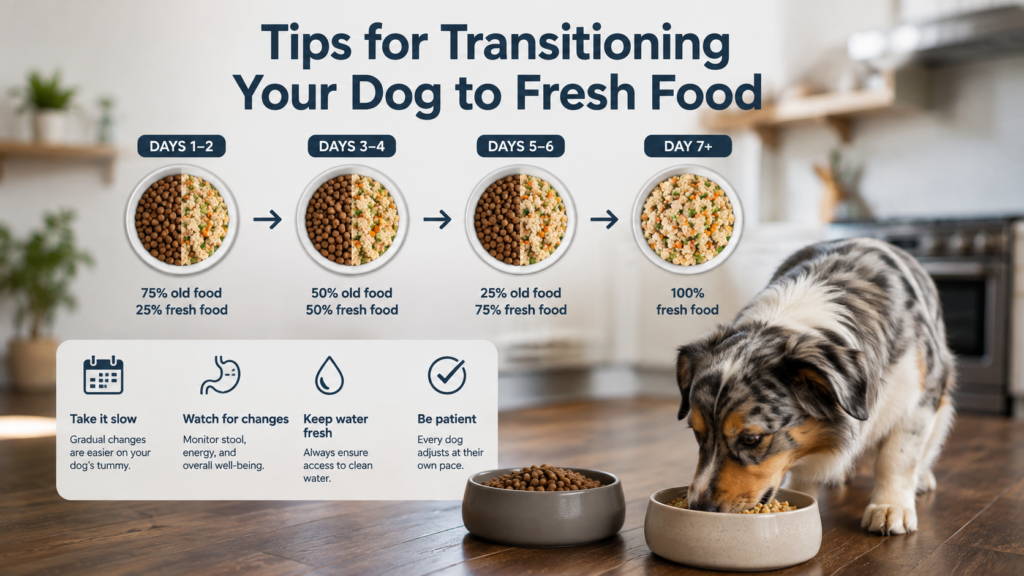
Switching diets too quickly is one of the most common reasons dogs experience temporary stomach upset, regardless of which fresh food brand you choose. A gradual transition makes the process much smoother.
- Start by mixing a small amount of the new food with your dog’s current diet, roughly 25 percent fresh food to 75 percent old food.
- Over the course of five to seven days, slowly increase the ratio of fresh food while decreasing the old food.
- Watch for signs of digestive upset, like loose stool or reduced appetite, and slow the transition further if needed.
- Keep feeding times consistent to help your dog’s digestive system adjust more predictably.
- If issues persist beyond a week or two, reach out to your veterinarian to rule out other causes.
Most dogs adjust within a week, and many owners report noticeable improvements in coat condition, energy, and stool quality once the transition is complete.
Final Verdict
So, is The Farmer’s Dog really worth the hype in 2026? For most dog owners who value ingredient quality, are comfortable with a higher food budget, and want a genuinely personalized feeding plan, the answer is yes. The recipes are thoughtfully formulated, the customer service reputation is strong, and the real world results owners describe, better coats, steadier energy, and improved digestion, line up with what you would expect from a well designed fresh food diet.
That said, it is not a universal solution. Owners of dogs with specific protein allergies, prescription dietary needs, or tight household budgets may find better options elsewhere. The best approach is to weigh your dog’s specific health needs and your own budget against what the service offers, rather than deciding based on marketing alone.
If you are on the fence, taking advantage of an introductory trial box is the lowest risk way to see how your own dog responds before committing to a full subscription.
Frequently Asked Questions
Is The Farmer’s Dog worth the money?
For most dogs, yes, especially if you are looking to move away from processed kibble and want ingredient transparency and personalized portions. The value comes down to your budget and your dog’s specific dietary needs.
How much does The Farmer’s Dog cost per month?
Pricing varies by your dog’s size and recipe selection, but small dogs typically start around 80 dollars a month, while large dogs can cost 300 dollars or more monthly.
Can I use The Farmer’s Dog as a food topper instead of a full replacement?
Yes. Many owners mix a smaller portion of fresh food with their dog’s regular kibble to add nutritional value while keeping monthly costs lower.
Does The Farmer’s Dog work well for dogs with sensitive stomachs?
Many owners report improved digestion thanks to the simplified ingredient lists and gentle cooking process, though any diet change should be introduced gradually to avoid temporary upset.
Is The Farmer’s Dog suitable for dogs with food allergies?
It depends on the allergy. Since recipes are limited to chicken, beef, turkey, and pork, dogs that need novel protein sources or a prescription diet will likely need a different food option.
