
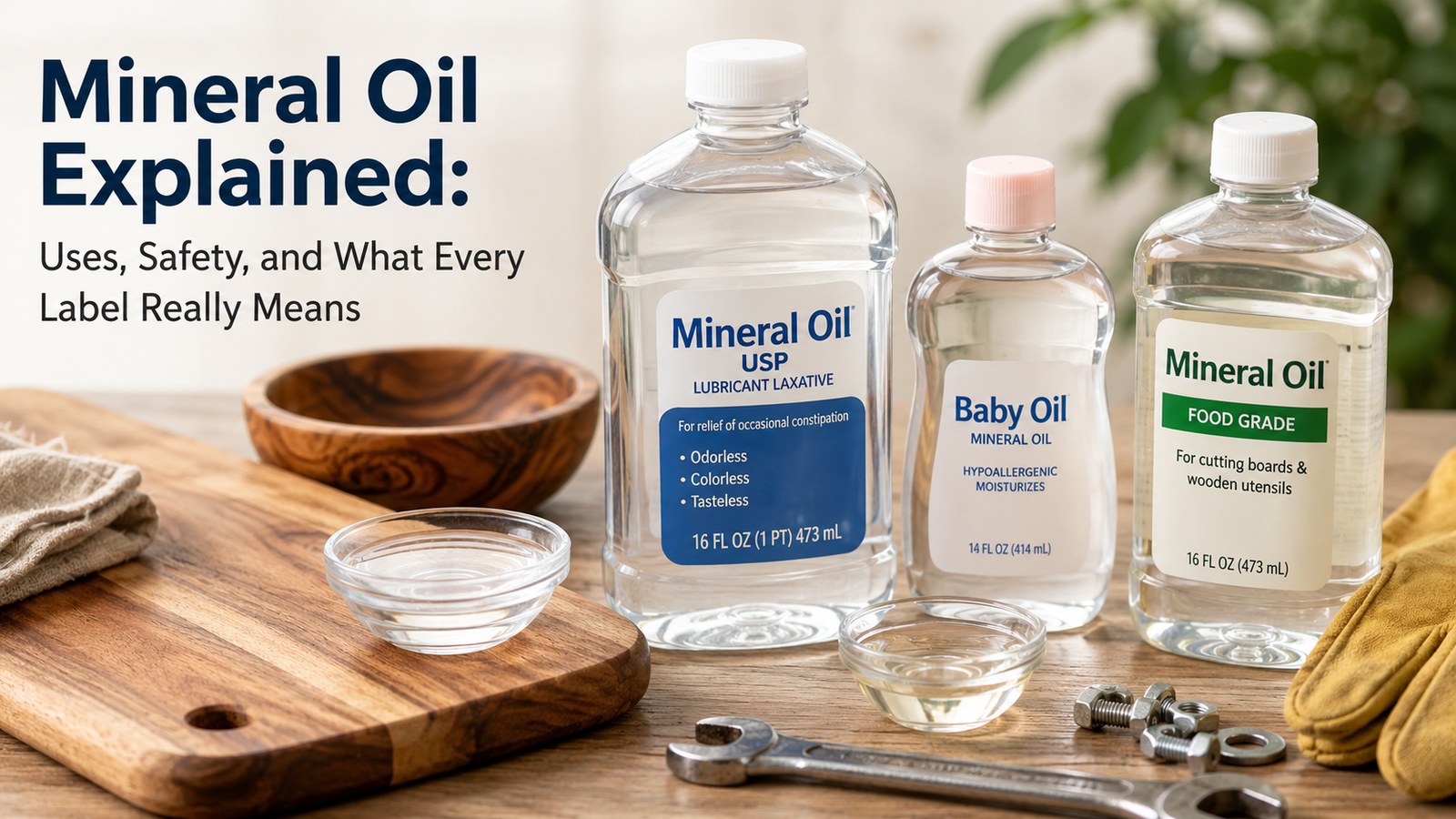
Few ingredients spark as much confusion at the drugstore or the pharmacy shelf as mineral oil. It shows up in baby lotion, laxative bottles, cutting board care kits, and industrial equipment manuals, and that range alone raises an obvious question: is it the same substance in every case, and is it actually safe.
This guide answers that question in plain language. Instead of repeating the same surface level definition you can find anywhere, we will walk through what mineral oil actually is, how the different grades differ from one another, where the safety concerns come from, and how to use it correctly depending on what you are trying to do with it.
What Is Mineral Oil
Mineral oil is a colorless, odorless liquid made mostly of alkanes, which are simple hydrocarbon molecules derived from crude oil. It is a byproduct of the petroleum refining process, created during the distillation steps used to produce gasoline and other fuels.
Despite the industrial sounding origin, the mineral oil found in cosmetics, laxatives, and food safe products goes through extensive purification before it ever reaches a store shelf. This refining step is the single most important detail to understand, since it separates safe consumer grade oil from the crude, unrefined version used in heavy machinery.
You may also see mineral oil listed under other names, including liquid paraffin, paraffinum liquidum, or white oil. These are simply different labels for the same general category of refined petroleum liquid, and the terminology often depends on the country or the type of product it appears in.
How Mineral Oil Is Made
Crude oil is heated and separated into different fractions based on boiling point, a process known as fractional distillation. Mineral oil is one of the middle fractions that remains after lighter products like gasoline and heavier products like asphalt are removed.
At this stage, the oil still contains impurities and compounds that are not suitable for use on skin or in food. Manufacturers remove these through additional refining processes such as hydrotreating and solvent extraction, which strip out sulfur compounds, aromatic hydrocarbons, and other unwanted byproducts.
The final result is a lightweight, chemically stable oil with no taste, no scent, and a long shelf life, which is exactly why it became such a popular base ingredient across so many industries.
The Different Grades of Mineral Oil

One of the biggest sources of confusion around mineral oil comes from the fact that not all mineral oil is created equal. Understanding the grades makes it much easier to judge whether a product is appropriate for its intended use.
Industrial or Technical Grade
This is the least refined version, used in machinery, hydraulic systems, and manufacturing equipment. It may still contain trace contaminants and is not intended for contact with skin or food, so it should never be substituted for cosmetic or food grade products.
Cosmetic Grade
Cosmetic grade mineral oil is highly purified and specifically formulated for use in lotions, creams, baby oil, and makeup removers. It is tested to be gentle on skin, non irritating, and non comedogenic when properly refined, meaning it will not clog pores under normal use.
Food Grade
Food grade mineral oil undergoes the strictest purification and is approved for direct or indirect contact with food. This is the type recommended for treating wooden cutting boards, salad bowls, and kitchen utensils, since any residue left behind is considered safe for ingestion in small amounts.
Pharmaceutical or USP Grade
This grade meets the standards set by the United States Pharmacopeia and is used in oral laxatives, enemas, and certain medical procedures. It carries the highest level of quality control, since it is designed to be taken internally.
Knowing which grade you are holding matters more than almost anything else when deciding how to use a bottle of mineral oil safely.
Is Mineral Oil Safe: Separating Fact From Old Concerns
Mineral oil has one of the more complicated reputations of any common household ingredient, largely due to outdated information that continues to circulate online.
The confusion often traces back to a classification issue. Untreated or minimally treated mineral oils have been identified as a known carcinogen when there is prolonged, high level occupational exposure, such as in certain manufacturing environments. Highly refined mineral oil, the type found in cosmetics and pharmaceuticals, falls into a completely different category and has not been shown to carry that same risk.
This distinction is the single most important fact missing from a lot of casual online discussion. The oil in your body lotion has undergone extensive processing specifically to remove the compounds responsible for that earlier concern.
Regulatory bodies including the World Health Organization and major dermatology associations have reviewed cosmetic grade mineral oil extensively, and it continues to be approved for use in skincare, baby products, and pharmaceuticals around the world.
That said, safety always depends on using the right grade for the right purpose. Industrial mineral oil should stay in the garage, and cosmetic or food grade mineral oil should stay in the bathroom or kitchen.
Mineral Oil for Skin and Cosmetics
Cosmetic grade mineral oil is an occlusive, which means it forms a thin barrier on the surface of the skin that helps prevent water loss. This is the same basic mechanism behind many popular moisturizers, including those built around petroleum jelly or shea butter.
For people with dry or sensitive skin, this barrier effect can be genuinely helpful, especially in colder months or dry climates where skin loses moisture quickly. Mineral oil is also fragrance free and rarely causes allergic reactions, which is part of why it remains a common ingredient in products designed for babies and people with eczema.
The persistent myth that mineral oil clogs pores mostly stems from decades old comedogenicity lists that were never updated to reflect modern refining standards. Highly refined cosmetic mineral oil sits on the surface of skin rather than absorbing into pores, and current dermatological research generally does not support the clogging concern for most skin types.
If you have particularly acne prone skin, patch testing any new product, mineral oil based or otherwise, is still a smart habit before applying it to your face.
Mineral Oil as a Laxative
Pharmaceutical grade mineral oil works as a lubricant laxative, coating the inside of the intestines and softening stool to make it easier to pass. It is typically used for short term relief of occasional constipation rather than as a long term solution.
A few practical points are worth knowing if you are considering it for this purpose:
- It usually takes between six and eight hours to produce a bowel movement after taking it orally
- It should be taken on an empty stomach, ideally two hours away from other medications
- Long term or excessive use can interfere with the absorption of fat soluble vitamins
- It should not be given to children under six or to anyone who has difficulty swallowing or is bedridden, due to the risk of the oil being inhaled into the lungs
Because of these considerations, it is worth talking to a pharmacist or doctor before using mineral oil regularly, particularly if you are pregnant, elderly, or managing another health condition.
Mineral Oil for Wood, Cutting Boards, and Kitchen Tools
Food grade mineral oil is one of the most recommended products for maintaining wooden cutting boards, butcher blocks, and salad bowls. Wood is porous, and without regular conditioning it can dry out, crack, or absorb odors and bacteria from food.
To treat a wooden cutting board, apply a generous amount of food grade mineral oil with a clean cloth, let it soak in for several hours or overnight, then wipe away any excess. Repeating this once a month, or whenever the wood starts to look dry or pale, keeps the surface sealed and food safe.
It is important to avoid vegetable oils like olive or canola oil for this purpose. Unlike mineral oil, plant based oils can turn rancid over time, leading to unpleasant odors and potential bacterial growth on the wood surface.
Industrial and Household Uses
Beyond skincare and kitchen care, mineral oil plays a surprisingly wide role in everyday life. Its chemical stability, lack of conductivity, and resistance to freezing make it useful in several practical applications.
Some of the more common uses include:
- Lubricating metal tools, hinges, and small mechanical parts to prevent rust
- Acting as an insulating and cooling fluid in electrical transformers
- Serving as a hydraulic fluid in certain machinery due to its incompressible nature
- Polishing and protecting stone surfaces like alabaster
- Preventing static and dust buildup on leather goods and certain finishes
While these industrial applications use mineral oil for very different reasons than skincare or wood care, the underlying properties, chemical stability, low reactivity, and resistance to degradation, are the same qualities that make it useful across such a wide range of settings.
Mineral Oil Versus Common Alternatives
It is worth comparing mineral oil against a few frequently mentioned alternatives, since the right choice depends heavily on the specific task.
For skin moisturizing, mineral oil is often compared with coconut oil or petroleum jelly. Petroleum jelly creates a thicker, more occlusive barrier and works well for very dry or cracked skin, while mineral oil feels lighter and absorbs into the surface faster, making it a better fit for daily lotion use. Coconut oil offers a more natural origin but can clog pores for some skin types and has a shorter shelf life.
For cutting board maintenance, mineral oil clearly outperforms vegetable oils because it will not turn rancid, though some people prefer beeswax based conditioning products for an extra protective layer on top of the oil.
For constipation relief, mineral oil is generally gentler than stimulant laxatives, but it works more slowly and is not recommended for regular, ongoing use the way some fiber based options are.
How to Choose and Store Mineral Oil Correctly
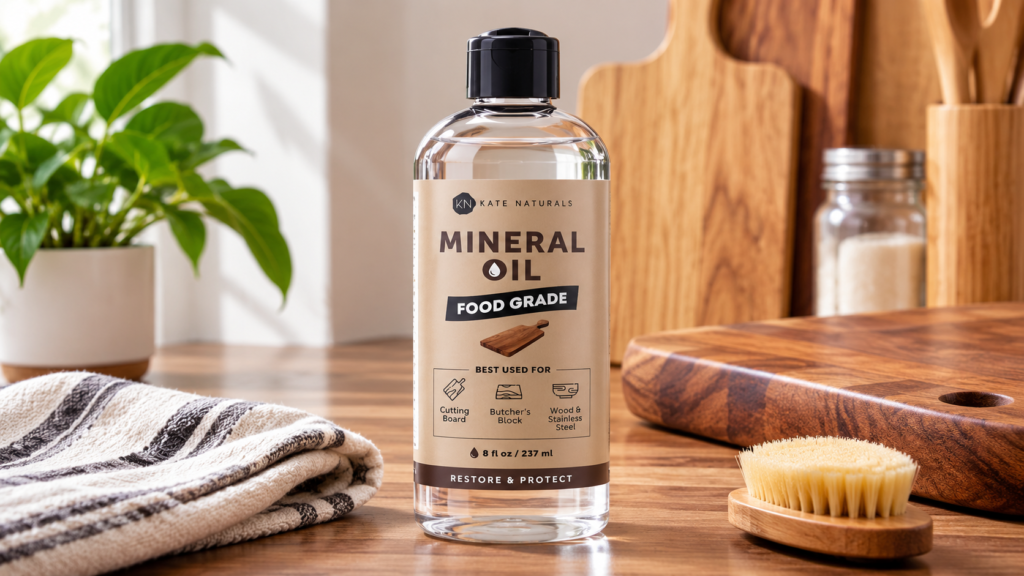
When buying mineral oil, always check the label for its intended grade. A bottle marketed for cutting boards or skincare will typically say food grade or cosmetic grade directly on the packaging, while pharmacy shelves will carry USP labeled products meant for internal use.
Store mineral oil in a cool, dry place away from direct sunlight. It has a notably long shelf life compared to many oils since it does not oxidize or turn rancid the way plant based oils do, but keeping the cap tightly sealed helps prevent contamination over time.
If a bottle changes color, develops an unusual smell, or shows any signs of contamination, it is best to replace it rather than continue using it, even though this is uncommon given how chemically stable the product is.
Conclusion
Mineral oil is a genuinely useful, well studied ingredient that has earned its long standing place in skincare, medicine cabinets, and kitchens around the world. The safety concerns that follow it online almost always trace back to unrefined, industrial grade oil, not the highly purified cosmetic, food, or pharmaceutical grade versions found in consumer products.
The practical takeaway is simple: match the grade to the task. Use cosmetic grade mineral oil for skin, food grade for cutting boards and utensils, and pharmaceutical grade only under guidance for occasional constipation relief. With that distinction in mind, mineral oil remains one of the most reliable, affordable, and versatile products you can keep on hand.
Frequently Asked Questions
Is mineral oil bad for your skin?
Highly refined cosmetic grade mineral oil is generally considered safe and effective for moisturizing skin. It forms a protective barrier that helps prevent water loss and rarely causes irritation or allergic reactions.
Does mineral oil cause cancer?
Untreated or minimally refined mineral oil used in some industrial settings has been linked to cancer risk with prolonged occupational exposure. Highly refined cosmetic and pharmaceutical grade mineral oil does not carry that same classification.
Can I use regular mineral oil on a cutting board?
You should specifically use food grade mineral oil for cutting boards and other kitchen wood items, since it is purified to a standard that is safe for contact with food.
How much mineral oil should I take for constipation?
Dosing should follow the instructions on the product label or guidance from a healthcare provider, since it varies by age and the specific product. It is generally intended for occasional, short term use rather than daily reliance.
Is mineral oil the same as baby oil?
Baby oil is essentially cosmetic grade mineral oil with added fragrance. The base ingredient is the same, but baby oil is formulated specifically for gentle use on infant and adult skin.
