
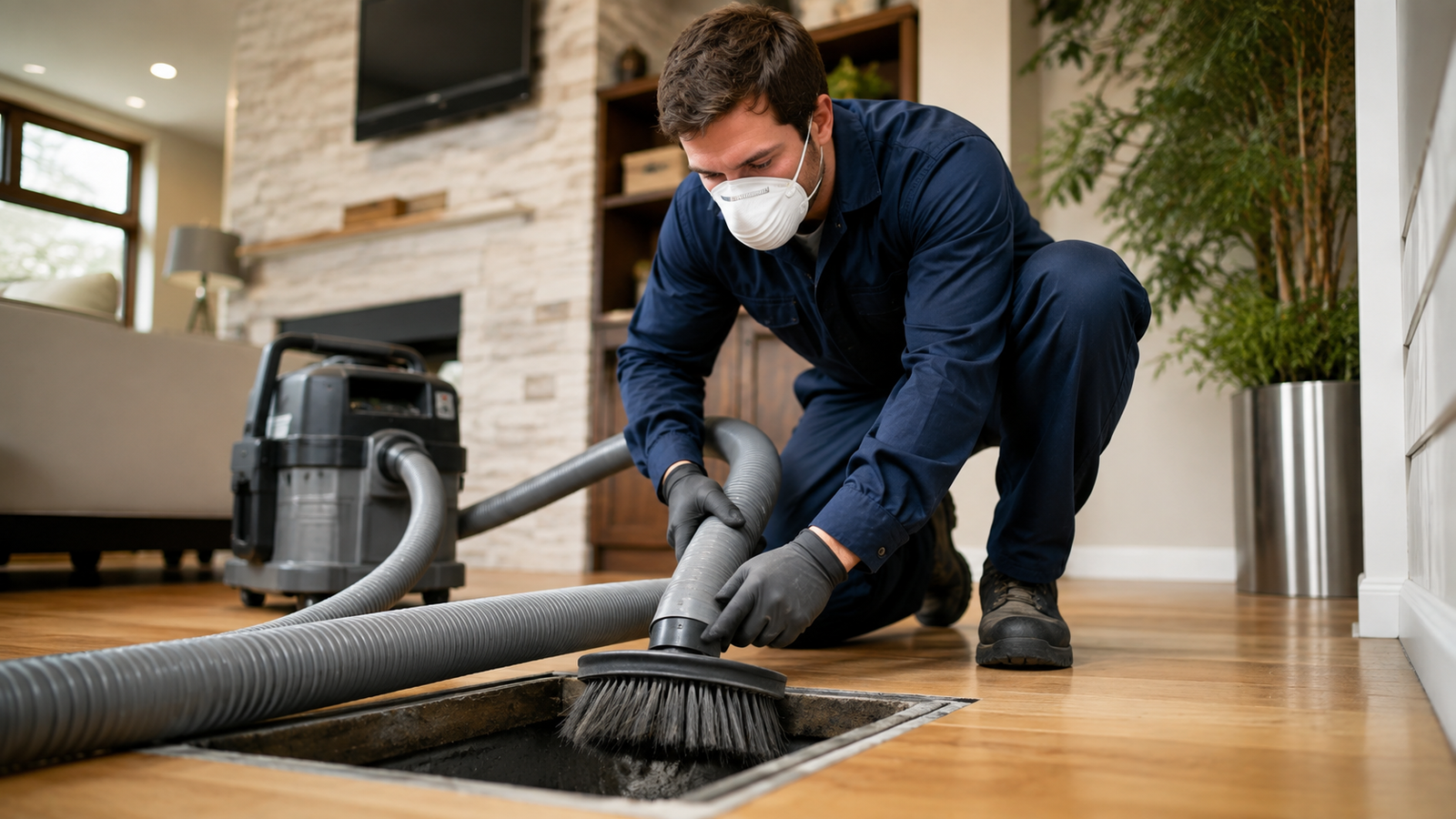
You noticed dust puffing out of a vent, or maybe a musty smell drifting through the house every time the furnace kicks on. Naturally, you started searching for an air duct cleaning service and now you are staring at a dozen different price quotes and just as many conflicting opinions.
This guide cuts through the noise. You will learn exactly what the service involves, what a fair price actually looks like in 2026, when it is genuinely worth booking, and how to avoid the pushy sales tactics that give parts of this industry a bad name.
What an Air Duct Cleaning Service Actually Does
An air duct cleaning service is a whole system cleaning of your home’s HVAC ductwork. That includes the supply lines, return lines, registers, grilles, and often the air handler, blower motor, and coils too.
The purpose is straightforward. Technicians remove the dust, pet hair, pollen, and general debris that builds up inside your ducts so it stops circulating through your living space every time the system runs.
Most legitimate companies work according to standards published by the National Air Duct Cleaners Association, commonly known as NADCA. That organization defines what counts as a proper whole system clean, including which tools and techniques are considered industry standard.
Step by Step: How the Cleaning Process Works
Knowing the actual process helps you judge whether a company is doing a real job or just running a vacuum for twenty minutes and calling it done.
Inspection First
A technician usually starts with a visual or camera inspection of the ductwork. This tells them how dirty the system is, whether there is mold or pest activity, and roughly how long the job will take.
Protecting Your Home
Before any equipment turns on, the crew should cover nearby flooring and furniture and seal off vents that are not part of the cleaning zone. This step matters more than people expect, since duct cleaning can kick up a fair amount of dust.
Creating Negative Pressure
A powerful vacuum, often mounted on a truck outside, connects to the main trunk line. This creates negative pressure throughout the system so loosened debris gets pulled out rather than pushed further into your home.
Agitating the Debris
Technicians use tools such as rotary brushes, air whips, and compressed air to knock dust and buildup loose from the interior duct walls. This is the part that actually does the cleaning, and skipping it is one of the biggest shortcuts low quality providers take.
Cleaning the Components
A thorough job also covers the vent covers, blower motor, evaporator coil, and sometimes the furnace itself. If a company only touches the visible ductwork and skips these parts, you are not getting the full service.
Final Check
Good technicians finish with a walkthrough, sometimes including before and after photos, and reinstall every cover properly before leaving.
Air Duct Cleaning Cost Breakdown
Pricing depends on your home’s size, the number of vents, how accessible your ductwork is, and your region. Based on national averages for 2026, here is a realistic breakdown.
| Cost Factor | Typical Range |
|---|---|
| Average total cost | $270 to $500, averaging around $389 |
| Price per vent | $25 to $50 each |
| Price per square foot of ductwork | $0.15 to $0.30 |
| Labor rate | $90 to $125 per hour |
| Job duration | Three to eight hours |
Extra Costs That Can Show Up
Certain conditions push the price higher, and it helps to know these before a technician arrives.
- Video inspection: $70 to $130 if not already included
- Mold remediation: often over $1,000 depending on how extensive it is
- Pest or rodent removal: roughly $100 to $1,200
- Dryer vent cleaning: about $100 when bundled, more if done separately
- Duct repair or sealing: $200 to $800
Homes with hard to reach ductwork, flexible ducts instead of metal, or ducts that have never been cleaned should expect quotes on the higher side.
When It Is Worth Paying For
Plenty of debate exists around whether routine duct cleaning meaningfully improves air quality. The EPA has stated there is no conclusive proof that dirty ducts alone raise health risks in an average home. Still, there are clear situations where the service pays off.
- You can see mold growth inside the ducts or around vent covers
- A recent renovation left construction dust throughout the system
- You have found droppings, insect activity, or nesting material near a vent
- Airflow feels weak and you can visibly see debris blocking a register
- You just bought a home and want to know what the last owner left behind
- Someone in the household has allergies or asthma that seem worse indoors
In each of these cases, cleaning solves a real, identifiable problem rather than acting as a generic once a year chore.
When You Can Reasonably Wait
On the other hand, this is not a service every home needs on autopilot. You can probably hold off if:
- The home is fairly new with limited buildup so far
- You already replace filters regularly and schedule annual HVAC maintenance
- There is no visible mold, pests, or heavy debris blocking airflow
- Nobody in the house has noticed new respiratory symptoms or odd smells
Spending several hundred dollars on a system that does not need it is not a great use of your home maintenance budget. A standalone inspection is a much cheaper way to get a clear answer before committing to a full cleaning.
Warning Signs Your Ducts Need Attention
Rather than cleaning on a fixed schedule, it makes more sense to watch for actual symptoms. Here is what to look out for.
- A musty or stale odor when the HVAC system kicks on
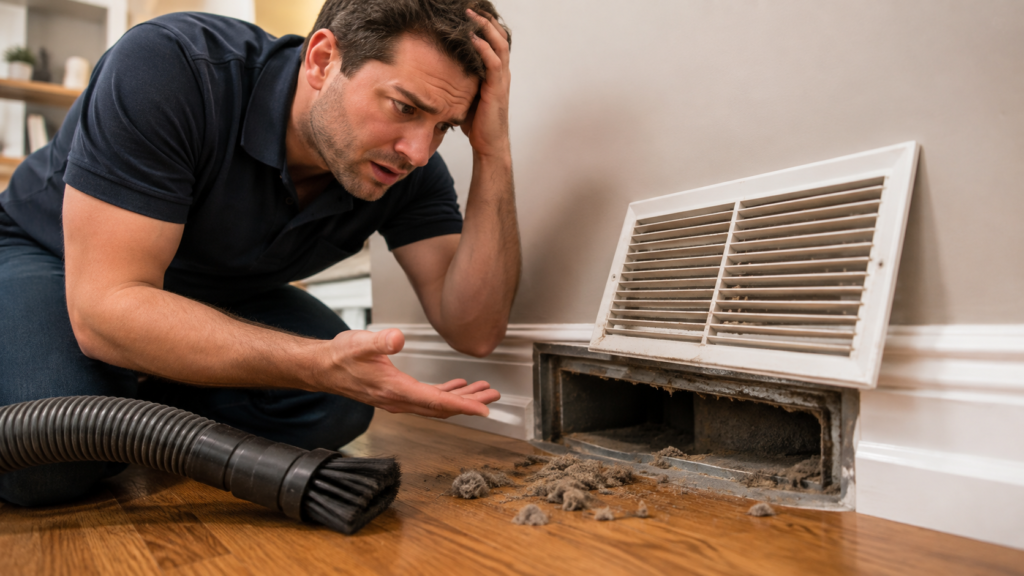
- Dust blowing visibly out of registers shortly after you have cleaned a room
- Allergy symptoms that ease up as soon as you leave the house
- Rodent droppings, insect shells, or nesting debris near a vent
- Noticeably uneven airflow between rooms that used to feel balanced
If a couple of these sound familiar, it is a reasonable time to schedule an inspection.
DIY Duct Cleaning: What You Can and Cannot Do
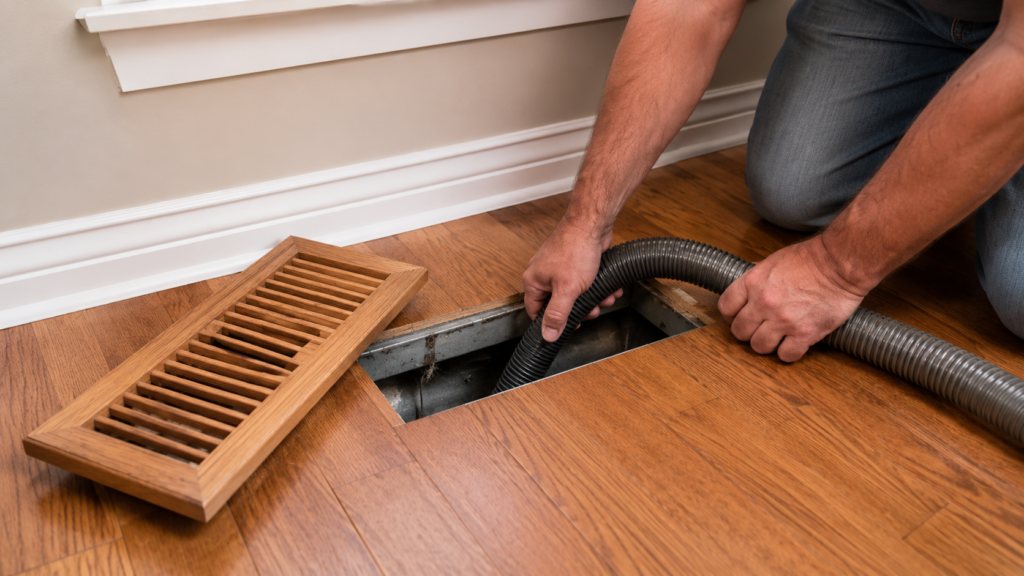
You can absolutely handle some maintenance yourself. Removing and washing vent covers, vacuuming the first few feet of accessible ductwork, and swapping filters more often are all useful habits between professional visits.
What you cannot really do is clean deep inside the duct system, the plenum, or the coils. Most households simply do not own equipment strong enough to create the negative pressure needed to safely pull debris out of a full duct run.
Trying a full DIY clean with a household vacuum often just stirs dust up and pushes it further into the system instead of removing it. If mold or pests are involved, skip DIY entirely, since mishandling either can spread contamination through your home.
How to Vet a Duct Cleaning Company
Not every provider offers the same quality, and in this industry a rock bottom price usually means a rock bottom job. Use this checklist before hiring anyone.
Confirm Certification
Ask whether the technicians are NADCA certified. It is the clearest sign the company follows real industry standards instead of improvising on the job.
Get an Itemized Quote
A trustworthy company explains exactly what is included, whether pricing is per vent, flat rate, or hourly. Be wary of quotes that stay vague when you ask for specifics.
Ask About Equipment
Truck mounted vacuums paired with agitation tools are the industry standard. A company relying only on a small portable vacuum is unlikely to deliver a thorough clean.
Request Proof of the Work
Reputable technicians are usually glad to share before and after photos or video. That transparency is a strong sign they stand behind their results.
Check Detailed Reviews
Specific reviews mentioning punctuality, communication, and thoroughness tend to be far more useful than a simple star rating.
Red Flags and Common Scams
This industry has a history of bait and switch pricing, so it pays to recognize warning signs before you sign anything.
- Coupon deals advertising whole house cleaning for under $100, which rarely cover the full job and usually lead to upselling once the crew arrives
- High pressure claims that your ducts are dangerously contaminated without any real inspection to support it
- Technicians who cannot explain their process or refuse to show you what they found
- Companies that will not provide proof of licensing or certification when asked directly
- Quotes that suddenly change once the crew is already inside your home
If something about the pitch feels off, trust that instinct and get a second opinion before agreeing to anything.
Final Takeaways
An air duct cleaning service is not a scam, and it is not a miracle cure either. Its real value shows up when it solves an actual problem, whether that is visible mold, pest contamination, or the aftermath of a dusty renovation.
Before you book anything, request a written quote, confirm NADCA certification, and ask exactly what the service includes. Skip any company that pressures you or offers a suspiciously cheap deal. Follow that approach and you will end up with genuinely cleaner ducts, a fair price, and one less thing to worry about at home.
Frequently Asked Questions
How often should air ducts be cleaned?
Most professionals suggest every two to three years for typical households, though homes with pets, smokers, or recent renovation work may benefit from more frequent cleaning.
Does cleaning air ducts really improve indoor air quality?
It can help in specific situations, such as removing mold or heavy debris, but there is limited evidence that routine cleaning alone dramatically improves air quality in an otherwise well maintained home.
Can duct cleaning lower my energy bill?
Some research suggests a cleaner system runs a bit more efficiently, though savings tend to be modest rather than dramatic and depend on how dirty the ducts were beforehand.
Is air duct cleaning included in my HVAC warranty?
Routine cleaning is generally treated as maintenance and is not covered by manufacturer warranties, although certain home warranty plans may include it as an add on.
When is the best time of year to clean air ducts?
Spring and fall work well, since these seasons let you clear out buildup from the previous season before your system faces heavy summer or winter use.
