
If you have ever tested your own patio door by pushing on the glass or wiggling the handle, you already know the uncomfortable truth. Most sliding doors are easier to force open than people realize, and burglars know it too. Learning how to secure sliding doors is not about buying every gadget on the market. It is about understanding exactly where these doors fail and closing those specific gaps.
This guide walks through the seven most common weak points on a sliding glass door, why each one matters, and the fixes that genuinely hold up against a determined intruder. Whether you rent an apartment or own your home, you will find practical options here that fit your budget and your lease.
Why Sliding Doors Are a Common Target
Sliding glass doors were designed for a view and for airflow, not for resisting force. The large glass panel, the exposed track, and the simple latch mechanism all make the door convenient to live with but relatively easy to defeat if nothing else is added.
Home security surveys consistently point to patio and sliding doors as one of the top entry points for break ins, right alongside first floor windows. That is not meant to scare you. It is meant to explain why the fixes below matter more than most homeowners assume.
The good news is that securing a sliding door does not require replacing it or spending a fortune. Most of the fixes in this article cost under fifty dollars and take less than an hour to install.
Weak Point 1: The Factory Latch
The little lever lock built into most sliding doors was never intended to be your only line of defense. It is thin, it sits in a shallow strike, and it can often be popped open with a flathead screwdriver or even a firm shove near the handle.
The Fix
Add an auxiliary lock designed specifically for sliding doors. Two reliable options include:
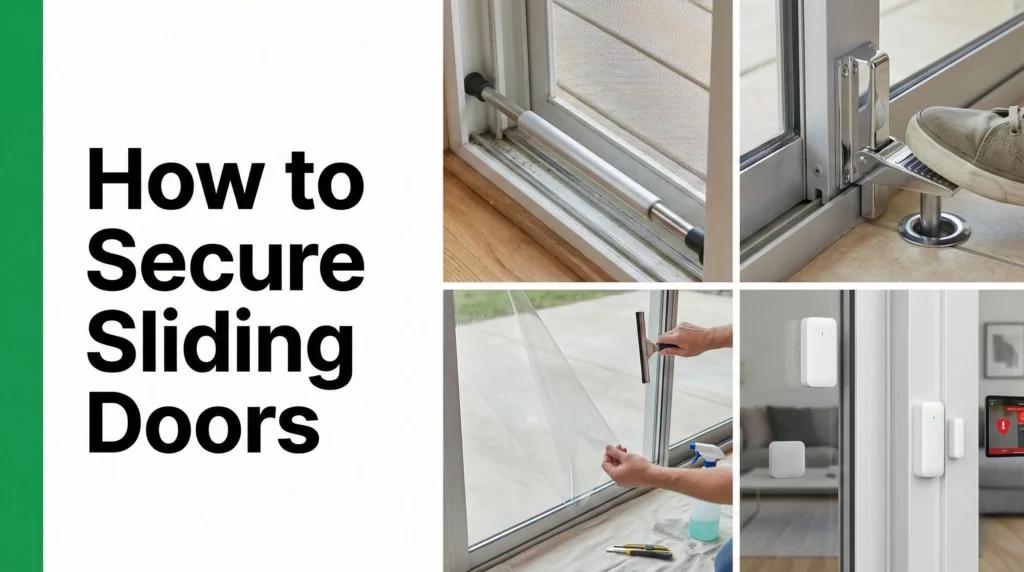
- A foot lock that bolts into the floor track and blocks the door from sliding, even if the main latch is defeated.
- A keyed sliding door lock that mounts to the frame and gives you a second, sturdier locking point above or below the factory latch.
These additions work independently from the original latch, so even if someone jimmies the handle, the door still will not move.
Weak Point 2: The Lift Out Panel
Here is something a lot of homeowners never think about. Many sliding doors can be lifted up and out of their bottom track, even when locked. Older installations especially tend to have too much vertical clearance, which means the whole panel can be tilted and pulled free.
The Fix
Install anti lift blocks or screws along the top track. These are small metal tabs or self tapping screws that reduce the vertical gap just enough to stop the door from being lifted out, while still letting it slide smoothly. This single fix closes one of the most overlooked vulnerabilities on any sliding door.
Weak Point 3: The Door Track
An empty track is an open invitation. Without anything physically blocking the door from sliding, a broken or bypassed latch means the door can simply be pushed open.
The Fix
This is where the classic security bar comes in, sometimes called a Charlie bar or a dowel rod. Placed inside the track when the door is closed, it physically prevents the door from sliding regardless of what happens to the latch.
A cut to length wooden dowel works in a pinch, but a purpose built adjustable security bar is sturdier, fits more precisely, and usually includes a release mechanism so you are not fumbling with it during an emergency exit.
Weak Point 4: The Glass Itself
Locks and bars protect the frame, but standard glass can still be shattered. A determined intruder who knows the track is blocked may simply break the pane and reach through to unlock everything else.
The Fix
Consider one of the following, depending on your budget:
- Security window film, a shatter resistant laminate applied directly to the glass that holds shards together even after impact, slowing down or stopping entry.
- Laminated safety glass, which is far more resistant to breaking than standard tempered glass and is worth considering if you are ever replacing the door.
- Impact resistant glazing, a step up in cost but a long term option for homes in high risk areas or storm prone regions.
None of these make the glass unbreakable, but they add crucial seconds and noise, which is often enough to deter an intruder who wants a quiet, quick entry.
Weak Point 5: No Secondary Locking Point
Relying on a single lock anywhere in your home is a gamble, and sliding doors are no exception. If the only thing standing between your living room and the outside is one latch, you are trusting an awful lot to a small piece of hardware.
The Fix
Layer your locking points. Combine the factory latch with a track blocking bar and a keyed auxiliary lock so that defeating one obstacle still leaves two more in place. This layered approach is the same principle used in commercial security and it applies just as well at home.
Weak Point 6: Poor Visibility and Lighting
A dark, hidden patio is far more appealing to a burglar than one that is well lit and visible from the street or from neighboring homes. Overgrown shrubs near the door, broken porch lights, or a fence that blocks sightlines all work against you.
The Fix
Add motion activated lighting near the sliding door and trim back any landscaping that creates hiding spots. This is one of the cheapest security upgrades available and it works because burglars overwhelmingly prefer to avoid being seen.
Weak Point 7: No Way to Know When the Door Opens
Even a well secured door leaves you exposed if you have no way of knowing it was tampered with or opened while you were asleep or away.
The Fix
A glass break sensor or a simple door contact sensor connected to a monitored alarm system closes this gap. Many modern systems send a phone alert the moment the sensor is triggered, which means you find out immediately rather than after the fact. Even a standalone battery powered door alarm, without a full monitoring subscription, adds a meaningful layer of awareness.
Renter Friendly Versus Permanent Solutions
Not every fix is appropriate if you are leasing your home, so it helps to separate temporary, damage free options from permanent upgrades.
Renter friendly options include security bars or dowels, foot locks that do not require drilling, removable window film, and battery operated door alarms. These can typically be removed without leaving marks and do not require landlord approval.
Permanent or owner level options include anti lift screws, keyed auxiliary locks that require drilling into the frame, laminated glass replacement, and hardwired monitored security systems.
If you are renting, always check your lease agreement or ask your landlord before installing anything that involves drilling, but most of the fixes above can be done without altering the property at all.
A Simple Way to Test Your Own Door
Before you buy anything, spend five minutes testing your current setup. This tells you exactly which fixes matter most for your specific door.
- Close and lock the door, then try lifting the panel gently from the inside to check for looseness in the track.
- Push firmly near the handle to see how much give the factory latch has.
- Check whether there is a visible gap in the track where a bar or dowel could be added.
- Look at the glass and consider how old or thin it feels compared to modern standards.
- Step outside at night and see how visible the door area actually is from the street.
This quick audit usually reveals one or two weak points that need attention first, rather than guessing at a one size fits all solution.
Conclusion
Securing a sliding door is not about turning your home into a fortress. It is about closing the specific gaps that make these doors an easy target in the first place. A blocked track, a reinforced latch, anti lift protection, tougher glass, layered locks, better lighting, and a way to know if the door is disturbed all work together to turn a vulnerable entry point into one that a burglar is far more likely to skip.
Start with the cheapest, fastest fixes first, a track bar and an anti lift screw will already put you ahead of most homes on your street. Then build up from there based on your budget and whether you own or rent. The goal is not perfection. It is making your sliding door enough of a hassle that anyone looking for an easy way in decides to look elsewhere.
Frequently Asked Questions
Are sliding glass doors really easier to break into than other doors?
Yes, generally speaking. Their large glass panels, shallow factory latches, and liftable panels make them more vulnerable than solid doors with deadbolts, unless additional security measures are added.
Do security bars actually stop a break in?
A properly fitted security bar or dowel placed in the track prevents the door from sliding open, even if the latch is bypassed. It will not stop someone from breaking the glass, which is why pairing it with window film or laminated glass is worth considering.
Can a sliding door be lifted off its track even when locked?
On many older doors, yes. Excess vertical clearance allows the panel to be tilted and lifted free. Anti lift blocks or screws close this gap and are one of the most overlooked fixes available.
What is the cheapest way to secure a sliding door?
A cut dowel rod or an affordable adjustable security bar placed in the track, combined with a basic foot lock, offers strong protection for well under fifty dollars total.
Is it worth installing a glass break sensor on a sliding door?
Yes, especially if the door leads to a less visible part of the home. A sensor does not prevent a break in on its own, but it alerts you immediately, which allows for a faster response and can deter an intruder who realizes the home is monitored.

1 Comment
Pingback: Types of Ladybugs You Never Knew Existed