
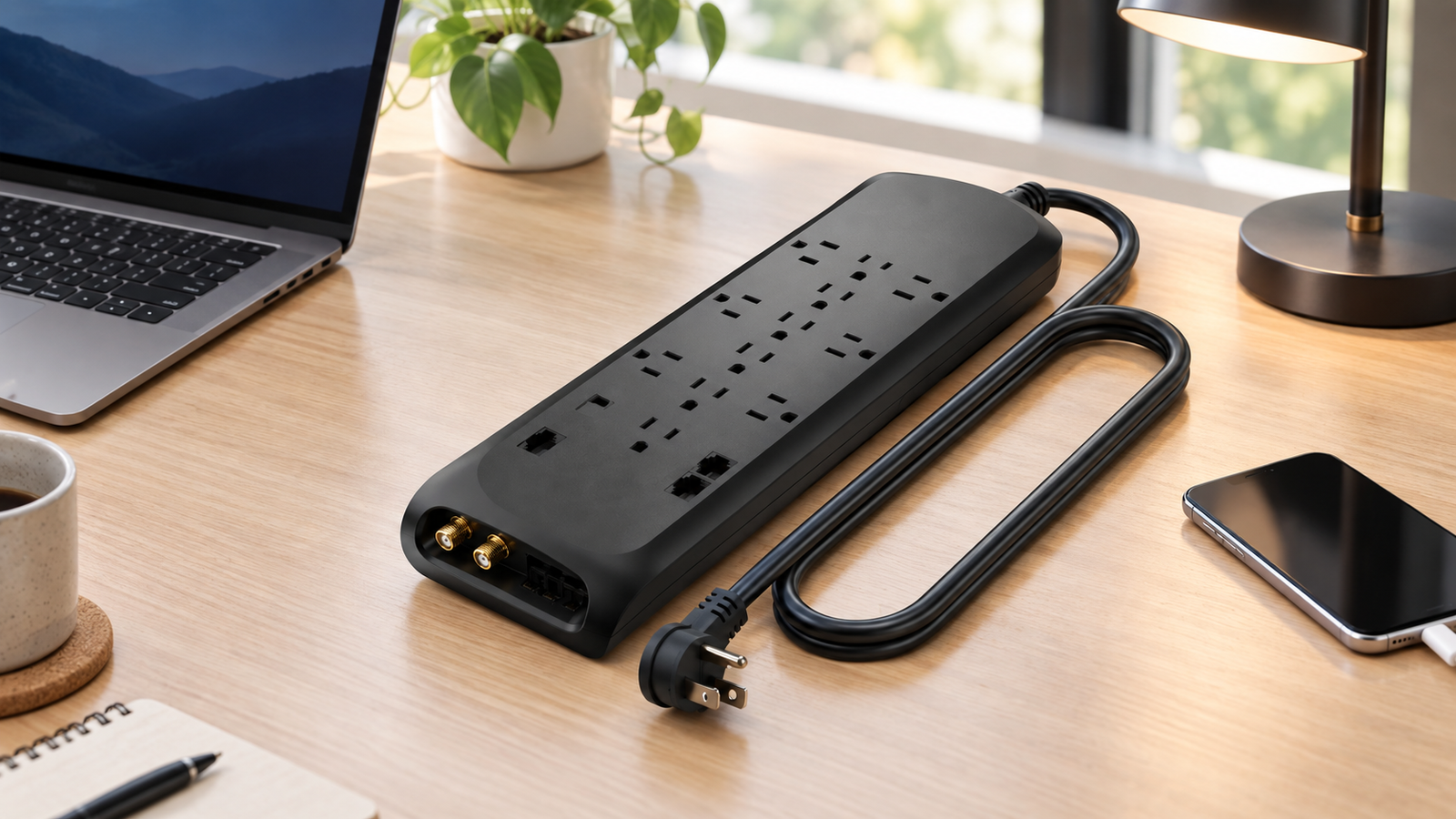
Most people do not think about a surge protector until the moment they need one, and by then it is often too late. A single spike from a storm, a faulty appliance, or even the power grid switching back on after an outage can quietly fry a television, a gaming console, or a laptop in a fraction of a second. Choosing the right surge protector is one of those small decisions that pays off enormously the one time it actually matters.
This guide walks through everything you need to know before buying one, including how joule ratings work, how many outlets you actually need, and what warranty terms are worth paying attention to. No jargon, no fluff, just practical information you can use right now.
Why a Good Surge Protector Matters More Than You Think
Power surges happen far more often than most homeowners realize. Contrary to popular belief, the biggest threat usually is not lightning. Most surges are small, repeated events caused by appliances cycling on and off inside your own home, such as air conditioners, refrigerators, or hair dryers.
These smaller surges rarely destroy a device outright. Instead, they wear down electronic components over months or years, shortening the lifespan of your electronics without any obvious warning sign. A quality surge protector absorbs that stress before it ever reaches your equipment.
Think of it as cheap insurance. A decent surge protector costs less than a dinner out, while the electronics plugged into it can cost hundreds or thousands of dollars to replace.
What a Surge Protector Actually Does
Inside nearly every consumer surge protector sits a small component called a metal oxide varistor, or MOV. Under normal conditions, the MOV does nothing at all. The moment voltage spikes above a safe threshold, it activates almost instantly, diverting the excess electricity safely to the ground wire instead of letting it flow into your devices.
This entire process happens in a matter of nanoseconds, long before a damaging voltage spike would otherwise reach your television, router, or computer. The MOV then resets itself, ready to respond again the next time a surge occurs.
It is worth noting that MOVs degrade with use. Each time one absorbs a surge, it wears down slightly, which is why surge protectors are not designed to last forever. More on that later.
Surge Protector vs Power Strip: Know the Difference Before You Buy
This is one of the most common points of confusion, and manufacturers do not always make it easy to tell the two apart on store shelves.
A power strip simply extends the number of outlets available from a single wall socket. It offers no protection whatsoever against voltage spikes. Plugging your electronics into an unprotected power strip is essentially the same as plugging them directly into the wall.
A surge protector, on the other hand, contains the MOV technology described above and actively defends your equipment. Here is the simplest way to tell them apart before purchasing:
- Check the packaging for a joule rating. If none is listed, it is a power strip.
- Look for UL 1449 certification, which is the safety standard specifically for surge protective devices.
- Read the label carefully. Terms like surge suppressor or surge diverter indicate real protection, while power strip alone usually does not.
If the product only advertises the number of outlets and a cord length with no mention of joules or surge protection, assume it offers none.
Understanding Joule Ratings Without the Technical Headache
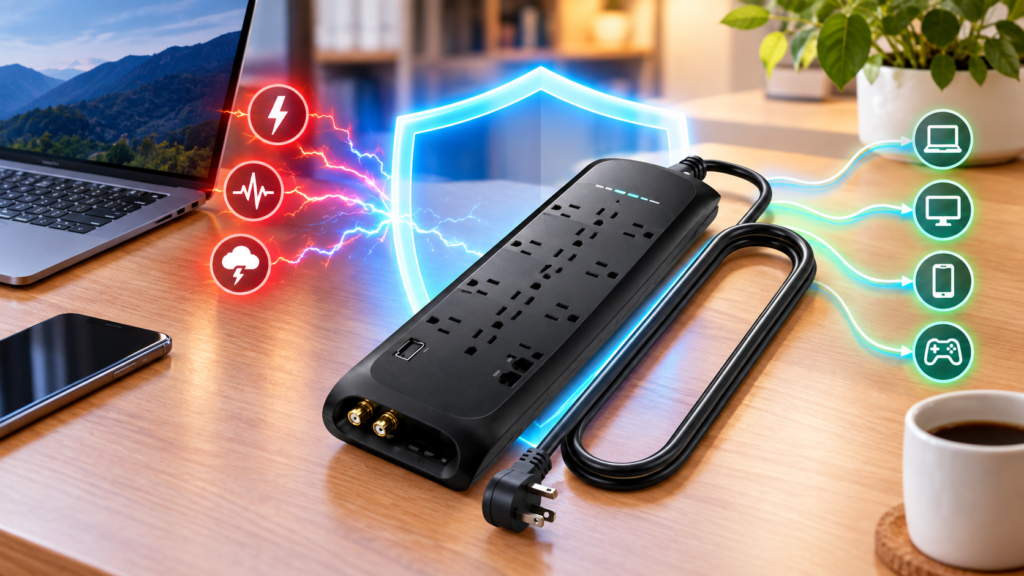
Joule ratings tend to intimidate shoppers, but the concept is fairly simple once broken down. A joule is a unit of energy, and the joule rating tells you how much surge energy a device can absorb over its lifetime before it needs to be replaced.
Higher joule ratings generally mean better protection and a longer usable life, since the internal MOVs can handle more cumulative surges before wearing out. Lower joule ratings still offer protection, but they may need replacing sooner, especially in areas prone to frequent storms or unstable power.
A Practical Way to Match Joule Ratings to Your Devices
Rather than simply chasing the highest number on the shelf, match the rating to what you are actually protecting.
- Below 1,000 joules: Suitable for lamps, small kitchen appliances, or phone chargers where the risk of damage is lower.
- 1,000 to 2,000 joules: A solid middle ground for home offices, entertainment centers, and general electronics.
- 2,000 joules and above: Recommended for expensive setups such as gaming rigs, home theaters, or multiple connected devices sharing one protector.
If you live somewhere with frequent thunderstorms or older electrical wiring, lean toward the higher end of these ranges regardless of what you are protecting. The extra cost upfront is minor compared to replacing a damaged device later.
How Many Outlets and Ports Do You Actually Need
It is easy to underestimate how many outlets you will need until you are physically counting cords behind your desk or entertainment center. Before buying, take a quick inventory of everything that needs power in that specific location.
Consider not just the number of outlets, but their spacing. Bulky power adapters and chargers often block neighboring outlets on cheaper models, effectively reducing your usable outlet count even on a protector that advertises twelve or more.
A few practical considerations worth checking before you buy:
- Wide spaced outlets accommodate large power bricks without blocking adjacent plugs.
- USB A and USB C ports built into the unit reduce the need for separate wall adapters.
- Rotating or angled outlets help awkwardly shaped plugs fit without crowding.
- Individually switched outlets let you power down specific devices without unplugging everything.
For a home office or entertainment setup, six to eight outlets plus a couple of USB ports is usually a comfortable baseline. Larger setups with multiple monitors, gaming consoles, and networking equipment often benefit from twelve outlet models.
Warranty and Connected Equipment Protection Explained
This is a detail many shoppers skip entirely, yet it can matter just as much as the joule rating itself. Most reputable surge protector brands offer two separate types of coverage, and understanding the difference protects you financially if something does go wrong.
The first is a standard product warranty, which covers defects in the surge protector itself, typically for one to three years depending on the brand.
The second, and often more valuable, is connected equipment protection. This is essentially an insurance policy built into the purchase. If a covered device is damaged by a surge while properly connected to the protector, the manufacturer will reimburse you up to a specified dollar amount, sometimes reaching into the hundreds of thousands of dollars for premium models.
Before buying, check the fine print for:
- The maximum payout amount for connected equipment protection.
- Whether the policy requires registration within a certain window after purchase.
- What documentation you would need to file a claim, such as a receipt or proof of proper installation.
A surge protector with a generous connected equipment warranty is often worth the extra few dollars, especially if you are protecting expensive electronics like a large television or a custom built computer.
Types of Surge Protectors and Which One Fits Your Home
Not every surge protector is designed for the same job. Picking the right category matters just as much as picking the right joule rating within that category.
Plug in Power Strip Style
This is the most common type, plugging directly into a wall outlet and offering multiple protected outlets plus USB ports. It is ideal for desks, entertainment centers, and kitchens. Expect a lifespan of roughly three to five years with regular use.
Wall Tap Style
A compact option that plugs directly into the outlet without a cord, expanding one outlet into two or three protected ones. These work well for small appliances or single devices like a lamp or a modem, though they lack the outlet count of larger strips.
Uninterruptible Power Supply
A UPS combines surge protection with a battery backup, keeping devices running briefly during a power outage. This is especially useful for desktop computers, home servers, or medical equipment where an unexpected shutdown could cause data loss or safety issues.
Whole House Surge Protection
Installed directly at the electrical panel by a licensed electrician, this type protects every circuit in the home simultaneously rather than just what is plugged into one strip. It handles larger surges, including many caused by lightning strikes near the property, and typically lasts up to ten years. Many homeowners pair whole house protection with point of use plug in protectors for layered defense, since the panel level unit handles large external surges while the plug in units manage smaller internal ones.
Signs Your Surge Protector Is Failing
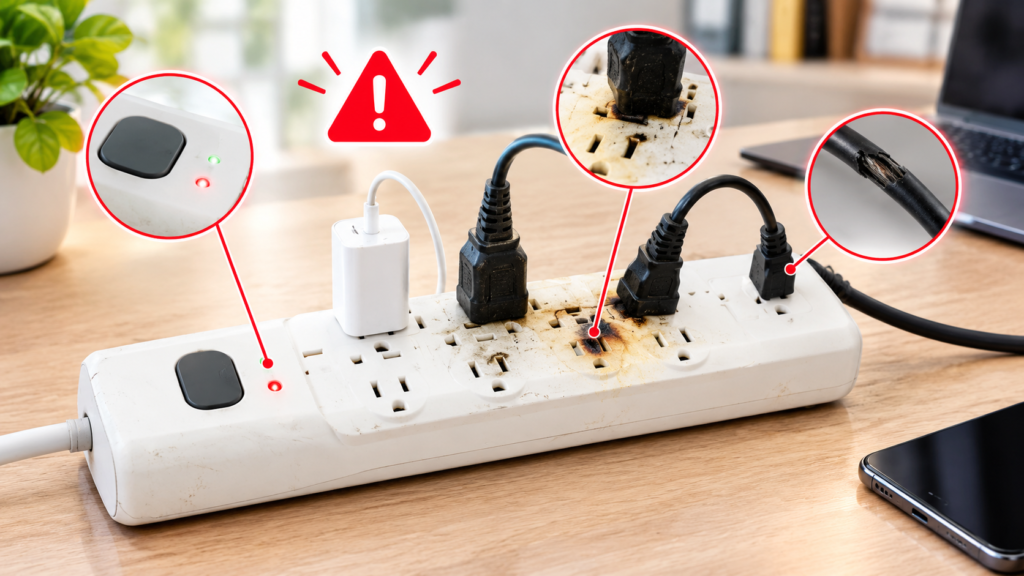
Because MOVs degrade silently with each surge they absorb, a surge protector can stop offering meaningful protection long before it visibly stops working. The outlets might still supply power, giving a false sense of security.
Watch for these warning signs and replace the unit immediately if you notice any of them:
- The indicator light, usually labeled protected or grounded, turns off or flickers.
- The unit feels warm to the touch during normal use.
- There is any burning smell or visible discoloration around the outlets.
- The protector is more than five years old, even if it appears to be functioning normally.
Many models include a small LED specifically to signal MOV failure. If that light goes out, the strip still delivers electricity but no longer protects anything plugged into it. Treat that light as your primary indicator, not just a convenience feature.
A Simple Buying Checklist
Before you check out, run through this quick list to make sure you are getting genuine protection rather than an oversized power strip:
- Confirm a joule rating is listed on the packaging.
- Look for UL 1449 certification.
- Match the joule rating to the value and sensitivity of your equipment.
- Count your outlets needed, then add two or three for future devices.
- Check for USB A and USB C charging ports if you plan to skip separate wall adapters.
- Read the connected equipment protection amount and registration requirements.
- Note the warranty length and what it actually covers.
Taking five extra minutes to check these details before buying will save you far more time and money than dealing with damaged electronics later.
Conclusion
A surge protector is not just an accessory for extra outlets. It is a small, inexpensive safeguard for some of the most expensive items in your home. The right choice comes down to matching the joule rating to what you are protecting, making sure you have enough properly spaced outlets and ports for your setup, and paying close attention to the warranty and connected equipment protection before you buy.
Whether you need a simple plug in strip for a home office, a UPS to keep a computer running through short outages, or whole house protection installed at the panel, taking a few minutes to understand these basics means your electronics stay protected long after the purchase is made. Check that indicator light occasionally, replace the unit every few years, and you will get the peace of mind a surge protector is meant to provide.
Frequently Asked Questions
Do I need a surge protector if I already have a whole house unit installed?
Yes. Whole house protectors handle large external surges at the panel, but plug in units still guard against smaller surges generated inside the home by your own appliances cycling on and off.
Can a surge protector prevent an electrical fire?
A properly functioning, UL 1449 certified surge protector reduces fire risk by diverting excess voltage safely, but a failing or overloaded unit can itself become a fire hazard, which is why replacing old units matters.
Is a higher joule rating always better?
Generally yes for longevity and larger devices, but for small, low risk items like lamps or chargers, a moderate joule rating is perfectly adequate and often more cost effective.
How long do plug in surge protectors typically last?
Most last between three and five years under normal use, though frequent surges or storms can shorten that lifespan considerably.
Will a power strip work in an emergency if I do not have a surge protector?
A standard power strip offers zero surge protection, so while it will supply power, it will not shield your devices from voltage spikes in any way.
