
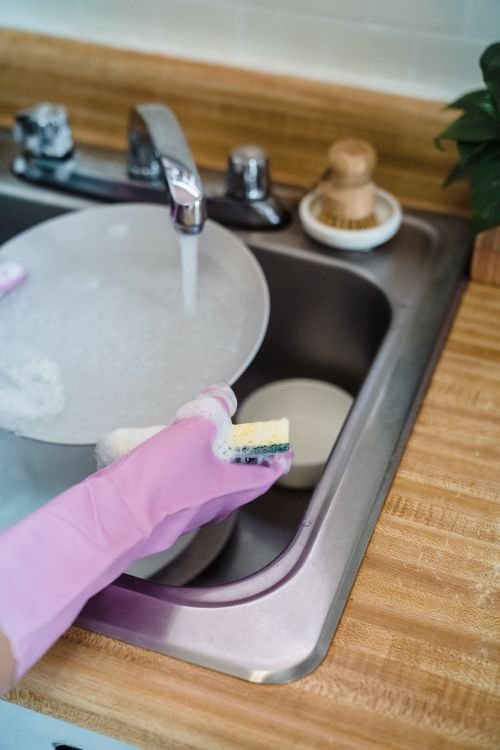
You know the smell. You pick up the sponge after dinner, give it a squeeze, and instead of fresh dish soap you get a sour, musty punch that makes you hold your breath. That smell has a simple cause and an even simpler fix, and learning how to keep kitchen sponge from smelling comes down to one daily habit plus a handful of easy treatments that stop bacteria before they settle in.
A sponge that smells bad is not just unpleasant. The same moisture and trapped food particles that feed the odor feed the bacteria that cause it. The good news is that none of the fixes below cost more than a few minutes, and the daily rinse ritual alone will prevent most sponge smells before they ever start. Let us walk through what is really happening inside that foam, then fix it step by step.
Why Does Your Kitchen Sponge Smell So Bad
A kitchen sponge is one of the hardest working objects in your home and one of the least ventilated. Every time you wash up, the sponge collects crumbs, grease, and traces of food. If it stays damp afterwards, that organic residue sits inside thousands of tiny pores in a warm, dark, wet environment. That is exactly the habitat bacteria love.
Researchers have found that a single used sponge can host enormous colonies of bacteria deep inside its pores, not just on the surface. The sour smell you notice comes from volatile compounds produced by those colonies as they break down leftover food. A bacterium called Moraxella osloensis is one of the main culprits behind the classic musty sponge stink, and it thrives wherever moisture lingers.
This is why a sponge that sits in a puddle in the sink starts to smell within a day or two, while a sponge that dries out fully can stay fresh for much longer. Smell is simply the signal that bacteria are winning. Dryness is their enemy, and almost every tip below is really a strategy for keeping the sponge hostile to bacterial growth.
The Daily Rinse Ritual That Stops Most Smells
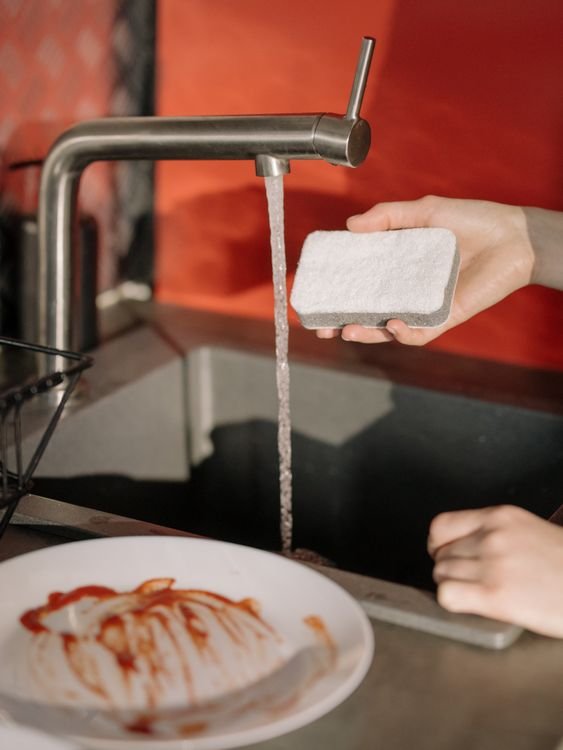
Before any special treatment, build this thirty second habit. After you finish the dishes, rinse the sponge under hot running water while squeezing it several times. This flushes out food particles and soap residue, which are the two things bacteria feed on most.
Then wring the sponge out as hard as you comfortably can. The goal is to leave it barely damp, not dripping. Most sponge smell starts with water left trapped deep in the foam, so this squeeze matters more than any cleaning product you might buy.
Finally, stand the sponge somewhere it can breathe. A holder with drainage holes is ideal, but simply propping the sponge upright on its edge near the window or on a dry section of the countertop works well. Never leave the sponge lying flat in the bottom of the sink. That one spot traps water underneath it all night and is the fastest route to a sour sponge by morning.
Do this every time you wash up and you will solve most sponge odor problems without ever needing the fixes below. For the times when the smell has already started, here are nine proven methods.
9 Ways to Keep Kitchen Sponge From Smelling
These methods run from daily habits to occasional deep treatments. Start with the first two, then add the rest as needed. Each one attacks the smell at a different stage, from prevention to rescue.
1. Wring It Bone Dry After Every Single Use
Water is the root of every sponge smell. Bacteria cannot multiply without moisture, and a sponge that stays wet overnight gives them eight hours of uninterrupted growth time. The fix is purely mechanical: after rinsing, twist and squeeze the sponge until no more water comes out.
If you have trouble getting it dry enough with your hands alone, press it firmly between two dry dishcloths for a few seconds. You will be surprised how much extra water comes out. A sponge that feels almost dry to the touch before you set it down will smell noticeably fresher the next day.
2. Give It Airflow Instead of a Flat Surface
A sponge dries from the outside in, so the surface touching the countertop stays damp the longest. Air circulation is the whole game here. A simple sponge caddy with an open base costs very little and keeps the sponge elevated with air moving around every side.
If you prefer not to buy anything, stand the sponge upright on its narrow edge on a small dry plate, or clip it upright with a binder clip on the edge of the sink so it hangs in the air. The difference in drying time between a sponge lying flat in a puddle and one standing upright with airflow can be the difference between fresh and funky by the next morning.
3. Run It Through the Dishwasher Every Day
If you run the dishwasher regularly, give the sponge a ride. Place it on the top rack with your dishes and run a normal hot cycle with the heated dry setting on. The combination of heat and detergent knocks down the bacterial load dramatically, and because you are doing it daily, the bacteria never get a chance to build up into that smelly biofilm.
One caution: check that your sponge has no metal scouring layer and no plastic parts that could melt or rust. Standard cellulose sponges handle the dishwasher well. If your dishwasher has been smelling off itself, it is worth reading our guide on why a dishwasher smells like a wet dog first, because a smelly dishwasher will leave the sponge smelling worse, not better.
4. Microwave the Damp Sponge for One Minute
A damp sponge microwaved on high for about one minute comes out with a drastically reduced bacterial count. Research on sponge sanitation has found that a fully wet sponge heated this way can eliminate a very high percentage of bacteria. It is the fastest deep clean available, and it uses nothing but water and heat.
Safety matters here, so follow this exactly. The sponge must be completely wet before it goes in, because a dry sponge in a microwave is a fire risk. Place it on a microwave friendly dish, not directly on the glass tray, and let it cool for a minute before touching it, because it comes out extremely hot. Skip this method for sponges with metal scouring pads or metallic printed designs. Use it at most once a week as a supplement to daily drying, not as a replacement for it.
5. Soak It in White Vinegar
White vinegar is a natural deodorizer that loosens the food residue and soap buildup bacteria feed on. Fill a bowl with undiluted white vinegar, submerge the sponge completely, and leave it for about fifteen minutes. Rinse it thoroughly under cold water afterwards, wring it out well, and let it dry upright.
Vinegar does not fully disinfect a sponge the way heat does, but it is excellent at cutting the organic matter that makes the sponge attractive to bacteria in the first place. Use this soak once a week as maintenance, or anytime the sponge has a mild odor that the rinse ritual has not cleared. The vinegar smell itself fades completely once the sponge dries.
6. Try an Overnight Baking Soda Rest
When the smell is mild but persistent, baking soda pulls odor out of the foam overnight. Dissolve two tablespoons of baking soda in a bowl of warm water, press the sponge down so it is fully submerged, and leave it to soak overnight. In the morning, rinse it well under running water, wring it out, and dry it upright.
Baking soda works by neutralizing the acidic odor compounds bacteria produce, and the long soak gives it time to reach deep into the pores. This method is gentler than vinegar, so it suits sponges that are starting to look worn and cannot take harsh treatment anymore.
7. Rotate Two Sponges Instead of Using One
Using one sponge nonstop is like wearing the same shirt every day. It never gets the chance to dry out completely, and the bacteria get a permanent home. Keep two sponges and alternate them daily. While one is on duty, the other dries out completely on the rack.
This simple rotation doubles the effective lifespan of each sponge and cuts odor dramatically, because a sponge that fully dries between uses resets its bacterial load almost every day. Label them if you like, or just make it a habit to swap in the dry one each morning. The cost is one extra sponge, which is almost nothing.
8. Keep Raw Meat Jobs Away From the Dish Sponge
Cross contamination is one of the fastest ways to make a sponge smell terrible and one of the riskiest. Juices from raw meat, poultry, and seafood carry bacteria like Salmonella and Campylobacter, and once those get deep into sponge pores, they are very hard to remove completely.
Assign one sponge for general dishwashing and use disposable paper towels or a separate dedicated cloth for anything involving raw meat or fish. If the dish sponge does come into contact with raw meat juice, sanitize it immediately with the dishwasher or microwave method rather than just rinsing. Keeping the sponge out of that mess in the first place is the single most hygienic upgrade you can make.
9. Switch to Silicone or Luffa When Sponges Keep Failing You
Some households simply cannot keep a traditional foam sponge fresh, especially in humid kitchens where nothing dries quickly. Silicone scrubbers dry in minutes, harbor far fewer bacteria, and do not absorb odors the way foam does. They are also dishwasher friendly and last for months instead of weeks.
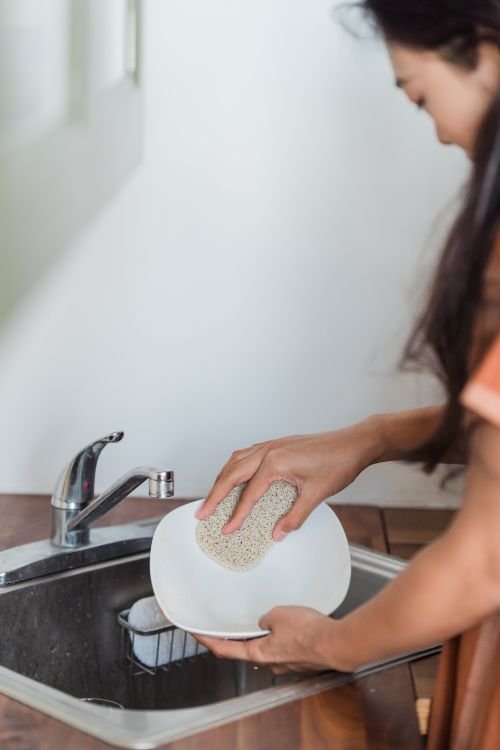
Natural luffa sponges are another option. They dry faster than foam, are compostable at the end of their life, and handle the dishwasher well. They cost a little more up front, but replacing fewer sponges over the year balances that out. If you have tried the fixes above and the smell keeps coming back within days, a different sponge material may be the real answer.
When to Stop Fighting the Smell and Replace It
No treatment works forever. Food safety experts recommend replacing a standard kitchen sponge every one to two weeks depending on how heavily your household cooks, and sometimes the right move is simply to start fresh. Watch for these signals that the sponge is done.
First, a persistent sour smell that survives a thorough rinse, wring, and full drying. If the odor comes right back after the sponge has been completely dry, the bacterial colonies are entrenched in the foam and no home method will clear them reliably.
Second, a slimy texture that lingers even when the sponge is dry. That slickness is a bacterial biofilm, a protective layer the colonies build around themselves, and it means surface treatments are barely touching the problem.
Third, visible breakdown: the scouring layer peeling away, chunks of foam coming off, or dark stains that resist rinsing. A physically degraded sponge has more crevices for bacteria and fewer intact pores for proper drainage, so it will smell faster every day from here on. When you see these signs, toss it and start the rinse ritual on a fresh sponge. A new sponge costs almost nothing; a smelly one can spread bacteria across every clean dish it touches.
Your Weekly Sponge Care Routine
Here is the whole system on one page. Follow the daily column every time you wash up, and the weekly column keeps the sponge in top condition between replacements.
Daily: rinse under hot water and squeeze out all residue. Wring the sponge as dry as you can. Stand it upright where air can reach every side. Toss it on the dishwasher top rack if you are running a load.
Weekly: give it one deep treatment, either the vinegar soak, the baking soda overnight rest, or the microwave method. Check it for wear, sliminess, or persistent smell. Rotate in the second sponge if you keep a pair.
Every one to two weeks: replace the sponge with a fresh one, sooner if you cook daily or handle a lot of raw meat and fish. The cheapest sponge on the shelf, replaced on schedule, stays fresher than an expensive one kept for months.
Conclusion: Keep That Sponge Fresh
Learning how to keep kitchen sponge from smelling is really about one insight: dryness beats every cleaning product. A sponge that gets rinsed, wrung dry, and left in moving air after every use rarely develops a smell at all, because the bacteria that cause the odor never get the damp, food filled environment they need.
When the smell does creep in, you have a full toolkit now. The dishwasher and microwave give you fast heat based resets, the vinegar and baking soda soaks handle maintenance, rotating two sponges keeps everything dry, and keeping raw meat jobs on a separate tool removes the biggest contamination risk. And when the sponge is past saving, you know exactly when to let it go.
The main takeaways are simple: rinse and wring after every use, stand the sponge where air can reach it, give it a weekly deep clean, and replace it every one to two weeks without guilt. Do that and the sour sponge smell will stay in your past, where it belongs. For more kitchen freshness wins, see our guides on getting rid of smells in a rice cooker and removing cooking smells from the house fast.
Frequently Asked Questions
Why does my kitchen sponge smell even after washing it with dish soap?
Dish soap cleans the surface but does not reach the bacterial colonies living deep inside the sponge pores, and it can leave residue that bacteria feed on. A thorough rinse plus full drying matters more than the soap you use, and a weekly deep clean like the dishwasher or vinegar soak reaches what surface washing cannot.
Can microwaving a sponge really sanitize it?
A fully wet sponge microwaved on high for about one minute sees a very large reduction in bacteria. It is one of the fastest deep cleans available. Just make sure the sponge is completely wet before microwaving, never microwave a dry sponge, and skip sponges with metal parts.
How often should I replace my kitchen sponge?
Every one to two weeks is the standard guidance, depending on how much you cook. Replace it sooner if the smell returns right after drying, if it feels slimy, or if the scouring layer is peeling. A cheap fresh sponge beats an expensive old one every time.
Does white vinegar disinfect a sponge?
Vinegar is a good deodorizer and it loosens the food residue bacteria feed on, but it is not a reliable disinfectant on its own. Think of the vinegar soak as maintenance rather than sterilization. For a real bacterial knockdown, use heat: the dishwasher or the microwave.
Are silicone sponges better for avoiding smells?
Yes, generally. Silicone does not absorb water or odors the way foam does, it dries in minutes, and it handles the dishwasher easily. If your foam sponges keep smelling no matter what you try, switching to silicone is a practical long term fix, especially in humid kitchens.
