
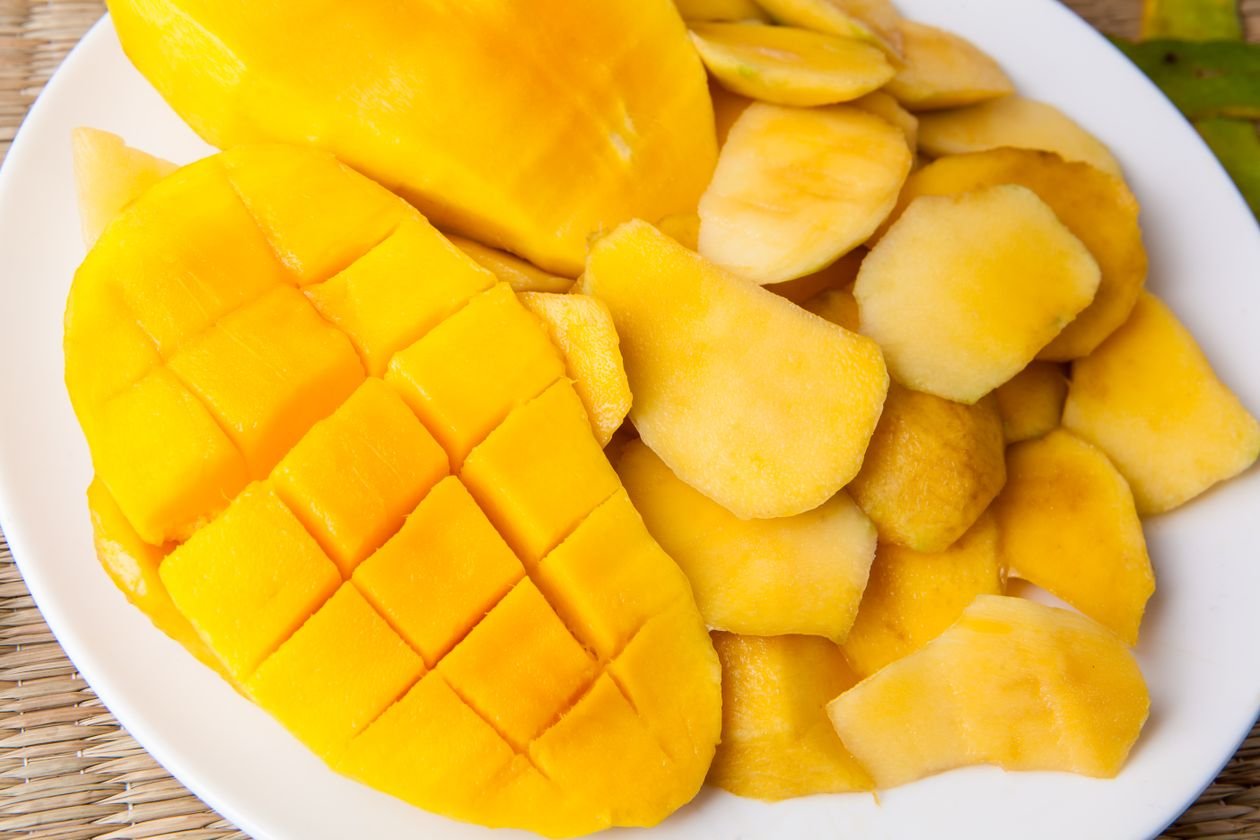
Last Saturday I came home from the grocery store with three mangoes that looked perfect and felt like small rocks. I had planned a mango smoothie for Sunday breakfast, and the fruit in my bag was nowhere near ready. The skin was tight and green at the edges, the flesh gave nothing at all when I pressed it, and the stem end smelled like nothing. I had two choices: wait a week for nature to do its work, or learn how to ripen a mango quickly at home. I chose the second one, and by Monday morning the mangoes were soft, sweet, and ready to eat.
If you have ever stood in your kitchen holding a hard mango and wondering whether it will ever soften, this guide is for you. It explains why mangoes ripen the way they do, how to tell when one is truly ready, and the five fastest home methods that actually work. It also covers the tricks that sound clever but ruin the fruit, so you can skip the mistakes I made the first time I tried.
Why a hard mango needs a little help
A mango is a climacteric fruit, which means it keeps ripening after it is picked. The fruit gives off a natural gas called ethylene, and that gas is the signal that tells the flesh to soften, the starches to turn into sugars, and the flavor to develop. When a mango sits alone on a counter, the gas drifts away into the room, so ripening takes its time. When you trap that gas around the fruit, the whole process speeds up.
That one fact explains every method in this guide. The paper bag, the rice bowl, and the newspaper wrap all do the same job in different ways: they hold the ethylene close to the fruit while still letting a little air move. The methods that fail are the ones that fight this process, either by cooking the fruit with heat or by chilling it in the fridge before it is ready.
Temperature matters just as much as trapped gas. Ripening enzymes work best between 65 and 75 degrees Fahrenheit. In a cool kitchen the process slows right down, and in a cold fridge it stops almost completely. That is why a mango that goes into the fridge while still hard can sit there for days and never improve.
How to tell if your mango is ripe yet
Before you start any ripening method, check where your mango stands right now. A lot of people judge a mango by color alone, and that is the most common mistake in the kitchen. Some varieties stay green even when fully ripe, while others turn a deep red blush long before the flesh is sweet. Color is a hint, not a verdict.
The squeeze test is far more reliable. Hold the mango in your palm and press gently near the stem end with your thumb. A ripe mango gives slightly under light pressure, the way a ripe peach does. If it feels like a rock, it needs more time. If your thumb sinks in easily and leaves a dent, the fruit is overripe and should be eaten today, ideally in a smoothie or a sauce where soft texture is a bonus.
Next, smell the stem end. A ripe mango smells sweet and floral right where the stem meets the fruit. If you smell nothing at all, the mango is still unripe. If the smell is sharp, sour, or fermented, the fruit has gone too far. A final check is weight: a ripe mango feels heavy for its size because the flesh is full of juice.
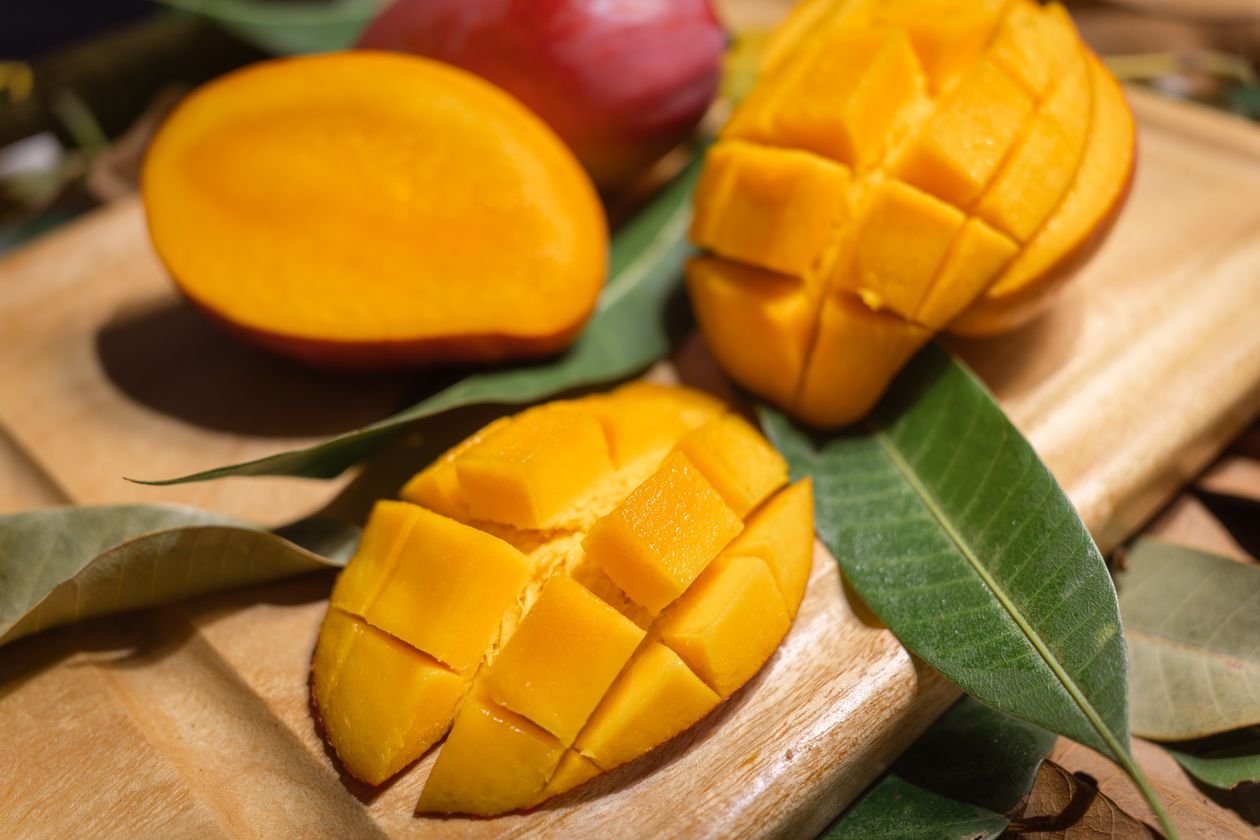
Run these three checks every day while your mango ripens. Once the fruit gives gently and smells sweet at the stem, it is ready, and you should eat it or move it to the fridge the same day. Ripe mangoes only hold their peak for a few days, so timing matters at both ends of the process.
How to ripen a mango quickly at home
Here are the five methods that work, ranked from fastest to slowest. Every one of them is cheap, uses things you already have in the kitchen, and takes less than a minute to set up. Pick the one that fits the time you have and the supplies in your cupboard.
1. Paper bag with a ripe banana or apple
This is the fastest reliable way to ripen a mango quickly at home, and it is the method I use most weeks. Put the mango in a brown paper bag with a ripe banana or apple, fold the top over loosely, and leave the bag on the counter at room temperature. The banana or apple gives off a large amount of ethylene, and the bag traps that gas around the mango. Most hard mangoes soften in 1 to 2 days with this method.
Use a paper bag, never a plastic one. Plastic traps moisture as well as gas, and the damp air can grow mold on the skin before the flesh ripens. Fold the top loosely rather than sealing it tight, so a little air can still move. Check the mango once a day, because a fruit that was closer to ripe than you thought can turn soft fast in a bag full of ethylene. If you want to keep bananas fresh longer for the rest of the week, store the spare ones away from the bag, since the same gas that ripens your mango will ripen them too.
2. Paper bag on its own
If you have no ripe banana or apple in the house, the bag still helps on its own. Put the mango in a brown paper bag, fold the top over, and leave it on the counter. The mango traps its own ethylene, which is enough to cut the wait to about 2 to 3 days. It is slower than the banana method, but it beats leaving the fruit out in the open, where the gas escapes into the room.
This is the best option when your mango is already showing a little give and a faint sweet smell, because it only needs a small push. Keep the bag away from direct sunlight and away from the stove, since heat above 85 degrees can damage the flesh and bring on uneven ripening.
3. Bury it in uncooked rice
This is the traditional method in many mango growing regions, and it works beautifully. Fill a large bowl or container with uncooked rice, nestle the mango inside so the grains cover it completely, and leave the container on the counter. The rice traps ethylene around the fruit and holds a gentle warmth, so most mangoes ripen in 1 to 3 days.
Check the fruit every 12 hours if you can, because rice can work faster than people expect, and an overripe mango hidden in rice is easy to miss. One warning: do not use cooked rice, and do not reuse rice that has sat with fruit in it for cooking later. Keep a small jar of rice aside for ripening duty and label it, so nobody cooks with it by mistake.
4. Wrap it in newspaper and keep it warm
Wrap each mango loosely in a sheet of newspaper, place the wrapped fruit in a cardboard box or a drawer, and keep it in a warm spot in the kitchen. The paper traps ethylene the same way a bag does, and the enclosed space holds warmth. Expect results in 2 to 4 days.
This method suits people who bought a whole box of hard mangoes at once. Wrap them one by one, keep them in a single layer with a little space between each fruit, and check them daily. Fruit at the bottom of a pile ripens faster and can bruise under the weight, so a single layer is worth the extra counter space.
5. Leave it on the counter
The simplest method of all is to do nothing except leave the mango on the counter at room temperature, stem end up, in a fruit bowl away from heat and sunlight. It works, and it needs no supplies at all, but it is the slowest option. A hard mango can take 2 to 7 days to ripen this way, depending on the variety and how unripe it was when you bought it.
Use this method only when you are in no hurry. The advantage is control: the fruit ripens evenly, you can watch it change day by day, and there is almost no risk of overdoing it. If your kitchen is cool, below 65 degrees, move the bowl to the warmest spot you have, such as the top of the fridge, where warm air rises.
Methods that do not work
The internet is full of shortcuts that promise a ripe mango in minutes. Most of them do not ripen the fruit at all. They soften it by cooking it, which is a different thing entirely, and the result tastes flat, sour, and disappointing.
The microwave is the worst offender. A few seconds of heat will soften the flesh, but microwaving does not trigger the enzymes that create sweetness. You end up with a warm, mushy mango that still tastes unripe. The same goes for the oven and for soaking the fruit in warm water. Heat softens, but only time and ethylene create flavor.
Refrigerating a hard mango is the other common error. Cold stops the ripening enzymes, and a mango that spends days in the fridge while unripe may never develop properly even after you bring it back to room temperature. The fridge is for ripe mangoes only, never for hard ones. If you have ever wondered why a mango from the store stayed hard for a week in your fridge, this is the reason.
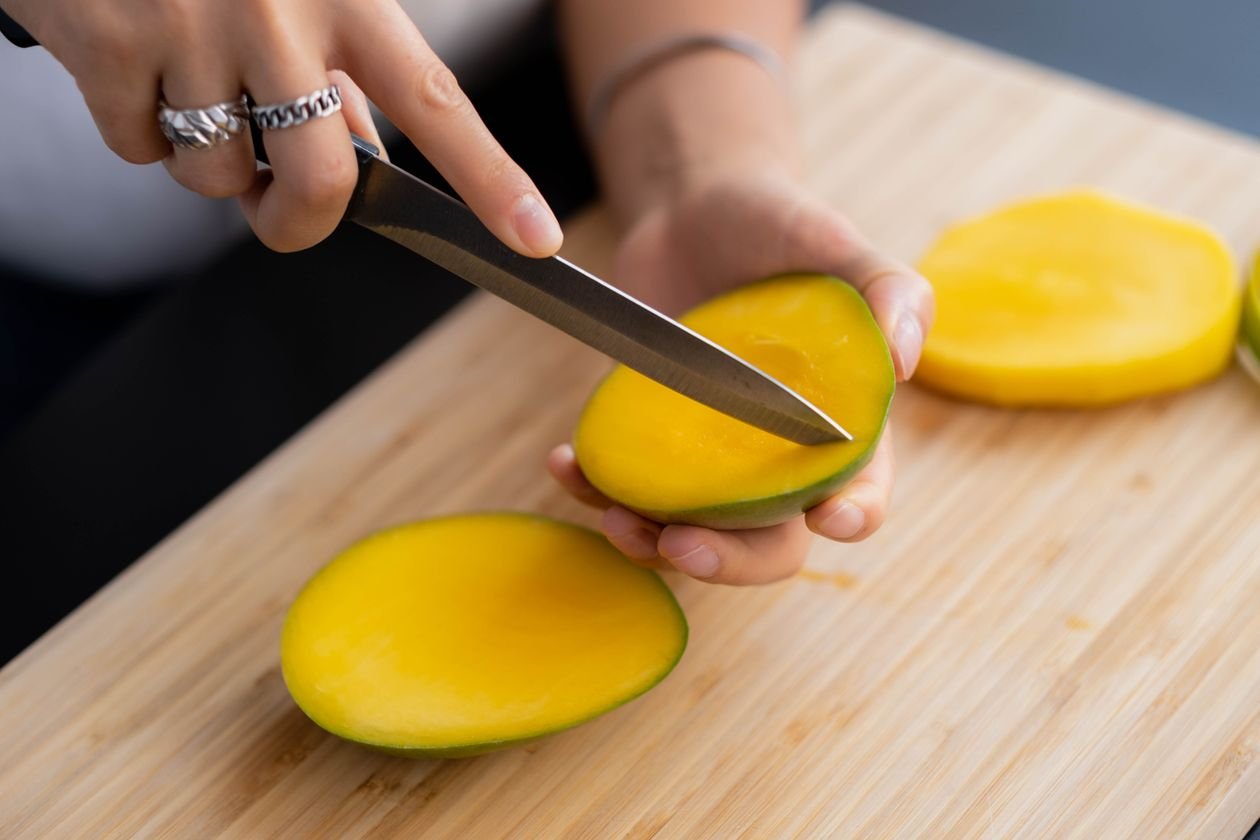
One more method to skip is the idea of pricking the skin or cutting the mango open to check it. A cut mango stops ripening, and the open flesh dries out and browns within hours. Judge ripeness from the outside with the squeeze and smell tests, and only cut the fruit when you are ready to eat it.
What to do once your mango is ripe
A ripe mango has a short window. At room temperature it holds its peak for about a day, so eat it soon or move it to the fridge. In the crisper drawer, a ripe mango keeps for 3 to 5 days. That cold slows further ripening without damaging the flavor, because the sugars have already developed.
For longer storage, cut the flesh away from the pit and freeze it. Spread the cubes on a tray lined with baking paper, freeze until solid, then move the cubes into a sealed bag or container. Frozen mango keeps for up to 6 months and works perfectly in smoothies, where you can blend it straight from frozen. If you often buy fruit in bulk, the same thinking applies to other produce too. Our guide on how to store ginger so it lasts longer uses the same idea: the right container and the right temperature can add weeks to fresh food.
Cut mango needs tighter care. Wrap the cut side closely, place it in a sealed container, and refrigerate right away. Eat cut mango within 1 to 2 days for the best flavor. A squeeze of lime juice over the cut flesh slows browning a little, although it will change the flavor slightly, so use it only when the look matters more than the pure taste.
Common mistakes that ruin a mango
The first mistake is buying by color alone. Shoppers pick the reddest mango on the shelf and take it home, then wonder why it tastes sour. Color tells you about the variety, not about ripeness. Trust the squeeze test and the smell test instead, and you will bring home better fruit every time.
The second mistake is storing hard mangoes in the fridge, which halts ripening before it starts. Keep unripe fruit on the counter, and only refrigerate once the fruit gives gently and smells sweet.
The third mistake is sealing fruit in plastic. A plastic bag traps moisture, and damp skin grows mold fast. Paper breathes just enough to hold the gas in while letting moisture out, which is why every method in this guide uses paper, rice, or newspaper instead of plastic.
The fourth mistake is forgetting to check. A mango can go from perfectly ripe to overripe in a single warm day, especially in a paper bag with a banana. Check once a day, and eat the fruit the moment it is ready rather than leaving it for tomorrow.
The fifth mistake is ripening fruit next to the stove or in direct sun. Gentle warmth helps, but strong heat cooks the outside before the inside has a chance to sweeten. A warm kitchen shelf is ideal. A sunny windowsill in the middle of summer is not.
Conclusion
Learning how to ripen a mango quickly at home comes down to one idea: trap the fruit’s own ethylene gas around it and keep it warm. The paper bag with a ripe banana is the fastest method, turning a hard mango sweet in 1 to 2 days. The rice bowl and the newspaper wrap are close behind, and the plain counter method works fine when you have a week to spare. Skip the microwave, skip the fridge while the fruit is hard, and never seal it in plastic.
Start by checking your mango with the squeeze and smell tests, pick the method that fits your timeline, and check the fruit daily. A little patience and a brown paper bag are all that stand between a rock hard mango and the sweet, juicy fruit you were hoping for when you bought it. Try it once, and the hard mango on your counter will never feel like a problem again.
Frequently asked questions
How long does it take to ripen a mango at home?
A hard mango ripens in 1 to 2 days in a paper bag with a ripe banana, in 1 to 3 days buried in uncooked rice, and in 2 to 7 days left on the counter. The exact time depends on the variety and how unripe the fruit was when you bought it.
Can I ripen a mango in the microwave?
No. A microwave softens the flesh with heat but does not create sweetness, so the mango ends up mushy and sour. Use a paper bag with a banana instead for real ripening.
Does putting a mango in the fridge help it ripen?
No. Cold stops the ripening enzymes, and a hard mango in the fridge may never ripen properly. Only refrigerate a mango once it is fully ripe, and then eat it within 3 to 5 days.
How can I tell if a mango is ripe without cutting it?
Press gently near the stem end. A ripe mango gives slightly under light pressure. It should also smell sweet and floral at the stem, and feel heavy for its size. Color alone is not a reliable sign.
What is the fastest way to ripen a mango overnight?
Put the mango in a brown paper bag with two ripe bananas, fold the top over loosely, and leave the bag in a warm spot overnight. A mango that was close to ripe can be ready by morning, although a very hard one will still need another day.

1 Comment
Pingback: Keep Strawberries Fresh Longer Without Fridge