
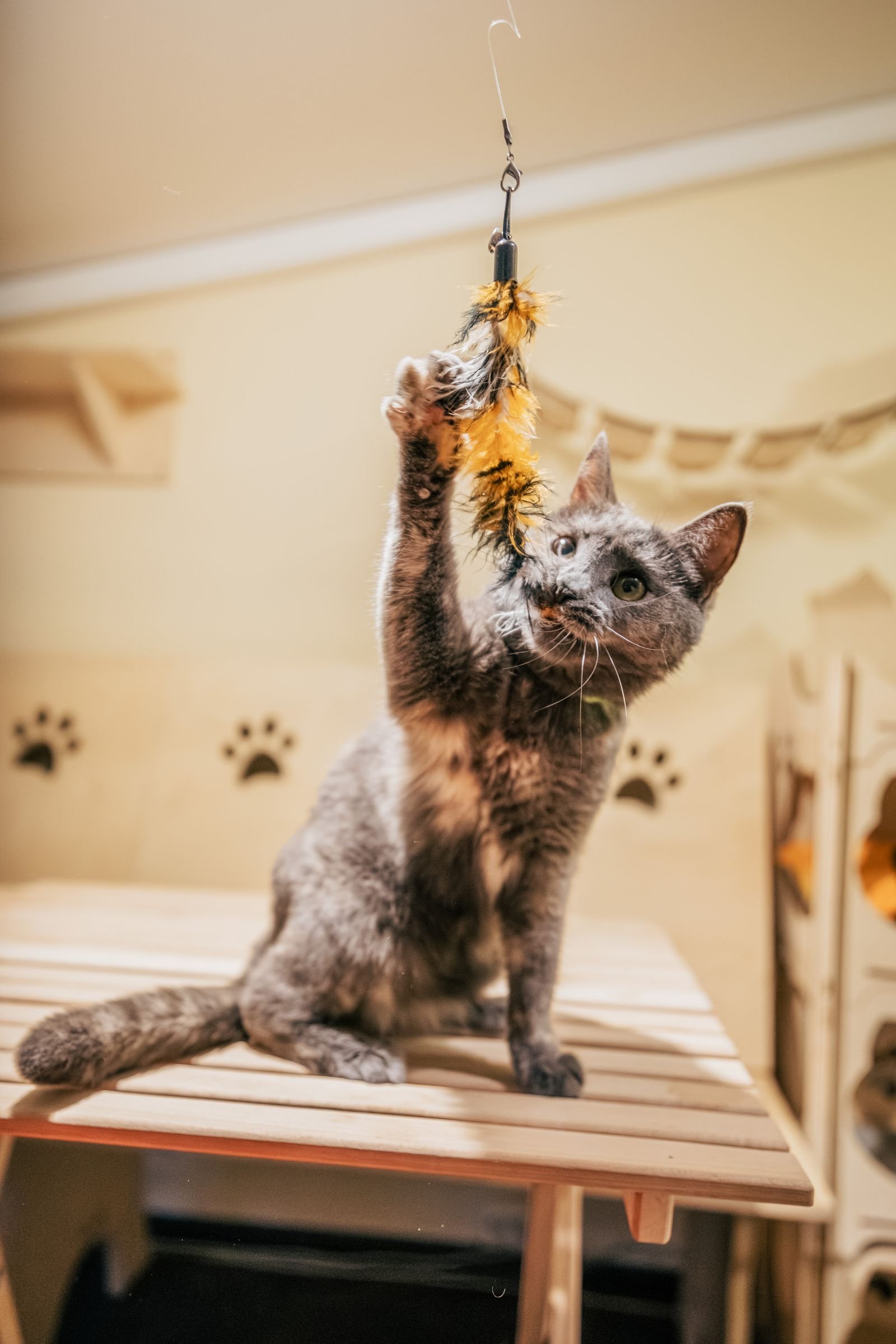
It is 3am in Manchester, and you have just been woken by tiny teeth on your toes. Again. Your cat is crouched at the end of the bed, eyes wide, tail twitching, waiting for your feet to move under the duvet so the game can start over. If you are reading this with one eye open and a sore toe, you are not alone, and the good news is that learning how to stop cat biting feet at night is simpler than it feels at 3am. The biting is not spite, and it is not your cat being naughty. It is a hunting game, and once you understand the game you can end it in about two weeks with a calm evening routine and a few small changes to your bedroom.
This guide explains why your cat does it, what to do in the moment when it happens tonight, and the exact routine that stops it for good. It also covers when biting is a sign of pain and needs a vet, because that matters more than any training tip.
Why Your Cat Bites Your Feet at Night
Cats are hunters by design. A foot moving under a blanket looks, sounds and feels like prey. It wiggles, it disappears, it comes back. To a cat, that is the most exciting thing in the bedroom. Your cat is not attacking you. Your cat is playing the only game the bedroom offers at 3am.
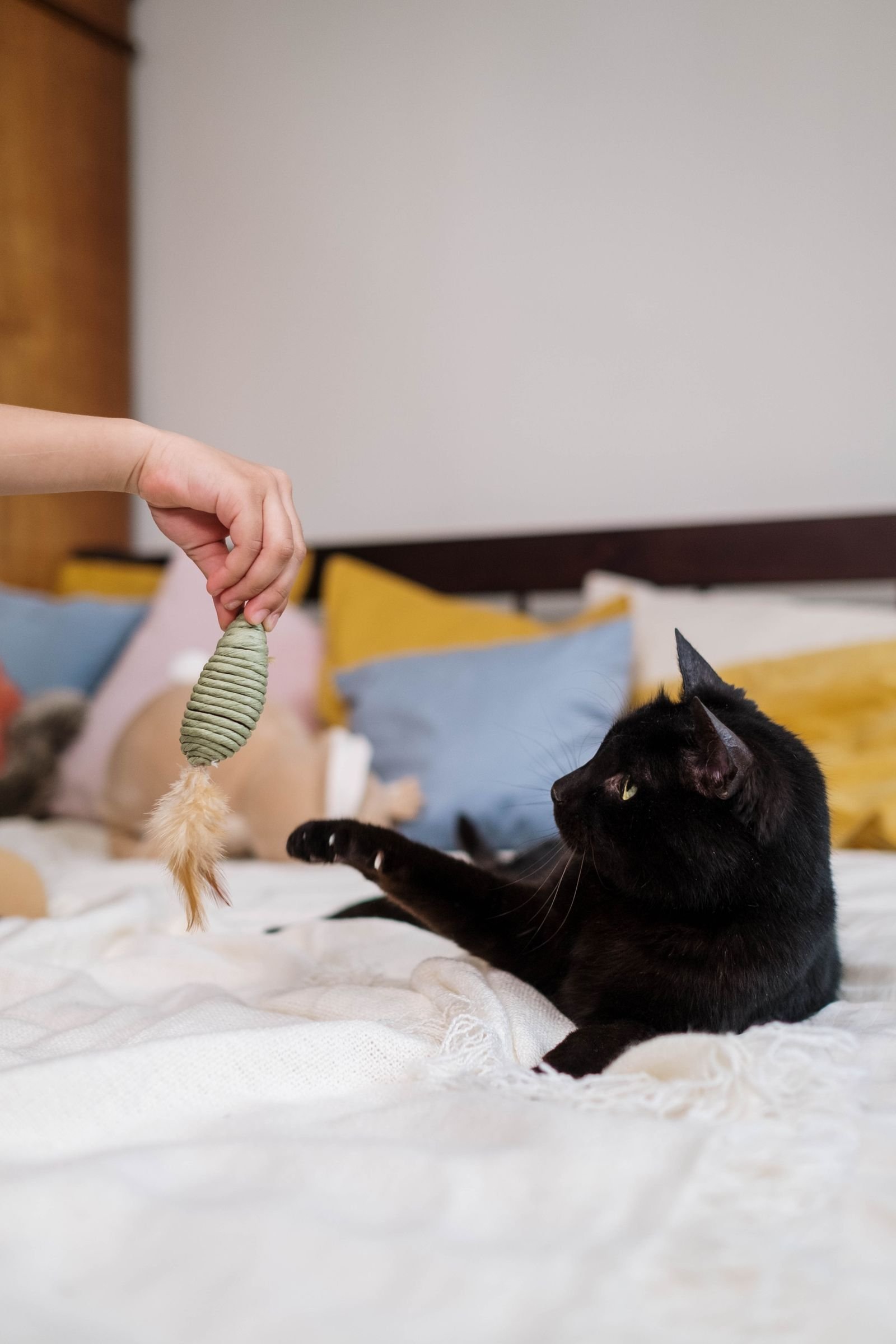
There are three reasons the game starts at night and not during the day. First, cats are naturally most active at dawn and dusk, the hours when their wild ancestors hunted. A cat that sleeps all afternoon has a full tank of energy by midnight. Second, the house is quiet at night, so every small movement under the covers stands out. Third, you react. When your feet jerk away, your cat reads that as prey trying to escape, and the game gets better.
Your feet look like prey
Under a duvet, your feet make a moving lump. The shape changes as you shift in your sleep. The fabric rustles. From your cat’s point of view, this is a small animal hiding under a bush. The stalk, crouch and pounce sequence is hardwired, and it fires before your cat has time to think. Kittens practise it on everything, and adult cats keep doing it when they are bored or under stimulated.
Your cat is bored, not angry
Indoor cats in UK flats often get very little real hunting during the day. They sleep, they eat, they watch the window. By night, the urge to hunt has built up with nowhere to go. Feet under a blanket become the outlet. This is why the biting often gets worse in winter, when the nights are long, the windows stay shut and the cat spends more time indoors. A cat that plays hard in the evening rarely bothers your feet at night.
Your reaction keeps the game going
Every time you squeal, kick, laugh or reach down to stroke your cat, you pay out the reward. Even shouting counts as attention. Cats do not link your anger to their behaviour the way people do. They link your noise and movement to excitement, and excitement means the game worked. The owners who fix this fastest are the ones who learn to be boring at 3am.
What to Do at 3am When It Happens Tonight
You need a plan for tonight, before the routine has had time to work. Follow these steps in order, and do not skip ahead.
First, freeze. Stop moving your feet completely. A still foot is a boring foot, and the game ends faster when the prey stops running. This feels unnatural, and it takes practice, but it works within seconds in most cases.
Second, stay quiet. Do not speak, do not laugh, do not shout. Keep your breathing slow and even. If you must move, move slowly and smoothly, as if you are half asleep, which you probably are.
Third, wait for the pause. Your cat will usually lose interest within a minute once the feet stop moving. When your cat walks away or settles down, you can gently pull the duvet tighter or tuck your feet under a heavier blanket.
Fourth, if your cat keeps going, get up calmly and leave the room for two minutes. Close the bedroom door behind you. Come back quietly and get back into bed. This is not punishment. It simply removes the audience, and the game cannot continue without one.
Fifth, keep a decoy toy beside the bed. A small soft toy or a kicker toy within arm’s reach lets you toss an alternative target away from the bed without turning on the light or starting a conversation. Aim it towards the floor on the far side of the room, so your cat follows the toy and not your feet.
What you should never do at 3am is spray your cat with water, clap loudly, or push your cat off the bed. These reactions frighten your cat, damage trust, and often make the biting worse the next night. A frightened cat is a stressed cat, and stressed cats bite more, not less. Cats Protection and the RSPCA both advise against punishment for this kind of behaviour, and they recommend redirection instead.
How to Stop Cat Biting Feet at Night With an Evening Routine
The real fix happens before bed, not at 3am. Cats follow a natural sequence: hunt, catch, eat, groom, sleep. If you give your cat that sequence in the evening, the hunting urge is spent before you get into bed. This is the single most effective change you can make, and it costs nothing.

About an hour before your bedtime, play with your cat for 10 to 15 minutes using a wand toy or a feather toy. Move it like prey: let it hide behind furniture, dart across the floor, and pause so your cat can stalk it. Let your cat catch it several times. A cat that never catches the toy gets frustrated, so make the ending easy. This kind of play is far more tiring than a laser pointer, because it uses the whole body and ends with a real catch.
When the play session ends, feed your cat a small meal or a few treats. This completes the hunt catch eat sequence and triggers the natural wind down. Cats groom after eating, then they sleep. A cat that has just eaten after a good play session is a sleepy cat, and a sleepy cat does not hunt toes.
Keep the routine at the same time every night. Cats love predictability, and a steady routine teaches your cat when the hunting day is over. Within a week, most owners notice the 3am attacks getting shorter and less frequent. By the second week, many cats stop altogether.
A sample evening for a working owner
If you get home at 6pm, feed your cat the main meal at 6.30pm. Play hard from 9.30pm to 9.45pm, then offer a small snack, perhaps a spoonful of wet food or a few biscuits. Dim the lights, keep voices low, and go to bed at 10.30pm. Your cat will have hunted, eaten and groomed, and will be ready to sleep when you are. This is the routine that vets and behaviourists recommend most often, because it works with the cat’s nature instead of fighting it.
Make Your Feet Boring
While the evening routine takes effect, make your feet the least interesting thing in the bedroom. This is management, not training, and it buys you quiet nights while the habit changes.
Wear thick socks to bed for a couple of weeks. Socks take away the bare skin and the ticklish reaction that makes the game fun. A heavier duvet or an extra blanket folded at the foot of the bed works the same way. It hides the shape of your feet and softens the movement underneath.
Keep your feet still and tucked in. Dangling feet off the edge of the bed are an open invitation, and wiggling your toes under the covers is practically a dinner bell. If your cat pounces, freeze, as described above, and wait it out. It is dull, but it is effective.
Some owners put a folded throw across the bottom of the bed as a shield. It gives your cat something to pounce on that is not attached to you, and it protects your feet from claws. This is a temporary measure, and you can drop it once the evening routine has done its job.
Give the Hunt a Better Target
Your cat needs something to hunt at night that is not you. The answer is to leave the right toys out and take the wrong ones away.
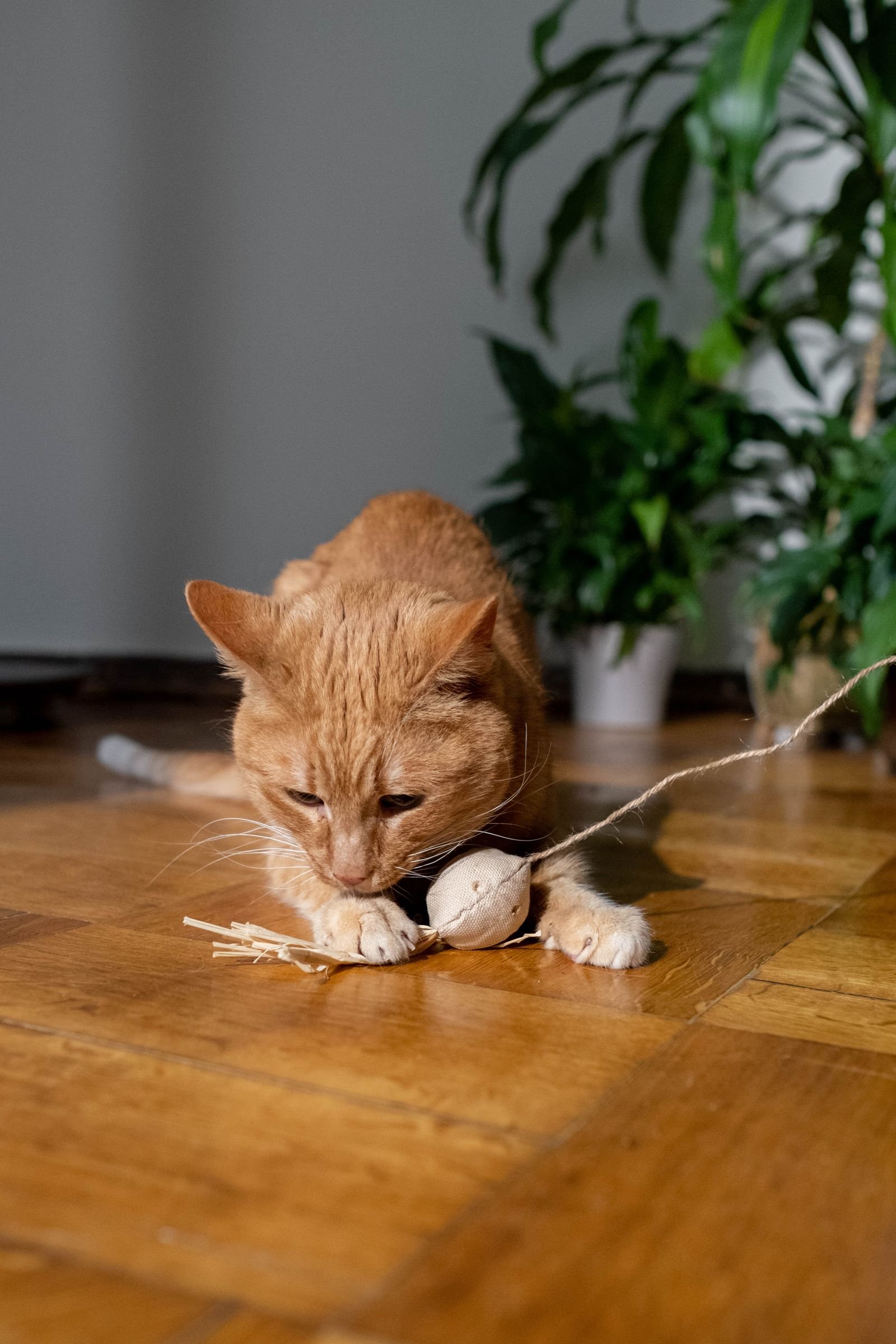
A wand toy used before bed is the best tool you have, because it lets your cat hunt at a safe distance from your hands and feet. Never use your hands or feet as toys during play. Every time you let your cat chase your fingers or toes in the daytime, you teach your cat that human body parts are fair game at night.
Leave puzzle feeders and treat dispensing balls out overnight. A puzzle feeder filled with a few biscuits keeps a cat busy for half an hour and uses up hunting energy quietly. A kicker toy, a long soft toy that a cat can grab with its front paws and kick with its back legs, is another good overnight option. Place one near your cat’s bed so the choice is easy.
Rotate the toys every few days. A toy that has sat in the same spot for a month is furniture, not prey. Put half the toys away in a cupboard and swap them around each week. Novelty costs nothing and keeps the hunting instinct pointed at toys instead of toes.
If your cat likes heights, a tall cat tree near a window gives an evening outlet that costs no effort from you. Cats that climb and watch the street before bed settle better than cats with nothing to do. Scratching posts matter too. A cat that scratches and stretches is a cat that has spent energy, and the same redirection idea helps with other habits, as our guide on how to stop a cat from scratching the couch explains.
Set Up the Bedroom for Calm Nights
A cat that has options in the bedroom is less likely to invent its own entertainment. Small changes to the room can make a real difference.
Put a cosy bed or blanket near your bed, on the floor or on a stable cat tree. Many cats simply want to be close to their people at night, and a warm spot beside the bed gives them that without putting them on your feet. A heated pad made for pets costs around £20 to £30 in UK shops, and it is a popular choice in winter. If your cat sleeps on the bed with you, give your cat a defined spot, perhaps a folded blanket at the corner, and reward your cat for using it.
Keep the room dark and quiet. A night light or a television left on can keep a cat alert and playful. A white noise machine or a quiet radio can mask small sounds that wake a cat and set off a hunting round. The aim is a bedroom that says sleep, not play.
If your cat yowls or scratches at the bedroom door when it is shut, the answer is not always to open it. Some cats settle better with the door closed and a puzzle feeder in the hallway. Others need to be in the room to feel safe. Try both for a week each and see which gives you more sleep. Night time behaviour varies a lot from cat to cat, which is why our article on why your cat sits outside the bedroom door at night is worth a read if door behaviour is part of the problem.
Think about temperature as well. A cold cat is a restless cat. In a chilly UK flat in November, a cat may climb under the duvet looking for warmth and then start playing with whatever it finds there. A warm bed of its own often solves this without any training at all.
Kitten Biting Versus Adult Cat Biting
Kittens bite feet more than adult cats, and for good reasons. Kittens are learning how hard to bite, and they practise on everything that moves. A kitten that was taken from its mother and littermates very young may never have learned bite control, because littermates teach it by squeaking and walking away when play gets rough.
For kittens, the evening play routine matters even more. Play twice a day if you can, morning and evening, for 10 minutes each time. Always end with a toy your kitten can catch. Never let children use their feet as toys, even as a joke, because a kitten cannot tell the difference between a game at noon and a game at 3am.
Most kittens grow out of foot biting by the time they are a year old, as long as owners stay consistent. If the biting is still strong after a year, or if it is getting harder rather than softer, look at the adult cat section below and consider a vet check.
Adult cats that start biting feet suddenly are a different story. A cat that never did this before and suddenly starts may be in pain, stressed by a change in the home, or reacting to a new pet or a new baby. Adult cats also bite when they are over stimulated. If your cat’s ears flatten, its tail lashes, or its pupils go wide during play, the game has tipped from fun into frustration, and it is time to stop and give your cat space. Setting clear boundaries around the house helps here too, in the same way that teaching a cat which surfaces are allowed helps, as our guide on how to keep your cat off the kitchen counter shows.
When Biting Means a Vet Visit
Most foot biting is play, but some of it is pain. Book a vet visit promptly if you notice any of the following.
- Biting starts suddenly in a cat that never did it before
- Bites draw blood or get harder over time
- Your cat flinches, cries out, or hides when touched along the back
- Skin ripples or twitches along the back before an attack
- Biting comes with hiding, eating less, using the litter tray less, or other behaviour changes
- Your cat is older and the night time restlessness is new, which can point to pain, thyroid trouble, or cognitive change
Pain from arthritis is common in older cats, and it can make a cat grumpy and quick to bite. Feline hyperesthesia syndrome, a condition where the skin along the back becomes over sensitive, can look like play attacks but needs a vet to diagnose. Dental pain can also make a cat bite more. None of these are fixed by training, and a vet check is cheap compared with months of broken sleep. If your vet clears your cat, you can train with confidence.
The Two Week Plan
Put it all together with this simple plan. Tick off each night, and do not judge the result until day 14.
Days 1 to 3: Start the evening play and feed routine. Wear thick socks to bed. Keep a decoy toy beside the bed. When your cat attacks, freeze and stay quiet.
Days 4 to 7: Add a puzzle feeder overnight. Move your cat’s bed beside yours. Rotate the toys. Keep the routine at the same time every night.
Days 8 to 10: Your cat should be attacking less often. If the attacks have stopped, keep the routine going for the full two weeks anyway. Habits need time to set. If attacks continue, add a second short play session in the late afternoon.
Days 11 to 14: Drop the thick socks and see if the peace holds. If your cat stays calm, the habit is broken. Keep the evening play as a permanent part of your routine, because the hunting urge never goes away, it only gets managed.
If nothing has improved after two weeks of consistent effort, talk to your vet or a qualified feline behaviourist. A behaviourist registered with a UK body can watch your cat, spot triggers you have missed, and build a plan for your home. Ask your vet for a referral rather than picking a name from a search result.
What Never Works
Some popular advice makes the problem worse, so it is worth naming it clearly.
Spraying water at your cat does not teach your cat anything except to fear you. It stops the bite for one night and damages trust for months. Shouting has the same problem, plus it wakes the whole house. Hitting or flicking your cat is never acceptable, and it can make a playful cat into a fearful biter.
Declawing is illegal in the UK and it does not stop biting anyway. It causes lasting pain and often makes behaviour problems worse. If anyone suggests it, ignore them.
Locking your cat in a bathroom or a cupboard overnight is not a solution either. It creates stress, and a stressed cat may start spraying, over grooming, or biting during the day instead. Separation only helps if your cat has a comfortable room of its own, with food, water, a litter tray, a bed and toys, and even then it should be a choice, not a punishment.
Finally, do not buy a gadget before you have tried the routine. Calming diffusers, pheromone sprays and special collars can help some anxious cats, and a pheromone diffuser costs around £20 to £25 in UK pet shops. But they are a support for a good routine, not a replacement for one. Spend the money on a good wand toy first. It costs about £5, and it does more than any diffuser on its own.
Conclusion
Learning how to stop cat biting feet at night comes down to three ideas. First, your feet look like prey, so the fix starts with evening play that spends the hunting urge before bed. Second, your reaction at 3am is the reward, so freezing and staying quiet ends the game faster than any scolding. Third, a two week routine of play, feed and sleep rewires the habit for good.
Start tonight. Play for 10 minutes before bed, feed a small meal, put on thick socks, and keep a decoy toy beside the bed. When the teeth find your toes, freeze, stay quiet, and wait it out. Most owners see real change within a week and quiet nights within two. And if the biting is sudden, painful or paired with other changes, see your vet first, because no training plan can fix a cat that hurts.
Your cat is not trying to ruin your sleep. Your cat is a hunter with nothing to hunt. Give the hunt a better target, and you both get your nights back.
Frequently Asked Questions
Why does my cat bite my feet at night?
Feet moving under a blanket trigger the hunting sequence of stalk, crouch and pounce. Cats are most active at dawn and dusk, and a bored indoor cat with unspent energy will treat your feet as prey.
How do I get my cat to stop attacking my feet at night?
Play with a wand toy for 10 to 15 minutes before bed, then feed a small meal. At night, freeze when attacked, stay quiet, and toss a decoy toy away from the bed. Keep the routine going for two weeks.
Is it normal for cats to bite feet under the covers?
Yes, it is normal play behaviour, especially in kittens and young cats. It becomes a problem only when it is frequent, painful, or linked to sudden behaviour changes, which need a vet check.
Should I close the bedroom door on my cat?
It can help if your cat has a comfortable spot outside the room with food, water, a litter tray and toys. Some cats settle better in the room, so try both for a week each and keep whichever gives you more sleep.
When should I take my cat to the vet for biting?
Book a visit if the biting starts suddenly, draws blood, gets harder over time, or comes with hiding, eating less, skin rippling along the back, or sensitivity to touch. Pain and feline hyperesthesia can look like play biting.
