
You buy a bright bunch of parsley on Monday, and by Thursday it is a sad, slimy bundle in the fridge drawer. If that sounds familiar, you are not alone. Learning how to keep fresh herbs fresh longer in the fridge is one of the easiest ways to cut food waste and save money, because fresh herbs are among the most thrown away items in home kitchens. The good news is that most herbs stay crisp for one to three weeks when you store them the right way. This guide walks you through the exact methods that work for tender herbs, woody herbs, and the one tricky exception that never belongs in the cold.
Why Fresh Herbs Go Limp So Fast
Fresh herbs are cut plants, and once they are separated from their roots they start losing water through their leaves. This process is called transpiration, and it never stops while the herb is alive. At the same time, tiny amounts of bacteria on the stems begin to break the tissue down, which is why a bunch can look fine one day and turn to mush the next.
The fridge slows both processes down, but only if the air around the herbs is managed. Too dry, and the leaves wilt within a day. Too wet, and rot sets in just as quickly. Every good storage method is really just a way to find the middle ground: enough moisture to stop wilting, but not so much that bacteria thrive. That balance is different for each type of herb, which is why one method does not fit all.
Temperature matters too. Most herbs like the steady cool of a fridge, which sits between 2 and 5 degrees Celsius. Basil is the odd one out. It bruises and blackens below about 10 degrees, so it needs completely different treatment. Once you understand these basics, the methods below will make perfect sense.
What You Need Before You Store Anything
You do not need special equipment to store herbs well. Most of what works is already in your kitchen. Gather a few clean jars or glasses, a roll of kitchen paper, some resealable bags or lidded containers, and a pair of scissors or a sharp knife for trimming stems.
The most important habit is sorting your herbs before they go into the fridge. Pick out any leaves that are already yellow, brown, or slimy, because one rotting leaf can spread decay through the whole bunch. Give the stems a fresh trim, since the cut ends seal over in the shop and trimming reopens the vessels so the herb can drink again.
It is best not to wash herbs before storing them. Water sitting on the leaves feeds the bacteria that cause sliminess. If they are visibly gritty, rinse them gently and then dry them completely in a salad spinner or between clean tea towels before they go into storage.
The Water Jar Method for Tender Herbs
Tender herbs have soft stems and delicate leaves. This group includes parsley, coriander, mint, dill, and spring onions. They respond beautifully to being treated like cut flowers, which is the simplest way to keep fresh herbs fresh longer in the fridge.
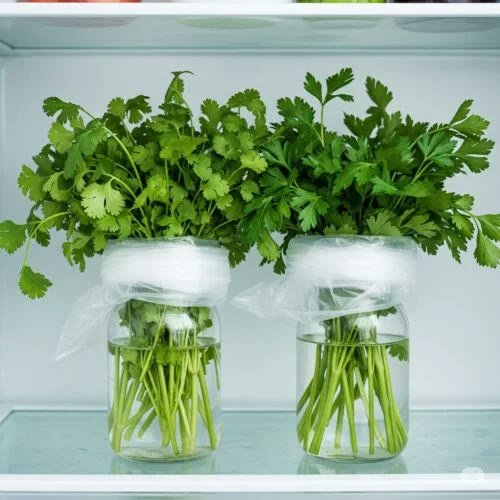
Start by trimming about two centimetres off the bottom of the stems with a sharp knife. A clean cut matters more than you might think, because a crushed stem cannot take up water properly. Place the bunch upright in a jar with about three centimetres of cold water, making sure only the stems and not the leaves are submerged.
Next, cover the leafy tops loosely with a produce bag or a small plastic bag. This creates a humid tent that stops the leaves drying out, while the open bottom lets a little air move. Store the jar in the fridge door or on a middle shelf, and change the water every two or three days.
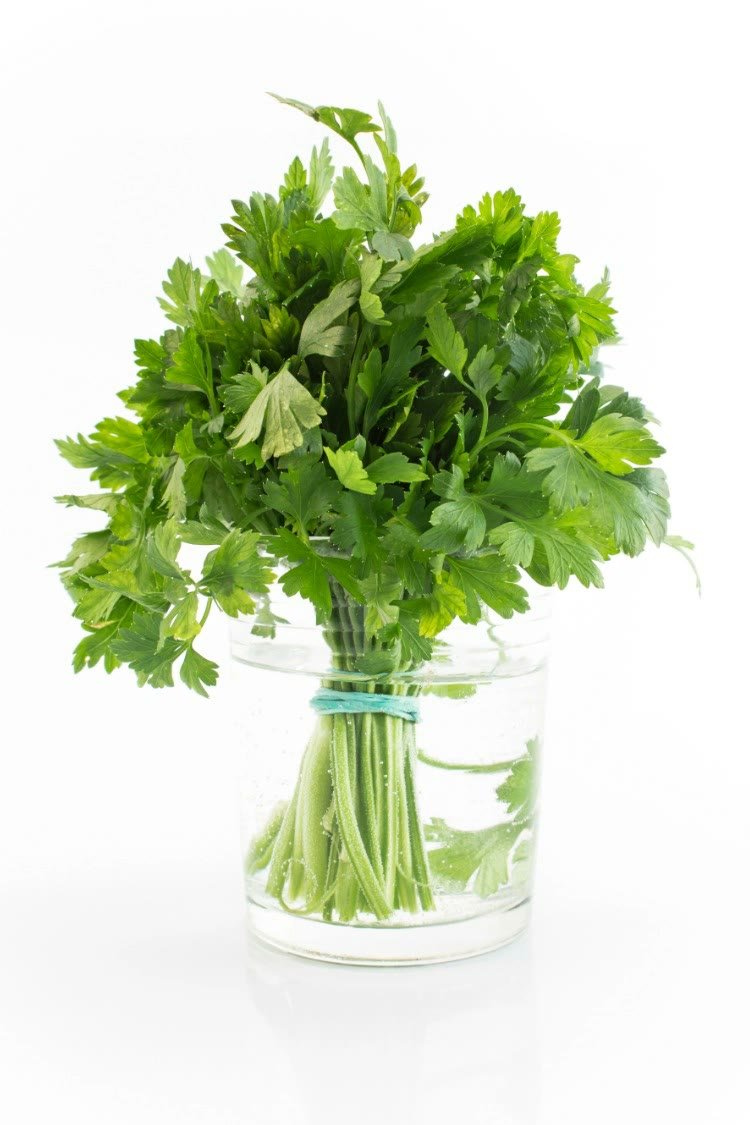
Stored this way, tender herbs commonly stay crisp for two to three weeks. Mint and parsley are the champions and often last the longest. Check the water regularly, and pull out any stem that turns mushy before it affects the rest. If the leaves ever look a little tired, a trim of the stem ends plus fresh water usually perks them back up.
The Damp Towel Method for Woody Herbs
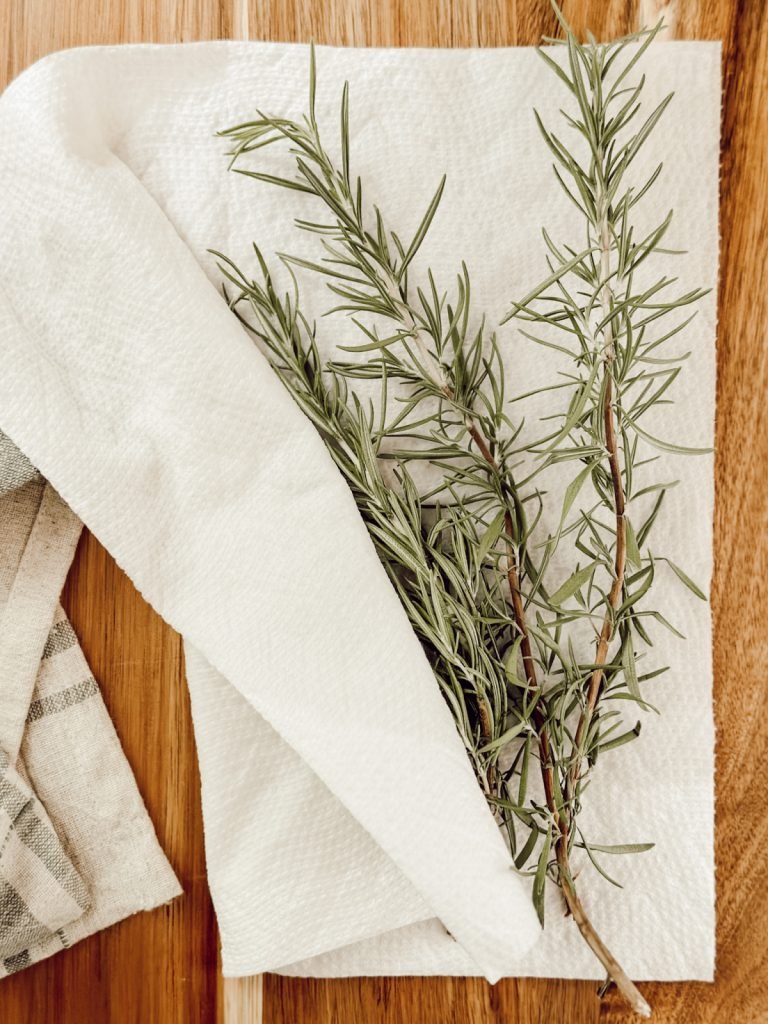
Woody herbs have tougher stems and lower water content. Think rosemary, thyme, sage, oregano, and bay. The jar method is too wet for them and invites rot, so they do better wrapped in a slightly damp towel and kept in a sealed container.
Spread the herbs in a single layer on a sheet of kitchen paper that is damp but not dripping. If you can squeeze water out of the paper, it is too wet. Roll the towel loosely around the herbs, leaving the leafy ends slightly open so a little air can circulate.
Slide the whole roll into a resealable bag or a lidded container and press out most of the air before sealing. Keep it in the crisper drawer or toward the back of the fridge, where the temperature is most stable. Check the bundle every few days and replace the towel if it dries out or starts to smell musty.
This method keeps most woody herbs fresh for two to three weeks, and rosemary and thyme sometimes last even longer. The key mistake people make is wrapping them in a soaking wet towel, which does more harm than no towel at all. Damp is the goal, never wet.
Basil Is the Exception That Hates the Fridge
Basil deserves its own section, because putting it in the fridge is the fastest way to ruin it. Cold temperatures damage its cell walls, which is why basil leaves turn black and limp after a night in the cold. This is called chilling injury, and once it happens there is no way to reverse it.
Instead, treat basil like a little bouquet on your counter. Trim the stems, place them in a jar with a couple of centimetres of water, and leave the jar at room temperature away from direct sunlight. A loose bag over the top helps in dry kitchens, but skip it if your kitchen is already humid. Change the water every couple of days and keep the jar away from the cooker, because heat wilts basil fast.
Counter stored basil stays fresh for one to two weeks, and sometimes the stems even grow tiny roots in the water. If your basil leaves start yellowing, cold is rarely the only cause, and problems with light and watering play a part too. Our guide on why houseplant leaves turn yellow and how to fix them covers the same principles that apply to potted basil. And if you keep potted herbs on the windowsill, remember that crowded supermarket pots often lean toward the light, a problem we explain in why your snake plant is leaning to one side.
How to Freeze Herbs and Keep Their Flavor for Months
When you have more herbs than you can use in a few weeks, freezing is the answer. Frozen herbs will not look pretty enough for a garnish, but they keep their flavor beautifully in cooked dishes for up to six months.
The easiest method uses an ice cube tray. Chop the herbs finely, pack them into the tray compartments, and cover them with a little olive oil or water. Olive oil works best for woody herbs like rosemary and thyme, while water suits tender herbs like parsley and coriander. Freeze until solid, then pop the cubes out into a labeled freezer bag.
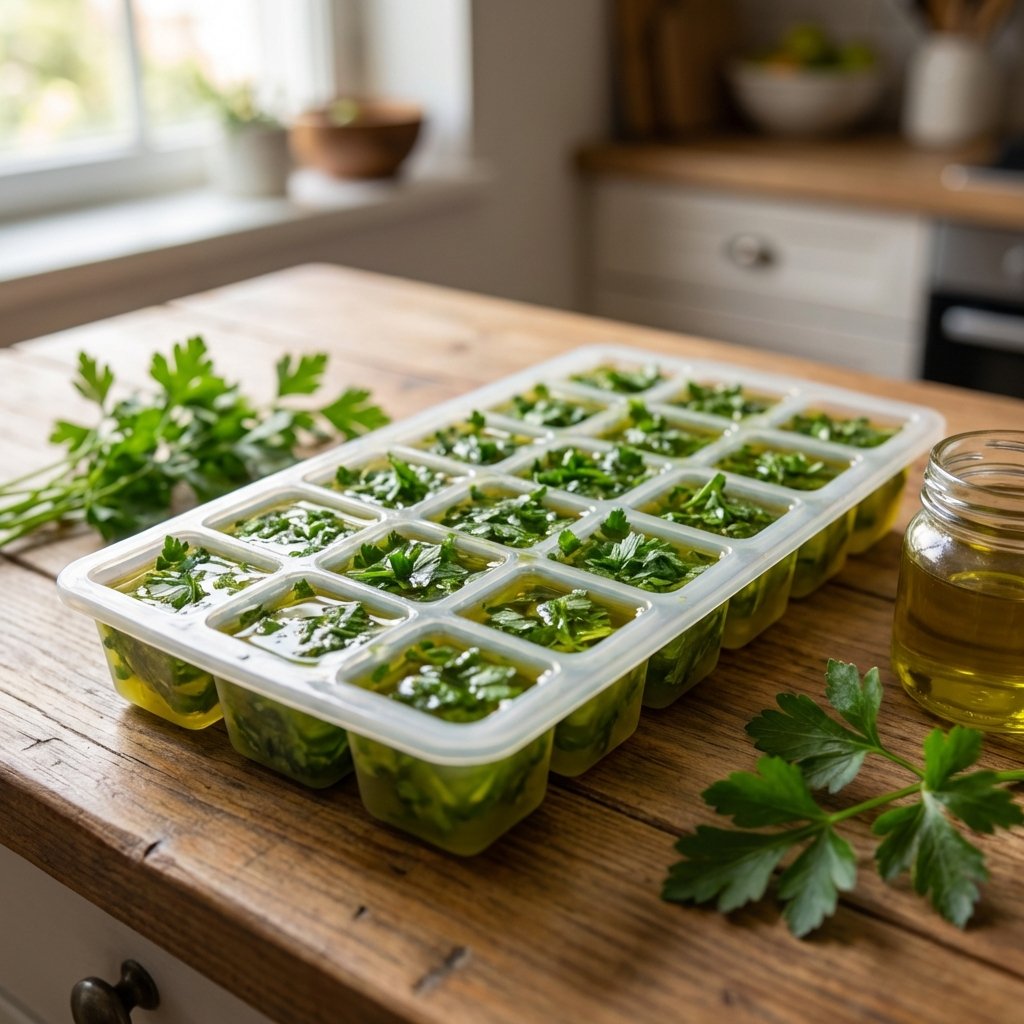
When you cook, drop a cube straight into the pan. There is no need to defrost first, which makes this method perfect for soups, stews, sauces, and sautes. Basil freezes especially well in oil, and many cooks say frozen basil cubes taste closer to fresh than any dried basil ever could.
You can also freeze whole sprigs of woody herbs. Spread clean, dry sprigs of rosemary or thyme on a tray, freeze them for an hour or two, then transfer them to a freezer bag. They will stay separate instead of clumping, so you can pull out exactly what you need.
Herb by Herb Storage Chart
Use this quick reference when you bring herbs home from the shop. The times below assume you use the method listed and that the herbs were fresh when you bought them.
| Herb | Best storage method | How long it lasts |
|---|---|---|
| Parsley | Water jar in the fridge | Two to three weeks |
| Coriander | Water jar in the fridge | Two to three weeks |
| Mint | Water jar in the fridge | Two to three weeks |
| Dill | Water jar in the fridge | One to two weeks |
| Spring onions | Water jar in the fridge | Two to three weeks |
| Rosemary | Damp towel wrap in the fridge | Two to three weeks |
| Thyme | Damp towel wrap in the fridge | Two to three weeks |
| Sage | Damp towel wrap in the fridge | One to two weeks |
| Oregano | Damp towel wrap in the fridge | One to two weeks |
| Bay leaves | Damp towel wrap in the fridge | About two weeks |
| Basil | Water jar on the counter, never the fridge | One to two weeks |
Mistakes That Spoil Your Herbs Early
Most herb waste comes from a handful of avoidable mistakes. The first is stuffing the original plastic clamshell straight into the fridge. Those packs trap condensation against the leaves, which is a perfect recipe for slime. Always repackage shop bought herbs using one of the methods above.
The second mistake is washing everything the moment you get home. It feels like the tidy thing to do, but wet leaves decay far faster than dry ones. Wash herbs just before you cook with them, and dry them well first if you washed them for storage.
The third is overcrowding. Cramming three bunches into one small jar means the stems sit in dirty water and the leaves never get air. Give herbs space, use a bigger jar, or split big bunches across two containers. The fourth mistake is forgetting about them. A quick check every few days takes seconds and lets you remove any tired leaves before they spoil the bunch.
How to Revive Wilted Herbs
Wilted does not always mean wasted. If your herbs are limp but still green and not slimy, you can often bring them back. Fill a bowl with ice cold water and plunge the herbs in for fifteen to thirty minutes. The cold water shocks the cells and they take moisture back up through the stems, often returning to a crisp state.
After the ice bath, shake off the water and dry the herbs gently. Use revived herbs the same day if you can, because they will not keep as long as herbs that never wilted. This trick works best for parsley, coriander, and mint. If the leaves have turned brown, black, or slimy, they are past saving and should go in the compost.
Common Questions About Storing Fresh Herbs
Should I wash fresh herbs before storing them in the fridge?
It is better not to wash them until you are ready to use them, because moisture left on the leaves speeds up rotting. If they are visibly dirty, rinse them gently and dry them completely in a salad spinner or between clean tea towels before they go into storage.
How long do fresh herbs last in the fridge?
Without proper storage, most fresh herbs last only one or two days. With the right method, tender herbs in a water jar and woody herbs in a damp towel wrap stay fresh for one to three weeks. Basil is the exception and should stay out of the fridge entirely.
Can you freeze fresh herbs?
Yes, and it is the best option for long term storage. Chop the herbs, pack them into an ice cube tray, cover with olive oil or water, and freeze. Frozen herb cubes keep their flavor for up to six months and can go straight into the pan while cooking.
Why does basil turn black in the fridge?
Basil suffers chilling injury below about 10 degrees Celsius. The cold damages its cell walls, which turns the leaves black and limp. Store basil in a jar of water on the counter at room temperature instead, and it will stay fresh for one to two weeks.
Can wilted herbs be saved?
Often, yes. Soak limp but still green herbs in a bowl of ice cold water for fifteen to thirty minutes. They usually crisp back up as they absorb moisture. Use them the same day, since revived herbs do not keep as long as fresh ones.
Conclusion
Knowing how to keep fresh herbs fresh longer in the fridge comes down to three simple habits. Treat tender herbs like cut flowers in a water jar, wrap woody herbs in a damp towel inside a sealed container, and keep basil on the counter where the cold cannot hurt it. Sort and trim your bunches when you bring them home, change the water every few days, and freeze anything you cannot use in time.
These small steps can stretch a bunch of herbs from a couple of days to two or three weeks, which means less waste, fewer emergency trips to the shop, and fresher flavor in everything you cook. The next time you reach for parsley, it will be crisp and ready, not a slimy reminder of good intentions.

1 Comment
Pingback: How to Keep Bread Fresh for Longer Without Waste - Daily Spark News