

If you have ever watched a busy restaurant kitchen in full swing, you have probably noticed one person who seems to be everywhere at once. They are checking a pan on the stove, calling out instructions, tasting a sauce, and calmly fixing a problem before the head chef even notices it happened. That person is very often the sous chef.
A sous chef is the second in command of a professional kitchen, the one who turns the executive chef’s vision into a plate that actually reaches the table on time, every time. It is a role built on both culinary skill and leadership, and it is one of the most important jobs in any restaurant, hotel, or catering operation.
In this guide, we will walk through exactly what a sous chef does, the skills and education needed to become one, realistic salary expectations, and the career path that leads to this position. Whether you are a line cook eyeing a promotion or simply curious about restaurant hierarchy, you will find practical, honest answers here.
What Is a Sous Chef?
The word sous comes from French and simply means under. Pair it with chef, and you get under chef, or more practically, the chef who works dirfoectly under the executive or head chef.
A sous chef is the operational backbone of the kitchen. While the executive chef often focuses on the bigger picture, things like menu concepts, budgets, and overall direction, the sous chef is the one making sure that vision actually happens during every single service. They supervise cooks, manage the pace of the kitchen, and step in wherever the team needs support.
Think of it this way. If the executive chef sets the destination, the sous chef is the one driving the car, adjusting the route in real time, and making sure everyone arrives safely and on schedule.
In smaller restaurants, there might be just one sous chef working closely with a single head chef. In large hotels, resorts, or high volume operations, you will often find several sous chefs, each overseeing a different shift or section of the kitchen.
Where the Sous Chef Fits in the Kitchen Hierarchy
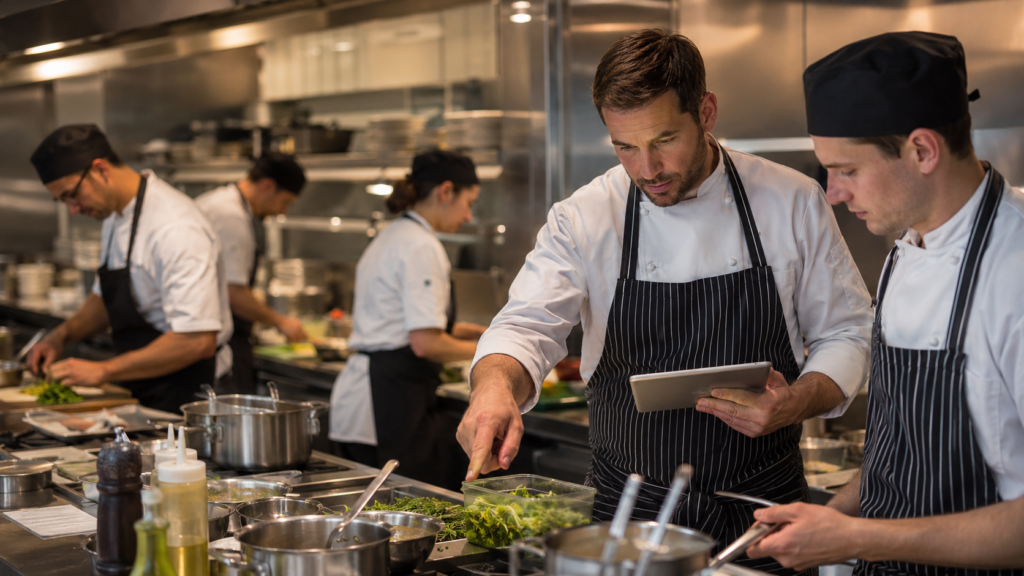
Professional kitchens are organized using a system called the brigade de cuisine, a structure developed by the legendary French chef Auguste Escoffier over a century ago. It is still the backbone of most commercial kitchens today.
Here is a simplified breakdown of that hierarchy, from the top down:
- Executive chef. Oversees the entire kitchen operation, sometimes across multiple restaurant locations. Handles menu direction, budgeting, and big picture decisions.
- Sous chef. Second in command, responsible for daily operations and staff supervision.
- Chef de partie or station chef. Runs a specific station such as sauté, grill, or pastry.
- Commis chef or line cook. Handles the bulk of hands on cooking at an assigned station.
- Prep cook. Responsible for basic preparation tasks like chopping vegetables and portioning ingredients.
Some kitchens also include a chef de cuisine, a title that can sit between the executive chef and the sous chef, particularly in restaurant groups where the executive chef oversees multiple properties. Every kitchen structures this a little differently, but the sous chef almost always sits just below the top and just above the line.
What Does a Sous Chef Do Day to Day?
No two days look exactly the same for a sous chef, which is part of what makes the job both demanding and genuinely interesting. Still, certain responsibilities show up again and again across restaurants, hotels, and catering kitchens.
Supervising Kitchen Operations
The sous chef keeps daily service running smoothly. This means checking in with each station, making sure prep lists are completed, and stepping in immediately if a station falls behind during a rush.
Training and Mentoring Staff
New cooks rarely learn everything from the executive chef directly. Instead, the sous chef trains them on techniques, house standards, and kitchen procedures, acting as both a teacher and a coach.
Quality Control
Before a dish leaves the kitchen, it often passes by the sous chef for a final check. They confirm that flavor, temperature, portion size, and presentation all meet the restaurant’s standards.
Managing Inventory and Ordering
Keeping a kitchen stocked without overspending is a constant balancing act. Sous chefs track inventory levels, place orders with vendors, and help control food costs.
Scheduling and Administrative Work
Many sous chefs help build staff schedules, manage payroll details, and handle documentation related to health and safety compliance.
Menu and Recipe Development
While the executive chef usually leads menu direction, sous chefs frequently contribute ideas, test new recipes, and help standardize dishes so they can be recreated consistently by the whole team.
Cooking on the Line
Despite all the managerial responsibilities, a sous chef is still very much a working chef. During busy services, you will often find them cooking at a station themselves, especially when the kitchen is short staffed or slammed with orders.
Sous Chef vs Executive Chef vs Head Chef
These titles get mixed up constantly, so let us clear up the differences.
An executive chef typically oversees the entire culinary operation, sometimes managing multiple restaurants or a large hotel’s food and beverage program. They spend more time on strategy, budgeting, and menu concept than actual cooking.
A head chef or chef de cuisine leads a single kitchen and takes a more hands on role in daily cooking compared to an executive chef, while still handling scheduling, supplier relationships, and menu refinement.
A sous chef reports to either of these roles and focuses on the minute to minute reality of running service. They are the ones physically present on the floor, solving problems as they happen and making sure the executive or head chef’s standards are met at every single station.
In short, executive and head chefs set the direction. The sous chef makes sure the kitchen actually gets there, dish by dish, shift by shift.
Skills Every Sous Chef Needs
Becoming a strong sous chef takes more than knowing how to cook well. It requires a blend of technical ability and people skills that many cooks underestimate until they step into the role themselves.
Technical Culinary Skills
- Strong knife work and food preparation techniques
- Comfort across multiple cooking methods, including sautéing, braising, grilling, and roasting
- A working understanding of plating and food presentation
- Knowledge of food safety and sanitation standards
Leadership and Soft Skills
- Clear communication. Giving direction quickly and calmly, even during a chaotic dinner rush.
- Organization. Keeping prep lists, schedules, and inventory on track without letting anything slip.
- Composure under pressure. Staying level headed when a station falls behind or an order gets sent back.
- Delegation. Knowing which tasks to hand off and to whom, rather than trying to do everything alone.
- Mentorship. Genuinely investing time in developing junior cooks, not just correcting their mistakes.
A great sous chef often says relatively little during a busy service, yet somehow the entire kitchen still knows exactly what needs to happen next. That kind of quiet authority takes years to build.
Sous Chef Salary and Earning Potential
Pay for a sous chef varies widely depending on location, the type of establishment, and years of experience. According to data from the U.S. Bureau of Labor Statistics, chefs and head cooks, a category that includes sous chefs, earned a median annual wage in the low sixty thousand dollar range in recent years, with plenty of variation above and below that figure.
Generally speaking, you can expect sous chef salaries to fall somewhere in the following ranges:
- Casual or independent restaurants: Often on the lower end of the scale, though still competitive with other kitchen leadership roles.
- Fine dining establishments: Typically higher, reflecting the increased skill and consistency required.
- Hotels, resorts, and large hospitality groups: Frequently the highest paying environments, especially in major metro areas, due to volume, budget, and brand standards.
Experience matters enormously here. A first year sous chef in a mid sized restaurant will earn considerably less than someone with a decade of experience running the kitchen of a high volume hotel. Location also plays a major role, with sous chefs in large cities generally earning more to offset the higher cost of living.
It is worth noting that sous chef is rarely a career destination on its own. For most people, it is a stepping stone toward executive chef, chef de cuisine, or eventually opening their own restaurant, and pay tends to climb steadily as that progression happens.
How to Become a Sous Chef

There is no single required path to becoming a sous chef, but most successful ones follow a fairly similar trajectory.
1. Start With Culinary Education, or Don’t
Some sous chefs attend culinary school and earn an associate or bachelor’s degree in culinary arts. Others learn entirely on the job, starting as a dishwasher or prep cook and working their way up through pure grit and experience. Both paths are valid, though formal education can sometimes accelerate the learning curve and open doors at higher end establishments.
2. Build Experience in Entry Level Kitchen Roles
Almost every sous chef started somewhere humble. Working as a prep cook or line cook teaches the fundamentals: knife skills, timing, consistency, and how to function under real pressure rather than in a classroom setting.
3. Master Individual Stations
Before anyone earns a leadership role, they typically need to prove they can run a single station well, whether that is grill, sauté, or pastry. This builds both technical mastery and credibility with the rest of the team.
4. Take on Informal Leadership
Long before the official title arrives, many future sous chefs start training newer cooks, covering shifts, and solving small problems on their own initiative. This is often what gets noticed by management.
5. Earn Relevant Certifications
While not always required, certifications like ServSafe Food Handler or Food Manager demonstrate a serious commitment to food safety. Some chefs also pursue the Certified Sous Chef designation through the American Culinary Federation.
Most people take somewhere between three and eight years of hands on kitchen experience before stepping into a sous chef title, though this timeline can move faster or slower depending on the individual, the restaurant, and a bit of good timing.
Life on the Job: What to Really Expect
It would not be honest to talk about this role without addressing the demands that come with it. Sous chef shifts often run long, sometimes ten to twelve hours, and they frequently include early mornings, late nights, weekends, and holidays. The pace during service can be intense, and mistakes have immediate, visible consequences.
That said, most sous chefs will tell you the trade off is worth it. There is real satisfaction in watching a chaotic dinner rush come together smoothly, in mentoring a nervous new cook until they become confident on their station, and in knowing that the kitchen runs well because of decisions you made.
It is physically demanding work too. Expect to be on your feet for the entire shift, moving constantly between stations, the walk in cooler, and the pass. If you enjoy sitting at a desk, this is probably not the career for you. If you thrive on movement, problem solving, and a bit of organized chaos, it might be exactly the right fit.
Is Becoming a Sous Chef Worth It?
For many culinary professionals, the answer is a clear yes. Beyond the paycheck, the sous chef role offers something harder to quantify: direct mentorship from experienced chefs, exposure to nearly every part of running a kitchen, and a realistic path toward executive chef or even restaurant ownership down the line.
It is also a role that teaches transferable skills. Budgeting, staff management, vendor relationships, and quality control are valuable in almost any leadership position, inside or outside the kitchen. Some former sous chefs go on to become culinary instructors, private chefs, or consultants, using the operational knowledge they built on the line.
If you are drawn to cooking but also enjoy leading people and solving problems on the fly, the sous chef position offers one of the most well rounded challenges in the culinary world.
Conclusion
A sous chef is far more than an assistant. They are the second in command who keeps a kitchen’s daily operations running smoothly, trains the next generation of cooks, and translates the executive chef’s vision into consistent, high quality plates night after night.
Getting there takes time, usually several years of hands on experience across different stations, along with a mix of technical cooking skill and genuine leadership ability. The pay reflects that responsibility, particularly in fine dining and high volume hospitality settings, and the role itself often serves as the launching pad toward executive chef or an independent culinary career.
If you are considering this path, focus on mastering your craft station by station, take on leadership opportunities early even before you have the title, and be prepared for long, physically demanding shifts that come with real reward. Few roles in the culinary world offer this much hands on responsibility, and few are quite as satisfying when a service comes together perfectly.
Frequently Asked Questions
What is the difference between a sous chef and a line cook?
A line cook typically runs one station and focuses on execution during service. A sous chef oversees the entire kitchen team, manages multiple stations at once, and handles leadership tasks like scheduling and training in addition to cooking.
Do you need a culinary degree to become a sous chef?
No, a degree is not strictly required. Many sous chefs work their way up through hands on experience alone, though formal culinary education can help build foundational skills and may open doors at certain high end establishments.
How long does it take to become a sous chef?
Most people spend three to eight years gaining experience in entry level and station chef roles before earning a sous chef title, though the exact timeline depends on the individual, the kitchen, and available opportunities.
What is the biggest challenge of being a sous chef?
Balancing hands on cooking with leadership responsibilities is often the hardest part. Sous chefs need to stay calm under pressure while managing people, inventory, and quality control all at once, often during the busiest hours of the day.
Can a sous chef become an executive chef?
Yes, this is actually the most common career progression in professional kitchens. Sous chef experience builds the operational and leadership skills needed to eventually run an entire kitchen or culinary program as an executive chef.
