

Working from anywhere sounds like a dream until you actually have to pick that anywhere. If you have ever opened five browser tabs comparing rent prices, internet speeds, and coffee shop reviews in three different cities, you already know the problem. There is no shortage of advice, but most of it repeats the same five cities without ever explaining what actually makes a place livable once your laptop closes for the day.
This guide takes a different approach. Instead of just handing you a list, it walks through the real factors that separate a good remote work location from a great one: cost of living, internet reliability, community, climate, and the everyday quality of life that a spreadsheet can’t capture. Whether you are a fully remote employee weighing a cross country move or a freelancer chasing better weather and a lower rent bill, this article will help you find the best places to live for remote workers based on what actually matters to your daily routine.
What Makes a City Great for Remote Work
Before jumping into rankings, it helps to understand what actually separates a remote work friendly city from one that just looks good in photos. Cost of living for remote workers is usually the first thing people check, and it matters, but it is only part of the story.
Here are the factors that genuinely affect your day to day experience once you relocate.
Internet Speed and Reliability
Fast, stable internet is not a luxury for remote employees, it is the entire job. A city can have gorgeous weather and cheap rent, but if your video calls freeze every afternoon, none of that matters. Look for average download and upload speeds, not just advertised maximums, and check whether fiber internet is actually available in the neighborhoods you are considering rather than just downtown.
Cost of Living and Housing
Your salary goes further in some cities than others, and this is where a lot of remote workers find real financial freedom. Median rent, home prices, groceries, and local taxes all factor into how comfortably you can live. A remote salary earned in a high cost city but spent in a lower cost one is one of the biggest advantages of location independent work.
Coworking Spaces and Community
Working from home every day can get isolating fast. Cities with a strong coworking scene, active freelancer meetups, or simply a culture of laptop friendly coffee shops make it easier to stay social and productive. This is especially important if you are moving somewhere new and do not have an existing network.
Climate and Outdoor Access
Weather affects mood, energy, and how much time you spend outside your four walls. Some remote workers thrive with year round sunshine, while others prefer four distinct seasons. Either way, it is worth thinking about how climate will affect your daily routine, not just your vacation photos.
Time Zone Compatibility
If your job requires regular meetings with a team based in a specific region, time zone overlap deserves more attention than most articles give it. Moving somewhere with a six or seven hour time difference from your core work hours can quietly wreck your schedule, even if the city itself is perfect in every other way.
How This List Was Put Together
Rather than pulling from a single data source, this list blends publicly available cost of living indexes, broadband coverage reports, and firsthand patterns reported by remote workers and digital nomad communities. Cities were evaluated on affordability, internet infrastructure, job and freelance opportunities, community and coworking access, and overall livability.
The goal was not to just repeat the usual suspects like Austin and Lisbon, though they do make appearances for good reason. It was to build a genuinely useful shortlist that balances popular hubs with a few underrated picks that rarely get enough credit.
Best U.S. Cities for Remote Workers in 2026
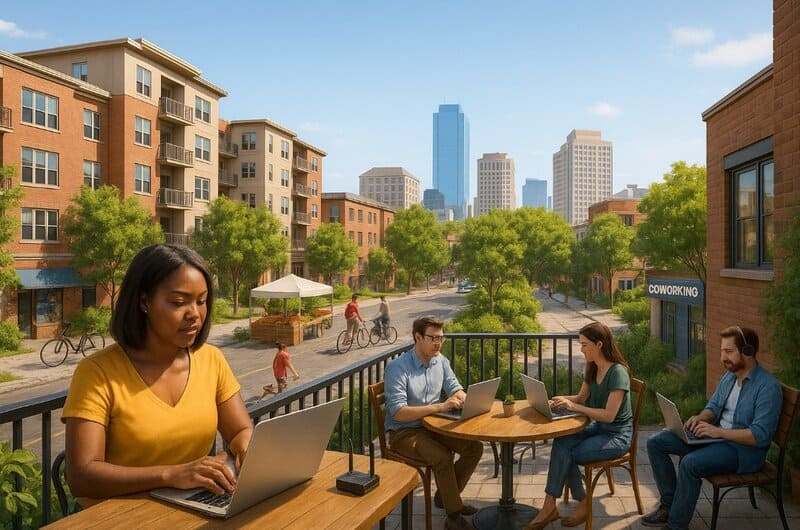
If you are staying within the United States, these cities consistently offer the strongest mix of affordability, infrastructure, and lifestyle for remote employees and freelancers.
1. Raleigh, North Carolina
Raleigh combines a growing tech scene with a noticeably lower cost of living than most East Coast metros. Reliable broadband, mild seasons, and a strong sense of community make it one of the most underrated cities for remote work in the country.
2. Boise, Idaho
Boise has quietly become a favorite for people who want outdoor access without sacrificing internet reliability or safety. Housing remains more affordable than most Western cities, and the pace of life suits people who want quiet focus during the week and trail access on the weekend.
3. Chattanooga, Tennessee
Chattanooga was one of the first U.S. cities to roll out citywide gigabit internet, and that investment still pays off for remote workers today. Add a lower cost of living and a growing creative and tech community, and it is easy to see why this city keeps showing up on relocation shortlists.
4. Austin, Texas
Austin remains one of the best known remote work hubs, and while it has gotten more expensive over the years, it is still cheaper than most major coastal tech cities. The combination of coworking spaces, a strong professional network, and year round warm weather keeps it near the top of most lists, including this one.
5. Madison, Wisconsin
Madison offers a rare mix of small city charm and big city resources. Bike friendly streets, dependable internet, and an active downtown scene make it easy to build a routine that balances deep work with a genuine social life.
6. Tampa, Florida
No state income tax, warm weather nearly all year, and expanding high speed internet coverage make Tampa a strong pick for remote workers who want their cost of living to stretch further. The beach access is a nice bonus for weekend recovery from a long work week.
7. Pittsburgh, Pennsylvania
Pittsburgh has transformed from an industrial city into a genuine hub for healthcare, education, and tech remote work opportunities. Affordable housing and a strong arts and culture scene round out the appeal.
8. Salt Lake City, Utah
Salt Lake City pairs a growing tech economy with unmatched access to outdoor recreation. If your ideal Tuesday involves finishing a work call and then heading straight to a trailhead, this city is worth serious consideration.
9. Grand Rapids, Michigan
Grand Rapids has invested heavily in broadband infrastructure and remote work friendly initiatives in recent years. Lower housing costs and an increasingly vibrant downtown make it a smart choice for people who want stability without a big city price tag.
10. San Antonio, Texas
San Antonio offers one of the more affordable cost of living profiles among major Texas cities, along with a growing number of coworking spaces and no state income tax. It is a solid option for remote workers who want city amenities without city size prices.
Best International Destinations for Remote Workers
For remote workers open to living abroad, several countries have made this decision far easier by introducing dedicated digital nomad visas. Here are five international destinations worth serious consideration in 2026.
11. Lisbon, Portugal
Lisbon consistently ranks among the top global cities for remote work, and it is easy to understand why. Portugal’s digital nomad visa options, reliable internet, and relatively lower cost of living compared to Western Europe make it a magnet for location independent professionals.
12. Mexico City, Mexico
Mexico City offers a rich cultural scene, strong food culture, and a temporary resident visa process that allows extended stays. For remote workers based in the Americas, the time zone overlap with U.S. business hours is a significant practical advantage.
13. Tbilisi, Georgia
Georgia’s Remotely From Georgia program was built specifically to attract remote professionals, offering an easy path to long term stays. The affordability and growing expat community make Tbilisi a compelling, if lesser discussed, option.
14. Chiang Mai, Thailand
Chiang Mai has long been a favorite in the digital nomad community for its low cost of living, warm climate, and dense network of coworking spaces. Thailand’s newer visa options have made longer stays more accessible as well.
15. Medellin, Colombia
Medellin combines pleasant year round weather with a genuinely active coworking and startup scene. Colombia’s digital nomad visa, paired with a lower cost of living than most North American cities, has made this a fast growing hub for remote professionals.
How to Choose Between a Domestic Move and Going Abroad
This decision often comes down to more than just preference. A few practical questions can help clarify the right direction.
Domestic moves tend to be simpler from a legal and tax standpoint, since you avoid dealing with foreign visas, currency exchange, and international health insurance. If your job requires a consistent overlap with U.S. business hours, staying domestic also removes a lot of scheduling friction.
International moves often offer a lower cost of living and a genuinely different lifestyle, but they come with added complexity. Visa renewals, tax residency rules, and language barriers are all real considerations that rarely make it into glossy travel focused articles.
Neither option is inherently better. It depends on your income stability, your comfort with logistics, and how much you value stepping outside familiar systems.
Questions to Ask Before You Commit to a City
Before signing a lease or booking a one way flight, it is worth running through a short mental checklist.
- Does the average internet speed in this city actually meet my work requirements, not just the marketing numbers?
- How does the cost of living compare to my current city once I account for taxes, healthcare, and transportation?
- Is there an existing remote work or coworking community I can plug into quickly?
- How compatible is the local time zone with my team’s working hours?
- What does healthcare access look like, especially if I am moving internationally?
Answering these honestly before you move saves a lot of regret after.
Common Mistakes Remote Workers Make When Relocating
A lot of relocation decisions get made based on vacation impressions rather than everyday reality. A city that feels magical over a five day trip can feel very different once you are working there full time and dealing with grocery runs, doctor appointments, and slow internet days.
Another common mistake is underestimating how quickly digital nomad hotspots can become saturated. Popular cities sometimes see housing prices rise specifically because of remote worker demand, which can quietly erode the affordability that made the location attractive in the first place.
Finally, many remote workers overlook local community building. It is easy to assume that working from home means isolation is inevitable, but cities with strong coworking cultures and regular meetups make a real difference in avoiding burnout and loneliness.
Final Thoughts
There is no single best place to live for remote workers because the right answer depends entirely on what you value most. Someone chasing outdoor access and lower costs might land in Boise, while someone craving a completely new cultural experience might thrive in Lisbon or Medellin.
What matters is approaching the decision with a clear list of priorities rather than chasing whatever city is trending. Internet reliability, genuine cost of living, community access, and time zone compatibility will affect your daily life far more than a scenic skyline photo ever will.
Whichever city or country you choose, take the time to visit if possible, talk to people already living and working there, and give yourself permission to change course if it does not work out. The entire point of remote work is flexibility, and that flexibility extends to where you call home too.
FAQ
What is the best U.S. city for remote workers in 2026?
There is no single answer, but Raleigh, Boise, and Chattanooga consistently rank highly thanks to a strong mix of affordability, reliable internet, and quality of life.
Do I need a visa to work remotely from another country?
It depends on the country and how long you plan to stay. Many popular destinations now offer dedicated digital nomad visas, but tourist visas typically do not legally permit remote work, even if enforcement varies.
How important is internet speed when choosing a city?
It is one of the most important factors. Even a beautiful, affordable city becomes frustrating quickly if your video calls drop or uploads take forever, so always check real world speed reports, not just advertised averages.
Are smaller cities better than major metros for remote work?
Not necessarily better, but often more affordable while still offering solid infrastructure. Smaller cities like Madison or Grand Rapids can offer a strong quality of life without the price tag of larger metros.
How do I avoid loneliness after relocating for remote work?
Look for cities with active coworking spaces, local meetup groups, or established remote work communities. Building a routine that includes regular in person interaction makes a significant difference in long term satisfaction.
