
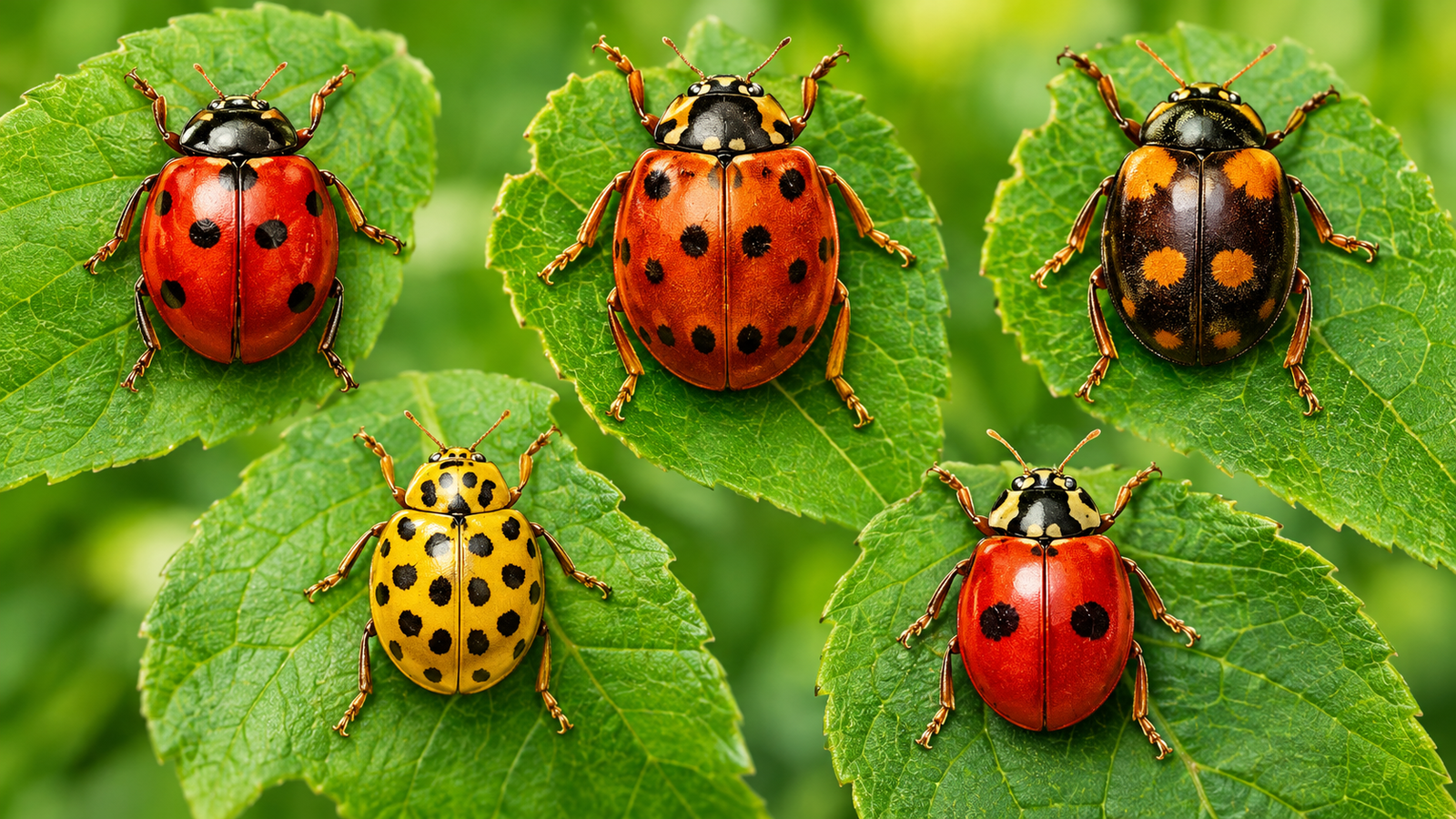
If you have ever spotted a small, round beetle crawling across a leaf and wondered exactly what kind it was, you are not alone. Most people assume every ladybug looks the same: red with black spots. In reality, there are thousands of types of ladybugs around the world, and they come in colors and patterns you might not expect, from solid orange to pale gray to deep metallic blue.
This guide walks you through the most common types of ladybugs you are likely to encounter, how to tell them apart, which ones are native versus introduced, and what their presence in your garden or home actually means. Whether you are trying to identify a beetle you just found or simply curious about these small but important insects, you will find clear, practical answers here.
What Exactly Is a Ladybug
Ladybugs belong to the beetle family Coccinellidae, which includes an estimated 5,000 to 6,000 species worldwide. Scientists and entomologists often call them lady beetles or ladybird beetles instead, since technically they are beetles and not true bugs. The name stuck anyway, and most people still use ladybug in everyday conversation.
These insects have a rounded, dome shaped body, short antennae, and a pair of hardened outer wings called elytra that protect their more delicate flight wings underneath. While red with black spots is the image most of us picture, ladybugs can also appear yellow, orange, pink, gray, or even black, with markings that range from bold spots to faint streaks or no pattern at all.
How to Identify Different Types of Ladybugs
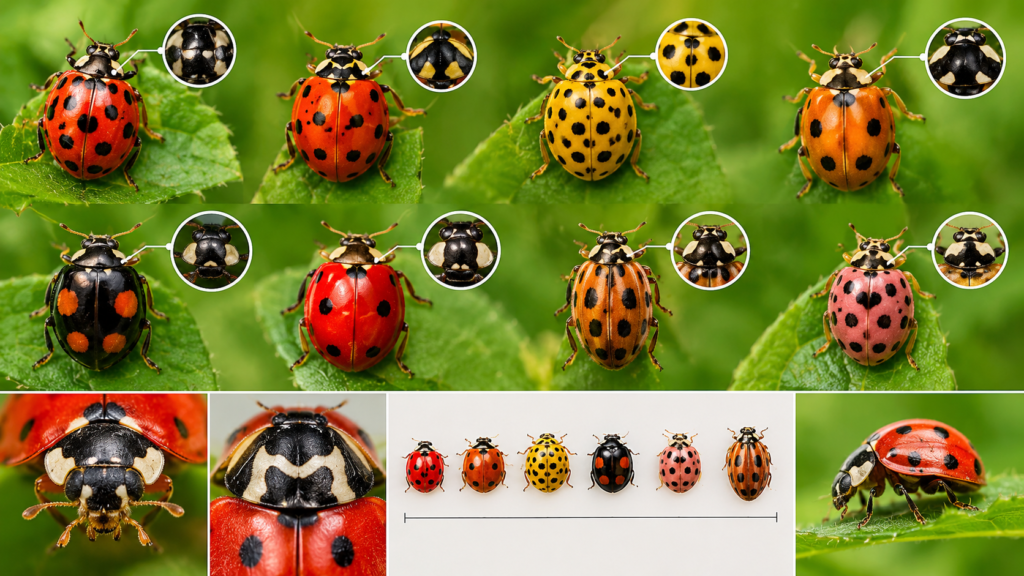
Identifying types of ladybugs comes down to a handful of visual clues. Once you know what to look for, telling species apart becomes much easier.
Body color. Most ladybugs fall into shades of red, orange, or yellow, though gray, pink, and black variations exist as well.
Spot count and pattern. Some species have exactly two spots, others have seven, thirteen, or even twenty two. A few species have no spots at all.
Pronotum markings. The pronotum is the small shield behind the head. Many species have distinct white, black, or M shaped markings here that are often more reliable for identification than spot count alone.
Size. Ladybugs range from about 1 millimeter up to nearly 11 millimeters, depending on the species.
Shape. Some ladybugs are almost perfectly round, while others, like the convergent ladybug, have a slightly elongated, oval body.
Keep in mind that spot number is not a reliable way to guess a ladybug’s age, a common myth. Spot patterns are fixed by species and sometimes vary slightly between individuals of the same type.
The Most Common Types of Ladybugs You Will Encounter
While thousands of species exist globally, only a relatively small number show up regularly in gardens, farms, and homes across North America and Europe. Here are the ones you are most likely to see.
Seven Spotted Ladybug
The seven spotted ladybug, scientifically known as Coccinella septempunctata, is probably the species most people picture when they hear the word ladybug. It has a bright red body with exactly seven black spots, three on each wing cover plus one shared spot at the center.
Originally from Europe, this species was intentionally introduced to North America decades ago to help control aphid populations. It succeeded so well that it is now one of the most widespread ladybugs on the continent. A single adult can eat several thousand aphids over its lifetime, making it a genuine ally for gardeners.
Convergent Ladybug
Native to North America, the convergent ladybug is named for the two white lines on its pronotum that appear to converge toward each other. Its body is typically red to orange with anywhere from twelve to thirteen black spots.
This species is commonly sold commercially for natural pest control in gardens and greenhouses. It thrives in warm climates and often gathers in large groups to overwinter, particularly in mountainous regions of California.
Asian Lady Beetle
The Asian lady beetle, or Harmonia axyridis, is one of the most variable species in appearance. Colors range from pale yellow to deep red, and spot counts can range from zero to nineteen. The most consistent identifying feature is a black marking shaped like the letter M or W on the pronotum.
Introduced to North America and Europe as a biological pest control agent, this species has since become a nuisance in many regions. It tends to invade homes in large numbers during autumn, seeking warm places to spend the winter. Asian lady beetles can also give a mild bite and release a foul smelling yellow fluid when disturbed, which is why many homeowners want to identify and manage them specifically.
Nine Spotted Ladybug
The nine spotted ladybug is a native North American species and holds the honor of being the official state insect of New York. It has four spots on each wing cover plus one central spot that straddles both wings.
Once extremely common across the northeastern United States, its population has declined sharply since the late 1980s. Researchers point to competition from introduced species, including the Asian lady beetle and seven spotted ladybug, as a likely contributing factor.
Two Spotted Ladybug
True to its name, this species displays exactly two black spots on an otherwise red or orange body. It is found throughout both North America and Europe.
Like the nine spotted ladybug, populations of the two spotted ladybug have been shrinking in parts of its range, and it is now listed as a species of conservation concern in some states. It still plays an important role controlling aphids in gardens and agricultural fields where it remains common.
Fourteen Spotted Ladybug
This smaller species stands out with a yellow or pale background covered in fourteen black spots, some of which appear fused together into blocky patterns. It is native to Europe but has spread into North America and parts of Asia.
Because of its smaller size, it consumes aphids at a slower rate than larger species, but it remains a useful presence in gardens and low intensity farming systems.
Pink Spotted Lady Beetle
Native to North America, this species has a distinctly pink or reddish body marked with black spots, typically arranged six per wing cover. It is unusual among ladybugs in that it also feeds on pollen and nectar in addition to aphids, which helps it survive periods when insect prey is scarce.
Mealybug Destroyer
As the name suggests, this species specializes in hunting mealybugs rather than aphids. Native to Australia but now used worldwide in greenhouses and citrus groves, it has a dark brown body with an orange head and rear section. Its larvae are covered in waxy filaments that make them look remarkably similar to the mealybugs they prey on, a clever disguise that helps them approach prey undetected.
Native Ladybugs Versus Introduced and Invasive Species
Not every ladybug found in a given region originated there naturally. Species like the seven spotted ladybug and Asian lady beetle were deliberately introduced to North America to help control crop pests, and both have since spread far beyond their original release sites.
Being introduced does not automatically make a species invasive. The key difference is impact. The Asian lady beetle is considered invasive because it outcompetes native species for food, tolerates disease better than many native ladybugs, and has been linked to declining numbers of species like the nine spotted and two spotted ladybug.
Meanwhile, species like the convergent ladybug and pink spotted lady beetle are native to North America and continue to thrive alongside introduced species, though not always without competition for the same food sources.
Ladybug Look Alikes That Often Get Misidentified
Several beetles resemble ladybugs closely enough to cause confusion, and a few of them are actually garden pests rather than beneficial predators.
The Mexican bean beetle looks similar in shape and color but feeds on bean plant leaves rather than aphids, often causing noticeable crop damage. The squash lady beetle has a similar effect on squash, pumpkin, and cucumber plants. Both species have a coppery or yellowish tint and slightly fuzzier wing covers than true ladybugs.
Other look alikes include certain clerid beetles and the scarlet lily beetle, which despite its name is not related to true ladybugs and is known for damaging lily plants. If you notice chewed leaves alongside a ladybug like beetle, it is worth taking a closer look, since you may be dealing with a plant pest rather than a helpful predator.
Where Ladybugs Live and What They Eat
Ladybugs are found in an enormous range of habitats, including gardens, farmland, forests, grasslands, and even coastal areas, depending on the species. Most prefer environments with a steady supply of aphids, since aphids make up the primary diet for the majority of ladybug species.
Some species have adapted to more specialized diets. The twenty two spotted ladybug and its relatives feed almost exclusively on powdery mildew rather than insects, while the pink spotted lady beetle supplements its diet with pollen and nectar when prey is limited.
Because ladybugs get much of their hydration from the insects they eat, they generally do not need to live near open water sources. During colder months, many species enter a dormant state called diapause, often clustering together in large groups under bark, leaf litter, or inside buildings to conserve warmth until spring.
Why Some Ladybug Populations Are Declining
While ladybugs as a group remain widespread, several native species have seen significant population drops over the past few decades. The nine spotted ladybug and two spotted ladybug are the two most notable examples in North America.
Researchers point to a combination of factors, including competition from introduced species like the Asian lady beetle and seven spotted ladybug, habitat loss, and shifts in agricultural practices that reduce available aphid populations. Because ladybugs play a meaningful role in natural pest control, their decline has drawn growing interest from conservation groups and citizen science projects that track sightings of rarer native species.
What to Do If Ladybugs Are Swarming Your Home
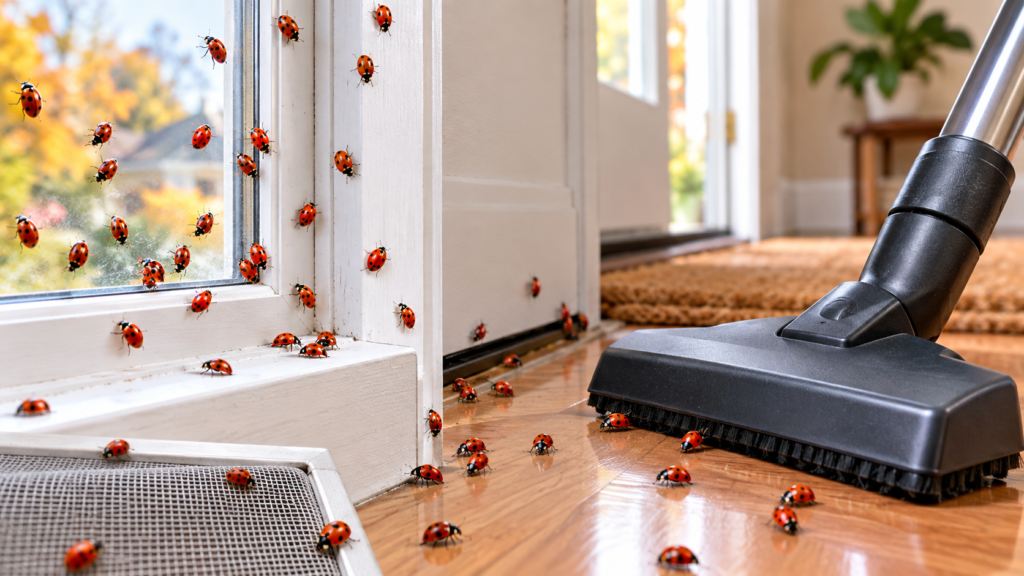
Large numbers of ladybugs, particularly Asian lady beetles, often try to enter homes in autumn as temperatures drop. This is normal overwintering behavior rather than a sign of a structural problem, but it can still be unwelcome indoors.
The most effective long term solution is prevention. Sealing cracks around windows, doors, and siding, along with repairing damaged window screens, keeps most ladybugs outside before they find a way in. For ladybugs that have already made it inside, a vacuum cleaner works better than sweeping or squashing them, since crushed ladybugs release a strong smelling yellow fluid that can stain fabric and surfaces.
If you are dealing with a persistent or unusually large indoor swarm, a local pest control professional can offer a more thorough inspection and long term prevention plan tailored to your home.
Conclusion
Ladybugs are far more diverse than most people realize, ranging from the familiar red and black seven spotted ladybug to gray, pink, and even metallic blue species found around the world. Learning to identify types of ladybugs by their color, spot pattern, pronotum markings, and size makes it much easier to understand which species you are looking at and whether it is native, introduced, or simply a look alike pest.
Most ladybugs remain genuinely beneficial, helping control aphids and other soft bodied pests in gardens and farms without the need for chemical treatments. Whether you are trying to protect declining native species, keep an introduced species out of your home, or simply satisfy your curiosity about a beetle in your backyard, understanding these small but important insects gives you a much clearer picture of the role they play in the natural world around you.
Frequently Asked Questions
How many types of ladybugs are there in total?
Scientists estimate there are between 5,000 and 6,000 ladybug species worldwide, though only a few hundred are commonly found in North America and Europe.
Do the number of spots on a ladybug indicate its age?
No. This is a common myth. Spot number and pattern are determined by species, not age, and remain largely consistent throughout an adult ladybug’s life.
What is the difference between a ladybug and an Asian lady beetle?
Asian lady beetles are a specific introduced species known for their variable coloring and the M or W shaped mark on their pronotum. They are more likely to invade homes in large numbers and can give a mild bite, unlike most native ladybug species.
Are all ladybugs beneficial for gardens?
Most are, since they feed on aphids and other soft bodied pests. However, a few look alike species, such as the Mexican bean beetle and squash lady beetle, actually damage garden plants rather than helping control pests.
Why are some ladybug species becoming less common?
Native species like the nine spotted and two spotted ladybug have declined due to competition from introduced species, habitat changes, and shifts in agricultural practices that reduce their food supply.
