
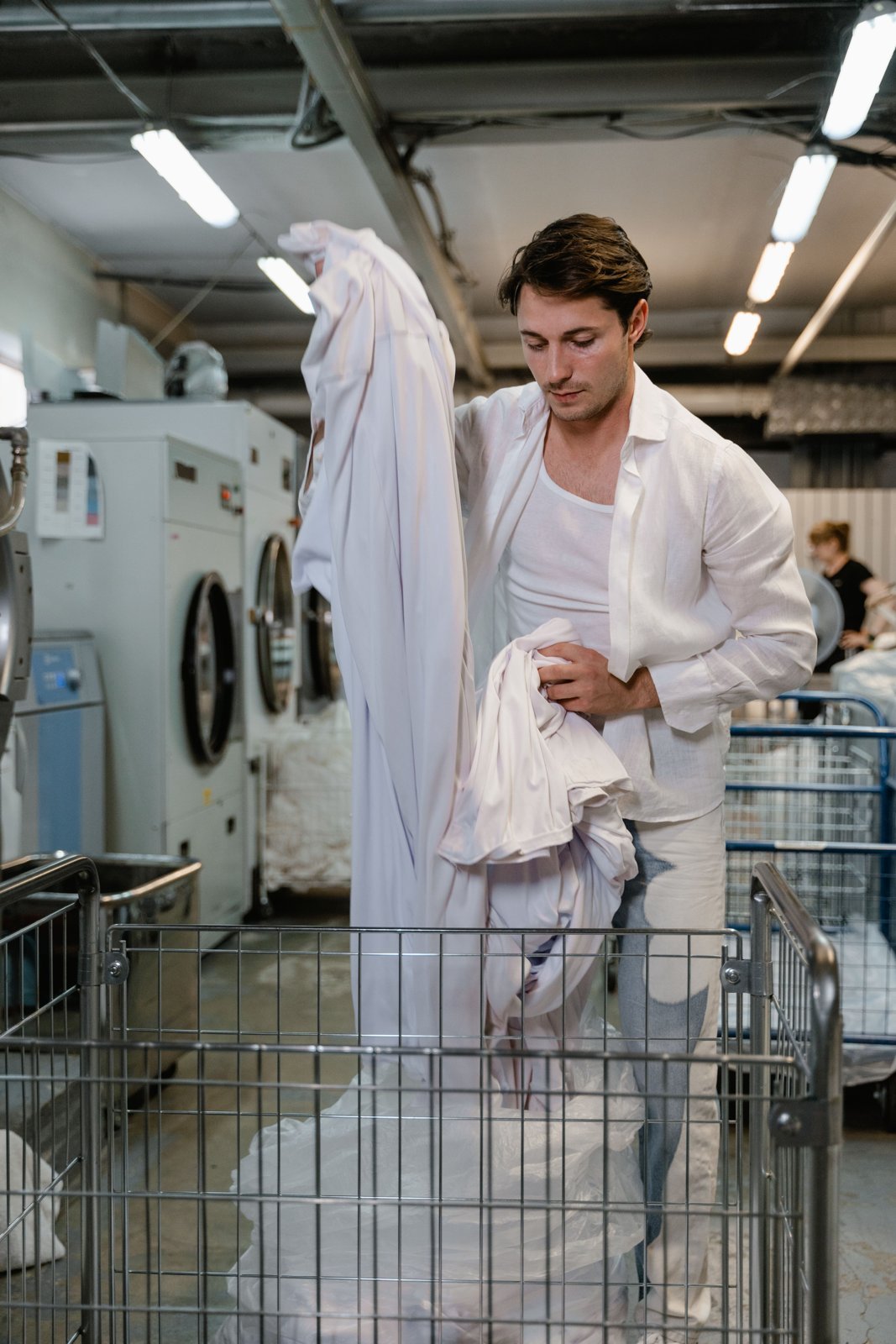
Marcus had an interview at ten in the morning and a white shirt he trusted. He had worn it to two weddings and a graduation, and it always looked crisp. The night before the interview he took it out of the closet, held it up to the light, and saw it. Two yellow patches under the arms, faint at the edges and darker in the middle, like a map of every hot day the shirt had survived. He tried a quick wash, then a second wash, and the patches stayed exactly where they were. For a moment he considered throwing the shirt away and buying a new one at nine in the morning, before deciding to find out what the stains actually were.
If you want to know how to remove sweat stains from white shirts without bleach, the answer starts with that same question. Yellow underarm marks are rarely just sweat. They are a mix of sweat, body oil, and the aluminum compounds in most antiperspirants, baked into cotton by body heat and by the dryer. Chlorine bleach reacts with that mix and often makes the yellow darker, which is why the strongest product in the laundry room is the worst choice here. The good news is that gentler methods work better, and they use things you probably already own. This guide explains why the stains form, the four methods that actually lift them, how to treat different fabrics, and how to stop the stains coming back.
Think of this as a rescue plan for a shirt you like. You will learn which method to try first, when to move to a stronger soak, and which mistakes set a stain for good. By the end you will know how to save the shirt Marcus almost threw away, and how to keep your other white shirts from going the same way.
Why White Shirts Turn Yellow Under the Arms
Sweat on its own is almost colorless. The yellow color appears when sweat meets antiperspirant. Most antiperspirants contain aluminum salts that plug sweat glands to reduce wetness. When those salts mix with sweat proteins and skin oils, they form a yellowish residue that bonds to cotton fibers. Heat sets the bond. Every trip through a hot dryer makes the stain a little harder to remove, which is why a shirt can look fine for months and then suddenly show marks that will not wash out.
Body oil adds to the problem. Skin oils collect in the underarm and collar areas, and they attract dirt and trap the aluminum residue in place. Hard water can add a gray or yellow tint of its own, especially if detergent does not rinse out fully. That is why a stain sometimes looks worse after a wash: leftover detergent and mineral residue dry into the fabric and leave a film behind.
Knowing the cause changes the treatment. You are not trying to bleach a color out of the fabric. You are trying to break down a protein and mineral buildup and lift it away. Gentle, patient methods do that job. Harsh chlorine bleach attacks the cotton itself and can react with the residue to leave a deeper yellow stain that no later treatment can fix.
What Not to Do First
Before you treat anything, avoid the three mistakes that turn a removable stain into a permanent one. First, do not reach for chlorine bleach. On white cotton it can yellow the underarm area further, weaken fibers, and leave the shirt looking worse than before. Oxygen bleach is a different product and is safe for this job, but chlorine bleach is not.
Second, do not put the shirt in a hot dryer before the stain is gone. Heat sets protein stains. Check the underarm in good light after washing, while the shirt is still damp. If any yellow remains, treat it again and wash again. Only use heat drying once the stain has fully lifted.
Third, do not start with very hot water on a fresh stain. Cool or warm water loosens residue without setting it. Hot water has its place later, for a soak on sturdy cotton, but it is not the opening move.
One more habit to drop: scrubbing hard with a stiff brush. Aggressive scrubbing frays cotton and spreads the stain wider. A soft toothbrush, gentle pressure, and enough waiting time will do more than force ever will.
Method 1: The Baking Soda Paste for Everyday Stains
This is the method to try first on most white shirts. It is gentle, cheap, and it works on mild to moderate yellowing, especially when the stain is weeks rather than years old.
Start by turning the shirt inside out so you work on the side where the buildup sits. Rinse the underarm area in cool water to loosen surface residue. Mix about three parts baking soda with one part water to make a thick paste, about the texture of toothpaste. Spread the paste over the yellow area, inside and outside the fabric, and work it in lightly with an old soft toothbrush.
Let the paste sit for 30 to 60 minutes. Do not let it dry completely into a hard crust; if it starts to dry, mist it lightly with water. Then wash the shirt as usual with a good detergent, in cool or warm water, on a normal cycle. When the wash finishes, check the underarm before drying. If the yellow has faded but not gone, repeat the paste once more before you let the shirt near heat.
Baking soda works because it is mildly abrasive and mildly alkaline, so it loosens oils and residue without attacking cotton. It is also safe for most white fabrics, which makes it the right first step when you are not sure how old or deep a stain is.
Method 2: Hydrogen Peroxide for Stubborn White Cotton
When the baking soda paste leaves a shadow behind, step up to hydrogen peroxide. This method is for white fabric only. Hydrogen peroxide can lighten colors, so never use it on a colored shirt or on a white shirt with colored trim.
Mix equal parts standard 3 percent hydrogen peroxide and water, then add a small squirt of plain dish soap and a spoonful of baking soda to make a thin paste. Apply it to the yellow area and work it in gently with a soft brush. Let it sit for 30 minutes, then wash as usual in warm water.
The dish soap matters here. It cuts through the body oil that holds the stain in place, letting the peroxide reach the residue underneath. Without the soap, peroxide alone often cleans the surface and leaves the deeper buildup untouched.
Check the result in daylight before drying, because bathroom light hides faint yellow very well. If the stain is gone, wash once more with detergent alone to remove any soap residue, then dry as usual. If a faint shadow remains, repeat the treatment once. Two rounds of this method clear most stains that a single wash cannot touch.
Method 3: A Vinegar Soak for Odor and Residue
Vinegar is the best choice when the problem is odor and crusty antiperspirant buildup rather than deep yellowing. It dissolves mineral residue and deodorant film, and it freshens fabric that smells stale even after washing.
Fill a basin with cool water and add one cup of plain white vinegar. Soak the shirt for 30 minutes, making sure the underarm areas stay under the water. Then wash as usual with detergent. For a shirt that also has yellowing, follow the soak with the baking soda paste method rather than expecting vinegar alone to remove the color.
Do not mix vinegar and hydrogen peroxide in the same treatment, and do not soak delicate fabrics for hours. Vinegar is an acid, and long soaks can weaken fine fibers. Thirty minutes is enough to loosen residue without stressing the shirt.
This method also helps with collar rings, where sweat, skin oil, and dirt collect along the neckline. Apply the same soak, then gently brush the collar band before washing.
Method 4: An Oxygen Bleach Soak for Old Set In Stains
Old stains that have survived many washes and many dryer cycles need a longer, slower treatment. Oxygen bleach, sold as sodium percarbonate, releases hydrogen peroxide in water without the harsh effects of chlorine bleach. It is safe for white cotton and for most colorfast fabrics, but always read the product label first.
Dissolve the oxygen bleach in warm water following the label directions. Soak the shirt for four to six hours, or overnight for a very old stain. Keep the stained areas submerged. Then wash as usual, and check before drying.
Patience is the whole secret with this method. A quick dip does little, because the oxygen bleach needs time to break down the bonded residue. An overnight soak often succeeds where a dozen normal washes failed, and it does so without thinning the fabric the way chlorine bleach would.
If the stain survives an overnight oxygen bleach soak plus one round of the peroxide paste, it is probably heat set beyond home treatment. At that point a professional cleaner is worth trying before you give up on the shirt, because commercial enzyme treatments can sometimes lift what home methods cannot.
Treating Different Fabrics the Right Way
Not every white shirt is plain cotton, and the fabric decides how aggressive you can be. Cotton and linen are the most forgiving. They tolerate baking soda paste, peroxide on whites, vinegar soaks, and oxygen bleach soaks. Wash them in the warmest water the care label allows once the stain is lifting.
Polyester and cotton blends need a lighter touch. Polyester holds onto body oil, which is why workout shirts and uniform shirts often smell stale even when they look clean. Use the baking soda paste or an enzyme detergent, and wash in warm water. Avoid very hot water, which can set oil based residue in synthetic fibers.
Delicate fabrics, including silk, wool, and anything labeled dry clean only, should not get peroxide or long soaks at home. For those shirts, try a gentle detergent prewash on the stain, rinse in cool water, and take the shirt to a cleaner if the mark remains. A ruined silk shirt costs far more than a cleaning bill.
For any shirt, test a new treatment on an inside seam first if you are unsure. Wait a few minutes, rinse, and check that the fabric and color are unchanged. That one minute of caution saves shirts.
Collar Rings and Cuff Marks Need a Different Touch
Collar rings are mostly skin oil, dirt, and dead skin, rather than antiperspirant residue. They respond well to a direct application of liquid laundry detergent. Rub a small amount into the collar band, let it sit for 15 minutes, then brush gently and wash.
Cuff marks follow the same rule, with one extra step. Cuffs collect dirt from desks and sleeves, so brush loose dirt away before you wet the fabric. Wet dirt grinds deeper into the weave, while dry dirt brushes off easily.
If a collar ring survives detergent, try the baking soda paste next. The paste gives the detergent something to grip, and the gentle scrubbing lifts oil out of the tight collar weave. Treat collars before the shirt goes into a full wash, because a wash alone rarely reaches the folded layers of a collar band.
A Prevention Plan That Actually Works
Removing stains is satisfying, but preventing them is easier. The single most effective change is to let antiperspirant dry fully before you dress. Apply it after a shower, wait a few minutes, and only then put on a white shirt. Wet antiperspirant transfers straight into fabric and starts the buildup that becomes a stain.
Consider switching to a deodorant without aluminum for days when you will wear white, or wear a thin undershirt as a barrier. An undershirt absorbs sweat and residue before it reaches the good shirt, and an undershirt is cheap to replace. Wash white shirts promptly after wearing them, rather than leaving them in the laundry basket for a week. Fresh residue washes out easily. Old residue bonds.
Use enough detergent, but not too much. Excess detergent leaves a film that traps residue and dulls white fabric over time. The same gentle washing habits that keep towels soft after washing also protect white shirts from residue buildup, and if you dry laundry inside, our guide to stopping clothes smelling damp when drying indoors will help you avoid the musty smell that often settles into cotton. Measure for your machine and water hardness, and run an extra rinse occasionally if your water is hard. Finally, dry white shirts in the shade or on a low setting, and always check underarms before the shirt goes into a hot dryer.
These habits sound small, but together they break the cycle. A shirt that gets treated promptly, dried gently, and protected from wet antiperspirant can stay white for years instead of months.
When to Stop and Call a Professional
Stop home treatment if the fabric starts to thin, if colors near the stain begin to shift, or if three full rounds of treatment have made no difference. More scrubbing after that point damages the shirt without improving it. A professional cleaner has enzyme treatments and controlled soaking equipment that go beyond home methods, and they can tell you honestly when a stain is permanent.
Also stop if the shirt has sentimental value and you are unsure about a method. A wedding shirt or a gift is worth a cleaner visit before any experiment. Home methods are safe for everyday shirts, but a treasured shirt deserves a professional opinion first.
Frequently Asked Questions
Can I use bleach on a white shirt with sweat stains?
Do not use chlorine bleach. It often reacts with antiperspirant residue and makes yellow stains darker, and it weakens cotton. Use oxygen bleach instead, which is a different and much gentler product.
How long should I leave baking soda paste on a stain?
Leave it for 30 to 60 minutes for a normal stain. For an older stain, you can extend the time, but do not let the paste dry into a hard crust. Repeat once if needed rather than leaving one application on all day.
Will hydrogen peroxide damage a white shirt?
Standard 3 percent hydrogen peroxide is safe for sturdy white cotton when used as described. Do not use it on colored fabric, and always test an inside seam first if the shirt has colored trim or a label warning.
Why do sweat stains come back after washing?
They usually were never fully removed. Heat drying sets any residue that survived the wash, so the stain reappears as the shirt is worn again. Check the stain while the shirt is damp, treat again if needed, and only use heat drying once the stain is gone.
Do undershirts really prevent sweat stains?
Yes, for most people. A thin undershirt absorbs sweat and antiperspirant before it reaches the outer shirt, which keeps the outer shirt cleaner for much longer. Wash the undershirt after every wear for the best result.
Conclusion
Yellow underarm stains look permanent, but they are usually just chemistry that has not been treated the right way. Skip chlorine bleach, keep heat away until the stain is gone, and work through the methods in order: baking soda paste first, hydrogen peroxide for stubborn white cotton, vinegar for odor and residue, and an oxygen bleach soak for old stains. Treat collars with detergent before washing, match the method to the fabric, and let antiperspirant dry before you dress.
Marcus saved his interview shirt with a baking soda paste and a second wash, and he changed one habit afterwards. He now lets his antiperspirant dry before dressing and checks his shirts before they go in the dryer. His white shirts last longer, his laundry is simpler, and he has not thrown a shirt away for a stain since. Try the same approach on your worst shirt first. If it works there, it will work on the rest.
