
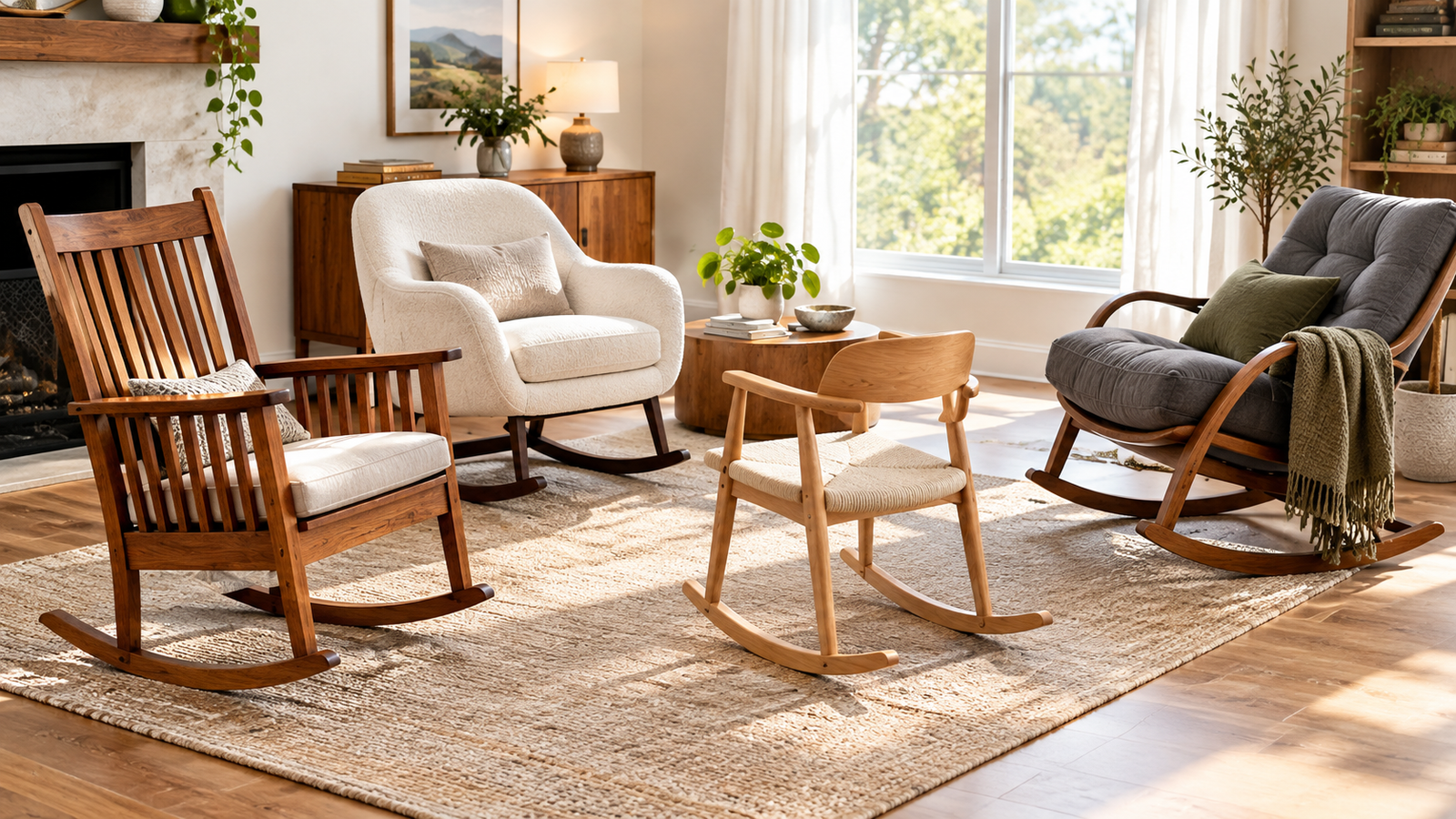
A rocking chair looks simple: two curved runners, a seat and a back. But a poor choice shows up quickly. Your knees ache after twenty minutes, the chair creeps across the floor, or a porch rocker turns grey and cracks after one wet winter.
This guide covers the decisions that matter: how you will use the chair, which type suits your space, what size fits your body, and which material will last. By the end, you should know what to look for and what to ignore.
Start With How You Will Use Your Rocking Chair
Before you open a single product page, decide what the chair has to do. A rocking chair for late night feeding has different priorities from one that will sit on a porch through every season.
- Nursery or feeding chair: Look for a wide seat, supportive arms, a fabric that wipes clean and a smooth, quiet motion.
- Reading nook or living room: Comfort for long sittings matters most, so focus on back support, cushioning and a look that suits your room.
- Porch or patio: Weather resistance comes first, followed by stability on a hard surface.
- Older adults: Prioritize an easy seat height, firm arms to push up from and a stable base that does not tip.
Once you know the job, the right type becomes much easier to choose.
Rocker, Glider, Platform or Recliner: Which Type Fits?
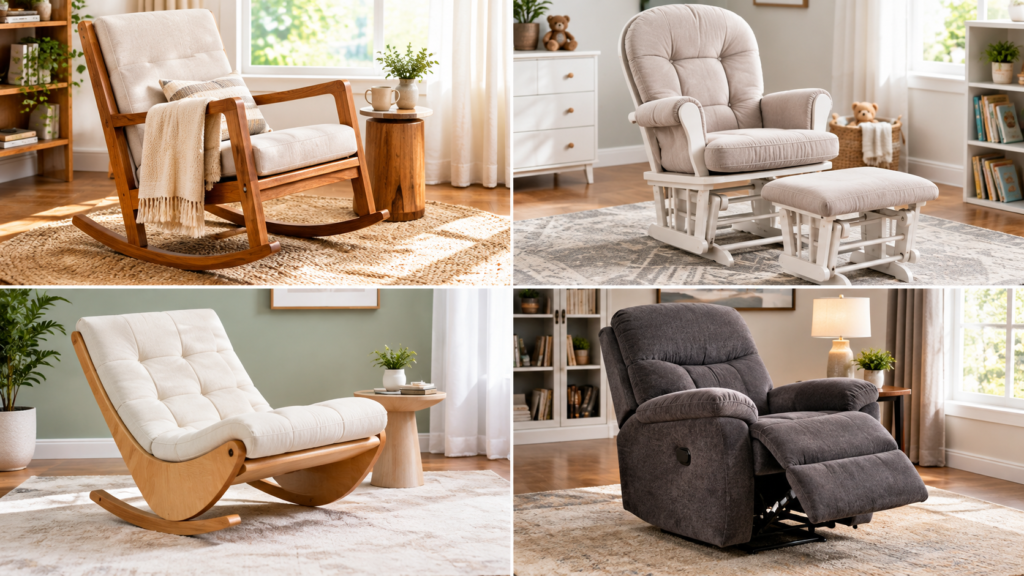
Not every chair that moves is a traditional rocking chair. The mechanism changes how the chair feels, how much space it needs and how it wears over time.
Traditional Rocking Chair
This is the classic design, with curved runners that touch the floor at only two points. It gives the most natural, flowing motion and often has the most charm, especially in wood. The downside is that the chair travels backward as you rock, so it needs clear space behind it.
Glider
A glider swings on a linked frame instead of curved runners, so the seat moves in a smooth, flat arc. It stays put on the floor and usually feels quieter, which is why many parents choose one for a nursery. The base is often larger, and the moving parts can eventually wear or loosen.
Platform Rocker
A platform rocker sits on a fixed base, and the seat rocks above it on springs. Because the base never moves, the chair will not creep across the floor, which suits small rooms and homes with rugs. Check the springs and any exposed gaps, especially around children.
Recliner Rocker and Swivel Rocker
These upholstered chairs add a footrest, a reclining back or a swivel to the rocking motion. They are very comfortable for long evenings, but they are heavier and bulkier. They also have more mechanisms that can fail, so test the locking function and read the warranty.
| Type | Best for | Space needed | Watch out for |
|---|---|---|---|
| Traditional rocker | Living rooms, porches, style lovers | Clear space behind the chair | Floor scratches, travel while rocking |
| Glider | Nurseries, quiet rooms | Wider base, less rear space | Mechanism wear, pinch points |
| Platform rocker | Small rooms, carpeted floors | Compact and stable | Spring condition, exposed gaps |
| Recliner rocker | Long relaxing sessions | Large footprint | Weight, locking function |
Getting the Size Right
Size is where many buyers go wrong. A rocking chair that looks perfect online can feel wrong once you sit down, because the motion magnifies every small fit problem.
Seat Height and Depth
Sit with your feet flat on the floor and your knees at roughly a right angle. Most seat heights fall between 15 and 19 inches, so shorter people should aim for the lower end and taller people for the higher end.
Seat depth matters just as much. A depth of about 17 to 20 inches suits most adults. If the seat is too deep, your legs dangle and your lower back loses support. If you are on the shorter side, a small lumbar cushion can fix the fit.
Width, Arms and Weight Capacity
Allow a comfortable seat width, generally 20 inches or more, and check that your hips do not press against the arms. Arms should sit close to elbow height, so your shoulders stay relaxed.
Always read the weight capacity. Many standard indoor chairs handle around 250 to 300 pounds, while heavy duty and outdoor models often go higher. A rocking chair works under repeated stress, so choose a rating comfortably above your own weight, plus anyone else who will use it.
Space the Chair Needs to Move
The listed dimensions describe the chair at rest, not while it moves. A traditional rocker can swing several inches beyond its footprint, so leave about 12 to 18 inches of clear floor behind it. Also keep it away from radiators, coffee tables and doors.
Here is a simple trick: mark the chair’s footprint and its rocking arc on the floor with painter’s tape. Then walk around it. If the outline blocks a doorway or brushes a wall, you need a smaller chair or a glider.
Choosing the Right Material
The material decides how the chair looks, how it ages and how much care it needs. Match it to where the chair will live.
Solid Wood
A wooden rocking chair is the traditional choice, and hardwoods are the best option. Oak, maple, cherry and hickory are dense, strong and can be refinished if the surface wears. Softer woods like pine cost less but dent more easily.
Look at how the pieces join. Chairs with mortise and tenon joints, or glued and doweled joints, hold up far better than those held together by screws alone. For a porch, teak, cedar and acacia resist moisture and insects naturally. They will fade to a silvery patina unless you oil them.
Upholstery and Cushions
Upholstered rockers depend on the fabric. Linen and cotton blends breathe well, while performance fabrics resist stains, which is useful for a nursery. Leather lasts a long time but can feel warm in summer. Boucle looks stylish but snags easily and is harder to clean.
Whatever you choose, removable cushion covers make life easier.
Outdoor Materials
For an outdoor rocking chair, weatherproofing beats appearance. High density polyethylene, often sold as poly lumber, is one of the most durable options because it does not rot, splinter or need painting. Resin wicker over an aluminum frame gives a softer look and handles rain well. Natural rattan is best kept indoors.
Metal frames are sturdy, but wrought iron is heavy and can rust, and any metal gets hot in direct sun. Adirondack style rockers add wide arms and a deep, reclined seat, which suits long afternoons on a porch.
Comfort Features Worth Paying For
Some details are easy to miss on a product page but obvious after ten minutes in the chair.
- Back height: A taller back supports your shoulders, and a headrest helps for reading or napping.
- Lumbar curve: A gentle curve at the lower back keeps you from slumping.
- Rocking arc: A shallow, controlled arc feels calmer than a steep one, which can feel unstable.
- Runner length: Longer runners generally give better stability and reduce the chance of tipping backward.
- Footrest or ottoman: Useful for long sittings, especially with recliner rockers.
If you can, sit in the chair for at least five minutes. Lean fully back and rock gently to feel how it behaves.
Check the Floor Before You Buy
Your floor can ruin a good chair, or the other way around. Runners can scratch hardwood, so add felt strips or rubber runner caps, and check them occasionally.
On rugs, low pile works best. Thick pile can stop the motion, and a rug edge can catch the runners. A rocker on an area rug also tends to creep, so a platform rocker or glider may be a better fit.
Outdoors, a rocking chair needs a smooth, firm surface such as a deck, concrete or paved patio. Grass, gravel and uneven stone interfere with the motion and make tipping more likely.
Safety and Care
Do a tip test before you commit: sit back fully and check that the chair does not feel like it will go over. Runners that extend slightly behind the seat add stability.
Small fingers and pet tails are the main hazards. Gliders, platform rockers and recliner rockers have moving parts, so keep children and pets clear of the mechanism. In a nursery, position the chair away from cords and blind pulls.
For care, tighten joints and hardware a few times a year. Wax wooden runners lightly, clean upholstery according to its label and cover or store outdoor cushions in bad weather. Most squeaks come from a loose joint or a dry contact point, and tightening or waxing usually solves it.
Set a Budget and Spot Quality
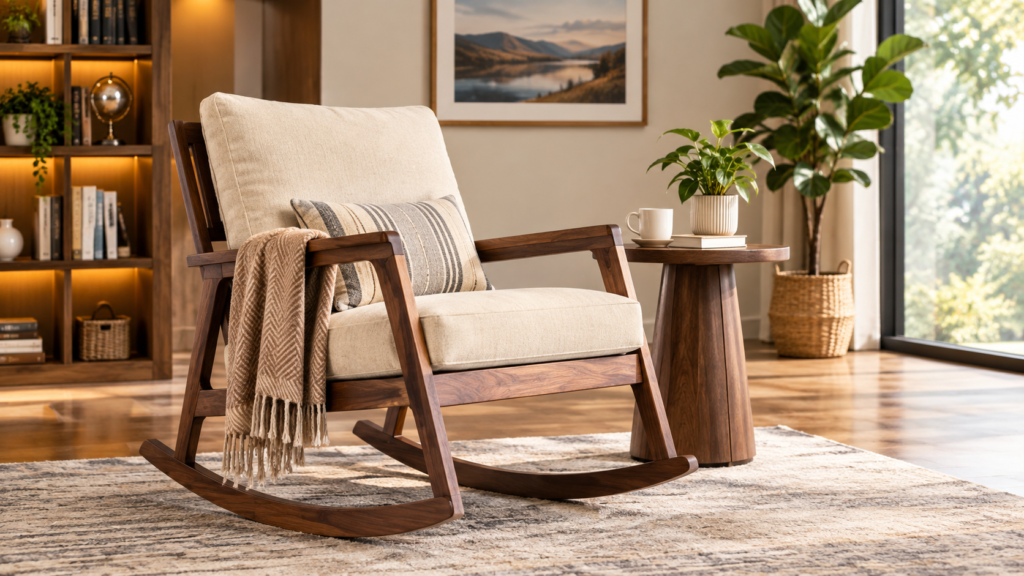
Basic upholstered rockers and resin outdoor models sit at the lower end of the price range, while handcrafted hardwood chairs cost more. Price alone does not prove quality, so use these checks:
- Lift a corner. Solid furniture usually feels weighty and balanced.
- Look at the joints. They should be tight, with no gaps or visible wobble.
- Check the runners. They should be evenly curved and flush with the frame.
- Run your hand under the seat and along the underside. A quality finish is smooth all over.
- Read the warranty and return policy, because furniture is hard to judge until it is in your home.
What to Expect From the Health Claims
Many sellers claim a rocking chair can relieve pain, improve sleep or lift your mood. The gentle rhythm does relax many people, and small studies suggest the motion may support calm and sleep. The evidence is modest, though, and a chair is not a medical treatment.
If you have back, joint or balance problems, speak to a doctor or physiotherapist before you buy, then focus on comfort and support.
Frequently Asked Questions
Is a glider better than a rocking chair for a nursery?
Many parents prefer gliders because they stay in place and move quietly. A traditional rocker can work well too if you have enough clear floor space behind it.
How much space does a rocking chair need?
Leave about 12 to 18 inches behind a traditional rocker, plus room to sit and stand comfortably. Gliders and platform rockers need less rear clearance.
Can I use a rocking chair on carpet or grass?
Low pile carpet is usually fine, but thick pile can block the motion. Grass and gravel are not ideal, because they interfere with the rocking and raise the risk of tipping.
How do I stop a rocking chair from squeaking?
Tighten loose joints and hardware first. If the noise continues, a little wax on the contact points often helps.
Are rocking chairs safe for older adults?
They can be, if the chair has a stable base, firm arms and a comfortable seat height. A platform rocker or a chair with a wide, tip resistant base is often the safest choice.
Final Thoughts on Choosing Your Rocking Chair
The best rocking chair is the one that fits your body, your room and your routine. Start with how you will use it, then choose the type, measure your space and sit in the chair before you buy.
Remember three practical points. Match the seat height and depth to your frame, check the weight capacity and floor space, and choose a material that suits the setting. Do that, and your rocking chair should give you comfort for many years.
