
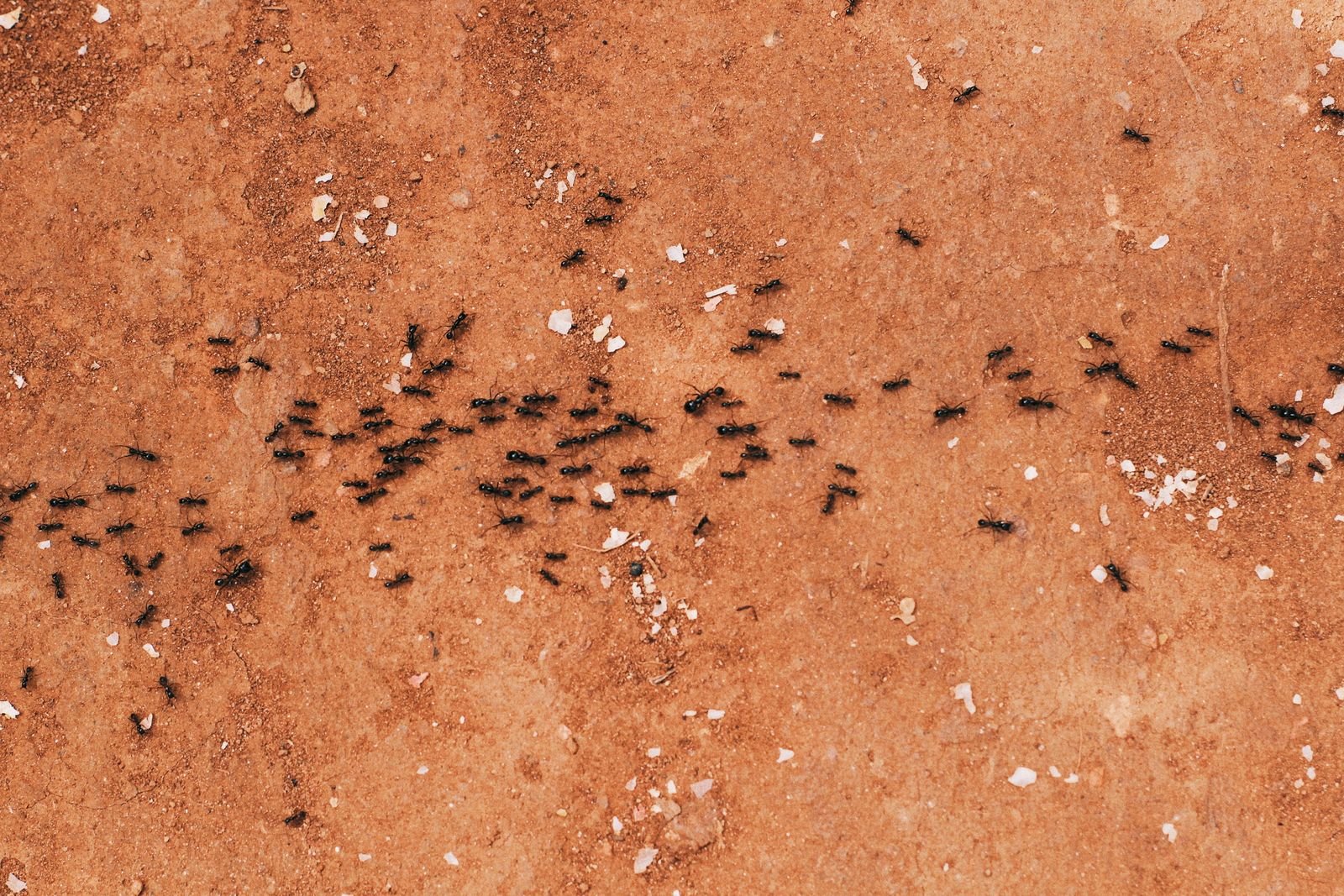
You walk into the kitchen in the morning, still half asleep, and there it is. A thin black line of ants marching across the worktop, from a crack by the skirting board to the sugar jar you left open last night. You wipe them away, wash the worktop, and feel pleased with yourself. By lunchtime the line is back, longer than before, as if your cleaning never happened. Learning how to get rid of ants in the kitchen without chemicals starts with understanding what that line really is, because the ants you can see are only the messengers. The real problem is an invisible scent map that runs from their nest to your food, and until you erase that map and close the door they use, no amount of wiping will end the visits. This guide shows you how to do it with things you already have in your cupboards, in a way that is safe for children and pets, and in a way that lasts.
Why the ants keep coming back
Ants live in colonies, and a colony sends out scouts to look for food. When one scout finds sugar, crumbs, or a sticky spill in your kitchen, it walks back to the nest laying down a scent trail as it goes. Other ants follow that trail, and each one adds more scent, so the path gets stronger with every ant that uses it. That is why a single ant near the kettle in the morning can become a busy highway by the afternoon. The trail is made of chemicals called pheromones, and it is invisible to us, which is why the kitchen can look clean to you while it smells like a motorway to an ant.
Spraying the ants you can see does nothing to that trail. It kills the workers on the worktop, but the scent map stays on the surface, and the colony simply sends more workers along the same route. Chemical sprays have a second problem in a kitchen. They leave residues on surfaces where you prepare food, on chopping boards, and near plates and cups. That is a poor trade for a problem you can solve with vinegar, a cloth, and a little patience. The whole method in this guide rests on three ideas. First, erase the scent map. Second, block the door the ants use to get in. Third, take away the food and water that made your kitchen worth visiting. Do those three things in order, and most kitchen ant problems clear up within one to two weeks.
It helps to know which ant you are dealing with. In most UK homes the visitor is the black garden ant, a small dark ant that nests in soil under patios, in wall cavities, and under kitchen floors. It comes indoors mainly from late spring to early autumn, when the colony is at its busiest and the weather is warm. Flying ants, the winged ones you see on warm summer evenings, are the same species on mating flights, and they are a sign of a mature colony nearby rather than a separate invasion. If the ants in your kitchen are larger, reddish, or appear in the middle of winter, the nest may be inside the structure of the house, and the section near the end of this guide on calling a professional applies.
How to get rid of ants in the kitchen without chemicals: the two step method that works
Every natural method in this guide works best as part of a simple two step routine. Step one erases the scent trail so the ants lose their map. Step two blocks the entry point so they cannot draw a new one. Do step one every day for a week, and step two as soon as you find where they are getting in. Skip either step and the ants will be back, because a blocked door with a live trail still invites them to find another way in, and an erased trail with an open door lets the next scout start all over again.
Step one: erase the scent trail with vinegar
White vinegar is the most useful tool in this whole job, and it works because of simple chemistry. Vinegar is acidic, and its acid breaks down the pheromone chemicals that make up the scent trail. When you wipe a trail with a vinegar solution, you are not just cleaning the worktop. You are deleting the map that every ant in the colony was following. Soapy water kills ants on contact, but it does not destroy the trail as thoroughly, so vinegar is the better choice for this step.
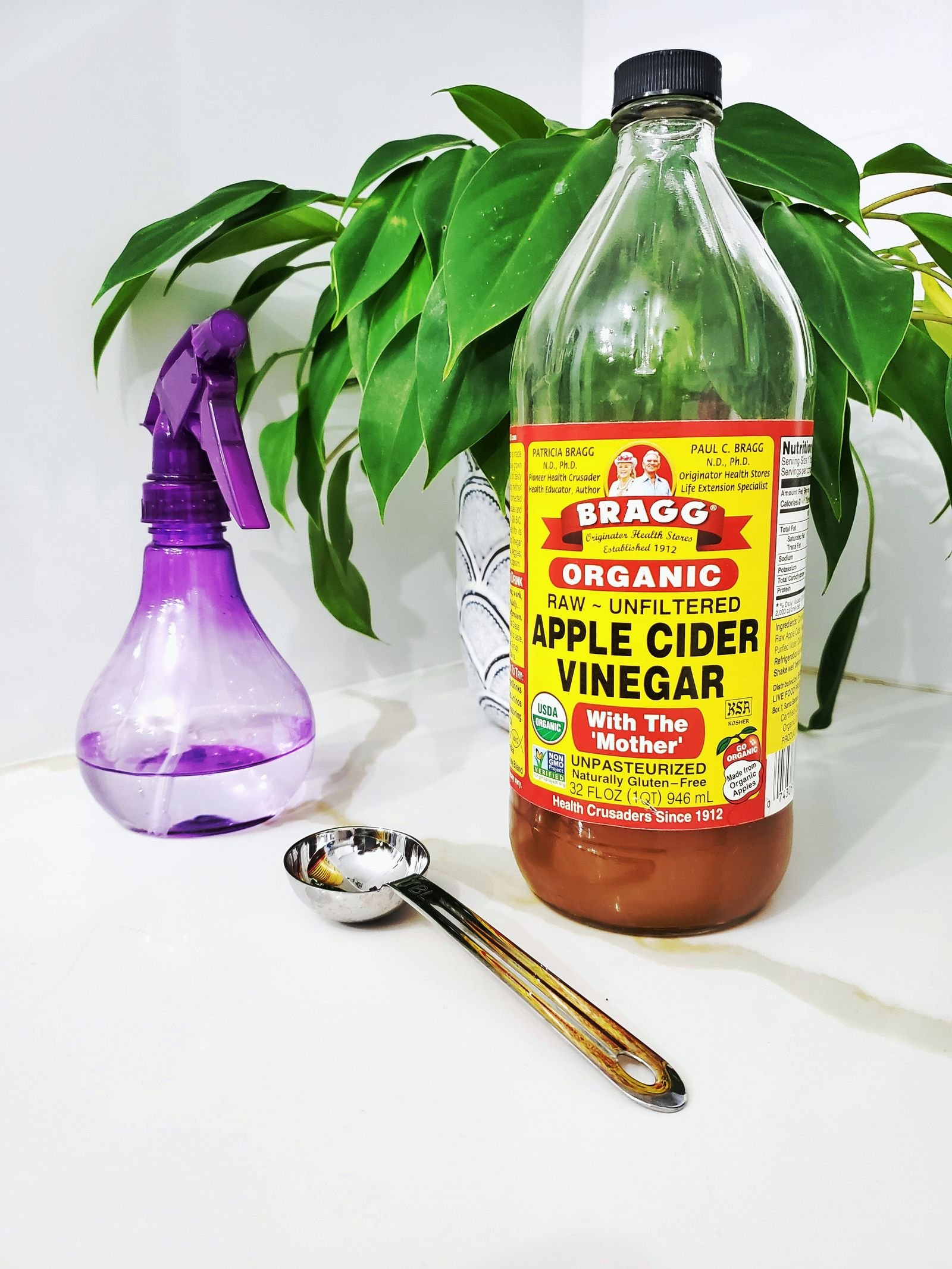
Mix equal parts white vinegar and water in a spray bottle and keep it under the sink. Spray the whole route the ants were using, not just the spot where they are clustered. Follow the line back to the skirting board, the window frame, or the pipe where it starts, and spray that too. Wipe it down with a cloth, then spray it once more and leave it to dry. Repeat this every day for about a week. One wipe is not enough, because the colony will send new scouts and the first ones will lay a fresh trail if any of the old scent survives. Daily wiping for a week is what breaks the cycle.
There are two cautions with vinegar. First, do not use it on natural stone worktops such as marble or granite, because the acid can dull the surface over time. On stone, use soapy water for the daily wipe instead, and save the vinegar for tiles, laminate, and other hard surfaces. Second, do not spray vinegar near any bait you have set down, because the smell will put the ants off the bait and they will not carry it back to the nest. Vinegar is for erasing trails. Bait is a separate step, and the two should never meet.
If the smell of vinegar bothers you, add a few drops of lemon juice to the bottle. Lemon has its own scent disrupting effect on ant trails, and it softens the sharp smell of the vinegar. Our guide on how to clean a microwave with lemon and vinegar uses the same pairing of vinegar and lemon for a different kitchen job, and the mixture works the same way here. Keep the bottle clearly labelled so nobody mistakes it for a cleaning spray for food surfaces, and keep it out of reach of small children.
While you are wiping, look for the entry point. Sit quietly for a few minutes and watch where the line begins and ends. The start of the line is usually a gap under a window, a crack where a pipe comes through the wall, a join in the skirting board, or a gap around the back door frame. You do not need to find the nest itself, which is often outdoors under a patio or in a wall cavity. You only need to find the door they are using, because that is the gap you will block in step two.
Step two: block the door they came through
Once you know where the ants are getting in, block that gap. For a crack in a wall or around a pipe, a tube of silicone sealant or decorators caulk from any hardware shop will do the job. Clean the area first, let it dry, then fill the gap and smooth it with a wet finger. For a gap under a door, a draught excluder strip or a brush seal stops ants as well as it stops cold air. For a gap around a window frame, a thin bead of sealant along the frame closes it. Sealing is the least glamorous step in this guide and the most important one, because a kitchen with an open door will always attract a new scout eventually.
While the sealant dries, lay a temporary barrier across the entry point. Ground cinnamon works well here, because ants dislike its smell and will not cross a continuous line of it. Sprinkle a thin line of ground cinnamon directly across the gap, on the windowsill, or along the skirting board where the trail began. Coffee grounds work in a similar way, and food grade diatomaceous earth is another good barrier. Diatomaceous earth is a fine powder made from fossilised algae, and its tiny sharp edges damage the waxy coating on an ant, which causes it to dry out. Use food grade diatomaceous earth only, never the pool grade version, and lay a thin line where ants walk. Keep it dry, because it stops working when it gets wet, and keep it away from areas where you prepare food uncovered.
Refresh the barrier every two or three days, and after any cleaning. A barrier is not a cure on its own. It buys you time while the vinegar wipes erase the trail and the sealing closes the gap for good. Think of it as a fence that holds the line while the real work happens behind it.
Cinnamon and other natural barriers that actually work
Not every natural remedy you read about online works, so it is worth knowing which ones have real backing and which ones are folk tales. Cinnamon is the strongest of the scent barriers. It contains a compound called cinnamaldehyde, which overwhelms an ant sense of smell. Ants navigate almost entirely by smell, so a line of ground cinnamon is like a wall of noise to them. Use ground cinnamon rather than cinnamon sticks for a barrier, because the powder makes a continuous line that ants cannot step over. Cinnamon sticks are useful near a fruit bowl or a sugar jar, where you want a scent deterrent that looks tidy and stays dry, but a line of powder is what blocks a gap.
Peppermint oil is the next best barrier. Add 10 to 15 drops of pure peppermint oil to a cup of water in a spray bottle and spray it along skirting boards and window frames. Ants dislike the strong menthol smell and will avoid the area. Refresh it every few days, because the scent fades. One caution for pet owners: concentrated essential oils can be harmful to cats, so use ground cinnamon instead if you have a cat in the house, and keep any oiled cotton wool out of reach of pets.
Other barriers with real value include lemon juice wiped along a trail, which disrupts the scent in the same way vinegar does, and cloves placed near a fruit bowl or a sugar container, which ants avoid because of their strong smell. Bay leaves tucked into a pantry shelf can help keep ants out of dry goods, and a line of chalk is often suggested online but has little evidence behind it. The honest summary is this: vinegar erases the map, cinnamon and peppermint block the road, and everything else is a supporting act. Spend your effort on the first two and you will see results.

A word about what not to use. Do not scatter citrus peel loosely around the kitchen and expect it to work, because the scent is too weak and too patchy. Do not lay cucumber slices on the worktop, because they dry out within hours and do nothing. Do not use boiling water indoors on a worktop or in a wall cavity, because it can damage surfaces and it will not reach the nest. Save boiling water for an outdoor nest in a patio or a path, where it can be poured safely and directly into the entrance.
The bait that reaches the nest
Vinegar and barriers deal with the ants in your kitchen, but they do not touch the colony itself. That is where bait comes in, and it is the step most people skip because it feels counterintuitive. Instead of killing the ants you can see, you feed them something they will carry home. A simple bait is a mix of one part borax to three parts sugar, dissolved in warm water and soaked into cotton wool balls. Place the cotton wool near the ant trail, but not on it, and leave it alone. Worker ants will find it, eat some, and carry the rest back to the nest, where it is shared with the queen and the rest of the colony. Over one to two weeks the colony shrinks, and the trail stops because there are fewer workers to walk it.
Borax is a naturally occurring mineral salt, and it is sold in most supermarkets and hardware shops in the UK as a cleaning product. It is not a spray pesticide, and it does not leave a chemical residue across your worktops, which is why it fits a chemical free approach to the kitchen. Treat it with respect all the same. Keep bait stations out of reach of children and pets, label them clearly, and wash your hands after handling them. Do not put bait near food, and do not use it if you have a crawling baby or a pet that eats anything it finds on the floor.
Timing matters with bait. Do not spray vinegar on or near a bait station, because the vinegar smell will repel the ants before they take the bait. Place the bait a short distance from the trail, wait for the ants to find it, and let them work undisturbed. If you have already been wiping the trail with vinegar for a week and the ants have mostly stopped, you may not need bait at all. Bait is for a trail that keeps coming back after a week of wiping and sealing, which usually means the nest is large or close to the house.
There is also a simpler kitchen cupboard bait made from equal parts baking soda and powdered sugar. Ants are drawn to the sugar and carry the baking soda back with it. It is slower than borax bait and less reliable, but it is worth trying if you cannot find borax or you prefer to avoid it. Whichever bait you use, patience is the whole method. A bait that is disturbed, moved, or cleaned away on day two will not work. Give it a full two weeks before you judge it.
Take away the food and water that brought them in
Ants come into kitchens for two things: sugar and water. Sugar is the bigger draw, and in most kitchens the sugar is not in the sugar bowl. It is in a honey jar with a sticky lid, a jam jar with a drip down the side, a fruit bowl with an overripe banana, a cereal box that was never closed properly, or a splash of squash on the worktop that nobody noticed. Go through the kitchen with fresh eyes and look for every sticky surface and every open container. Wipe down honey and jam jars, put sugar and flour in sealed glass jars with tight lids, and move fruit into the fridge or into a sealed container when it starts to soften.
Pet food is a common culprit that people forget. A bowl of dry cat or dog food left out overnight is an open invitation, and ants will find it within hours. Feed pets at set times and pick up the bowl between meals, or stand the bowl in a shallow dish of water so the ants cannot reach it. The same applies to a compost caddy on the worktop. Empty it daily, wash it out, and keep the lid on tight, because a warm caddy full of fruit peel is one of the strongest ant attractants in any kitchen.
Water is the second draw. Ants need water, and a kitchen sink with a slow drip, a damp cloth left in a heap, or a puddle under a plant pot gives them a reason to return even when the food is gone. Fix dripping taps, wipe the sink dry at night, and do not leave wet cloths or sponges sitting in the sink. Keep worktops dry overnight, and clear the draining board so there is no standing water for them to drink. A dry kitchen is a far less interesting kitchen to an ant.
Food storage is where a little effort pays off for months. Transfer open packets of cereal, rice, and flour into airtight jars, because ants can chew through thin plastic bags and cardboard boxes. Wipe the outside of jars after filling them, so no sugar dust is left on the glass. Keep the fridge clean and wipe up spills as soon as they happen, because a smear of jam on a fridge shelf is a feast to an ant. Our guide on how to keep celery fresh in the fridge longer and our guide on how to keep fresh herbs fresh longer in the fridge both cover airtight fridge storage, and the same sealed containers that keep vegetables fresh also keep ants out of them. A kitchen that is sealed, dry, and crumb free gives a scout nothing to report back to the colony, and scouts that find nothing do not lay a trail.
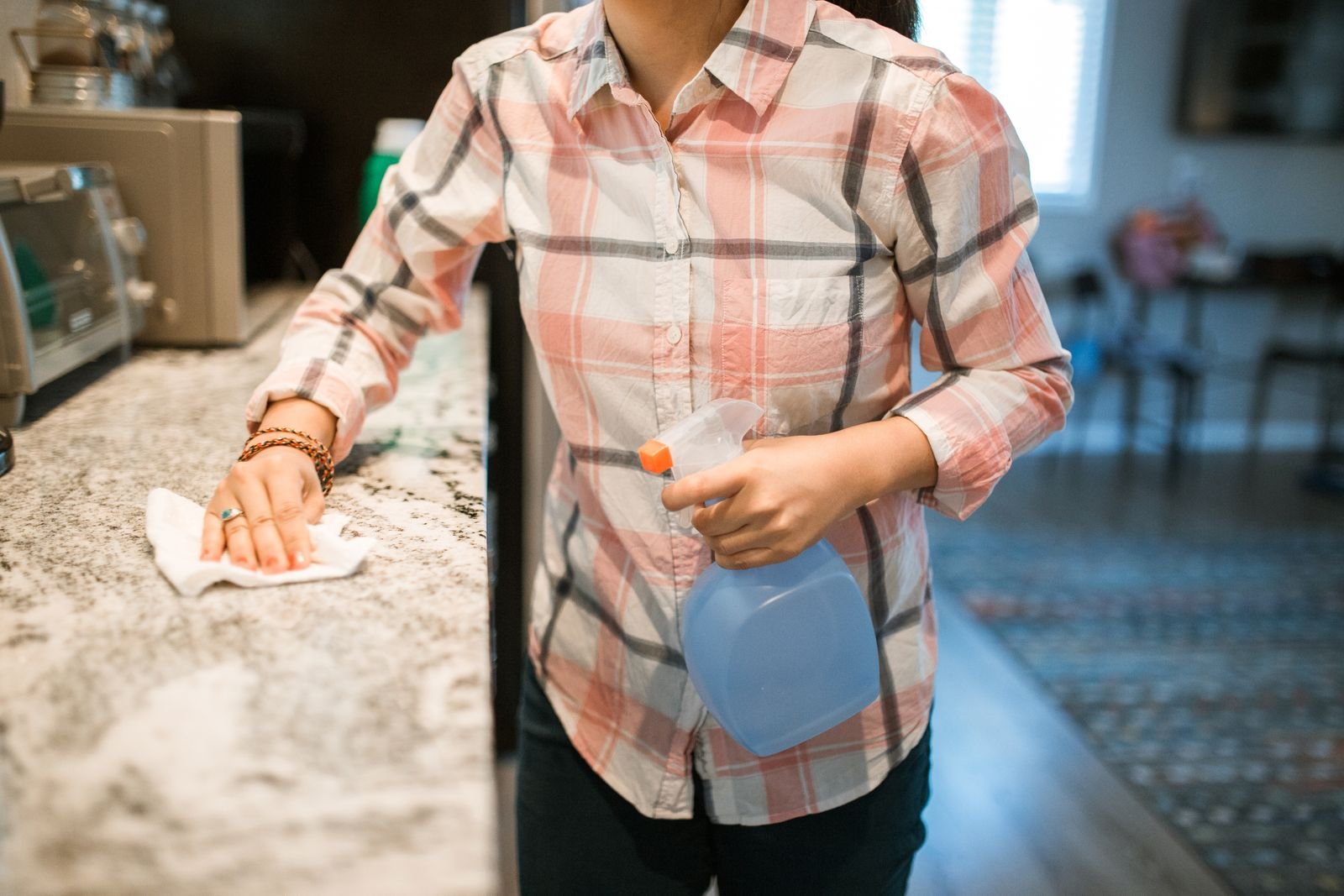
Daily habits make the difference here. Wipe the worktops after every meal, sweep the floor each evening, and take the rubbish out before it sits overnight. It sounds like a lot, but it takes five minutes once it becomes a habit, and it removes the food source that brought the ants in the first place. A kitchen that is cleaned daily for two weeks, combined with the vinegar wipes and the sealed entry point, is a kitchen the ants will stop visiting.
Seal the gaps so they cannot come back
Sealing is the permanent part of the fix, and it is worth doing properly once rather than repeating the whole routine every summer. Walk around the kitchen with a torch and look for gaps. Check where pipes come through the wall under the sink, where the worktop meets the wall, around the window frames, and along the skirting boards. An ant can squeeze through a gap of a millimetre or two, so look for the small cracks, not just the obvious holes.
Fill small cracks with decorators caulk or silicone sealant, and smooth the bead with a wet finger for a neat finish. For larger gaps around pipes, use expanding foam or a pipe collar, and trim the excess once it has set. Replace cracked or missing grout around tiles, because ants use grout lines as highways through a kitchen. Check the seal around the back door and the kitchen window, and replace any worn draught excluder strips. Outside the kitchen, check the air bricks and the vents, and fit fine mesh covers if they are open. Sealing the kitchen from the outside is just as useful as sealing it from the inside.
Do not seal a gap while ants are still using it as a trail, because you will trap the scent inside the wall and they will simply find another gap nearby. Wipe the trail with vinegar first, wait a day for the traffic to stop, then seal the gap. If you seal the gap and a new trail appears a metre away the next day, seal that one too, and keep going until the kitchen is closed. Most homes need only two or three gaps sealed to end the problem for the season.
What does not work
Some remedies are repeated so often online that they feel true, but they waste your time. Chalk lines are the best known example. The idea is that ants will not cross a chalk line, but in practice they walk straight over it, especially if the trail is strong. Cucumber slices are another. They dry out within hours and have no effect on a trail. Cinnamon essential oil is often suggested as a spray, but the concentrated oil can be toxic to cats, and ground cinnamon is safer and more effective. Ultrasonic pest repellers, the small plug in devices that claim to drive ants away with sound, have no good evidence behind them, and the money is better spent on a tube of sealant and a bottle of vinegar.
Boiling water deserves a special mention. It works on an outdoor nest in a garden path or a patio, where you can pour it directly into the entrance, and it is chemical free. It does not work indoors, because it cannot reach the nest through a wall cavity, and it can damage worktops, crack tiles, and scald anyone nearby. Keep it outside. Similarly, do not pour bleach down an ant trail. Bleach is a harsh chemical, it damages worktops and grout, it leaves a residue in a food preparation area, and it does not destroy the pheromone trail any better than vinegar does.
The most common mistake of all is to spray the ants and stop there. A can of insect spray kills the workers on the worktop, leaves a chemical residue where you prepare food, and does nothing to the trail or the nest. The colony replaces the dead workers within a day, and the trail brings them straight back. If you remember only one idea from this guide, make it this one: the trail is the problem, not the ants you can see, and the trail is what you must erase.
When to call a professional
Natural methods solve most kitchen ant problems, but there are times when a professional is the right call. Call one if the trail is still busy after two full weeks of daily vinegar wipes, bait, and sealing, because that usually means the nest is inside the structure of the house, in a wall cavity or under the floor, where you cannot reach it. Call one if you see winged ants indoors outside the summer mating season, or if you see large numbers of ants in several rooms at once, because that points to a large or mature colony. Call one if the ants are a species you do not recognise, such as very small pale ants or large reddish ants, because different species need different treatment.
When you call, ask what methods they use and whether they offer a treatment that avoids sprays in food preparation areas. Many pest control firms in the UK now use gel baits and targeted treatments that are safer for kitchens than a blanket spray. Ask for a fixed price before they start, and ask what guarantee they offer if the ants return within a few weeks. A good firm will inspect the kitchen, find the entry points, and explain what they are doing before they do it. Keep the natural routine going after their visit, because a treated kitchen with open food and unsealed gaps will attract the next colony just as fast as the last one did.
Your fourteen day plan to an ant free kitchen
If you want a simple routine to follow, here it is. Days one to three are about breaking the trail. Wipe the whole ant route with the vinegar solution every morning, follow the line to find the entry point, and clear every sticky jar and open packet from the kitchen. Days four to seven are about blocking the door. Lay a cinnamon barrier across the entry point, seal the gap with caulk, and put sugar, flour, and cereal into sealed jars. Days eight to ten are about the nest. If the trail is still active, set a borax sugar bait near the trail and leave it undisturbed. Days eleven to fourteen are about holding the line. Keep wiping daily, keep the kitchen dry overnight, and watch for any new trail. If no ants have appeared for four or five days in a row, the trail is broken, and you can drop back to a weekly wipe and normal cleaning.
Keep a simple note of what you see each day, because it is easy to forget whether the trail is getting shorter. A line that is shorter today than it was yesterday is progress, even if a few ants are still around. A trail that appears in a new place is not a failure. It means the colony is looking for another door, and sealing that gap too will close it. Most kitchens are clear within two weeks, and the few that are not usually have a nest inside the walls, which is the point to call a professional.
Conclusion
Learning how to get rid of ants in the kitchen without chemicals comes down to three ideas that are easy to remember. First, the ants you can see are not the problem. The invisible scent trail they follow is the problem, and a daily wipe with equal parts vinegar and water erases it. Second, a trail with an open door will always come back, so find the gap the ants are using and seal it, with a line of ground cinnamon as a barrier while the sealant sets. Third, take away the sugar and water that made your kitchen worth visiting, with sealed jars, dry worktops, and a quick wipe after every meal. Add a borax sugar bait if the trail keeps returning after a week, and call a professional if it is still busy after two. Do that, and the morning line of ants across your worktop becomes a story you tell about last summer, not a chore you repeat every day.
Frequently asked questions
How long does it take to get rid of ants in the kitchen without chemicals?
Most kitchen ant problems clear up within one to two weeks. Daily vinegar wipes break the scent trail in the first few days, and sealing the entry point stops new scouts. If the trail is still busy after two full weeks, the nest is likely inside the walls and a professional is the right next step.
Does vinegar really kill ants?
Vinegar kills ants on direct contact, but its real value is destroying the pheromone trail they leave behind. When the trail is gone, the next ant that comes looking has no scent to follow and turns back. Use it to wipe the whole route every day for about a week, and do not spray it near any bait you have set down.
Is cinnamon safe to use around children and pets?
Ground cinnamon is safe to use in a kitchen with children and pets, and it is a better choice than cinnamon essential oil, which is concentrated and can be harmful to cats. Use a thin line of ground cinnamon across the entry point, keep it dry, and refresh it every two or three days.
What is the best natural bait for ants?
A mix of one part borax to three parts sugar dissolved in warm water and soaked into cotton wool balls is the most effective natural bait. Worker ants carry it back to the nest, where it is shared with the queen and the colony. Keep bait stations out of reach of children and pets, and give the bait a full two weeks to work.
Why do ants keep coming back after I clean the kitchen?
Cleaning removes the ants you can see, but it does not always remove the scent trail, and it does not close the gap they came through. Wipe the whole route with vinegar to erase the trail, seal the entry point with caulk, and store sugar and dry goods in sealed jars. If the food source and the door are both closed, the scouts have nothing to report and the trail stops.
