
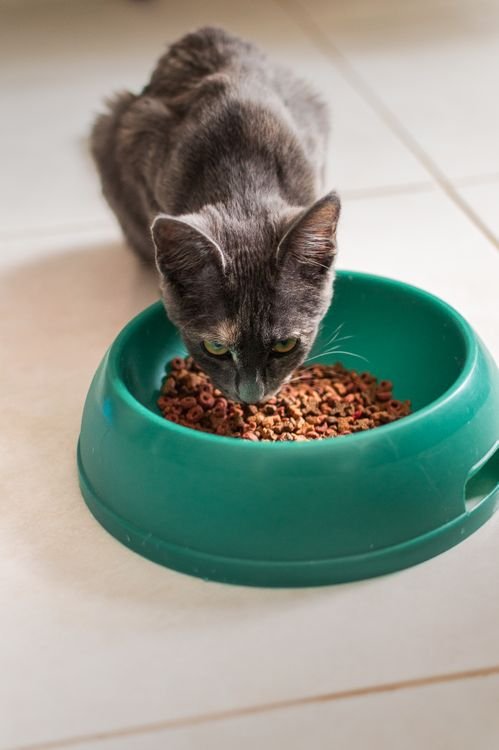
You walk into the kitchen for your morning coffee and there it is: a black river of ants flowing across the floor, straight into your cats food bowl. The kibble is crawling. Your cat stands next to the bowl, offended, refusing to eat. If you have ever googled how to keep ants out of cat food bowl at seven in the morning, you are not alone. This is one of the most common pet owner complaints in warm weather, and the fix has nothing to do with bug spray.
The problem with ants and cat food is that every common solution for the ants is dangerous near the food. You cannot spray insecticide next to something your cat licks three times a day. You cannot lay down bait stations inside a food bowl. So you need methods that block ants physically, confuse their trails, or make the bowl unreachable, all while staying completely safe for your cat.
This guide walks through eight methods that actually work, ranked from simplest to most thorough. It also covers which popular tricks to skip, what to do when the famous water moat fails, and whether ants can harm your cat at all.
Why Ants Find Cat Food So Fast
Ants do not find your cats bowl by luck. A single scout ant wanders your floor, climbs into the bowl, tastes the protein and fat in the kibble, and walks home laying a pheromone trail as she goes. Within an hour, hundreds of workers can follow that chemical highway straight to the food.
This is why wiping the counter and calling it clean rarely works. That invisible trail survives a quick wipe. It also explains why the ants seem to appear from nowhere: they were already scouting your kitchen for weeks. The bowl was simply the first reliable food source they found.
Two more things make cat food especially attractive. First, many owners leave dry food down all day, which gives ants a round the clock buffet. Second, tiny crumbs of kibble dust scatter around the bowl every time your cat crunches, creating a secondary trail system on the floor. Pet doors are another common entry point for foraging ants, and if yours lets in cold air as well as insects, sealing it helps on both fronts, as we cover in our guide on how to stop a cat flap letting in draughts. Deal with both issues and you solve most of the problem.
How to Keep Ants Out of Cat Food Bowl: 8 Methods That Work
Every method below is cat safe when used as described, and each one answers how to keep ants out of cat food bowl setups without reaching for sprays. Start with number one. Most owners never need to go past number three.
1. Build a Water Moat Around the Bowl
The moat is the single most recommended trick by cat owners for a reason. Place your cats food bowl inside a slightly larger, shallow tray or dish. Fill the outer tray with about an inch of water. The ants reach the water and stop, because the common household ants that raid kitchens cannot cross it.
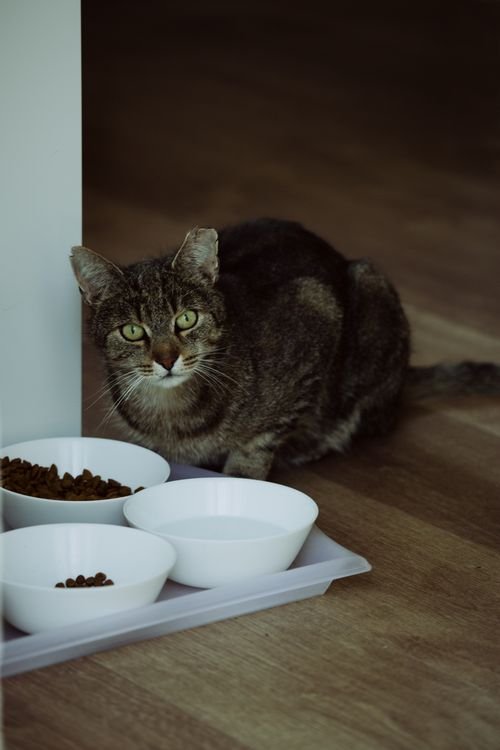
A pie plate, a baking sheet with a rim, or a shallow plastic storage lid all work. Keep at least an inch of water between the edge of the food bowl and the edge of the outer tray so ants cannot simply stretch across. A heavy ceramic food bowl is ideal because it will not float if your cat leans on it.
Some owners add a single drop of dish soap to the moat water. The soap breaks the waters surface tension, so any ant that tries to float across sinks instead. Use plain unscented soap, keep the amount tiny, and make sure your cat cannot drink from the moat. Cats that find the moat fascinating can be kept away with a slightly taller outer tray.
Clean the moat daily. Spilled kibble turns the water into a murky soup within hours, and some determined ant species will build living bridges of their own bodies across dirty, shallow water. Fresh water each day keeps the barrier absolute.
2. Raise the Bowl Off the Ground
Ants travel along floors and baseboards. Elevating the food bowl breaks their easiest route. A raised feeder stand, the kind sold in pet stores for about ten to twenty dollars, lifts the bowl several inches. For determined ants this is only a speed bump, so combine the stand with one of the barrier methods below.
A do it yourself version works just as well. Set the food bowl on a sturdy, wipeable platform, such as an upside down storage container or a small wooden crate, with the legs of the platform standing in small cups of water. Now ants must cross water to climb the platform, and the platform keeps the feeding area tidy. This is the method many outdoor colony caretakers swear by.
For cats with sensitive whiskers, choose a wide, shallow bowl on top of the stand. Whisker fatigue is real, and a cat that hates its raised bowl will eat from the floor instead, defeating the whole project.
3. Draw a Cinnamon Barrier
Ants dislike the strong scent of cinnamon and will avoid crossing a line of it. Sprinkle a ring of ground cinnamon around the food bowl on the floor, or dust it across the spots where ants enter the room. Reapply after feeding time and whenever you mop.
Use plain ground cinnamon from the spice aisle. Small amounts are not a concern for cats, though you should not let your cat snort a face full of powder. Keep the ring outside the bowl, not inside it. This method works best as a backup to the moat, not as the only defense, because heavy rain or a humid kitchen can flatten the powder and let ants walk through.
Dried bay leaves tucked under the bowl work on the same principle and last longer than powdered cinnamon. Replace them every few weeks as the scent fades.
4. Wipe Ant Trails With Vinegar and Water
Remember the pheromone highway. A fifty fifty mix of white vinegar and water destroys it. Wipe the floor around the feeding area, the baseboards, and any visible ant line with the solution after you set up your other defenses.
Vinegar does not kill ants on contact and it will not stop a determined colony on its own. Its job is erasure. Once the trail is gone, the scout ants have to start their search from scratch, and by then your moat or barrier is already in place. Repeat the wipe down every few days for the first two weeks while the colony gives up on your kitchen.
Skip bleach for this job. It is harsh around food areas and around cats, and vinegar handles the trail removal just as well with none of the risk.
5. Use Food Grade Diatomaceous Earth Carefully
Food grade diatomaceous earth is a fine powder made from fossilized algae. To an ant it is a field of microscopic razor blades: it damages their exoskeleton and they dehydrate. Sprinkle a thin, visible ring of it under and around the feeding station, on the floor where your cat does not walk or lick.
The key words are food grade. Pool grade diatomaceous earth is a different product and is not safe. Even the food grade version should never be applied where your cat breathes it in as a cloud or licks it in quantity. Apply it in a thin line with a squeeze bottle, let the dust settle, and keep it behind the feeding station or under a mat your cat cannot reach under.
This method loses power when wet, so it is strictly an indoor, dry floor tactic. It also needs reapplying after mopping. Many owners use it for the first week to knock down the invasion, then rely on the moat and barriers for maintenance.
6. Feed on a Schedule Instead of All Day Grazing
Free feeding, leaving dry food down around the clock, is the single biggest invitation to ants. Switch to two or three scheduled meals a day. Put the bowl down, give your cat twenty to thirty minutes, then pick up whatever is left and store it in an airtight container.
This change does more than fight ants. Scheduled meals let you monitor how much your cat actually eats, which is useful for weight control and for spotting appetite changes early. Most cats adjust to a schedule within a week.
For households with multiple cats or a grazer who refuses scheduled meals, an automatic feeder with a sealed lid is the compromise. The food stays locked inside until mealtime, and many models have a rubber gasket that ants struggle to breach. Look for feeders with stainless steel bowls rather than plastic, since plastic develops scratches that harbor odors.
7. Store Dry Food in Airtight Containers
The bag of kibble in the pantry is often the real source of the invasion. Ants chew through paper bags and thin plastic with ease. One trail into the bag becomes a thousand ants in the bowl, because the colony already knows your house has food.
Transfer dry food to a rigid container with a locking lid the day you open the bag. Glass jars with clamp lids, metal tins, or heavy plastic bins with silicone gaskets all work. Keep the container off the floor if possible, and wipe the outside down with vinegar water when you first bring the bag home, since eggs and scout ants sometimes hitchhike on packaging from the store.
While you are at it, inspect the bag before you buy. Tiny holes near the seams can mean the food was already infested at the warehouse. A quick look saves you from importing the problem.
8. Try an Ant Proof Feeding Station
Several companies now sell pet bowls with a built in moat. These have a wide outer channel you fill with water, surrounding a raised inner food bowl. They cost roughly fifteen to twenty five dollars and work well for indoor cats.
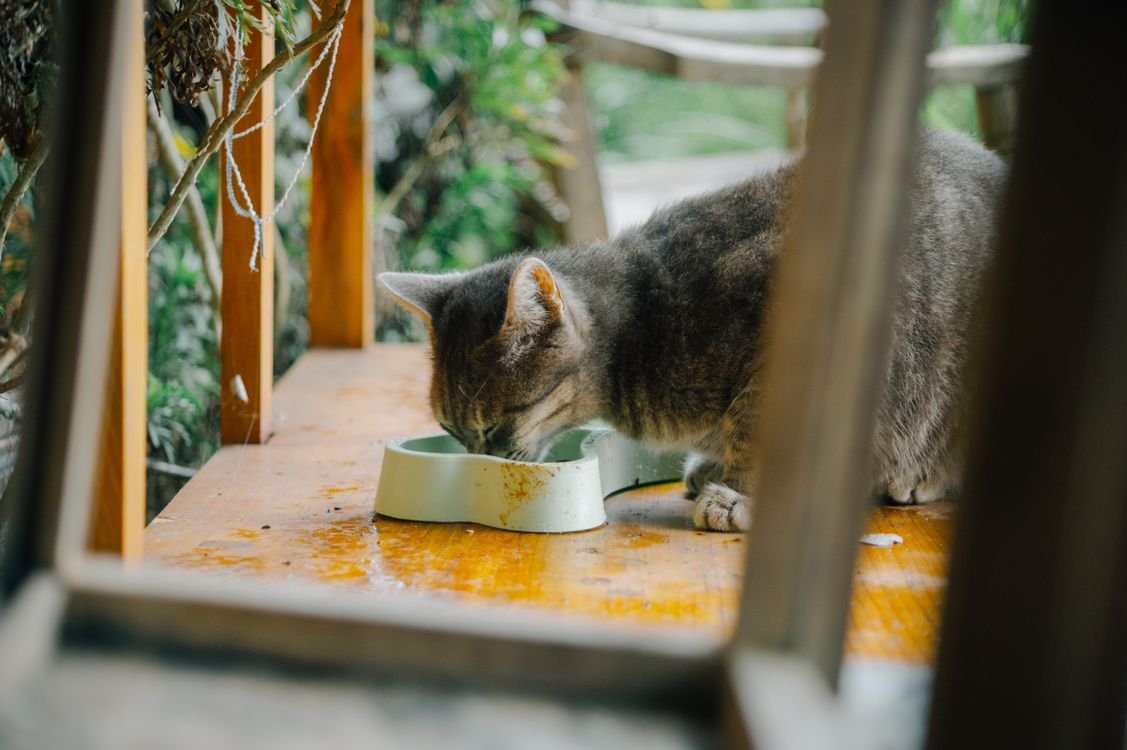
For outdoor or porch feeding, build a proper station. Hang the bowl from a tree limb or fence post on a short chain, or set it on a platform whose legs stand in water cups. Keep the station away from mulch and dense plantings where ant colonies nest, and clear fallen kibble from the ground daily. Outdoor stations need more maintenance, but they keep the ants out of your house too, which is half the battle.
What to Do When the Moat Fails
Sometimes you set up a perfect moat and still find ants in the bowl by morning. Do not give up on the method. Run through this checklist first.
Check for bridges. A crumb, a piece of kibble, or a paper towel touching both the outer tray and the inner bowl gives ants a dry path. The same goes for a tablecloth, curtain, or cable touching the setup. The moat only works when water is the single route.
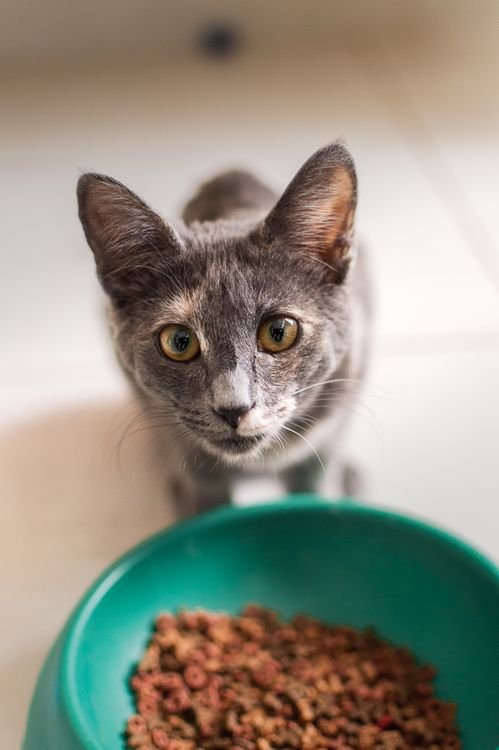
Check the water level. In warm or dry homes a shallow moat can evaporate overnight. Top it up before bed. Check for floaters. If the inner bowl is light plastic, a cat leaning on one side can tip it against the outer tray. Switch to a heavy ceramic bowl.
Check for a second food source. If ants are also in the pantry bag or a forgotten treat pouch, the colony has fuel to keep testing your defenses. Seal all stored food, wipe the trails, and give the moat another day. Persistence beats the colony. Ants abandon food sources that cost more energy than they return, usually within a week or two.
Methods to Skip
Not every popular trick deserves a place near your cats food. A few are ineffective, and a few are genuinely risky.
Skip insecticide sprays anywhere near the feeding area. Even sprays labeled for indoor use leave residues on floors and baseboards that your cat walks through and then grooms off its paws. The risk is not worth it when physical barriers work.
Skip ant bait stations next to the bowl. Baits work by attracting ants to poison, which is the opposite of what you want beside food your cat eats from. If you use baits for a house wide problem, place them far from the feeding area, inside a container your cat cannot open.
Skip the petroleum jelly ring unless you watch it closely. Smearing jelly around the bowls rim does stop ants at first, but dust and kibble crumbs collect in it within days, and the first ants to die in the goo become a bridge for the ants behind them. Cat owners on forums report having to reapply it constantly, and some cats are fascinated enough to lick it.
Skip citrus sprays and essential oil barriers directly around the bowl. Cats are sensitive to many essential oils, including tea tree, peppermint, and citrus oils in concentrated form. A cinnamon ring on the floor is the safer scent barrier.
Can Ants Harm Your Cat?
For most owners this is the first worry, so here is the reassuring part. The common household ants that invade kitchens, such as odorous house ants and pavement ants, are not venomous and will not poison your cat if a few get eaten. Many cats snack on the occasional ant with zero effect.
The real risks are smaller and indirect. Fire ants, common in the southern states, can sting a cats nose, lips, or paws, which is painful and can swell. A massive infestation can contaminate food with bacteria from wherever the ants have been walking. And a cat that refuses to eat because its bowl is swarming can miss meals, which matters for kittens, seniors, and cats with medical conditions.
Watch for redness or swelling on the nose and mouth if you live in fire ant country. Otherwise, treat the ants as a hygiene problem, not a veterinary emergency. If your cat shows vomiting or lethargy alongside an infestation, that is a vet visit, but the cause is more likely spoiled food than the ants themselves.
Outdoor Feeders Need a Different Playbook
If you feed community cats, ferals, or a porch cat, indoor tricks only go so far. Outdoor ants are bolder, colonies are larger, and rain destroys powder barriers.
Feed on a schedule and remove the bowls after thirty minutes. This is the single most effective outdoor tactic. Ants that arrive to an empty station learn to stop checking. Elevate the station on legs standing in water cups, and refresh the water after rain. Keep the area around the station clear of mulch and leaf litter where colonies nest.
Consider a hanging feeder for dry food. A simple platform suspended by a chain from a tree limb or shepherds hook is nearly ant proof if the chain is kept clear of branches. Wet food still needs the scheduled feeding approach, since it spoils in heat and draws flies as well as ants.
Never use granular insecticides around an outdoor feeding station. Cats, and often raccoons, opossums, and birds, share these spaces. Physical barriers and timing are the only safe tools outdoors. Outdoor feeding setups also get raided by other wildlife, and the same block the route thinking applies, which is why our guide on how to stop squirrels from eating bird seed pairs well with this one.
The Bottom Line
Learning how to keep ants out of cat food bowl areas comes down to one idea: make the bowl unreachable instead of trying to kill every ant in the county. A water moat, a raised bowl, and scheduled feeding solve the problem for the vast majority of owners, with cinnamon and vinegar as strong backups.
Start with the moat today. It costs nothing, takes two minutes, and works the same night you set it up. Seal your stored food, wipe the old trails, and give the colony a week to get the message. Your cat gets a clean bowl, you get a clean floor, and the ants can go find someone elses picnic.
Frequently Asked Questions
Will ants in the food bowl make my cat sick?
Common kitchen ants are not toxic to cats, and eating a few is harmless. The concern is contamination and missed meals if your cat refuses the swarming bowl. Fire ants are the exception and can sting painfully, so act faster if you live in the southern states.
Is diatomaceous earth safe to use around cats?
Food grade diatomaceous earth is low risk when applied as a thin settled ring where your cat will not walk through clouds of it or lick it up. Never use pool grade. Keep it away from the bowl itself and reapply after mopping.
Does the water moat really work?
Yes, it is the most reliable method owners report. The key details are a heavy inner bowl that will not float, at least an inch of water gap, fresh water daily, and no crumbs bridging the two containers. When a moat fails, a bridge or low water is almost always the cause.
What smells keep ants away from cat food safely?
Ground cinnamon and dried bay leaves are the safest scent barriers around cats. Vinegar wipes erase the pheromone trails ants follow. Avoid essential oils and citrus sprays near the feeding area, since concentrated forms can bother cats.
Should I use ant spray near my cats food?
No. Insecticide sprays leave residues on floors and surfaces that cats pick up on their paws and ingest while grooming. Physical barriers like moats, raised feeders, and sealed storage control the problem with none of the risk.
