
A rug corner that curls up is a small problem with an outsized effect. You catch your toe on it every morning, the vacuum nudges it further up, and the room looks unfinished no matter how tidy the rest of the space is. Learning how to stop a rug from curling up at the corners starts with one useful idea: a curl is a shape the rug has learned, and you can teach it a new shape with patience, warmth, weight and the right support underneath.
Most corners come down within a few days when you match the fix to the cause. A brand new rug that arrived rolled tight needs a different approach from a washed rug that dried unevenly, and a thin flat weave on a hard floor needs different support from a thick rug on carpet. This guide gives you a simple cause test first, then a timed plan, then floor by floor advice, so you stop guessing and start flattening.
Why rug corners curl up in the first place
A rug is a face fabric bonded to a backing, and both layers remember the shape they spent time in. When one layer is held tighter than the other, the edge lifts. That tension has a handful of ordinary causes, and knowing which one you have saves you from trying every fix at once.
Storage and shipping cause most new rug curls. A rug that spent weeks rolled in a tube wants to roll back up, and the corners are the first place that memory shows. Uneven drying is the next common cause. If one corner dried faster than the rest after a wash or a spill, that corner can set in a lifted shape. Cold rooms make stiff backings worse, because a cold backing holds its shape more stubbornly. A rug with nothing holding its edges down will also lift where feet step on it again and again, especially a small rug or a runner near a door.
Heat damage is the one cause that often cannot be fixed at home. If a corner was scorched by a heater, a hot iron or strong sun through glass and it stays curled however long you wait, the fibers or backing may be set for good. That is useful to know early, because it stops you from repeating a fix that will never work and points you toward repair or replacement instead.
The 30 second cause test
Press the curled corner flat with your hand and hold it for 30 seconds, then let go. If it springs straight back up, you are dealing with strong shape memory from rolling or storage, and reverse rolling plus weight is your best opening move. If it stays mostly flat for a minute and then slowly lifts at the very tip, uneven drying or a missing pad is more likely, and a light dampening plus flat drying or a pad will help more. If the corner feels stiff, crackly or melted to the touch, treat it as possible heat damage and skip heat fixes entirely.
Also check the back of the rug. A backing that is peeling, bubbling or pulling away from the face fabric points to a bonding problem rather than simple memory. A rug that is wavy across the whole surface, not just at the corners, may be too large for the room, laid over an uneven floor, or reacting to humidity changes. Corners alone usually mean a local fix will work.

How to stop a rug from curling up at the corners with reverse rolling
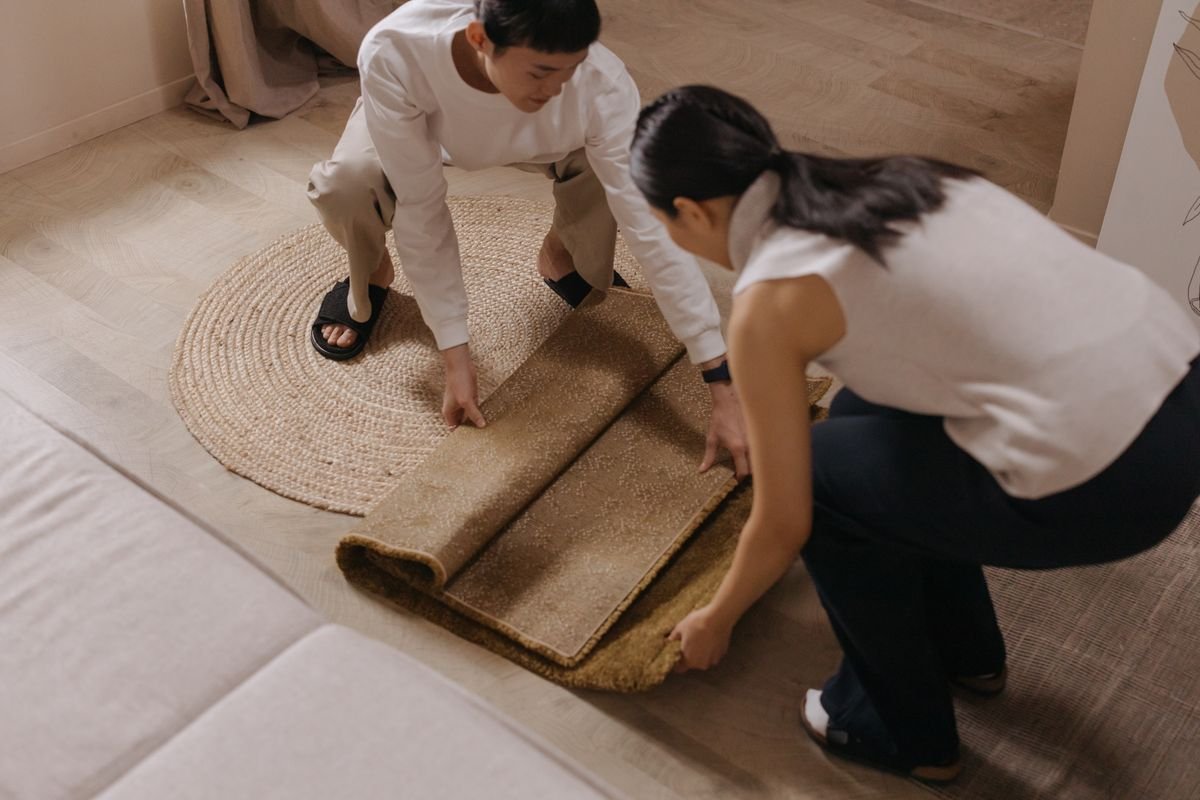
Reverse rolling is the gentlest strong fix, and it works because it gives the rug the opposite shape memory. Roll the curled corner back on itself, in the direction opposite to the curl, and hold it in that rolled shape for a few hours. For a corner that lifts sharply, roll the whole end of the rug, not just the tip, so the bend is smooth and even.
Start with a clean floor and a clear space. Roll the rug from the curled end toward the middle, keeping the roll snug but not forced. If the rug is large, roll just the affected end and secure the roll loosely with a soft strap or a towel tied around it. Never use tape on the rug face, because adhesive can pull fibers and leave a mark that is harder to fix than the curl.
Leave the reverse roll in place for at least 3 hours, and overnight for a new rug that arrived tightly rolled. Unroll it onto a flat floor, smooth it with your hands from the center outward, and check the corners. Many curls relax a lot after one session. If the corner lifts again within a day, repeat the reverse roll for longer before you move on to weight or a pad. Two patient sessions beat one forceful session every time.
Warmth and weight: the pair that finishes the job
Warmth makes fibers more willing to change shape, and weight holds the new shape while the rug cools and settles. Put the rug in a warm room for a few hours before you work on it. A room at normal living temperature is enough. Avoid placing a rug next to a radiator or a heater to speed things up, because concentrated heat can damage the backing.
After reverse rolling, lay the rug flat and place heavy, flat objects on the corners. A stack of large books, a flat board with books on top, or furniture that already sits near the edge all work well. Keep the weight in place for 24 to 48 hours. Check once a day and smooth the corner again by hand before you replace the weight. This slow pressure is what breaks the old memory without creasing the rug in a new place.
For a rug that curls after washing, add one more step before the weight. Dampen the curled corner lightly with clean water from a spray bottle, just enough to relax the fibers, then smooth it flat and dry it flat with weight on top. Do not soak the rug, and do not dry it draped over a line or a rail, because drying in a bent shape puts the curl straight back. Flat drying on a clean floor, with air moving gently through the room, gives the most even result.
Fixes that work, and fixes to avoid
Not every popular tip is safe for every rug. The table below sorts the common advice into fixes worth trying and fixes that can cause new damage.
- Reverse roll: safe for most rugs, best for storage memory. Give it hours, not minutes.
- Weight for 24 to 48 hours: safe and reliable. Use flat weight that spreads pressure evenly.
- Light dampening and flat drying: good after washing. Keep it light and dry fully flat.
- Rug pad or corner grips: best long term hold, especially on hard floors. See the floor guidance below.
- Low heat from a hair dryer: use with care on synthetic rugs only, held well above the surface and moved constantly. Test on a hidden spot first.
- Ironing, steaming or gluing: avoid. Heat and adhesive can scorch fibers, melt backing and leave marks that cannot be removed.
- Tape on the rug face or on a wood floor: avoid. It can pull fibers, leave residue and damage floor finish.
If you are tempted to iron a corner flat, pause. A rug that looks flat after ironing but has a scorched or shiny patch has traded a fixable curl for permanent damage. The slow methods in this guide take longer, but they leave the rug in good condition. When in doubt about a delicate rug, wool rug or antique rug, stop and ask a rug cleaner for advice before you use heat or water.
Choose the right hold for your floor
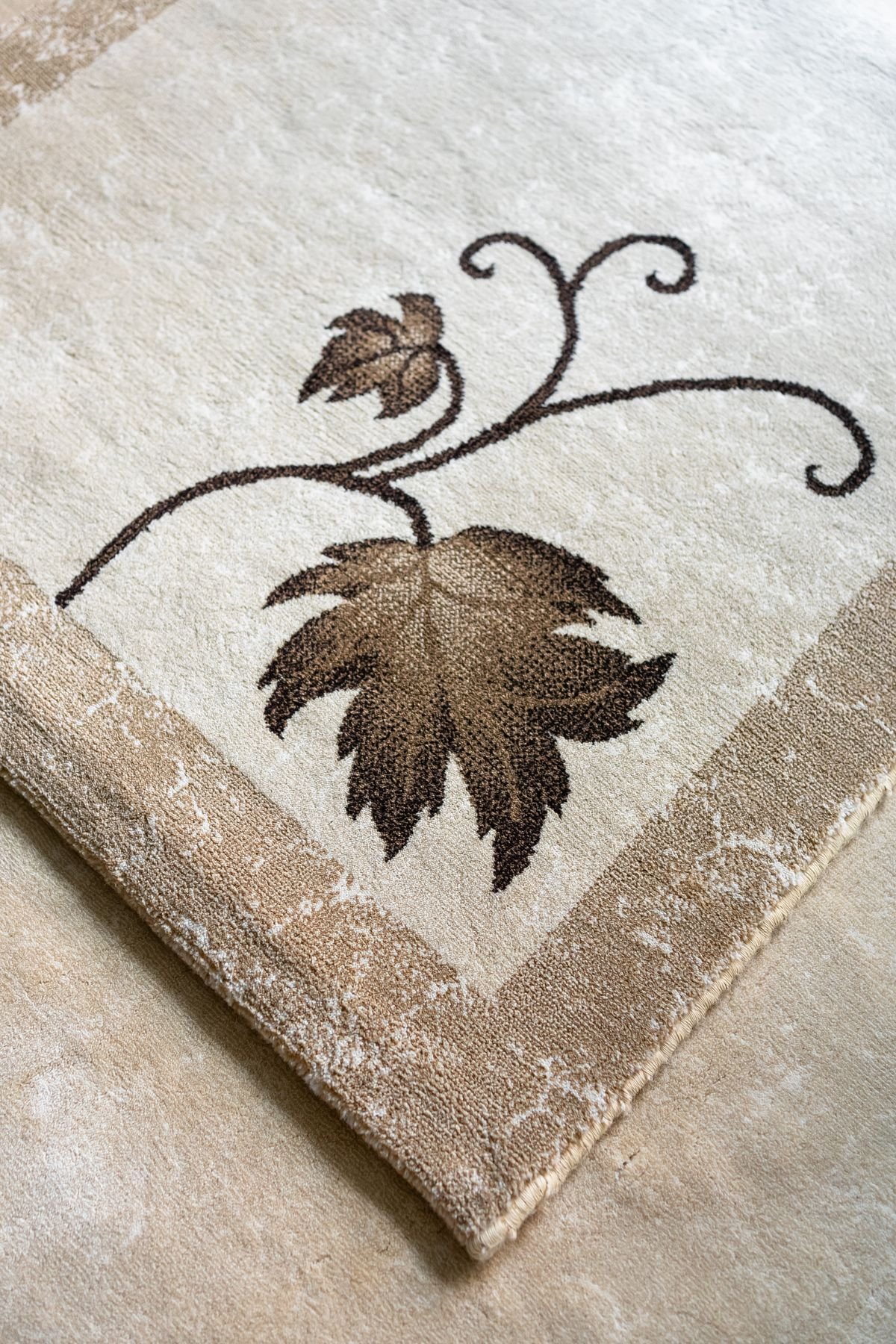
The fix that keeps a corner down depends on what is under the rug. A pad that grips a hard floor will not behave the same way on carpet, and a solution that works in a low traffic bedroom may fail in a busy hallway.
Hard floors: wood, tile and laminate
On a hard floor, movement is the enemy. Every footstep nudges the rug a little, and the corners take the most force. A full rug pad is the strongest answer. Choose a pad slightly smaller than the rug, so the pad edge sits just inside the rug edge and does not create a new ridge. A felt and rubber pad gives cushion and grip together, and it also protects a wood floor from scratches.
Corner grips are a good second choice when a full pad feels like too much. They add weight and grip exactly where the curl starts, and they are easy to remove for cleaning. Place them under the corners only, press the rug down firmly, and walk on the rug normally for a day to let them settle. If you rent your home, corner grips are usually the simplest option, because they leave no marks and need no adhesive. For advice on a related floor annoyance, see our guide on how to stop shoes from squeaking on tile floors, which covers how hard floors react to movement and moisture.
Carpeted floors: layering needs care
A rug on carpet can slide and bunch more easily, because the soft surface underneath gives way. A thin grip pad made for rug on carpet use helps, but a thick pad can make the rug feel unstable. Keep the pad thin and firm, and make sure the rug is large enough that furniture can sit on at least one edge. Furniture weight is often the simplest hold on carpet, and it looks natural when a sofa leg or a chair leg rests on the rug edge.
On carpet, reverse rolling and weight matter even more, because a pad alone cannot force a strong curl flat. Do the reverse roll first, then add the pad, then place weight on the corners for a day. If the rug is small and sits in the middle of a carpeted room with nothing to anchor it, consider moving it to a spot where furniture can help, or choose corner grips made for carpet use.
High traffic spots: doors, hallways and kitchens
Corners near doors take a beating. A door sweeping over a rug edge will lift it again and again, and no pad can fully stop that if the door clearance is too tight. Check that the door clears the rug with room to spare. If it catches, trim the rug placement rather than forcing the door, or move the rug so the door swings clear. In a hallway, a runner needs a full length pad, because a pad that covers only part of the runner lets the uncovered ends lift.
Kitchens add spills and steam to the mix. A rug that gets damp often will curl again unless it dries flat each time. Blot spills at once, lift the rug to dry if the floor underneath is wet, and lay it flat again before it is fully dry. A washable rug can be a better choice in a kitchen, provided you follow the flat drying rule after every wash.
A seven day plan that actually flattens the corner
Use this plan when you want a clear sequence instead of trying everything at once. It builds from the gentlest fix to the most lasting hold, and it tells you when to stop and reassess.
- Day 1: Run the cause test. Reverse roll the curled end for 3 hours or overnight, then lay the rug flat in a warm room.
- Day 2: Place flat weight on the corners for a full day. Smooth the corners by hand each morning and evening.
- Day 3: Check the corner with no weight. If it holds for several hours, move to a pad or grips. If it springs up, repeat the reverse roll overnight.
- Day 4: Fit a rug pad or corner grips. Press the corners down and walk the rug in normally.
- Day 5: If the rug was washed or damp, dampen the corner lightly, smooth it flat, and dry it flat with weight on top.
- Day 6: Leave the pad and grips in place and use the room normally. Note whether the corner lifts after vacuuming or after the door moves.
- Day 7: Judge the result. A corner that stays flat through normal use is fixed. A corner that lifts again needs a different diagnosis, not more force.
Keep notes as you go, even brief ones. A note like “reverse roll overnight, flat on day 2, lifted after vacuuming” tells you more than a vague memory, and it helps a rug cleaner give better advice if you need one. If you also hear creaks or movement from the floor itself, our guide on how to stop a squeaky floorboard without removing carpet explains how floor movement can affect everything sitting on it.
Prevent curling from coming back
Fixing a corner once is satisfying. Keeping it flat is where most people slip, because the habits that caused the curl creep back in. A few simple routines make a real difference.
Rotate the rug every few months so foot traffic and sunlight do not wear one edge more than the rest. Rotation spreads the load and keeps one corner from taking all the pressure. Control indoor humidity where you can, because big swings in humidity make natural fibers expand and contract unevenly, and that movement shows first at the edges. A steady room temperature and regular ventilation help more than any single product.
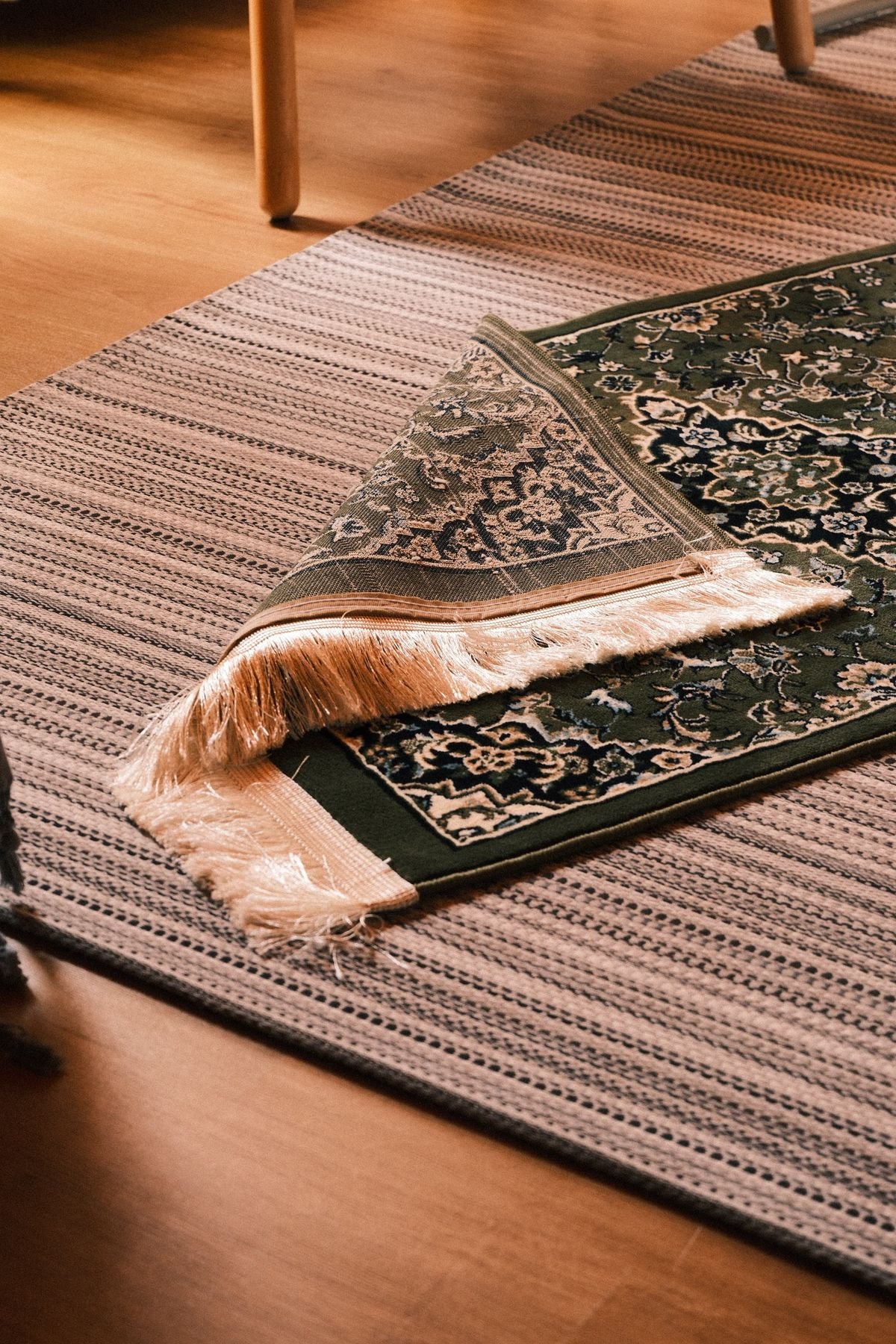
Store rugs rolled, never folded, with the pile facing inward, in a dry place. Folding creates a hard crease that can become a permanent lift. When you buy a new rug, unroll it at once and let it settle flat for a few days before you judge it. Give it warmth, weight and a pad from the start, and most new rug curls never become a lasting problem.
Vacuum with care around the edges. Lift the corner gently and vacuum underneath, rather than dragging the vacuum head over a lifted tip, which pulls the corner up further. When you move furniture, lift the rug edge rather than dragging furniture across it, because dragging stretches the backing and loosens the bond at the edge.
When to call a professional
Call a rug cleaner or repairer when the backing is peeling, the corner feels melted or brittle, the rug is valuable or antique, or the curl returns after two full rounds of reverse rolling, weight and a pad. A professional can block a rug, which means stretching and setting it flat under controlled conditions, or repair an edge that has come loose. Blocking is especially useful for wool and handmade rugs, where home heat and water carry more risk.
Ask the cleaner what caused the curl before you agree to work. A good answer names the cause, such as storage memory, uneven drying or a failing bond, and explains what the repair will do about it. If the answer is vague, or the price is high for a rug of modest value, replacement may be the calmer choice. A rug that keeps curling after professional help, and that trips people in a hallway or near stairs, is a safety issue first and a decor issue second.
Conclusion
Learning how to stop a rug from curling up at the corners comes down to three moves in the right order: test the cause, reverse roll and weigh the corner down, then hold it with a pad or grips that suit your floor. Give each step the time it needs, skip heat and glue, and dry washed rugs flat every time. Most corners settle within a week, and the simple habits of rotation, steady humidity and careful vacuuming keep them flat. If the corner stays stubborn after two patient rounds, or the backing is damaged, a professional opinion is the sensible next step, not a stronger home fix.
Frequently asked questions
Will a curled rug corner flatten on its own?
Sometimes, if the curl is mild and the rug is in a warm room with furniture weight on it. Most corners need help, and a reverse roll plus 24 to 48 hours of weight gives the fastest reliable result.
Can I use a hair dryer to flatten a rug corner?
Use low heat with great care on synthetic rugs only, held well above the surface and moved constantly, after testing a hidden spot. Skip heat entirely on wool, silk, antique rugs and any rug with heat damage.
Is rug tape safe for wood floors?
Tape with adhesive on both sides can leave residue and damage floor finish, so it is best avoided. A rug pad or corner grips hold the corner without adhesive and are safer for wood floors and for rented homes.
How long should I leave weight on a curled corner?
Leave flat weight in place for 24 to 48 hours, smoothing the corner by hand once or twice a day. A new rug that arrived tightly rolled may need a second overnight reverse roll as well.
Why does my rug curl again after washing?
Uneven drying is the usual reason. A corner that dries faster, or dries while bent over a line, sets in a lifted shape. Wash, dampen lightly if needed, and always dry the rug fully flat with weight on the corners.
