

Few daily annoyances are as constant as socks that keep sliding down inside your boots. You pull them up, you lace your boots tight, and ten minutes later they are bunched around your toes again. If you want to know how to stop socks from slipping down inside boots for good, the good news is that the problem is easy to fix once you understand what causes it. This guide explains why socks slide down inside boots and gives you nine proven fixes, from simple sock swaps to clever tricks, plus the laundry habits that keep your socks grippy for months.
Why Socks Slide Down Inside Boots (And How to Stop It)
Socks creep downward inside boots because of a simple mix of physics and worn out fabric. Every step you take moves your foot slightly inside the boot, and each tiny movement drags the sock a fraction of an inch lower. Gravity does the rest. Stiff boot leather adds friction against the sock, which sounds like it would hold the sock up, but in practice the friction grabs the sock and pulls it downward with every step.
The condition of your socks matters just as much. Socks stay up because of elastic in the cuff and stretchy fibers like elastane and spandex that hug your leg. High heat in the dryer, years of washing, and cheap cotton heavy blends all break those fibers down. Once the cuff goes loose, nothing is holding the sock against your leg, so it slides. Boot fit plays a role too. Boots that are half a size too large let your foot slide around inside, and the sock follows that motion downward.
So the way to stop socks from slipping down inside boots is to attack the problem from three sides: better socks, better fit, and a few physical tricks that lock everything in place. Here are the nine fixes that actually work.
1. Switch to Over the Calf Socks
The single most effective fix is wearing socks that are long enough. Ankle and low cut socks have almost nothing to grip, so they slide down almost immediately inside a boot shaft. Crew socks are better, but over the calf socks, also called knee high socks, are the gold standard. They extend above the top of most boot shafts, so even if they slip a little, they stay in place.
The calf muscle itself acts like a natural anchor. The gentle taper of your leg holds a taller sock in position far better than a short cuff ever could. Look for boot socks specifically labeled as over the calf or knee high, since they are cut with a longer leg and a cuff designed to sit above the boot line. This one change solves the problem completely for most people.
2. Choose Socks With Silicone Grip
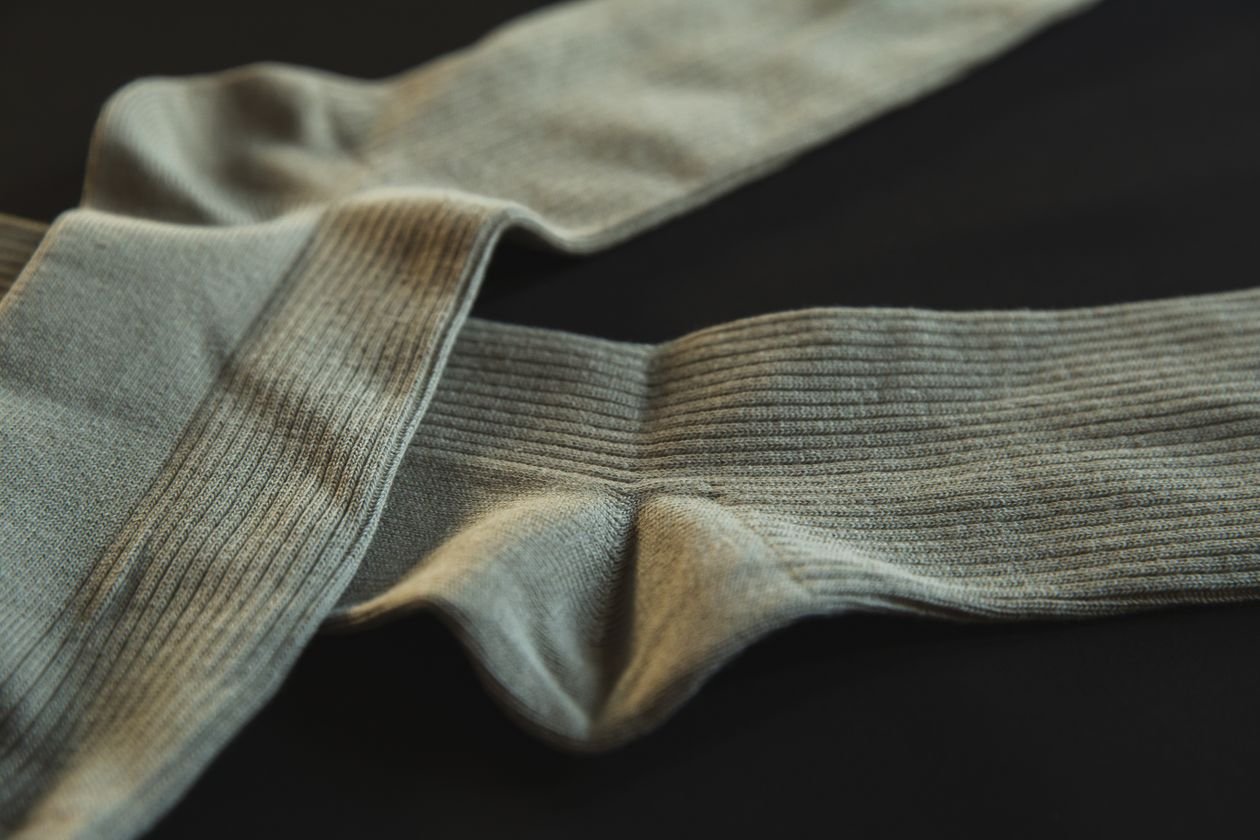
Many modern boot socks come with small silicone grip dots or strips woven into the cuff, the heel, or the sole. These tiny grippy spots add friction exactly where you need it, holding the cuff against your skin and the sock against the inside of the boot. If your socks keep sliding no matter what length you buy, grip socks are worth the upgrade.
You can find silicone grip boot socks from workwear and outdoor brands for about 15 to 25 dollars a pair. They are especially useful for smooth boot linings, which are the slipperiest of all. Cowboy boots, dress boots, and fashion boots with smooth interiors benefit the most, since rough leather linings already provide some natural friction.
3. Wear Compression Socks
Compression socks are designed to apply graduated pressure along your leg, and that constant snug tension keeps the sock from migrating downward. If you already wear compression socks for circulation, long shifts on your feet, or travel, switching to a longer style that extends above the boot top gives you a two in one solution.
Even light or moderate compression makes a difference compared with regular loose socks. The key is choosing a length that rises above the boot shaft. A compression sock that ends mid calf inside a tall boot will still slide; one that extends past the top of the boot stays put.
4. Get the Right Sock Size
Oversized socks are one of the most common causes of slippage, and the fix is free. Socks that are too large bunch up and fold inside the boot, and every fold becomes a starting point for sliding. If you are between sizes, size down rather than up. Socks should fit snugly with no excess fabric around the heel or toes.
As a rough rule, your sock size should be about one size below your actual shoe size rather than matching it. Cheap multipack socks often run large and loose, so if you keep buying the same big bag of cotton socks and they all slide, the sizing is probably the real problem, not your boots.
5. Match Sock Material to the Job

Material makes a huge difference in how well a sock stays up. Cotton absorbs moisture and stretches out through the day, which is exactly why a pair of cotton socks that fit fine in the morning are sliding by afternoon. Wool blends and synthetic performance fabrics hold their shape far better.
Merino wool socks with some synthetic fiber mixed in are the top choice for boots. They wick moisture, keep their elasticity, and resist the stretched out sag that causes slippage. Bamboo fiber socks are another good option, known for softness and decent shape retention. When you shop, check the label for elastane or spandex content. A higher stretch fiber percentage means a sock that hugs your leg all day instead of giving up by lunch.
6. Tighten Your Lacing Technique
How you lace your boots directly affects sock movement. If the ankle area of the boot is loose, your foot moves with every step, and the sock gets dragged down along with it. Tightening the top eyelets reduces that internal movement and keeps the sock where it belongs.
For lace up boots, try the heel lock lacing method. After threading through the final horizontal eyelets, loop each lace end back down through the same eyelet to create a small loop on each side, then cross the laces and thread them through the opposite loops before tying. This cinches the ankle collar snugly around your foot and sock, locking the heel in place and dramatically reducing the sliding that pulls socks down.

7. Try Sock Garters or Sock Clips
Sock garters are elastic bands worn just below the knee that physically hold socks up. They have been used by soldiers, construction workers, and hikers for decades, and they cost only about 5 to 15 dollars. They are nearly invisible under pant legs and they work with any sock, which makes them a great option if you do not want to replace your whole sock drawer.
A cheaper DIY version is a small silicone hair tie placed just below the sock cuff. It acts as a physical barrier that stops the sock from rolling down. Specialized sock clips and sock locks work the same way, gripping the sock to itself or to the inside of the boot. If you wear cowboy boots or pull on boots with a smooth lining, garters are often the fastest permanent fix.
8. Double Up With a Thin Liner Sock
Wearing a thin liner sock underneath your main boot sock is a trick borrowed from hikers, and it works for the same reason it prevents blisters. The two layers grip each other instead of gripping your skin, which reduces the friction that drags the outer sock downward. The liner stays in place, the boot sock stays in place, and your feet stay comfortable.
This method is especially useful in hot climates or during long active days when feet get sweaty, since the liner also wicks moisture away from your skin. It adds a little warmth too, which is a bonus in winter boots. Just make sure the combined thickness does not make your boots too tight, since overly tight boots create their own comfort problems.
9. Wash and Store Socks the Right Way
The elasticity that keeps socks up is fragile, and most people destroy it in the laundry without realizing it. High heat and harsh detergents break down elastane and spandex, the very fibers responsible for stretch recovery. Once those fibers are gone, no trick will keep the sock up, so laundry habits matter.
Wash your socks inside out in cold water with a mild detergent, and skip the dryer when you can. Air drying or low heat preserves elasticity far longer than a hot dryer cycle. Store socks flat or rolled rather than stretched over a hanger, and rotate through several pairs so each pair gets a full rest between wears. Even the best socks wear out, so replace any pair that shows thinning fabric at the heel or a cuff that has gone loose. Quality boot socks typically last six to twelve months with regular use.
Good washing habits do more than prevent slippage. They keep white socks looking brighter for longer too. If your socks are turning grey in the wash, this guide on keeping white socks from turning grey walks through the washing mistakes that dull them and how to fix them. And if laundry smells are a problem, these tips for drying clothes indoors without damp smells will keep your whole wash, socks included, smelling fresh.
What to Avoid
A few popular suggestions are more trouble than they are worth. Spray adhesive inside your boots can damage boot linings and irritate skin, so it should be a last resort at best. Safety pins or clips attached through the sock fabric create holes that weaken the cuff. And wearing ankle socks with tall boots will never work, no matter what tricks you add, because there is simply not enough sock to stay up. Put your effort into the nine fixes above instead.
When to Replace Your Socks
No fix can save a sock that has reached the end of its life. If the cuff feels loose when you pull it on, if the heel fabric has gone thin, or if the sock bunches and folds no matter what you do, it is time to retire the pair. Investing in fewer, better pairs of boot socks with good elastic content will save you money and frustration compared with endlessly replacing cheap socks that slide by noon.
Conclusion: How to Stop Socks From Slipping Down Inside Boots
Learning how to stop socks from slipping down inside boots comes down to three principles: wear socks long enough and snug enough to stay up, choose materials and features that grip, and lock the fit with good lacing or simple accessories. Start with the easiest wins. Size down if your socks are too large, switch to over the calf or compression socks, and tighten your lacing. If those do not fully solve it, add silicone grip socks, sock garters, or a liner sock underneath. Finally, protect your investment with gentle washing habits so the elastic lasts. With the right combination, your socks will stay exactly where you put them from morning to night.
Frequently Asked Questions
Can wearing two pairs of socks help keep them from falling?
Yes. A thin liner sock under your main boot sock reduces friction against your skin, and the two layers grip each other, which keeps the outer sock from sliding down. Hikers have used this trick for years.
Is sock slippage related to boot size?
Often, yes. Boots that are half a size or more too large let your foot move inside with every step, and the sock follows that motion downward. A proper fit, or a thicker insole to fill dead space, directly reduces slippage.
How often should I replace my boot socks?
Once the cuff elastic feels loose or the fabric at the heel and toes looks thin, it is time for a new pair. Quality boot socks typically last six to twelve months with regular wear.
Do compression socks help with slippage?
They can. The constant snug tension of a compression sock keeps it against your leg all day. Choose a length that extends above the boot shaft for the best results.
What are sock garters and do they work?
Sock garters are elastic bands worn below the knee that physically hold socks up. They cost about 5 to 15 dollars, work with any sock, and are one of the most reliable fixes for stubborn slippage in tall boots.
