
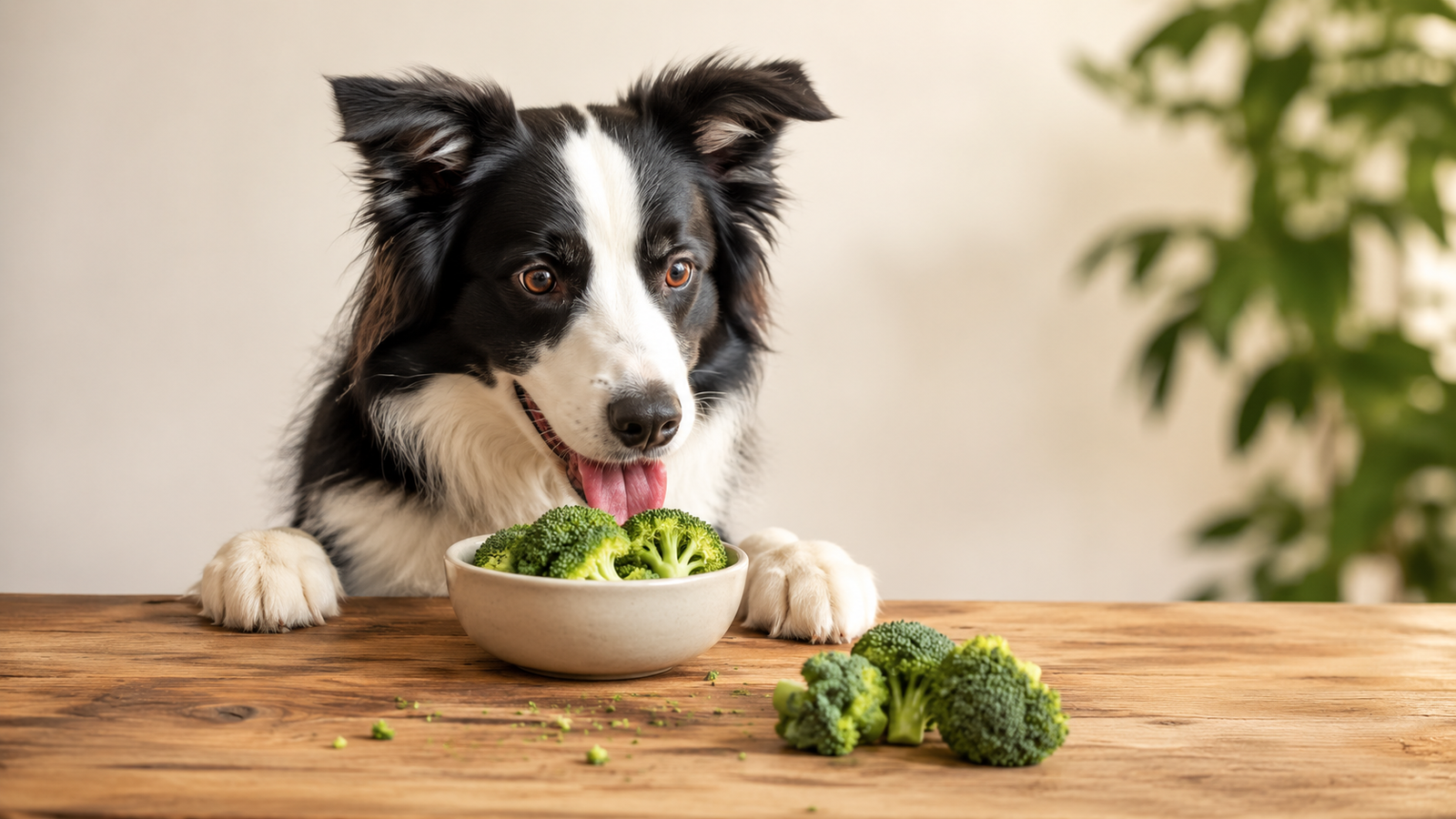
If you were just chopping broccoli for dinner and your dog gave you those pleading eyes, you are probably wondering: can dogs eat broccoli, or is this one vegetable better left off their plate?
The short answer is yes, dogs can eat broccoli, but there is more to the story than a simple yes or no. How much you feed, how you prepare it, and which part of the plant you offer all make a real difference to your dog’s comfort and safety. This guide walks through everything a responsible pet parent needs to know, backed by veterinary guidance and practical, real world serving advice you will not find condensed anywhere else.
Can Dogs Eat Broccoli
Yes, dogs can eat broccoli, and in small amounts it is considered one of the safer vegetables to share from your kitchen. Broccoli is not toxic to dogs the way onions, grapes, or chocolate are. Veterinarians generally agree that broccoli can be a healthy, low calorie addition to a dog’s diet when it is given occasionally and in appropriate portions.
That said, safe does not mean unlimited. Broccoli contains a compound called isothiocyanate, which can irritate a dog’s digestive tract if they eat too much of it. This is the main reason broccoli belongs in the treat category rather than as a daily dietary staple.
Think of broccoli the way you would think of any healthy snack for yourself. A few bites now and then is beneficial. A whole bowl at once is where problems start.
Health Benefits of Broccoli for Dogs
Broccoli is often called a nutritional powerhouse for humans, and many of those same benefits carry over to dogs when it is fed correctly.
Rich in Fiber for Digestive Health
Broccoli contains a good amount of dietary fiber, which supports healthy digestion and can help dogs feel fuller for longer. This makes it a popular low calorie treat option for dogs who are managing their weight.
Packed With Vitamins and Antioxidants
Broccoli offers vitamin C, vitamin K, and a range of antioxidants that support immune function and help protect cells from damage. These nutrients contribute to healthy skin, a strong coat, and overall wellness.
Supports Bone and Joint Health
Vitamin K found in broccoli plays a role in bone metabolism, and the mineral content, including potassium and magnesium, supports normal muscle and nerve function.
A Natural Dental Chew
Raw broccoli has a crunchy texture that can help scrape away plaque as your dog chews. It is not a replacement for regular dental care, but it does offer a small side benefit for dogs who tolerate raw vegetables well.
Low in Calories and Fat
For dogs on a weight management plan, broccoli is a smart alternative to calorie dense commercial treats. A few small florets provide crunch and nutrition without adding much to your dog’s daily calorie count.
The Risks and Downsides of Feeding Broccoli to Dogs

Every food has trade offs, and broccoli is no exception. Understanding the risks helps you feed it responsibly rather than avoiding it altogether.
Digestive Upset From Isothiocyanates
The florets of broccoli contain isothiocyanate, a naturally occurring compound that can cause gas, bloating, or diarrhea if a dog eats too much at once. Most dogs tolerate small amounts just fine, but sensitive stomachs may react even to modest servings.
Choking Hazard From Stalks
Broccoli stalks are dense and fibrous. If cut into large chunks, they can pose a choking risk, particularly for small breed dogs or dogs who tend to swallow food quickly without chewing thoroughly.
Potential Concern for Dogs With Bladder or Kidney Stones
Broccoli contains calcium and oxalates, compounds that some veterinarians advise limiting in dogs with a history of certain bladder or kidney stones. If your dog has this medical history, check with your vet before adding broccoli to their diet.
Not Suitable as a Meal Replacement
Dogs are primarily meat based eaters, and their nutritional needs are built around a complete and balanced commercial diet or a vet formulated homemade diet. Broccoli should complement that diet, never replace a meaningful portion of it.
Broccoli Stems, Leaves, and Sprouts: What Is Actually Safe
Most articles only talk about the florets, but pet parents often have broccoli stems, leaves, or even sprouts on hand and wonder if those parts are safe too.
Broccoli florets are the most commonly fed part and are generally safe in small, bite sized pieces.
Broccoli stalks and stems are safe for most dogs but are tougher and more fibrous. They should always be cut into small, manageable pieces to avoid choking, and they may be harder for dogs with dental issues to chew comfortably.
Broccoli leaves are technically edible for dogs and contain many of the same nutrients as the florets. They are less commonly fed simply because most people do not cook with them, but there is no specific toxicity concern with small amounts of clean, washed broccoli leaves.
Broccoli sprouts are safe in very small quantities. They are more concentrated in certain plant compounds than mature broccoli, so it is best to treat them as an occasional novelty rather than a regular addition, and always introduce them slowly to watch for any reaction.
How Much Broccoli Can a Dog Eat
Portion size depends heavily on your dog’s size. Veterinarians commonly recommend that treats, including vegetables like broccoli, make up no more than 10 percent of a dog’s daily caloric intake.
Here is a practical starting point based on dog weight:
| Dog Size | Approximate Weight | Suggested Broccoli Serving |
|---|---|---|
| Extra small | 2 to 10 pounds | 1 to 2 small florets |
| Small | 11 to 20 pounds | 2 to 3 small florets |
| Medium | 21 to 50 pounds | 3 to 4 medium florets |
| Large | 51 to 90 pounds | 5 to 6 medium florets |
| Extra large | 91 pounds and up | A small handful of florets |
These amounts are general guidelines rather than strict rules. Every dog is different, and factors like activity level, existing health conditions, and overall diet will affect what is appropriate. If you are introducing broccoli for the first time, start with a single small piece and watch how your dog responds before offering more.
How to Prepare Broccoli for Your Dog
Preparation matters just as much as portion size when it comes to feeding broccoli safely.
- Wash it thoroughly to remove dirt, pesticides, or bacteria from the surface.
- Cut it into small, bite sized pieces appropriate for your dog’s size, especially the stalks.
- Serve it plain. Skip the butter, oil, salt, garlic, or any seasoning that might upset your dog’s stomach or, in the case of garlic and onion, be genuinely toxic.
- Offer it raw, steamed, or boiled. All three methods are safe, though lightly steamed broccoli is often easier to digest than raw broccoli, especially for dogs with sensitive stomachs.
- Avoid overcooking, since this reduces some of the nutritional value that makes broccoli worth feeding in the first place.
- Introduce it gradually, particularly if your dog has never had broccoli before, so you can monitor for any signs of an upset stomach.
Frozen broccoli is also fine for most dogs, and some owners use small frozen florets as a cooling treat during warmer months. Just be mindful that frozen broccoli is harder, so it is best suited to dogs without dental sensitivities.
Broccoli Compared to Other Cruciferous Vegetables
Broccoli belongs to a family of vegetables that includes cauliflower, cabbage, kale, and Brussels sprouts. If you rotate vegetables in your dog’s diet, here is how they compare.
Cauliflower is very similar to broccoli in terms of safety and nutritional profile, and it can be fed using the same general portion guidelines.
Cabbage is safe in small amounts but, like broccoli, can cause gas if overfed, since it belongs to the same gas producing vegetable family.
Brussels sprouts offer similar fiber and vitamin content to broccoli but tend to be even more prone to causing digestive gas, so smaller portions are wise.
Kale is nutrient dense but should be fed sparingly and occasionally, since it contains compounds that may affect thyroid function in some dogs if eaten frequently in large amounts.
If your dog has a thyroid condition, it is worth discussing cruciferous vegetables as a category with your veterinarian, since they contain naturally occurring goitrogens that can, in large and regular quantities, interfere with thyroid hormone production. For most healthy dogs eating broccoli occasionally, this is not a significant concern, but it is worth being aware of if your dog has an existing thyroid issue.
Signs Your Dog Has Eaten Too Much Broccoli

Even with the best intentions, dogs sometimes sneak more broccoli than planned, whether from the counter, the trash, or a generous family member. Watch for these signs of overfeeding:
- Excessive gas or a noticeably bloated abdomen
- Loose stool or diarrhea
- Vomiting
- Lethargy or noticeable discomfort
- Reduced appetite at the next meal
Mild digestive upset from too much broccoli usually resolves on its own within a day. However, if symptoms are severe, persistent, or paired with signs like difficulty breathing or visible pain, contact your veterinarian promptly, since these could indicate an allergic reaction or an unrelated issue that needs medical attention.
Special Considerations for Puppies and Dogs with Health Conditions
Puppies have more sensitive digestive systems than adult dogs, and their bodies are still adjusting to new foods in general. It is generally best to hold off on broccoli, or any new vegetable, until a puppy is fully weaned and established on their regular puppy food, and even then to introduce it in very small amounts.
Senior dogs, dogs with a history of pancreatitis, and dogs with known sensitivities to high fiber foods may also benefit from extra caution. In these cases, a quick conversation with your vet before adding broccoli to the routine can save an unnecessary trip back to the clinic later.
Dogs with a history of bladder or kidney stones, as mentioned earlier, are another group where a vet’s input is genuinely valuable, since broccoli’s calcium and oxalate content may interact with certain types of stones.
Final Thoughts
So, can dogs eat broccoli? Yes, and when it is given thoughtfully, it can be a genuinely healthy addition to your dog’s routine. The key takeaways are simple: keep portions small relative to your dog’s size, cut it into manageable pieces to avoid choking, skip the seasonings, and pay attention to how your individual dog responds.
Broccoli will never replace a complete and balanced diet, but as an occasional, low calorie, nutrient rich treat, it earns its place in the bowl. When in doubt, especially if your dog has an existing health condition, a quick check in with your veterinarian is always the safest way to make sure broccoli is the right choice for your best friend.
Frequently Asked Questions
Can dogs eat raw broccoli?
Yes, raw broccoli is safe for most dogs in small, bite sized pieces. It is slightly harder to digest than cooked broccoli, so dogs with sensitive stomachs may do better with the steamed version.
Can dogs eat broccoli stalks?
Yes, broccoli stalks are safe as long as they are cut into small, manageable pieces to prevent choking, since the stalk is tougher and denser than the florets.
Can dogs eat frozen broccoli?
Yes, frozen broccoli is fine for most dogs and can even work as a cooling treat in warm weather, though it may be too hard for dogs with dental sensitivities.
How much broccoli is too much for a dog?
Any amount beyond roughly 10 percent of your dog’s daily caloric intake increases the risk of digestive upset. For most dogs, a few small florets a couple of times a week is a safe upper limit.
Is broccoli ever dangerous for dogs?
Broccoli is not toxic, but overfeeding it can cause significant digestive discomfort, and large stalk pieces can present a choking hazard. Dogs with certain health conditions, such as bladder stones or thyroid issues, should only have broccoli under veterinary guidance.
