
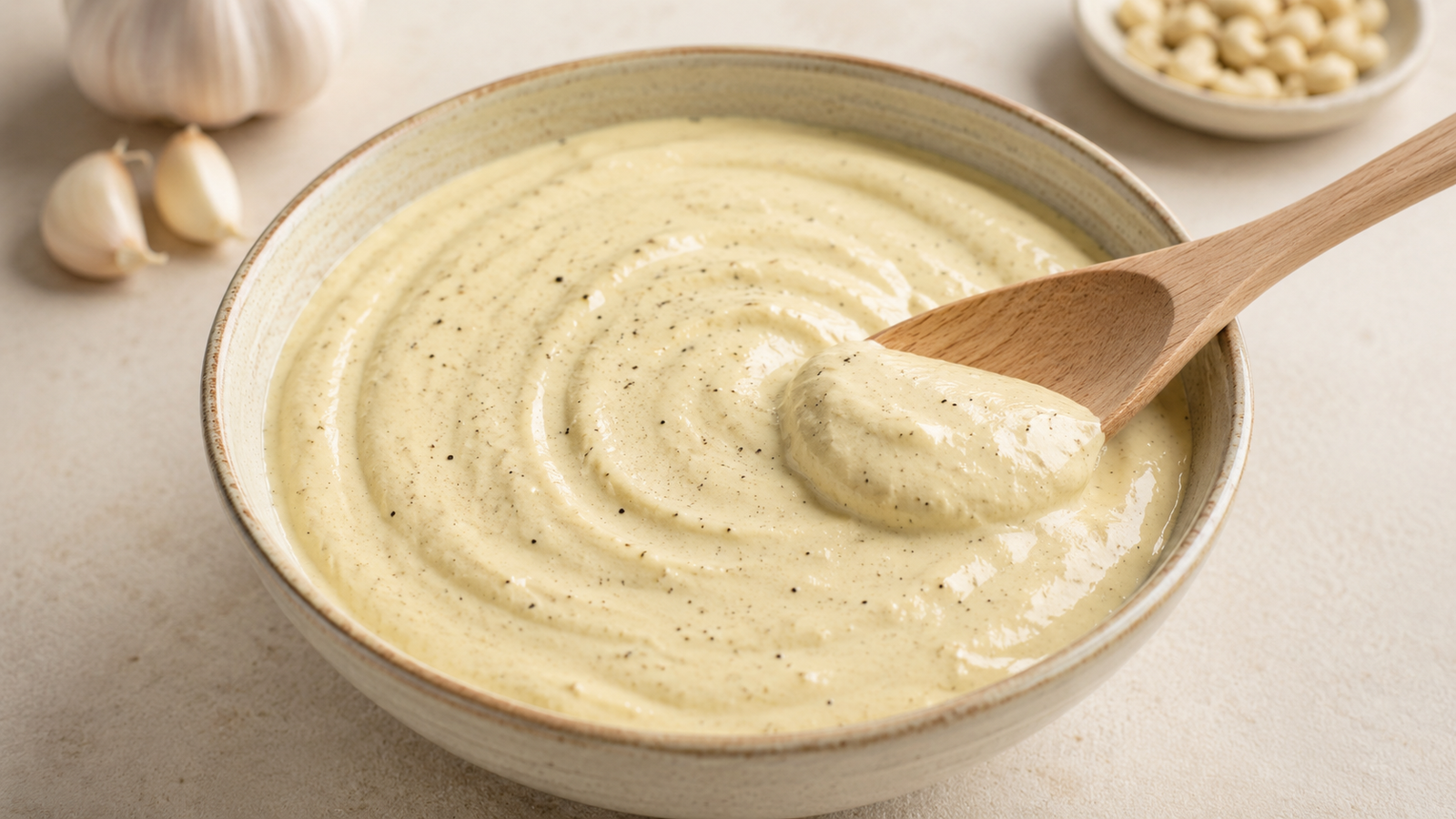
If you miss the rich, velvety comfort of a classic alfredo but want to skip the butter, cream and cheese, this vegan alfredo sauce is about to become your new go to recipe. It comes together in about 15 minutes, uses ingredients you can find at any grocery store, and delivers the same silky texture and savory flavor that made the original a favorite in the first place.
Whether you are fully plant based, cutting back on dairy, or just curious about trying something new, this sauce proves that vegan cooking does not mean sacrificing flavor. It is creamy, garlicky, a little tangy, and endlessly versatile.
What Makes This Vegan Alfredo Sauce So Creamy
The secret to a great vegan alfredo sauce is not a single magic ingredient. It is the combination of a creamy base, a savory flavor builder, and a bit of acidity to balance everything out.
Most home cooks reach for raw cashews, and for good reason. Once soaked and blended, cashews turn into a smooth, neutral cream that mimics the mouthfeel of heavy cream almost perfectly. Nutritional yeast then steps in to provide the cheesy, slightly nutty flavor that traditional alfredo gets from parmesan.
A touch of garlic, a splash of plant milk, and a little lemon juice or vinegar round out the sauce so it tastes bright instead of flat. The result is a sauce that clings to pasta the way the original does, without a drop of dairy.
Ingredients You Need
You only need a handful of pantry staples to make this recipe, and most of them are probably already in your kitchen.
The Cashew Base
Raw cashews are the foundation of this sauce. Soaking them softens their texture so they blend into a smooth, lump free cream rather than a gritty paste.
If you are short on time, a quick soak in boiling water for 10 to 15 minutes works just as well as soaking overnight in cold water. The goal is simply to soften the nuts enough for your blender to do the rest.
Building Cheesy Flavor Without Cheese
Nutritional yeast is the ingredient that gives this sauce its familiar cheesy edge. It has a savory, umami rich flavor that works beautifully in creamy pasta sauces, and it also happens to be a good source of B vitamins.
Garlic, sauteed briefly in olive oil, adds warmth and depth. A small amount of lemon juice or white wine vinegar cuts through the richness so the sauce does not taste one dimensional. Salt and black pepper tie everything together, and a pinch of onion powder or a sauteed onion can add even more complexity if you like.
Here is the full ingredient list for one batch, which makes enough sauce for about four servings of pasta:
- 1 cup raw cashews, soaked
- 1 cup unsweetened plant milk, such as oat or almond
- 3 cloves garlic
- 3 tablespoons nutritional yeast
- 1 tablespoon lemon juice
- 1 tablespoon olive oil
- Salt and black pepper to taste
- Optional: a pinch of nutmeg or dried herbs for extra warmth
How to Make Vegan Alfredo Sauce Step by Step
This recipe is genuinely simple, and you do not need any special equipment beyond a decent blender.
- Soak the cashews. Cover them with hot water and let them sit for 10 to 15 minutes, or soak in cold water for several hours if you are planning ahead.
- Saute the garlic. Warm the olive oil in a small pan over medium heat and cook the garlic for about a minute, just until fragrant. This mellows its sharpness and adds a rounder flavor to the finished sauce.
- Drain and blend. Drain the cashews, then add them to a blender along with the sauteed garlic, plant milk, nutritional yeast, lemon juice, salt and pepper.
- Blend until smooth. This usually takes one to two minutes in a high powered blender. Scrape down the sides as needed to make sure everything is fully incorporated.
- Adjust the consistency. If the sauce feels too thick, add a splash more plant milk. If it feels too thin, let it simmer gently in a pan for a few minutes to reduce.
- Warm and serve. Pour the sauce into a pan over low heat, toss with your favorite cooked pasta, and serve immediately.
That is the entire process. No roux, no constant whisking, and no risk of the sauce splitting the way dairy based versions sometimes do.
Nut Free and Allergy Friendly Alternatives
Not everyone can or wants to use cashews, and thankfully there are a few reliable substitutes that still produce a creamy result.
Sunflower seeds are one of the closest substitutes in terms of texture. Soak them the same way you would cashews and blend them with the same ratio of liquid.
Silken tofu is another excellent option. It blends into an ultra smooth, protein rich cream and works particularly well if you want a slightly lighter sauce.
For a completely nut free and legume free version, steamed cauliflower or potato can create a creamy base when blended with plant milk and nutritional yeast, though the flavor will be a touch milder and more vegetable forward than the cashew version.
If you prefer to skip blended bases entirely, a simple roux made from flour, vegan butter and plant milk, seasoned with nutritional yeast, is a classic alternative that many cooks already know from traditional white sauce recipes.
Vegan Alfredo Sauce vs Traditional Alfredo Sauce
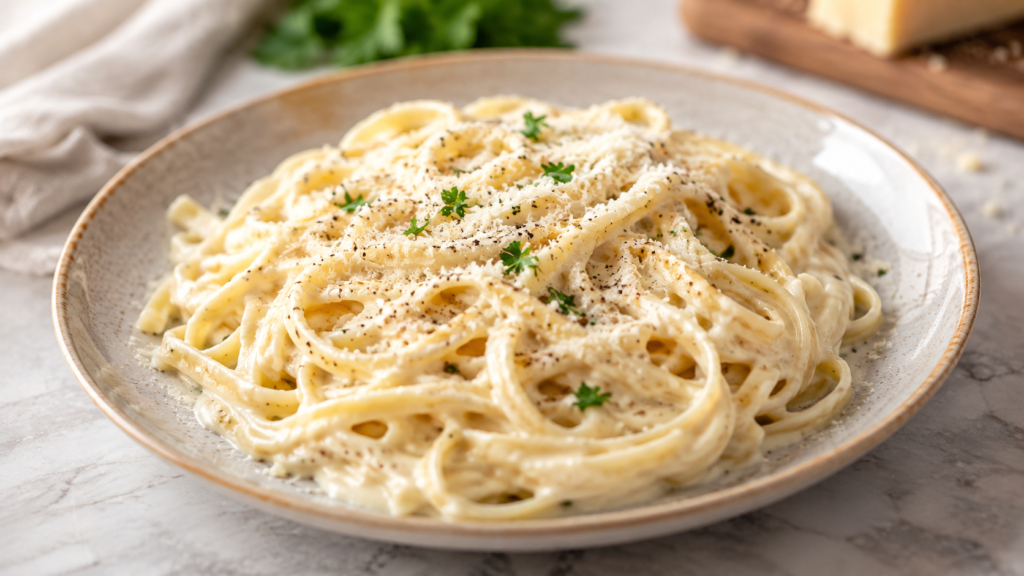
It helps to understand how this plant based version actually compares to the classic dish, both in taste and nutrition.
| Feature | Traditional Alfredo | Vegan Alfredo Sauce |
|---|---|---|
| Main base | Heavy cream, butter, parmesan | Cashews, plant milk, nutritional yeast |
| Texture | Very rich, thick | Creamy, smooth, slightly lighter |
| Approximate calories per serving | Higher, often 350 to 450 | Lower, typically 200 to 250 |
| Cholesterol | Present, often high | None |
| Protein source | Dairy | Cashews or optional tofu |
| Common allergens | Dairy | Tree nuts, unless substituted |
The vegan version generally comes in lower in saturated fat and calories, while still delivering a comparably rich texture. It will not taste identical to the dairy version, but most people find the flavor gap smaller than they expect, especially once nutritional yeast and garlic are in the mix.
Troubleshooting Common Problems
Even a simple sauce can go slightly wrong, so here are fixes for the issues that come up most often.
Sauce is too thick or paste like. This usually means the ratio of liquid to cashews was too low, or the blending time was too short. Add plant milk one tablespoon at a time until it loosens up.
Sauce tastes bland. Nutritional yeast and salt levels vary by brand, so taste as you go. A little extra lemon juice or a pinch of onion powder can also wake up the flavor.
Sauce separates when reheated. Reheat gently over low heat and stir constantly, or add a splash of plant milk or reserved pasta water to bring it back together. Avoid boiling it hard, since high heat can cause the fats to separate.
Sauce tastes gritty. This almost always comes down to under soaked cashews or a blender that is not powerful enough. Soaking longer, or straining the finished sauce through a fine mesh sieve, solves the problem.
Serving Ideas Beyond Pasta
While fettuccine is the classic pairing, this sauce is far more versatile than most recipes give it credit for.
Try spooning it over roasted vegetables like broccoli, cauliflower or asparagus for an easy weeknight side dish. It also works beautifully as a base for a creamy vegan pizza, drizzled over a baked potato, or stirred into rice for a simple comfort bowl.
For a heartier meal, add sauteed mushrooms, spinach, or plant based chicken to your pasta before tossing it with the sauce. A sprinkle of chili flakes or fresh parsley on top adds color and a bit of extra flavor.
Storing, Freezing and Reheating
This sauce keeps well, which makes it a great option for meal prep.
Store leftover sauce in an airtight container in the refrigerator for up to four or five days. It will thicken as it chills, so plan to loosen it with a splash of plant milk when reheating.
To freeze, portion the cooled sauce into freezer safe containers, leaving a little room for expansion. It will keep well for up to two months. Thaw it in the refrigerator overnight, then reheat gently on the stove, stirring often until smooth again.
Conclusion
This vegan alfredo sauce proves that plant based cooking does not have to be complicated or bland. With a handful of pantry ingredients, a blender, and about 15 minutes, you can make a sauce that is genuinely creamy, deeply flavorful, and satisfying enough to win over even committed dairy lovers.
Keep a few basics in mind: soak your cashews well, balance richness with a bit of acidity, and adjust the consistency to your liking. From there, the sauce is yours to build on, whether that means adding mushrooms, roasted garlic, or a favorite pasta shape.
Once you have made it once, you will likely find yourself reaching for this recipe again and again, not because it is a vegan substitute, but because it is simply a great sauce in its own right.
Frequently Asked Questions
Can I make vegan alfredo sauce without a high powered blender?
Yes, though the texture may be slightly less smooth. Soak the cashews a bit longer, closer to 30 minutes to an hour, to help compensate for a less powerful blender.
Is vegan alfredo sauce healthy?
It is generally lower in saturated fat and cholesterol than traditional alfredo, and cashews provide healthy fats, protein and minerals, though moderation still matters since it remains a rich sauce.
What can I use instead of nutritional yeast?
A store bought vegan parmesan works well, and a small amount of miso paste can also add savory depth if nutritional yeast is not available.
Can I make this sauce oil free?
Yes. Simply saute the garlic in a splash of water or vegetable broth instead of olive oil, and the sauce will still turn out creamy.
How do I make the sauce thicker for baked pasta dishes?
Reduce the amount of plant milk slightly, or simmer the finished sauce for a few extra minutes to let some of the liquid evaporate before mixing it into your dish.
