
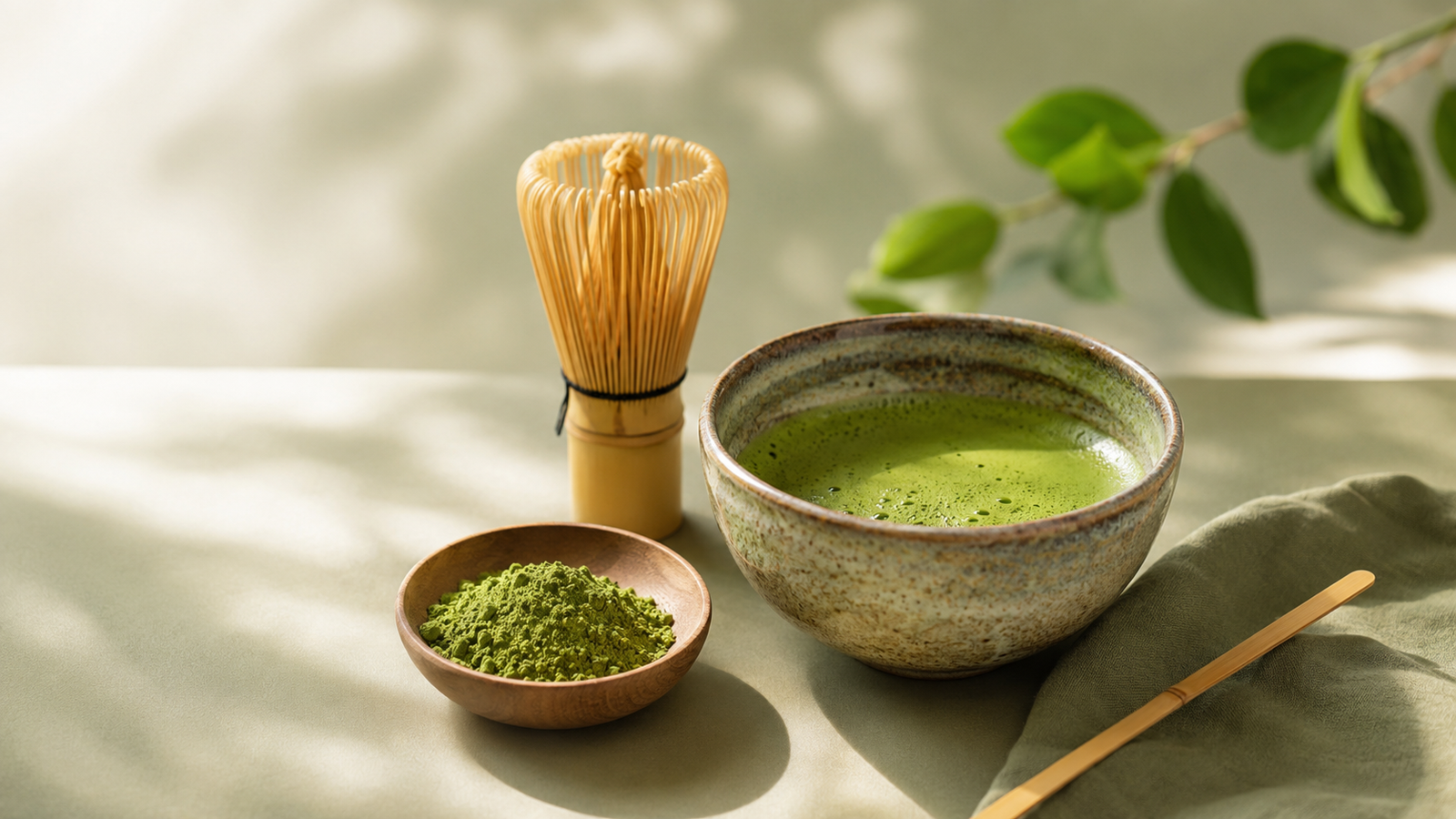
If you have ever sipped a bright green cup of matcha and wondered whether it will keep you buzzing all afternoon, you are not alone. The short answer is yes, matcha does have caffeine. But the full story is a lot more interesting than a simple yes or no.
Matcha’s caffeine content varies depending on the grade, how much powder you use, and how you prepare it. Unlike a cup of coffee where the caffeine hits fast and fades fast, matcha delivers its energy in a slower, steadier way. That difference is exactly why so many people are switching from their morning coffee to a bowl of whisked matcha.
In this guide, we will break down exactly how much caffeine is in matcha, how it compares to coffee and green tea, why it feels different in your body, and how you can adjust your cup to match your own caffeine tolerance. No fluff, just the numbers and practical tips you actually need.
Does Matcha Have Caffeine
Yes, matcha has caffeine, and it usually has more of it than a typical cup of steeped green tea. That surprises a lot of people who assume all green tea is more or less the same.
The reason comes down to how matcha is made. With regular green tea, you steep the leaves in hot water, then remove them. You are only drinking what dissolved into the liquid. With matcha, the entire tea leaf is stone ground into a fine powder, then whisked directly into your water or milk. You end up consuming the whole leaf, caffeine and all.
That single difference in preparation is the main reason matcha tends to pack a stronger punch than a standard bag of green tea, even though both come from the same Camellia sinensis plant.
How Much Caffeine Is Actually in Matcha
Caffeine content in matcha is usually measured per gram of powder, since serving sizes can vary quite a bit from one person’s cup to another.
On average, matcha contains somewhere between 19 and 44 milligrams of caffeine per gram of powder, though some ceremonial grade matcha can run a bit higher. A typical serving uses between 1 and 2 grams of powder, which is roughly half a teaspoon to a full teaspoon.
Here is how that translates into an actual cup:
- A light serving with 1 gram of powder: around 20 to 44 mg of caffeine
- A standard serving with 2 grams of powder: around 40 to 70 mg of caffeine
- A strong or ceremonial style serving with 3 to 4 grams of powder: around 60 to 176 mg of caffeine
For context, that puts a normal cup of matcha somewhere between a cup of black tea and a cup of drip coffee, though a very strong preparation can rival or exceed a shot of espresso.
Matcha Caffeine vs Coffee
This is probably the comparison most people care about, especially if you are thinking about swapping your morning coffee for matcha.
A standard 8 ounce cup of brewed coffee contains roughly 95 to 120 mg of caffeine. A typical 2 gram serving of matcha lands closer to 60 to 70 mg, which makes it noticeably gentler than coffee in most everyday preparations.
That said, the range for matcha is wide. A heavily concentrated, ceremonial grade bowl made with 4 grams of powder can actually contain as much or more caffeine than a cup of coffee. So the honest answer is that matcha can be lower or comparable to coffee, depending entirely on how it is made.
What tends to matter more than the raw number is how the caffeine is experienced. Coffee often delivers a fast, noticeable jolt followed by a dip a few hours later. Matcha tends to spread that same energy out over a longer stretch of time, which many people find easier on their nervous system.
Matcha Caffeine vs Regular Green Tea
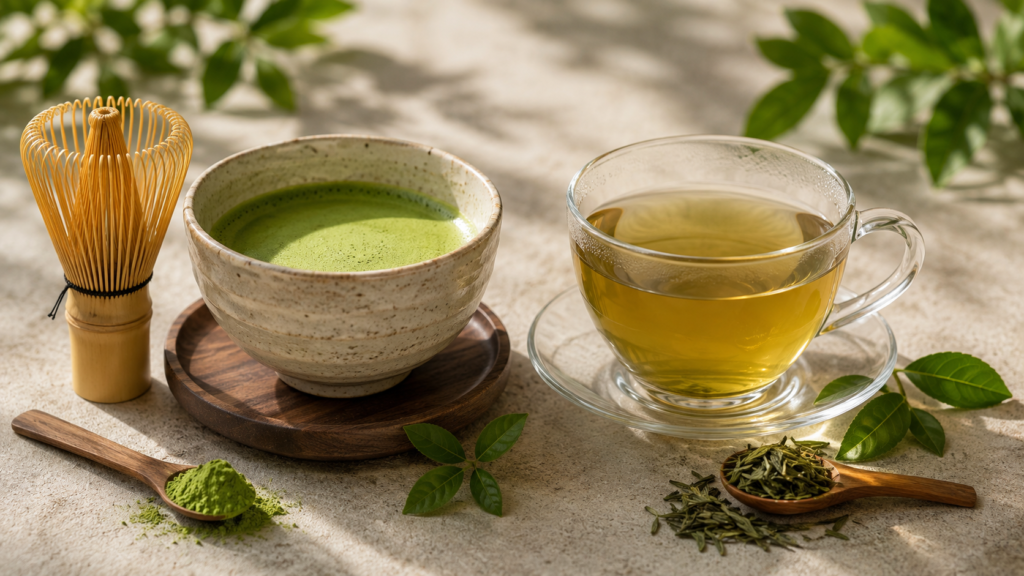
If you already drink green tea and are considering matcha as an upgrade, the caffeine difference is worth knowing.
A standard cup of brewed green tea typically contains around 20 to 45 mg of caffeine per 8 ounce serving. Matcha, prepared the traditional way, generally lands in the 40 to 70 mg range for a similar serving size, sometimes higher.
Again, this comes back to the whole leaf factor. Steeped green tea only transfers a portion of its caffeine into the water before you discard the leaves. Matcha holds onto everything because you are drinking the ground leaf itself.
If your goal is a gentle caffeine boost, a light cup of regular green tea might suit you better. If you want more sustained energy without jumping all the way to coffee, matcha sits nicely in that middle ground.
Why Matcha Caffeine Feels Different: The L Theanine Effect
Here is where matcha genuinely stands apart from coffee, and it has nothing to do with the caffeine amount itself.
Matcha naturally contains an amino acid called L theanine, and it contains a lot more of it than most other teas. L theanine is known for promoting a calm, focused mental state without making you drowsy.
When caffeine and L theanine are consumed together, they seem to balance each other out. The caffeine provides alertness, while the L theanine smooths out the sharp edges, reducing the jitteriness, racing heart, or anxious feeling that coffee sometimes causes.
This combination is often described as calm energy or a clean focus. Many people who feel wired and then crash after coffee report that matcha gives them a steadier, more even feeling that lasts for several hours instead of spiking and dropping.
What Affects Matcha’s Caffeine Content
Not all matcha is created equal, and several factors can push the caffeine level up or down in your cup.
Grade of the Matcha
Ceremonial grade matcha is made from younger, more tender leaves harvested early in the season, and it generally contains more caffeine than culinary grade matcha, which comes from slightly older leaves used mainly for cooking and baking.
Shading Period
Matcha plants are shaded from direct sunlight for several weeks before harvest. Longer shading periods tend to increase both caffeine and amino acid content, which is part of why premium matcha often tastes smoother and hits a bit stronger.
Amount of Powder Used
This is the simplest variable to control at home. Using more powder per cup directly increases caffeine, while using less powder lowers it. Small adjustments here make a noticeable difference.
Water Temperature and Whisking Time
Hotter water and longer whisking can extract slightly more caffeine from the powder, though this effect is smaller than the impact of grade or powder amount.
How to Control the Caffeine in Your Cup
If you love matcha but want to manage how much caffeine you are consuming, you have more control than you might think.
- Use less powder. Dropping from 2 grams to 1 gram can cut your caffeine intake nearly in half.
- Choose culinary grade over ceremonial grade for a gentler everyday cup.
- Dilute your matcha with extra water or milk to stretch the same amount of powder over a larger, less concentrated drink.
- Split your serving into two smaller cups throughout the day instead of one strong bowl.
- Pair it with food, since eating alongside caffeine can slow absorption and soften the intensity of the effect.
These small tweaks let you enjoy the flavor and benefits of matcha while staying within a caffeine range that feels comfortable for your body.
Is Matcha Safe If You Are Sensitive to Caffeine
If you know you are sensitive to caffeine, matcha is not automatically off the table, but it does deserve some caution.
Most health guidelines suggest adults keep total daily caffeine intake under 400 mg, though people who are sensitive, pregnant, or managing certain health conditions are usually advised to stay well below that. Since a strong cup of matcha can reach 100 mg or more, it is worth tracking your intake if you are watching your caffeine closely.
If you are pregnant, breastfeeding, or have a heart condition, it is best to talk with your doctor about a safe caffeine limit before making matcha a regular habit. The general advice for tea and coffee applies here too, since matcha’s caffeine behaves the same way in your body regardless of the source.
For most healthy adults, a cup or two of matcha per day fits comfortably within normal caffeine guidelines, especially compared to the caffeine load of multiple cups of coffee.
Best Time of Day to Drink Matcha

Because matcha releases its energy more gradually than coffee, timing it well can help you get the most out of it.
Morning or early afternoon tends to work best for most people, giving the calm, sustained focus time to support you through work or study without interfering with sleep later on. Since the effects can last several hours, drinking matcha late in the afternoon or evening may still affect your ability to fall asleep, especially if you are sensitive to caffeine.
A useful rule of thumb is to treat matcha the same way you would treat a moderate cup of coffee. If you would normally avoid coffee after 2 or 3 in the afternoon, the same guideline is a smart starting point for matcha.
Final Thoughts
So, does matcha have caffeine? Absolutely, but the amount is flexible and largely in your hands. A typical cup lands somewhere between green tea and coffee, offering a steadier, calmer form of energy thanks to its natural L theanine content.
Whether you are trying to cut back on coffee, looking for a gentler source of focus, or simply curious about what is in your cup, understanding matcha’s caffeine content helps you enjoy it on your own terms. Adjust the powder amount, choose the right grade, and pay attention to timing, and you can shape matcha into exactly the kind of energy boost that works best for you.
Frequently Asked Questions
Does matcha have more caffeine than coffee?
Usually not. A standard cup of matcha contains less caffeine than a standard cup of coffee, though a strong, concentrated serving of ceremonial grade matcha can come close to or match coffee’s caffeine level.
How much caffeine is in one cup of matcha?
A typical cup made with 1 to 2 grams of powder contains roughly 40 to 70 mg of caffeine, though this can range from about 20 mg to over 170 mg depending on the amount of powder used.
Why doesn’t matcha make me jittery like coffee does?
Matcha contains L theanine, an amino acid that promotes calm focus and helps balance out caffeine’s stimulating effects, which is why many people feel steadier energy without the jittery spike.
Is decaf matcha available for people who want to avoid caffeine?
Yes, some brands offer decaffeinated matcha, though it is less common and the decaffeination process can slightly alter the flavor and antioxidant content compared to regular matcha.
Can I drink matcha every day?
For most healthy adults, one to two cups of matcha per day is generally considered safe and fits well within standard daily caffeine guidelines, though anyone with health concerns should check with a doctor first.
