
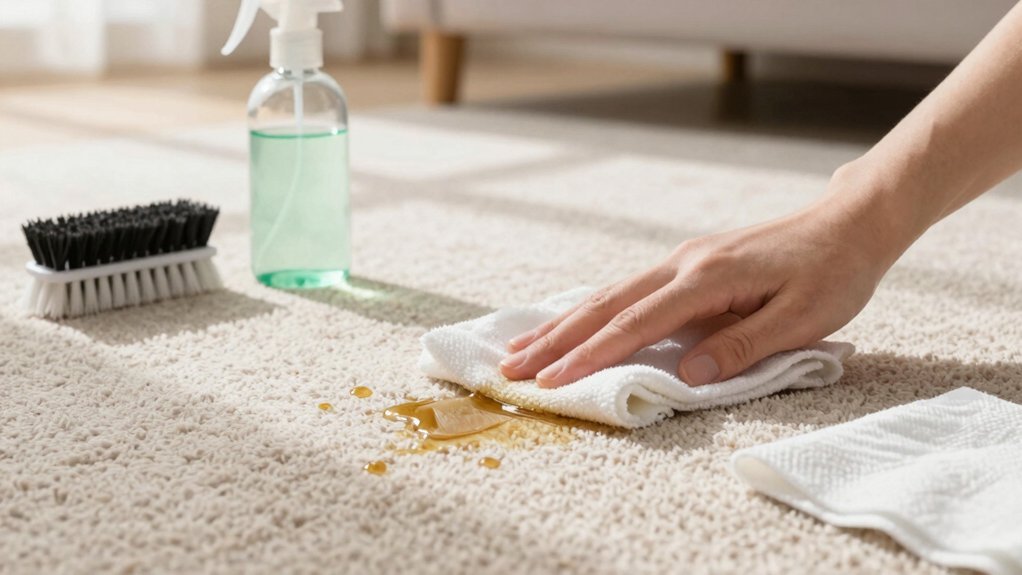
Discovering a dried dog urine stain on the carpet is one of those moments every dog owner dreads. The accident happened days or weeks ago, the mark has set into the fibres, and there is that unmistakable smell every time the room warms up. The good news is that you can still fix it.
Most dried dog urine stains can be removed, even ones that have been sitting there for weeks. Whether you found the spot behind the sofa or inherited it when you moved into a new flat, this guide walks you through how to get dried dog urine out of carpet properly, without damaging the fibres or leaving the smell behind.
In this guide you will find:
- The supplies that make the job much easier
- First response steps when you find the stain
- How to get dried dog urine out of carpet step by step
- How to remove lingering dog urine smell for good
- Two homemade stain remover recipes that work
- Enzyme cleaners vs homemade solutions, compared honestly
- How to clean vomit and solid messes
- Mistakes that make dog urine stains worse
- How to stop it happening again
- When it is time to call a professional
Gather Your Supplies Before You Start
Cleaning a dried urine stain goes far more smoothly when everything is within reach before you begin. You do not need expensive equipment. Most of what works best is probably already in your kitchen cupboard.
- Clean white cloths or a stack of paper towels
- White vinegar
- Baking soda
- Washing up liquid
- Hydrogen peroxide, 3 percent solution
- A spray bottle
- A soft bristled brush or old toothbrush
- A vacuum cleaner
- Rubber gloves
- An enzyme based pet stain cleaner, optional but very useful
Use white cloths rather than coloured towels. Dyes from coloured fabrics can transfer into damp carpet and leave you with a second stain to deal with. Paper towels work well for the first round of blotting because you can simply throw them away.
First Response: Blot and Prep the Area
Start with these steps the moment you discover the stain, especially if the area is still damp. Speed matters here. The longer urine sits in carpet fibres, the harder it becomes to shift. If you catch it early and follow these steps, many stains will disappear completely.
- Step 1: Remove any solids first. Use paper towels or a dustpan to lift away solid material. For vomit, a blunt knife or dustpan edge works well. Try not to press solids deeper into the pile as you lift.
- Step 2: Blot, never rub. Press clean white cloths or thick layers of paper towels firmly onto the wet area. Stand on the towels if you need extra pressure. Rubbing spreads the stain wider and damages carpet fibres, while blotting pulls moisture upward and out.
- Step 3: Rinse with cool water. Lightly dampen the area with cool water from a spray bottle, then blot again. This dilutes what is left in the fibres. Use cool water only, because heat can set protein based stains permanently.
- Step 4: Apply your cleaning solution. Use one of the homemade recipes below or a shop bought enzyme cleaner. Work it gently into the fibres with a soft brush, covering the full stained area and slightly beyond it.
- Step 5: Let it dwell. Give the solution time to work, usually 10 to 30 minutes depending on the product. Enzyme cleaners in particular need this waiting time to break down the organic matter in the stain.
- Step 6: Blot and rinse again. Blot up the cleaning solution with fresh cloths, then rinse lightly with cool water and blot once more. Leaving cleaning residue in the carpet attracts dirt later, so this rinse matters.
- Step 7: Dry the area thoroughly. Lay dry towels over the spot, weigh them down with something heavy, and leave them for several hours or overnight. Damp carpet invites mildew and encourages dogs to return to the same spot.
Check the area in daylight once it is fully dry. Carpet often looks clean while damp and reveals a faint shadow as it dries. If you can still see the mark, simply repeat the process before deciding you need a stronger approach.
How to Get Dried Dog Urine Out of Carpet Step by Step
Dried dog urine stains are the ones you discover behind the sofa or inherit when moving into a new flat. They are tougher because the urine has bonded with the fibres and the odour has settled deep into the carpet and sometimes the underlay. They are still very often removable with patience, and this is the method that works.
Start by vacuuming the area thoroughly to lift loose debris from the pile. Then rehydrate the stain, because dried matter responds far better to cleaning once it is damp again. Spray the area generously with cool water and let it soak for 10 minutes. Blot away the surface moisture with towels.
Next, apply a solution of one part white vinegar to three parts cool water, working it into the fibres with a soft brush. Leave it for around 30 minutes, then blot dry. Now sprinkle a generous layer of baking soda over the whole damp area. Leave it for several hours, or overnight if you can. The baking soda draws out remaining moisture and helps neutralise odours as it sits.
Vacuum up the dried baking soda slowly, making several passes. Inspect the area. For many dried urine stains this is enough. If a shadow or smell remains, move on to an enzyme cleaner, which is specifically designed to digest the proteins in old urine and is usually the most effective option for stains that have truly set.
One important warning for dried stains: do not be tempted to use a steam cleaner or hot water. Heat bonds protein stains to carpet fibres permanently. Cool water and time will always serve you better.
How to Get Dog Urine Smell Out of Carpet for Good
Removing the visible mark is only half the battle when learning how to get dried dog urine out of carpet. The smell comes from uric acid crystals and bacteria left behind in the fibres, and ordinary soap does not dissolve them. That is why a carpet can look clean yet still smell on a warm day, and why dogs keep returning to the same spot.
Enzyme cleaners are the gold standard here. They contain live enzymes that digest the uric acid crystals rather than masking them. Apply enough product to soak as deeply as the urine went, which often means right through to the underlay for serious accidents. Cover the area with a damp towel to keep it moist, because enzymes stop working once they dry out, and leave it for the full time stated on the label.
Baking soda is your best supporting act. After the enzyme treatment and a good rinse, sprinkle baking soda over the area while it is still slightly damp, leave it for a few hours, then vacuum. It absorbs residual moisture and odours remarkably well for something so cheap.
If you are struggling to find every old spot, try a handheld UV torch in a darkened room. Dried urine glows under ultraviolet light, which lets you treat the exact areas instead of guessing. And until each treated area is completely dry, keep your dog away from it. A baby gate or an upturned laundry basket works fine as a temporary barrier.
Two Homemade Dog Urine Stain Removers That Actually Work
You do not need to spend a fortune to remove dried dog urine. These two recipes use inexpensive ingredients and handle the majority of everyday accidents. As with any cleaner, test each one first on a hidden patch of carpet, such as inside a wardrobe or behind furniture, and wait until it dries to check for colour changes.
Recipe 1: White Vinegar and Baking Soda
This is the classic combination for a reason. The vinegar helps neutralise the ammonia in urine and loosens the stain, while the baking soda lifts residue and absorbs odours. It suits urine stains and light marks on most synthetic carpets.
- Mix equal parts white vinegar and cool water in a spray bottle
- Spray the stained area until damp, not soaked
- Sprinkle baking soda generously over the damp patch
- Leave for 15 to 30 minutes, then blot and vacuum once dry
Recipe 2: Hydrogen Peroxide and Washing Up Liquid
This stronger mixture is better for stubborn or discoloured stains on light coloured carpets. Hydrogen peroxide is a mild oxidiser that breaks down organic stains effectively, but it can lighten darker carpet dyes, so the patch test is essential here.
- Mix half a cup of 3 percent hydrogen peroxide with one teaspoon of washing up liquid
- Sprinkle baking soda over the stain first
- Pour the liquid over the baking soda and work in gently with a soft brush
- Leave for 10 minutes, blot thoroughly, rinse with cool water and blot dry
Keep dogs and children away from the area while hydrogen peroxide is working, and rinse well afterwards. Never mix hydrogen peroxide with vinegar in the same bottle, as the combination can irritate skin and damage some carpet fibres.
Enzyme Cleaners vs Homemade Solutions: Which Should You Choose?
Both approaches have their place, and honest comparison helps you pick the right one for each situation. Homemade solutions are cheap, fast to mix, and perfectly adequate for fresh, light stains. If your housetrained dog has one rare accident on the rug, vinegar and baking soda will almost certainly sort it.
Enzyme cleaners earn their price on the harder jobs. Dried urine stains, repeated accidents in the same place, strong lingering smells, and stains that have soaked into the underlay all respond far better to enzymes than to anything homemade. They work by digesting the actual source of the stain and smell rather than just lifting the surface mark.
A sensible household strategy is to keep both to hand. Use the homemade recipes for quick responses to fresh messes, and keep a bottle of enzyme cleaner for the stubborn cases. When buying one, look for a product specifically labelled for pet urine rather than a general carpet shampoo, and check that it is safe for your carpet type.
How to Clean Vomit, Faeces and Other Messes
Urine gets most of the attention, but vomit is arguably trickier. It is acidic, which means it can discolour carpet quickly, and it often contains food dyes. Speed is everything. Scrape up solids with a dustpan, blot the moisture, then use the vinegar solution or the hydrogen peroxide recipe above. The acidity of vomit responds particularly well to the baking soda stage, so do not skip it.
For solid messes, remove everything you can with paper towels first, then treat the remaining mark exactly like a fresh urine stain. The same blotting, rinsing and cleaning sequence applies.
If your dog is bringing up yellow foam or bile on a regular basis, the carpet is only a symptom. It is worth reading our guide on why dogs throw up yellow so you understand when it is a simple empty stomach and when it is a sign your vet should take a look.
7 Mistakes That Make Dog Urine Stains Worse
Even well meaning cleaning efforts can backfire. These are the errors that turn a removable stain into a permanent one.
- Using hot water or a steam cleaner, which sets protein stains permanently into the fibres
- Rubbing instead of blotting, which spreads the stain and roughs up the carpet pile
- Reaching for ammonia based cleaners, which smell like urine to dogs and invite repeat accidents
- Using coloured cloths or printed paper towels, which can transfer dye into damp carpet
- Soaking the carpet, which pushes the mess deeper and risks mildew in the underlay
- Skipping the final rinse, which leaves sticky residue that attracts new dirt
- Letting your dog walk on the damp area, which can re soil the spot and expose paws to cleaning chemicals
How to Stop Stains Happening Again
Cleaning is much easier when it is rare. A few practical changes around the home can dramatically cut down the number of accidents you deal with each month.
For puppies or newly adopted dogs, go back to basics with a consistent toilet routine. Regular trips outside, praise for going in the right place, and watching for sniffing and circling indoors will house train most dogs faster than any gadget.
Protect the highest risk zones. Washable runners in hallways and by the back door catch most muddy paw prints before they reach the carpet. A waterproof washable mat under food and water bowls handles the daily splashes. In busy entryways, wipeable wall finishes help too. Painted shiplap paneling, for example, wipes clean in seconds when muddy paws brush against the walls, which keeps the whole entrance looking fresh with very little effort.
Finally, clean accidents with an enzyme cleaner even when the stain looks minor. Any trace of urine smell left in the carpet acts as a signpost telling your dog this is an acceptable toilet spot. Removing the smell completely is genuine prevention.
When to Call a Professional Carpet Cleaner
DIY methods handle the vast majority of dog urine stains, but some situations call for professional equipment. Consider calling in an expert if the stain covers a large area, if smells keep returning after thorough treatment, or if the problem has reached the underlay or floorboards beneath.
Delicate carpets deserve professional care too. Wool, silk blends and some natural fibres react badly to DIY chemicals and excess water, so check your carpet care label before treating them yourself. A reputable cleaner will also be worth the money before an end of tenancy inspection or when preparing a home for sale, since their extraction machines clean far deeper than anything available for home use.
When choosing a cleaner, ask specifically about dog urine stain and odour treatment, and confirm they use pet safe products. A good professional will also tell you honestly when a stain is beyond saving, which is useful information before you spend money.
The Bottom Line
Learning how to get dried dog urine out of carpet comes down to a handful of principles that never change. Rehydrate the stain, blot instead of rubbing, and always use cool water. Choose a homemade vinegar solution for light marks and an enzyme cleaner for set in stains and lingering smells. Dry the area fully, keep your dog away until it is dry, and take sensible steps to prevent repeats.
Dogs and carpets can absolutely coexist. With the right approach, even a stain that has been sitting for weeks becomes a manageable job rather than a permanent reminder, and your home stays fresh for everyone in it.
Frequently Asked Questions
Can you really get dried dog urine out of carpet?
In most cases, yes. Rehydrate the stain with cool water, treat it with a vinegar solution, follow with baking soda left overnight, and finish with an enzyme cleaner for anything stubborn. Very old stains that have been heat set or left for years may leave a faint shadow, but the smell can almost always be removed.
Does white vinegar remove dried dog urine smell from carpet?
White vinegar helps a great deal because it neutralises ammonia and discourages bacteria. For deep or set in urine smells, follow the vinegar treatment with an enzyme cleaner, which digests the uric acid crystals that cause lingering odour.
Is baking soda safe to use on all carpets?
Baking soda is safe for the vast majority of carpets, including wool, as long as you vacuum it up completely. Use a brush attachment and several slow passes, because residue left in the pile can feel gritty underfoot.
Will hydrogen peroxide bleach my carpet?
It can lighten some darker dyes, which is why a patch test on a hidden area is essential. On light coloured synthetic carpets it is generally safe at 3 percent strength. If your carpet is dark, wool, or of unknown fibre, stick to vinegar and enzyme cleaners instead.
Why does my dog keep soiling the same spot?
Dogs return to spots that still smell like a toilet to them, even when humans can no longer detect it. Clean the area with an enzyme cleaner to remove the odour completely, keep your dog away until it is fully dry, and consider placing a washable rug or their bed over the spot while you retrain the habit.
