
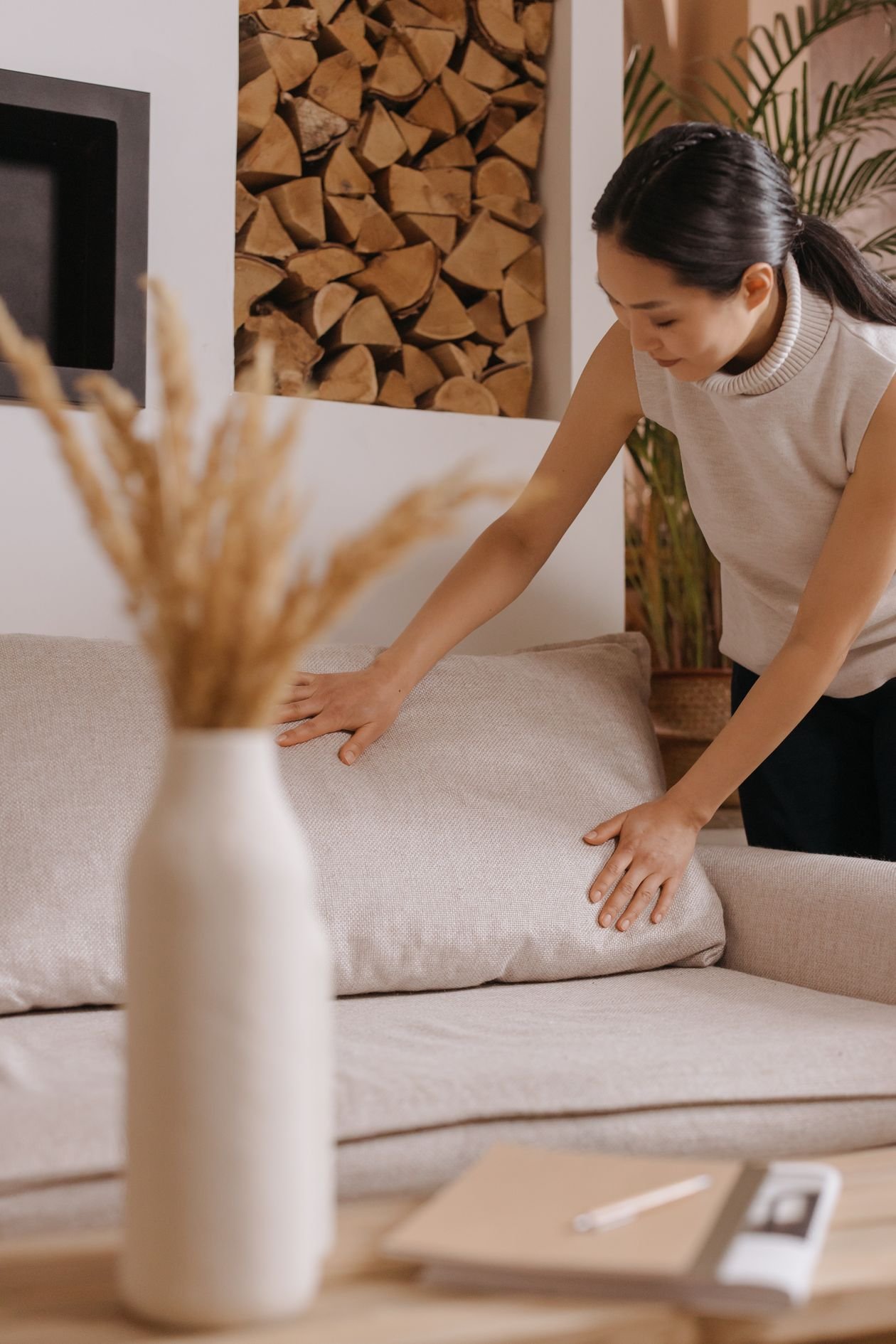
Learning how to clean a fabric sofa without a machine is one of the most useful home skills you can pick up. A rented carpet cleaner costs money, takes up half your weekend, and soaks your cushions so deeply that they can stay damp for days. The good news is that a careful hand cleaning method gets most sofas just as fresh, using supplies you probably already have under the sink.
This guide walks you through a proven seven step process that works on nearly every fabric sofa, from microfiber and cotton blends to linen style upholstery. You will learn how to read your sofa cleaning code, remove dust the right way, lift stains without spreading them, and leave the whole couch smelling fresh. Set aside about an hour and your sofa will look and feel noticeably better by tonight.
Why Cleaning a Fabric Sofa Without a Machine Works So Well
Most of what makes a sofa look dirty is not deep grime at all. It is a layer of body oil, dust, crumbs, and pet hair sitting on the surface fibers. A machine forces water deep into the padding to flush that layer out, but water is also what causes rings, shrinkage, and that musty damp smell that lingers after a rental clean.
Hand cleaning works with the fabric instead of against it. You lift the dry soil first, treat only the spots that need it, and use so little moisture that the sofa dries in a few hours. You also stay in control the whole time, which matters because every fabric reacts differently. A method that is gentle on a cotton blend could spot a delicate weave, and your hands can feel problems a machine never notices.
What You Will Need
Gather everything before you start so you are not dripping water across the kitchen mid clean. You need a vacuum with an upholstery attachment, a soft brush or clean dry paintbrush, a few white or light colored microfiber cloths, a spray bottle, clear dish soap, white vinegar, baking soda, and a bowl of warm water. Colored towels can bleed dye onto damp fabric, so stick with white cloths for every step that involves moisture.
Step 1: Read the Cleaning Code Before You Touch Anything
Flip over a cushion or check under the sofa for the care tag. Manufacturers print a single letter code that tells you which cleaners are safe. W means water based cleaners are fine. S means solvent based cleaners only, so keep water away. WS means either type works. X means vacuum only, and you should stop here and skip every wet step in this guide.
If the tag is missing or unreadable, play it safe. Test every liquid in a hidden spot first, such as the back of a cushion or the fabric under the sofa skirt. Dab a little of your cleaning mix on, wait ten minutes, then blot dry and look for color change or stiffness. No change means you can proceed with confidence.
Step 2: Vacuum Every Surface Thoroughly
Remove all the cushions and vacuum every surface, including the base under the cushions where crumbs and coins collect. Use the upholstery attachment for the broad areas and the crevice tool for seams, piping, and the gaps along the arms. Go slowly and overlap your passes, because a quick once over leaves most of the dust behind.
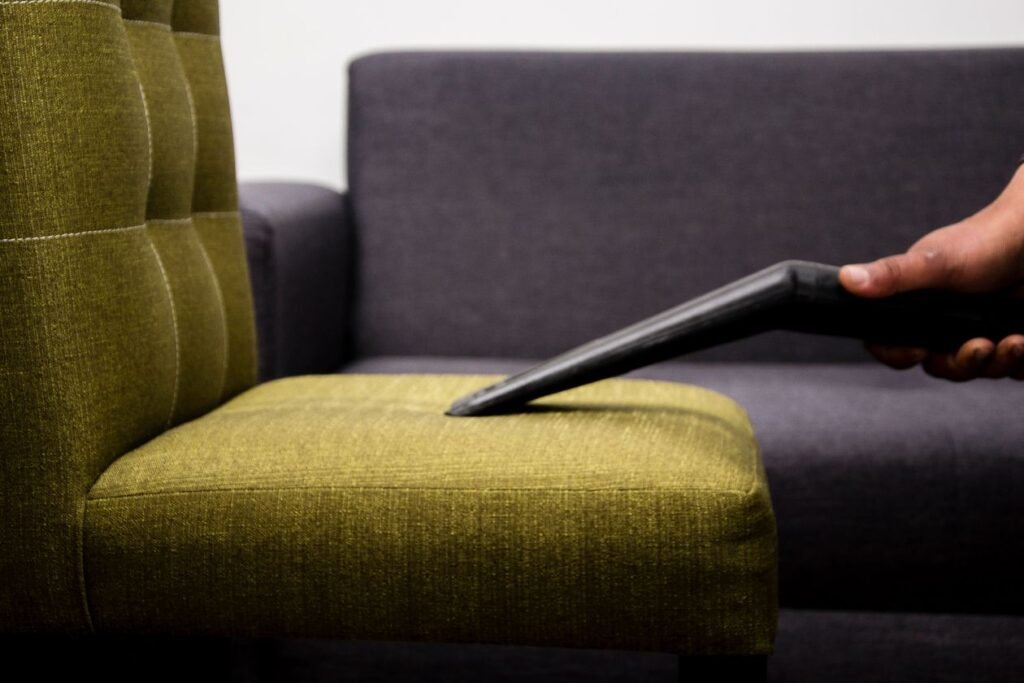
Vacuum both sides of every loose cushion, the back of the sofa, and the skirt or legs area near the floor. If you share your home with a pet, this step alone can transform the sofa, since removing pet hair from your couch regularly keeps the fibers from matting down. Finish by vacuuming the floor around the sofa so dust does not drift straight back onto your clean work.
Step 3: Brush and Beat Out the Dust
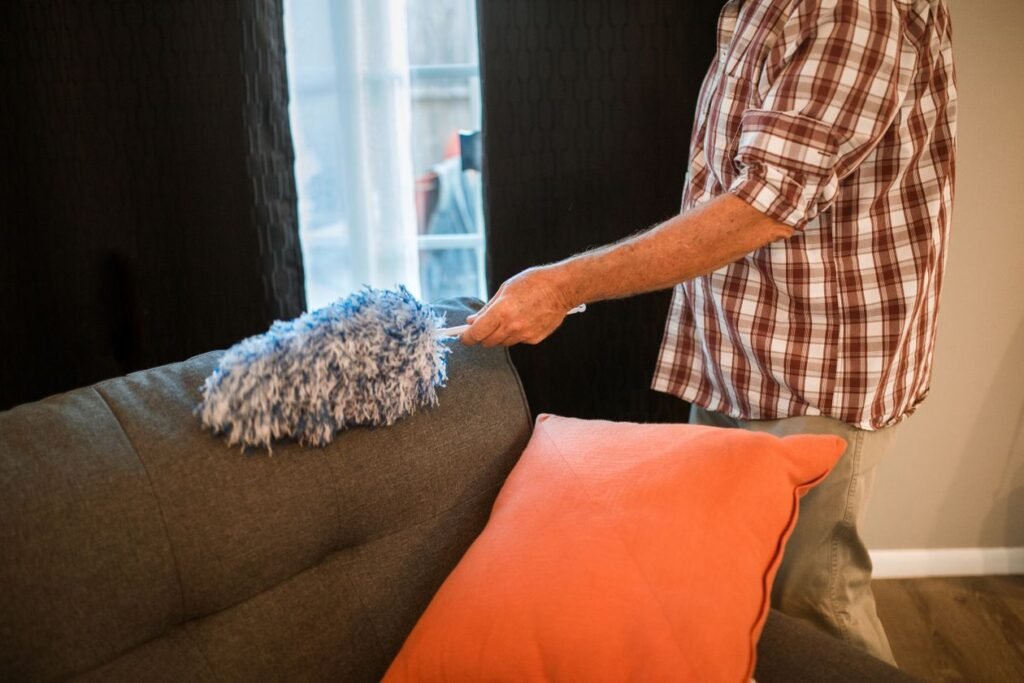
Even after vacuuming, fine dust clings to fabric fibers with static and body oil. Take a soft brush, an old clean paintbrush, or even a dry microfiber cloth and brush every panel firmly in one direction. You will be surprised how much gray dust this loosens. Follow with the vacuum once more to pick up everything you released.
For odors that have settled into the fabric, this is also the right moment for the baking soda pre treatment. Sprinkle a generous layer of baking soda over the entire sofa, cushions included, and let it sit for at least 20 minutes. Baking soda absorbs odors instead of masking them, which is why it beats scented sprays every time. Vacuum it all up thoroughly before moving on.
Step 4: Spot Clean Stains by Hand
Mix your cleaning solution in the spray bottle: one cup of warm water, one teaspoon of clear dish soap, and one tablespoon of white vinegar. Spray it onto your cloth, not directly onto the sofa. You want the cloth damp, never dripping, because excess liquid is what creates water rings on fabric.
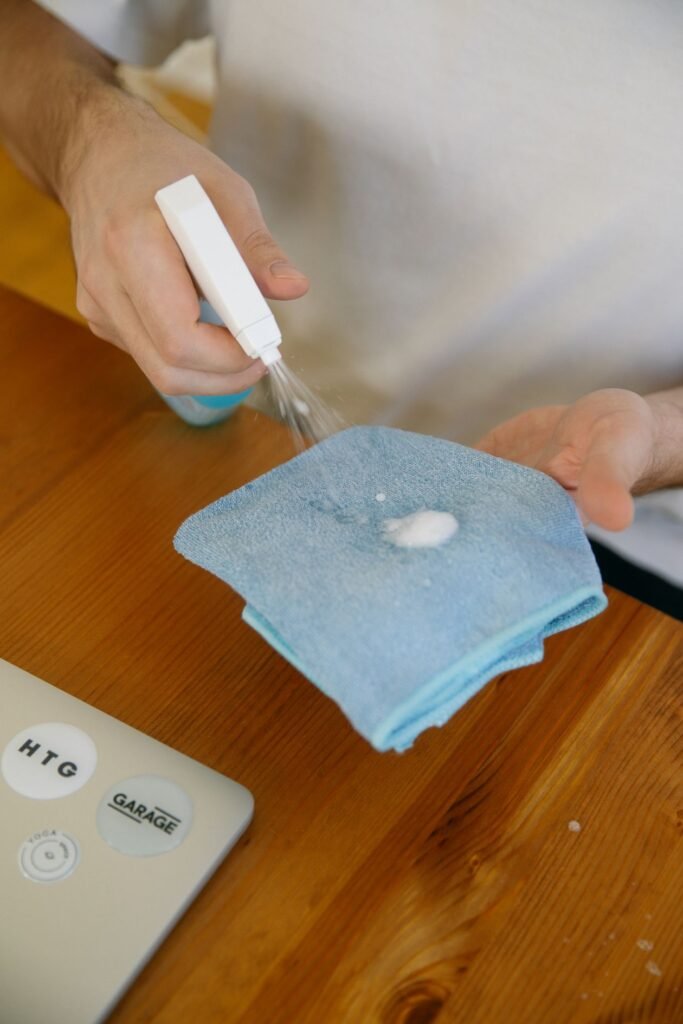
Blot the stain from the outside edge toward the center, which stops the stain from spreading outward as you work. Never rub, because rubbing pushes the stain deeper and roughs up the fabric pile. Rinse the cloth, fold to a clean section, and repeat until the stain lifts. For stubborn spots, let the solution sit on the cloth covered stain for five minutes before blotting again. When the stain is gone, press a dry cloth firmly over the area to absorb as much moisture as possible.
Step 5: Wipe Down the Whole Sofa for an Even Clean
Spot cleaning leaves clean patches that can stand out against the rest of the sofa. To avoid that patchy look, give the entire sofa a light once over with the same method. Dampen a fresh microfiber cloth with plain warm water, wring it out until it is barely moist, and wipe every cushion and panel in long even strokes.
Follow immediately with a dry towel, pressing firmly to pull the moisture back out. Work one section at a time rather than dampening the whole sofa at once. This keeps the total moisture low and dries evenly, which is the secret to avoiding water marks on fabric upholstery.
Step 6: Treat Lingering Odors the Natural Way
If your sofa still smells a little tired after cleaning, odors have likely settled into the foam beneath the fabric. Sprinkle baking soda over the cushions again and leave it for several hours or even overnight if you can. The longer contact time lets it pull odors out of the deeper layers.
For a light fresh scent without artificial sprays, add a few drops of essential oil such as lavender or lemon to the baking soda before you sprinkle it. Use a light hand, because strong fragrance on a sofa you sit on every day gets old fast. Vacuum everything up the next morning and the difference is usually dramatic.
Step 7: Let It Dry Fully and Fluff the Cushions
Point a fan at the sofa or open nearby windows to keep air moving across the fabric. Most sofas cleaned this way dry in two to four hours, much faster than after a machine clean. Do not sit on the sofa or replace the throw pillows until it feels completely dry to the touch, because body weight presses damp fibers flat and can leave shiny patches.
Once dry, beat the cushions firmly on all sides and rotate them to even out the wear. Fluffing restores the loft that vacuuming and wiping compress. Step back and look at your work: the fabric color usually looks richer and the whole sofa feels fresher, all without a single machine.
Mistakes That Ruin Fabric Sofas
The most common mistake is using too much water. Soaked fabric can shrink, bleed color, and grow mildew inside the cushions where you cannot see it. The second mistake is skipping the spot test. Even gentle cleaners can darken some fabrics, and you only get one chance to find out. The third mistake is rubbing stains instead of blotting, which grinds the stain into the fibers permanently.
Also avoid harsh shortcuts. Bleach and all purpose sprays with strong solvents can strip color from upholstery in seconds. Steam mops and garment steamers seem gentle but drive moisture deep into foam that takes days to dry. If your sofa tag says S for solvent only, respect it and keep every step in this guide dry.
How Often to Clean a Fabric Sofa
Vacuum your sofa every week and spot clean spills the day they happen. A full hand clean like the one in this guide is worth doing every three to six months, depending on your household. Homes with kids, pets, or light colored upholstery should aim for the shorter end of that range.
Between deep cleans, a few habits keep the sofa fresher for longer. Throw blankets on the seats take the brunt of daily use and wash easily. Rotating the cushions monthly spreads wear evenly so no single spot gets grimy. And if your cat treats the armrest as a scratching post, check our guide to keep your cat from scratching the upholstery before the fabric frays beyond saving.
Conclusion
Knowing how to clean a fabric sofa without a machine saves you the cost and hassle of rental equipment while giving you better control over the result. Vacuum thoroughly, dust and deodorize with baking soda, spot clean stains with a barely damp cloth, wipe the whole sofa evenly, and let it dry with good airflow. Keep water use minimal, always blot instead of rubbing, and test every cleaner in a hidden spot first. Follow these seven steps a few times a year and your sofa will stay fresh, clean, and comfortable for years.
Frequently Asked Questions
Can I clean my fabric sofa with just water?
Plain water handles light dust and fresh spills, but it struggles with body oil and set stains. A tiny amount of clear dish soap in the water breaks down oils without leaving residue, so the soap mix in this guide cleans far better than water alone.
Will vinegar damage my sofa fabric?
White vinegar diluted as described here is safe for most water safe fabrics, and it rinses away without residue. Always check the cleaning code first and spot test, because vinegar can affect some delicate weaves and should never touch S coded fabrics.
How do I remove old set in stains without a machine?
Old stains need patience rather than force. Apply the soap solution on a cloth, cover the stain, and let it sit for ten minutes before blotting. Repeat the cycle several times. Most old food and drink stains lift with three or four rounds.
Is baking soda safe for all sofa fabrics?
Yes, dry baking soda is safe for every fabric type, including S coded and X coded upholstery, because it involves no moisture. Just make sure you vacuum it out completely, since leftover powder can attract moisture from the air.
How long does a hand cleaned sofa take to dry?
With the low moisture method in this guide, most sofas dry in two to four hours with a fan running. If the room is humid or cold, open windows or run a dehumidifier nearby to speed things up.
