
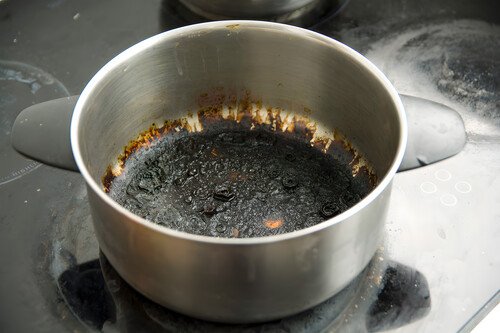
Nothing ruins a good evening like the smell of dinner burning onto the bottom of your favourite saucepan. If you have ever searched for how to clean a burnt saucepan without scrubbing, you are in very good company. That blackened crust looks permanent, and the thought of spending half an hour hunched over the sink with a scouring pad is enough to make anyone consider just buying a new pan.
Here is the good news. Most burnt saucepans can be rescued with simple ingredients you already have in your kitchen. The methods in this guide use heat, soaking time and gentle kitchen chemistry to lift the burnt layer for you, so there is almost no elbow grease involved. You will learn five proven methods that actually work, what to avoid so you do not damage your pans, and a few habits that stop food from burning in the first place.
Why Burnt Food Sticks So Firmly to Your Saucepan
When food burns, it goes through a process called pyrolysis. The sugars and proteins in the food break down under high heat and bond to the metal surface, forming a layer of carbon. Carbon is incredibly tough, which is why a quick rinse and a wipe with a sponge do nothing. You are not fighting food any more. You are fighting a thin layer of charcoal that has fused with your pan.
Heat also matters. Aluminium and thin stainless steel pans develop hot spots where the heat concentrates, and those spots burn first. Once a layer of burnt food builds up, it acts as insulation, which makes the hot spots even worse the next time you cook. That is why a pan that has burnt once often burns again in the same place.
The trick to removing the burnt layer is not brute force. Force only scratches the surface and pushes the carbon deeper into the microscopic pores of the metal. The smarter approach is to soften and dissolve the burnt layer with heat and mild acids or alkalis, then let time do the hard work for you. Every method below follows that principle.
What You Will Need Before You Start
You do not need specialist products. Gather whichever of these you have to hand:
- White vinegar
- Baking soda
- Washing up liquid
- Lemons
- Table salt
- A dishwasher tablet
- A soft sponge or a wooden spoon
- Hot water
You will only need one or two of these items per method, so do not feel you must buy the whole list. White vinegar and baking soda together cover most situations.
How to Clean a Burnt Saucepan Without Scrubbing
These are the five methods readers report the most success with. They are ordered from the quickest to the most patient, so pick the one that suits how bad the burn is and how much time you have.
Method 1: The Vinegar and Baking Soda Boil
This is the classic for a reason. Fill the burnt saucepan with enough water to cover the scorched area, then add an equal amount of white vinegar. If the burn covers the bottom, about one cup of water and one cup of vinegar is usually enough.
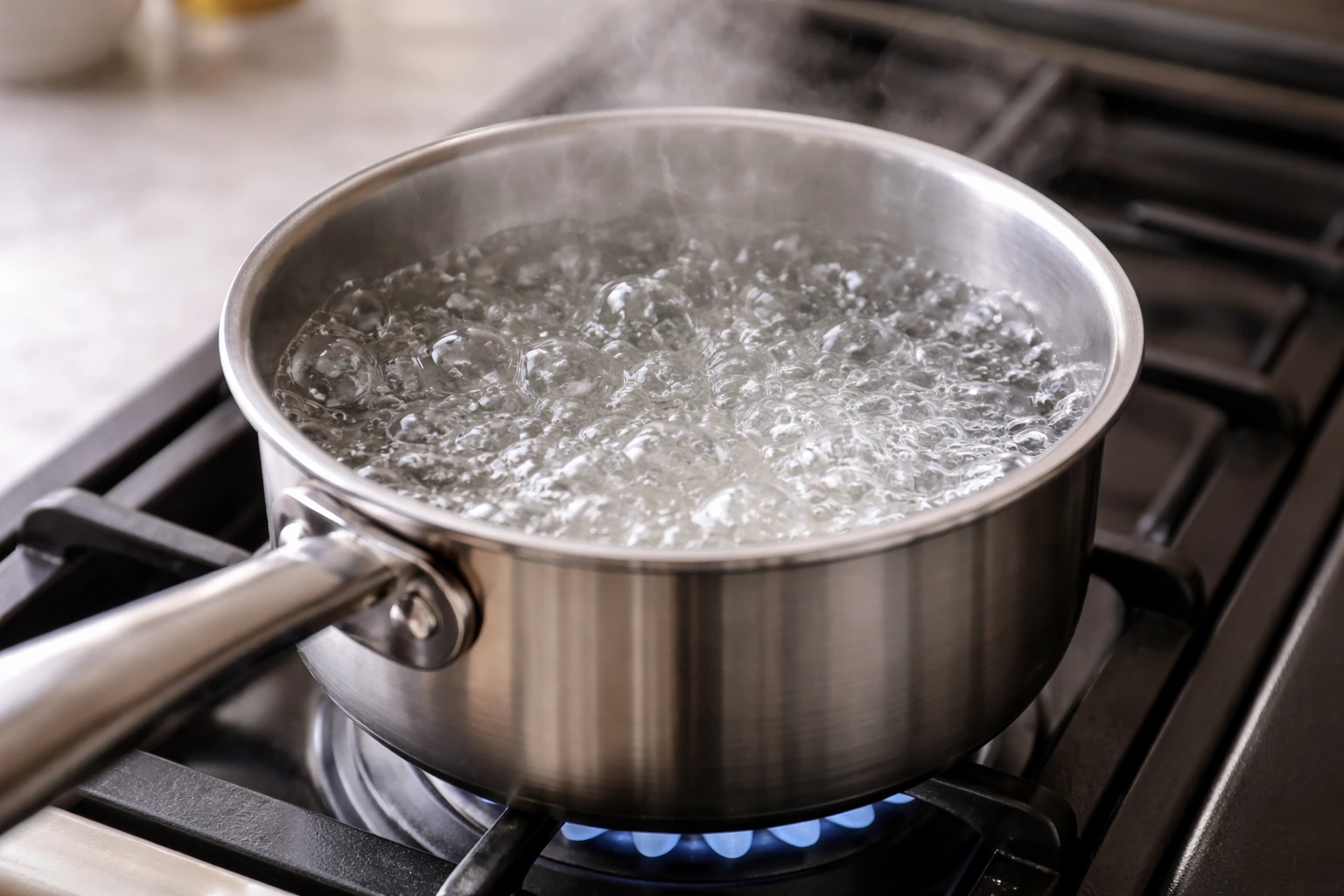
Place the pan on the hob and bring the mixture to a boil. Let it boil for five to ten minutes, keeping an eye on it so it does not boil over. The hot vinegar loosens the burnt layer while the boiling action lifts it from the surface. You will often see dark flakes rising off the bottom as it works.
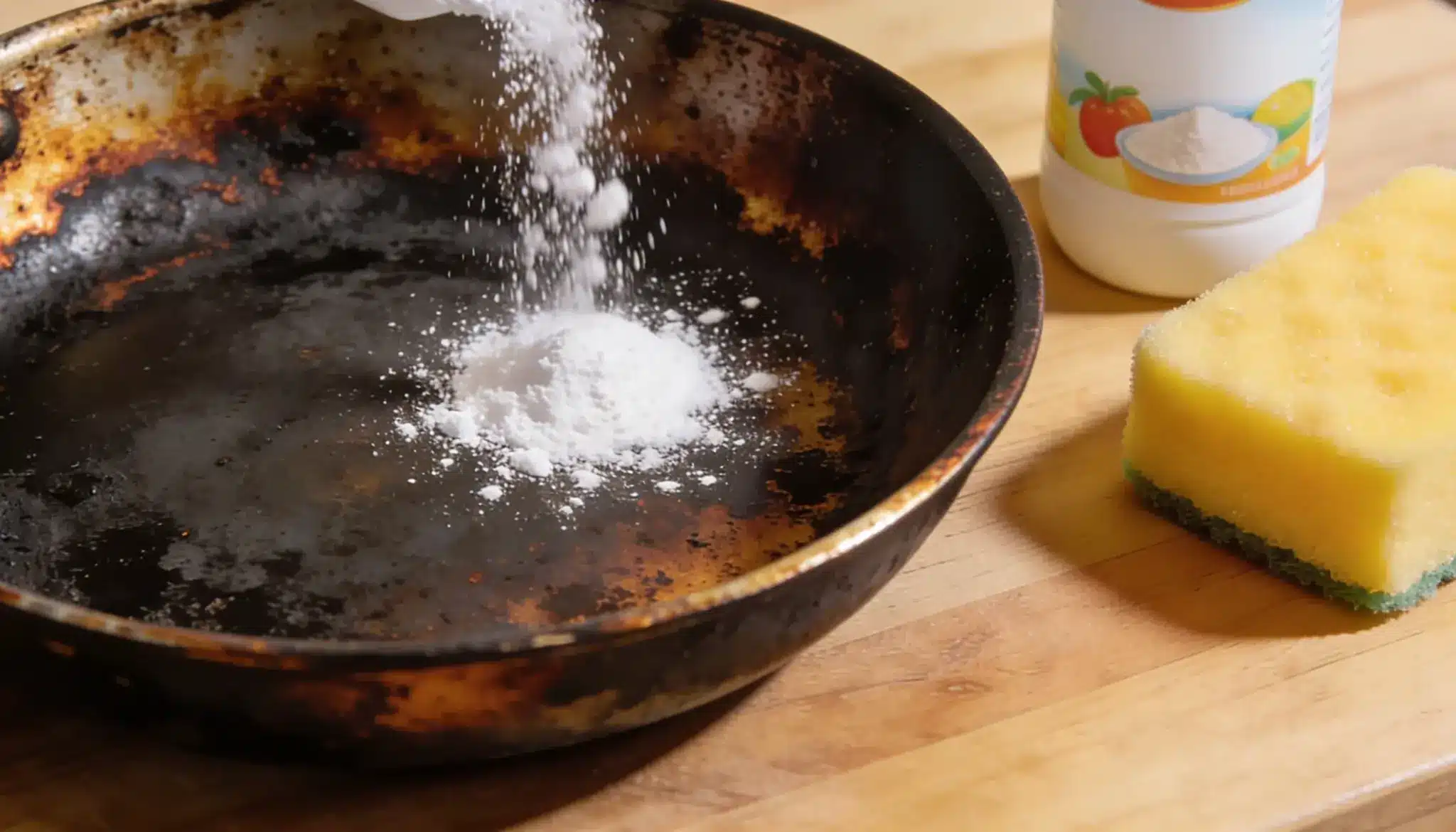
Take the pan off the heat and pour out most of the liquid, leaving about half an inch. Sprinkle two tablespoons of baking soda across the bottom. It will fizz and foam, and that fizzing helps break the remaining burnt film apart. Leave it to sit for ten minutes, then wipe with a soft sponge. The black layer should slide off with barely any pressure. For very stubborn burns, leave the baking soda on overnight before wiping.
Method 2: The Dishwasher Tablet Soak
If you have dishwasher tablets in the house, this is one of the easiest methods of all. Cover the bottom of the burnt saucepan with a small amount of hot water and warm it gently on the hob for a minute. Turn the heat off.
Take one dishwasher tablet and rub it over the burnt areas, pressing gently so it starts to dissolve and spread. The enzymes and detergents in the tablet are designed to break down baked on food, which makes them very effective on carbonised residue too. Leave the pan to soak for at least an hour, or overnight for heavy burns.
When you come back, the burnt layer will have softened into a paste that wipes away with a sponge and warm soapy water. This method works especially well on stainless steel and enamel pans. If the first tablet does not clear everything, a second soak usually finishes the job.
Method 3: The Lemon and Salt Simmer
This method smells much nicer than vinegar and works on the same principle. Cut two lemons into thick slices and lay them across the burnt bottom of the pan. Add enough water to cover the slices, then add three tablespoons of table salt.
Bring the pan to a gentle simmer and leave it for ten minutes. The citric acid in the lemons softens the burnt layer while the salt acts as a very gentle abrasive that will not scratch. You can use a lemon slice itself as a soft scrubber afterwards, which is perfect for delicate surfaces.
Let the pan cool enough to handle, then wipe out the softened residue with a sponge. The lemon also helps remove any lingering burnt smell from the pan, which is a welcome bonus. If the burnt smell has spread beyond the pan, here is how to remove cooking smells from your house fast. This is a good choice if your pan has only a light to moderate scorch, and if you cook with fresh ingredients often you may also like these tips to keep fresh herbs fresh longer in the fridge.
Method 4: The Overnight Baking Soda Paste
For pans where the burnt layer is thick and crusty, patience beats everything. Make a thick paste from baking soda and a little water, about the consistency of toothpaste. Spread it generously over the burnt areas, making sure every blackened spot is covered.
Cover the pan with a damp tea towel and leave it overnight. The damp environment keeps the paste active for hours, slowly working its way under the burnt layer. In the morning, lift the towel and wipe the pan with a soft sponge. Most of the burnt crust will come away in sheets.
If any patches remain, repeat the paste for a second night rather than reaching for a scouring pad. Two gentle overnight treatments remove burns that would otherwise tempt you into scratching the pan beyond repair.
Method 5: The Dryer Sheet Soak
This one sounds strange, but it has a loyal following for good reason. Fill the burnt saucepan with hot water and lay a dryer sheet flat inside, pressing it against the burnt surface. Leave it to soak overnight.
The conditioning agents in the dryer sheet loosen the bond between the burnt food and the metal. In the morning, you can usually wipe the burnt layer away with a sponge. Give the pan a thorough wash with washing up liquid afterwards, since you do not want any of the sheet residue left behind.
This method is particularly handy for enamel coated pans where you want to avoid anything abrasive. It is also useful when you have already tried another method and only a thin shadow of the burn remains.
What Not to Do With a Burnt Saucepan
Before you try any of the methods above, make sure you are not making the situation worse. Avoid these common mistakes:
- Do not use steel wool or harsh scouring pads on nonstick or enamel pans. Scratches give future food more places to grip, which means more burning.
- Do not plunge a very hot burnt pan into cold water. The sudden temperature change can warp the metal.
- Do not use bleach. It does not dissolve burnt carbon and it can damage the pan surface.
- Do not leave a burnt nonstick pan on high heat while you try other fixes. Overheating a damaged nonstick coating is not worth the risk, and a badly damaged nonstick pan is better replaced.
- Do not mix vinegar and bleach, or use oven cleaner inside cookware. These products are not made for food contact surfaces.
Cast iron pans deserve a special note. Do not use vinegar soaks or dishwasher tablets on bare cast iron, as acids and detergents can strip the seasoning. For cast iron, coarse salt and a little oil rubbed gently with a cloth is the safer route.
How to Stop Food Burning in the First Place
Cleaning a burnt saucepan is satisfying, but preventing the burn is better. These habits make a real difference:
- Use the right size hob ring. If the flame or element is wider than the pan base, the edges overheat and food sticks there first.
- Cook on medium heat more often. Most everyday cooking does not need the highest setting, and high heat is the main cause of burnt bottoms.
- Stir starchy foods like rice, porridge and custard regularly. Starch settles and scorches quickly if left alone.
- Add a little more liquid than you think you need when simmering sauces. You can always reduce a sauce down, but you cannot unburn it.
- Stay in the kitchen. Most burnt pans happen when someone walks away for just a minute too long.
Frequently Asked Questions
Can you really clean a burnt saucepan without scrubbing?
Yes, in most cases. Heat based methods like the vinegar boil and long soaks with baking soda or dishwasher tablets soften the burnt layer so thoroughly that it wipes away with a soft sponge. Only very severe burns may need a second treatment.
Is baking soda safe on all saucepans?
Baking soda is safe on stainless steel, enamel, glass and ceramic pans. Avoid using it on bare cast iron or aluminium, where it can dull the finish or strip seasoning. When in doubt, test a small area first.
How long should I soak a burnt saucepan?
A minimum of one hour helps, but overnight soaks give the best results for thick burnt layers. The longer the softening agents stay in contact with the burn, the less effort the final wipe needs.
Why does my saucepan keep burning in the same spot?
This is usually caused by a hot spot in the pan, often from a thin base or a hob ring that is too large for the pan. Try a smaller ring, lower heat and more stirring. If the same spot keeps burning, the pan base may be warped.
When should I give up and replace the pan?
If a nonstick coating is flaking or deeply scratched, replace the pan. If a stainless steel pan has a warped base that wobbles on the hob, it will keep burning food unevenly. Surface discolouration alone is not a reason to replace a good pan.
Conclusion
Learning how to clean a burnt saucepan without scrubbing comes down to working with chemistry instead of muscle. The vinegar and baking soda boil handles most burns in under half an hour, the dishwasher tablet soak and overnight paste rescue the worst cases, and the lemon and dryer sheet methods offer gentler options for delicate pans. Avoid steel wool, harsh chemicals and sudden temperature shocks, and your pans will stay in good condition for years.
Keep the key takeaways in mind. Soften the burn before you touch it, give soaking time a chance to work, and protect your pans by cooking on moderate heat with the right size hob ring. Your saucepans, and your evenings, will thank you.

2 Comments
Pingback: Remove Tea Stains from Mugs: 7 Easy Methods
Pingback: Get Rid of Rice Cooker Smell in 30 Minutes