
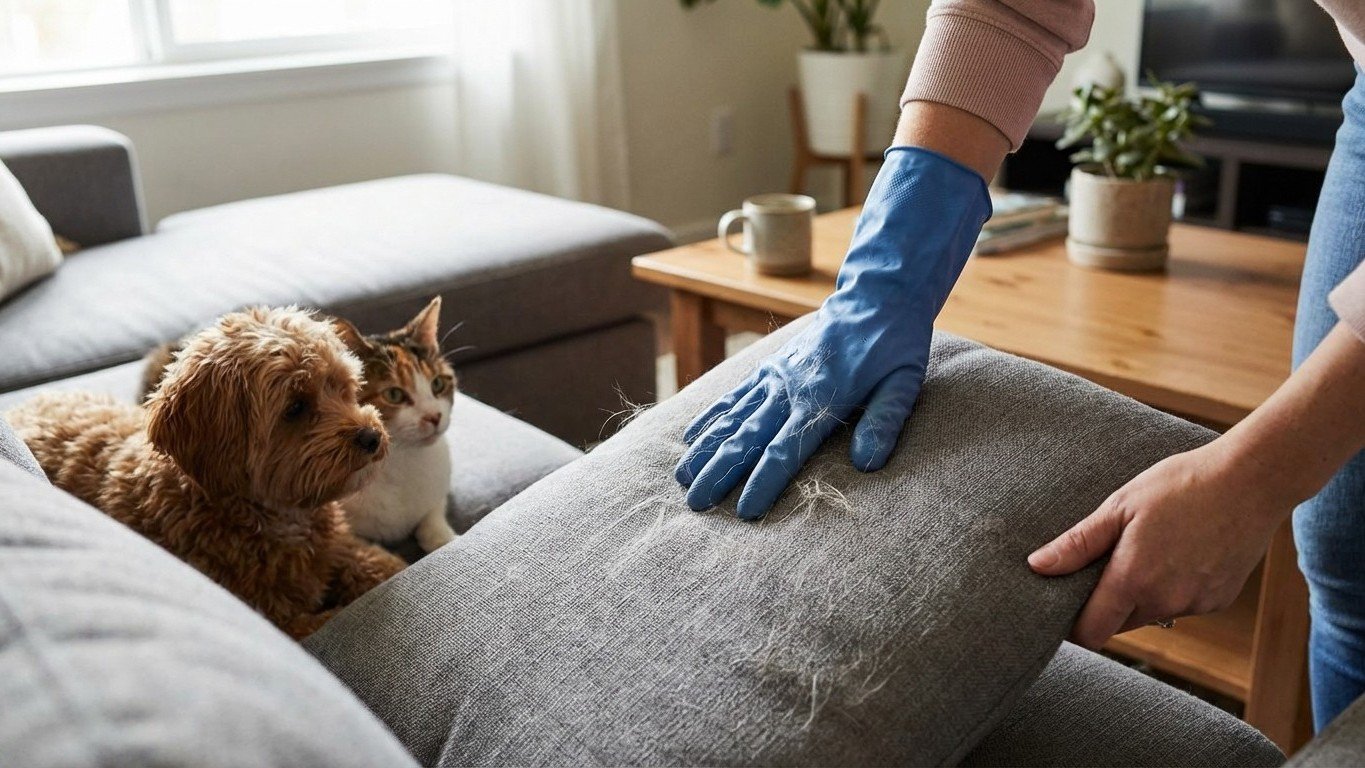
If you share your home with a dog or a cat, you know the feeling. You vacuum on Saturday, and by Monday your couch looks like it is wearing a fur coat again. Pet hair gets everywhere, but the couch takes the worst of it because that is where your pet loves to nap, stretch and watch the world go by with you.
Learning how to remove pet hair from couch fabric is easier than most people think. You do not need expensive gadgets or harsh chemicals. With a few simple tools and the right technique, you can get your sofa looking clean again in minutes and keep it that way with very little effort.
In this guide, you will find seven proven methods ranked from quickest to deepest clean, plus smart prevention tips that stop the fur from building up in the first place.
Why Pet Hair Clings to Couch Fabric So Stubbornly
Pet hair is not like dust. Individual strands work their way between the fibers of your upholstery, and static electricity holds them there like glue. Fabrics with texture, such as microfiber, chenille and velvet, are the worst offenders because their tiny fibers grab onto loose fur and refuse to let go.
Dog hair and cat hair behave differently too. Dog hair tends to be thicker and coarser, so it weaves itself deep into the fabric. Cat hair is lighter and finer, which means it floats around the room and then clings to every surface through static. Knowing which type you are dealing with helps you pick the right method below.
What You Will Need
Gather these basics before you start. Most of them are probably already in your home:
- A lint roller or extra sticky tape roller
- Rubber dishwashing gloves
- A vacuum cleaner with an upholstery attachment
- A rubber squeegee (a cheap window squeegee works fine)
- Baking soda
- A spray bottle filled with plain water
- A microfiber cloth
- A small amount of liquid fabric softener (optional)
Method 1: Lint Roller for Fast Touch Ups
The lint roller is the classic tool for a reason. It is fast, simple and perfect for surface hair on cushions, armrests and throw pillows. Roll it firmly across the fabric in short strokes, always in the same direction, and peel off the sheet when it is full.
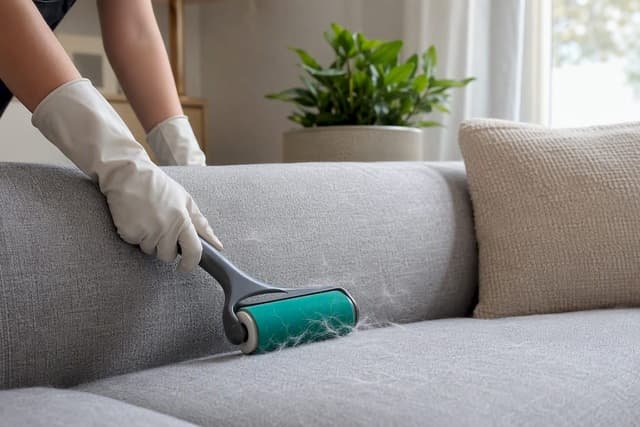
This method works best as a finishing step or for daily maintenance. If your couch is covered in a thick layer of hair, a lint roller alone will eat through sheets quickly, so use one of the deeper methods first and save the roller for the final pass. Keep a roller in a basket next to the couch so quick cleanups become a habit rather than a chore.
Method 2: The Damp Rubber Glove Trick
This is the trick cleaning professionals swear by, and it costs almost nothing. Put on a pair of rubber dishwashing gloves and dampen them lightly under the tap. Then run your hands over the couch in long, firm strokes in one direction.
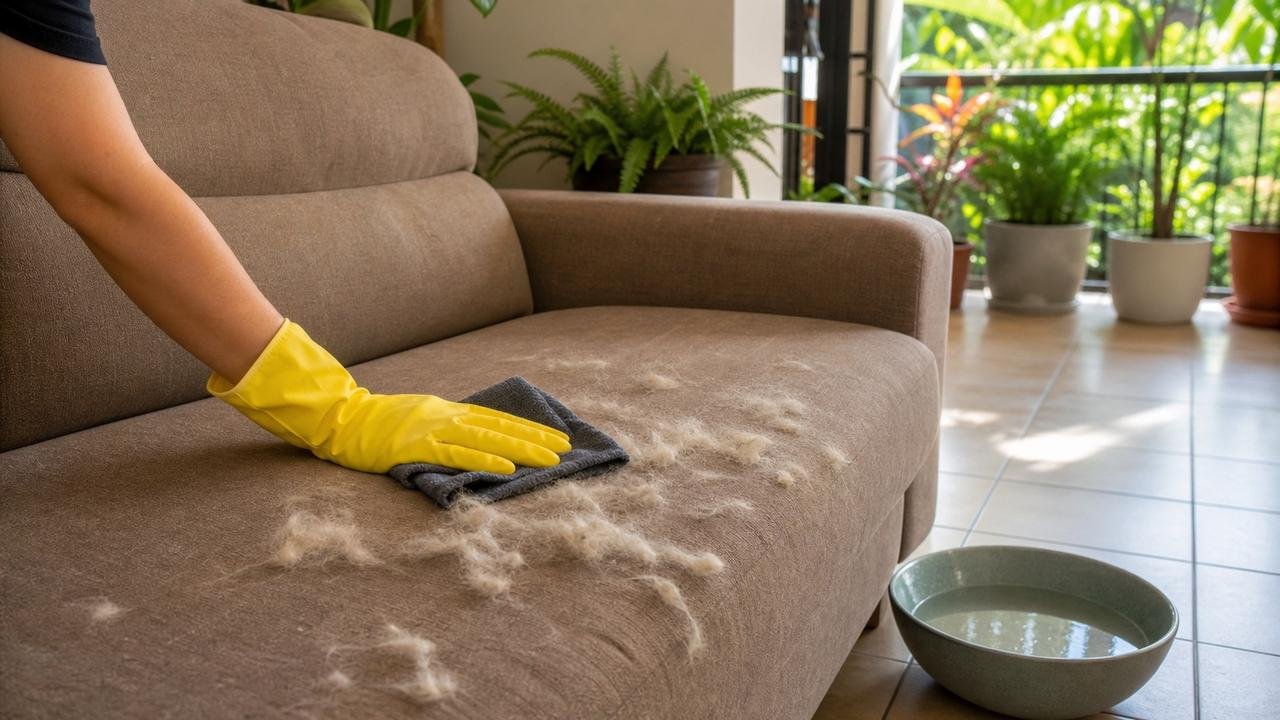
The damp rubber creates friction and a small amount of static that pulls hair out of the fabric and rolls it into clumps you can pick up by hand. Rinse the gloves when they are covered and keep going until the surface is clean. This method is gentle enough for delicate fabrics and works beautifully on curved areas like armrests and cushion edges where flat tools struggle to reach.
Method 3: Vacuum With the Upholstery Attachment
A vacuum with an upholstery tool is one of the most effective options for a full couch clean. Remove the cushions first and vacuum the base, the back, the arms and every seam and crevice. Then vacuum each cushion on both sides.
Move slowly and go over each area in two directions, because hair that resists the first pass often lifts on the second. If your vacuum has a rubber pet hair attachment with silicone fins, even better, since the fins agitate the fabric and pull embedded hair loose. Empty the canister or change the bag before you start so suction stays strong all the way through.
Method 4: A Rubber Squeegee for Embedded Hair
When hair is woven deep into the fabric and the vacuum leaves it behind, reach for a rubber squeegee. Drag it firmly across the cushions and arms in short strokes. You will be surprised how much hair rolls up into little piles in front of the blade.
This method is especially effective on microfiber and tightly woven fabrics, and it costs just a few dollars at any hardware store. Wipe the blade clean as you go, then vacuum up the piles of hair you have gathered. It is oddly satisfying to watch, and it reaches hair that sticky rollers never touch.
Method 5: Baking Soda to Loosen Hair and Fight Odor
Baking soda does two jobs at once. Sprinkle a light, even layer over the entire couch and let it sit for 15 to 20 minutes. The fine powder works its way between the fibers, loosens stubborn hair and absorbs odors at the same time.
After the wait, vacuum everything up slowly with the upholstery attachment. You will find the hair lifts much more easily than before. This is a great method to use before guests arrive, since the couch will look and smell fresher. For stronger household odors that baking soda alone cannot fix, our guide on removing cooking smells from the house fast covers more powerful options.
Method 6: A Light Fabric Softener Mist to Cut Static
Static is the reason hair keeps clinging even after you clean. Mix one teaspoon of liquid fabric softener into a spray bottle of water and mist the couch very lightly. Do not soak the fabric. A fine mist is all you need.
Wait two or three minutes, then wipe the surface with a microfiber cloth or vacuum again. The softener reduces the static charge so hair releases instead of gripping. Always test this on a hidden spot first, since some fabrics and dyes react badly to softener. If your couch has a cleaning code of S or X on its tag, skip liquids entirely and stick with dry methods.
Method 7: Damp Sponge or Microfiber Cloth
For an approach that needs no tools at all, a slightly damp sponge works wonders. Wring it out well so it is barely damp, then drag it across the couch in one direction. The hair gathers into neat rows that you can lift off by hand.
A damp microfiber cloth does the same job and is even gentler on delicate upholstery. This method shines on flat surfaces like seat cushions and works well for quick cleanups between deeper sessions. Just remember to let the fabric dry fully afterward so no moisture sits trapped in the cushions.
How to Remove Pet Hair From Couch Fabric Without a Vacuum
No vacuum? No problem. Some of the best methods above need no electricity at all. The damp rubber glove trick and the rubber squeegee both outperform most vacuums on embedded hair, and a lint roller handles surface fur in seconds.
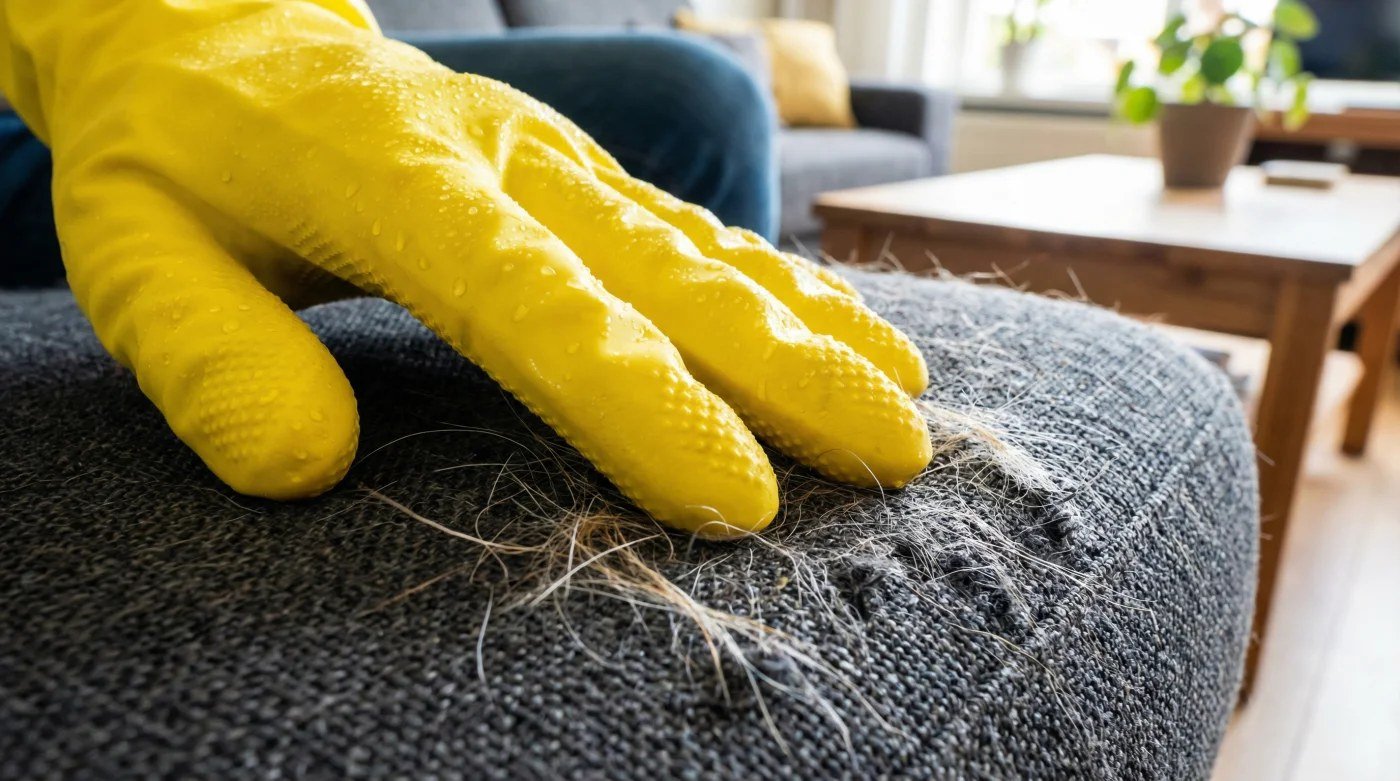
For seams and piping where hair loves to hide, wrap packing tape around your hand with the sticky side out and press it into the crevices. A damp sponge finishes the job on flat areas. Combine two or three of these simple methods and you can get a couch looking guest ready with nothing but items from under your sink.
Removing Pet Hair From Leather and Faux Leather Couches
Good news if you own leather. Pet hair does not weave into leather the way it does into fabric, so cleanup is much simpler. Wipe the surface with a slightly damp microfiber cloth and the hair lifts right off.
Avoid sticky lint rollers on leather if you can, since the adhesive can leave a residue that dulls the finish over time. For faux leather, the same damp cloth approach works, but skip anything abrasive and keep the cloth well wrung out so water does not sit in the seams.
Keep Pet Hair Off Your Couch for Good
Cleaning is only half the battle. These simple habits cut the amount of hair that lands on your couch in the first place.
Brush your pet regularly. Three or four brushing sessions a week, ideally outside, can dramatically reduce shedding around the house. It takes five minutes and most pets learn to enjoy it.
Cover the favorite spot. Lay a washable throw blanket or furniture cover where your pet likes to lounge. Washing one blanket is far easier than deep cleaning a whole couch. Toss removable covers in the wash on a gentle cycle, and check our tips on keeping towels soft after washing for tricks that work just as well on couch covers.
Train your pet to use its own bed. A cozy pet bed placed near the couch gives your dog or cat an appealing alternative. Reward them with treats and praise when they choose it.
Run an air purifier. A purifier with a HEPA filter pulls floating hair and dander out of the air before it settles on your furniture.
Vacuum on a schedule. A quick pass over the couch once or twice a week stops hair from working deep into the fibers where it is hardest to remove.
And remember that pets leave more than hair behind sometimes. If accidents happen on your floors too, our guide on getting dried dog urine out of carpet walks you through that cleanup in simple steps.
Mistakes to Avoid
A few common errors can make the problem worse or damage your couch. Do not soak the fabric with water or cleaning sprays, since trapped moisture can cause mildew and water stains. Skip abrasive tools on delicate fabrics because they can snag threads and wear the upholstery thin.
Be careful with scented dryer sheets. They can leave a waxy residue on upholstery that attracts dirt over time, so test in a hidden spot first or skip them entirely. And do not rub the fabric in hard circles with a dry cloth, which tends to push hair deeper instead of lifting it out.
Frequently Asked Questions
Does baking soda remove pet hair from a couch?
Baking soda loosens hair and absorbs odor, but it does not lift hair on its own. Sprinkle it on, wait 15 to 20 minutes, then vacuum thoroughly for the best result.
Can I use a lint roller on a leather couch?
You can, but a damp microfiber cloth is better. Sticky rollers can leave adhesive residue on leather that dulls the finish, so save the roller for fabric surfaces.
How do I get pet hair out of couch seams and crevices?
Use the crevice tool on your vacuum first, then press packing tape wrapped sticky side out into the seams. A damp rubber glove run along the piping also pulls out trapped hair.
Why does my vacuum not pick up pet hair?
Hair woven into the fabric often needs loosening first. Try the rubber glove or squeegee method before vacuuming, move slowly in two directions, and check that the brush roll is clean and the bag or canister is not full.
How often should I clean pet hair off my couch?
A quick lint roller pass once a day during heavy shedding season keeps things under control. A deeper clean with the vacuum and one of the methods above once a week is enough for most homes.
Final Thoughts
Figuring out how to remove pet hair from couch cushions and upholstery comes down to matching the method to the mess. A lint roller handles daily touch ups, the damp rubber glove and squeegee tackle embedded hair, and baking soda plus a good vacuum refresh the whole couch.
The real win is prevention. Regular brushing, a washable throw on the favorite spot and a weekly vacuum routine mean you spend minutes on upkeep instead of an hour on rescue missions. Your couch can stay clean and your pet can keep its favorite napping spot. Everyone wins.

3 Comments
Pingback: Stop Cat Scratching the Couch: 10 Fixes
Pingback: Laptop Overheats and Shuts Down? 9 Fixes
Pingback: How to Clean a Fabric Sofa Without a Machine: 7 Simple Steps - Daily Spark News