
If your cuticles have ever turned red, itchy, or swollen after a gel manicure, you are not imagining things, and you are not alone. A growing number of gel polish fans and nail professionals are switching to HEMA free gel polish, and the shift is not just a trend. It is a response to a real and well documented skin sensitivity issue that has been quietly building for years.
This guide breaks down exactly what HEMA is, why it causes problems for some people, what makes a gel polish genuinely HEMA free, and how to choose a formula that keeps your nails healthy without giving up the glossy, long lasting finish you love.
What Is HEMA and Why Is It Used in Gel Polish
HEMA stands for 2 hydroxyethyl methacrylate. It is a small molecule known as a monomer, and it has been a core ingredient in gel nail products for decades.
The reason HEMA became so popular in the nail industry comes down to chemistry. Its molecular size is small enough to penetrate the surface of the natural nail plate, which allows it to form an unusually strong bond between the gel and the nail. That bond is the reason gel manicures can last two to three weeks without chipping or lifting.
On top of its adhesive strength, HEMA is inexpensive to produce and easy to formulate with. For manufacturers working at scale, it checks every box: it cures reliably under UV or LED light, it is compatible with a wide range of pigments, and it keeps production costs low. That combination is why HEMA became the industry default rather than the exception.
For most people, gel manicures made with HEMA cause no issues at all. Millions of manicures are done every year using traditional gel systems, and the majority of users never experience a reaction. The concern is not that HEMA is dangerous for everyone. It is that repeated exposure can gradually sensitize a portion of users, and once that sensitivity develops, it tends to stick around.
Why HEMA Causes Allergic Reactions

Understanding the actual mechanism behind HEMA sensitivity helps explain why the HEMA free movement has picked up so much momentum, especially among nail technicians who see the same clients week after week.
The Sensitization Process
HEMA reactions fall into a category called contact sensitization. In simple terms, this is what tends to happen:
- Liquid, uncured HEMA touches the skin around the nail, often the cuticle, sidewalls, or underside of the nail tip during application.
- The immune system is exposed to the molecule repeatedly over time.
- In a subset of people, the immune system eventually flags HEMA as a threat and starts reacting to it.
- Once that sensitivity develops, the immune system will respond to HEMA every time it comes into contact with it again, sometimes for life.
This is different from a one time irritation. A true allergic sensitization does not fade with time off from gel manicures. It is a permanent shift in how the body responds to that specific ingredient.
What the Symptoms Look Like
The most common sign of HEMA sensitivity is contact dermatitis around the nail area. Typical symptoms include redness, itching, swelling, and in more severe cases, blistering, peeling skin, or the nail plate lifting away from the nail bed.
Symptoms usually show up around the skin bordering the nail rather than on the nail itself, since that is where uncured product is most likely to make contact.
Who Is Most at Risk
Sensitization risk is not evenly distributed. It tends to increase with:
- Years of repeated gel manicure exposure, especially with frequent touch ups
- Product making contact with skin rather than staying confined to the nail plate
- Incomplete curing, since under cured gel remains chemically reactive for longer
- Existing skin sensitivities or a history of contact allergies to other substances
If you have worn gel polish for years without any issues, that is a reasonable sign you are not sensitized, though risk can still build gradually with continued exposure. On the other hand, if you or a client have noticed recurring irritation after gel appointments, that pattern is worth paying attention to.
What HEMA Free Gel Polish Actually Means
HEMA free gel polish is a formulation where 2 hydroxyethyl methacrylate has been removed and replaced with alternative bonding agents. These substitutes are typically larger molecules, often oligomers rather than monomers, which makes it much harder for them to penetrate the skin and trigger an immune response.
It is worth being clear about one thing: HEMA free does not mean chemical free, and it does not mean natural. Gel polish is a synthetic product by design. It has to cure under UV or LED light and hold up for weeks without chipping, and that requires a blend of methacrylates, photoinitiators, and pigments regardless of whether HEMA is included.
What changes in a HEMA free formula is narrower and more specific. The one ingredient most commonly linked to allergic sensitization is swapped out, while the rest of the formula is built to deliver a comparable finish, wear time, and application experience.
A helpful way to think about it is similar to gluten free bread. The bread still contains flour, yeast, and other standard ingredients. It simply removes the one component that causes trouble for a specific group of people. HEMA free gel polish follows that same logic.
A Related Term You Should Know: TPO Free
Many HEMA free products also advertise as TPO free. TPO refers to diphenyl trimethylbenzoyl phosphine oxide, a photoinitiator used to help gel polish set under UV or LED light. Like HEMA, TPO has been identified as a potential skin sensitizer with repeated exposure.
Some brands remove HEMA but keep TPO, so it is worth checking both terms if minimizing allergy risk is your priority. Products labeled both HEMA free and TPO free offer the broadest protection against the two most commonly flagged sensitizers in gel systems.
The Ingredient That Sometimes Slips Through
One detail that catches a lot of shoppers off guard is Di HEMA TMHDC. This is a close chemical relative of HEMA, and it can trigger similar allergic responses in sensitized individuals. Some products marketed as HEMA free still contain this related compound, which is why reading the full ingredient list matters more than trusting the label alone.
HEMA Free vs Regular Gel Polish: A Practical Comparison
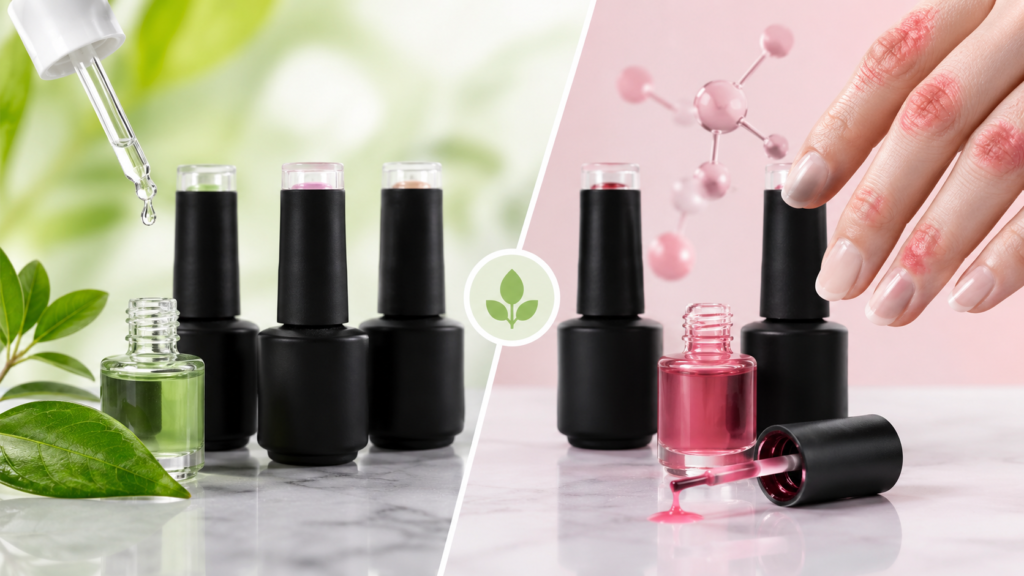
For years, HEMA free formulas had a reputation for underperforming compared to traditional gel polish. That gap has closed significantly as formulation technology has improved.
| Feature | HEMA Free Gel Polish | Regular Gel Polish |
|---|---|---|
| Adhesion | Strong, using alternative bonding agents | Strong, relying on HEMA for bonding |
| Wear Time | Two to three weeks without chipping | Two to three weeks without chipping |
| Cure Time | Sixty to ninety seconds under UV or LED | Sixty to ninety seconds under UV or LED |
| Finish | High shine, glossy result | High shine, glossy result |
| Allergy Risk | Lower, though not zero | Higher with repeated exposure |
| Removal | Standard soak off method | Standard soak off method |
| Price Range | Comparable, sometimes slightly higher | Comparable, sometimes slightly lower |
Modern HEMA free gels from reputable brands hold their own against traditional formulas on nearly every performance metric. The early adhesion issues that gave HEMA free products a rocky reputation have mostly been resolved through better oligomer chemistry, so the choice today comes down to ingredient priorities rather than a real trade off in quality.
Is HEMA Free Gel Polish Actually Safer
This is the question most people actually want answered, and the honest answer has some nuance to it.
Switching to HEMA free gel polish does meaningfully lower your risk of developing a HEMA specific allergy, since you are removing the ingredient most strongly associated with that reaction. For the large majority of users, this makes HEMA free formulas a genuinely safer choice.
That said, HEMA free does not guarantee a reaction free experience for everyone. The alternative bonding agents used in these formulas are still acrylates and methacrylates, and in rare cases, people can develop sensitivities to those substitutes as well. If you already have a diagnosed acrylate allergy, switching to any gel product, HEMA free or not, is a conversation worth having with a dermatologist first.
For everyday users without a diagnosed allergy, HEMA free gel polish offers a lower risk profile without asking you to give up the manicure results you are used to. That combination is exactly why demand for these products keeps climbing.
How to Choose the Right HEMA Free Gel Polish
Not every product labeled HEMA free is formulated to the same standard. A few factors are worth weighing before you buy.
Look at Brand Transparency
Reputable brands that genuinely prioritize safety tend to be upfront about their formulations. They publish full ingredient lists, explain what replaces HEMA in their formula, and are willing to answer direct questions about sensitizers. If a brand is vague about ingredients or avoids the topic entirely, treat that as a warning sign rather than reassurance.
Consider Whether You Also Need TPO Free
If minimizing allergy risk is your main goal, prioritize products that are both HEMA free and TPO free. This combination addresses the two ingredients most frequently connected to gel polish sensitization.
Match the Formula to Your Use Case
Home users generally want a straightforward, self leveling formula that applies evenly in two coats without a lot of technique required. Nail technicians working with a wide client base may prioritize a broader color range and a formula that performs consistently across different nail types and cure lamps used in a salon setting.
Factor in Certification and Regulation
Products sold in the European Union after 2024 must comply with restrictions limiting HEMA concentration, and brands meeting these standards often display compliance markings. While this does not apply everywhere, EU compliant labeling is a reasonable proxy for a brand that takes ingredient safety seriously, even if you are shopping outside Europe.
Read Real User Feedback, Not Just Marketing Claims
Reviews from people who have used a product for several weeks, rather than a single application, tend to be more reliable indicators of durability and skin tolerance. Look specifically for mentions of irritation, lifting, or reactions rather than general star ratings alone.
How to Check If a Product Is Really HEMA Free
Marketing claims are not always precise, so it helps to verify a product yourself before you commit to it.
- Read the full ingredient list. Look specifically for 2 hydroxyethyl methacrylate or the abbreviation HEMA in the INCI listing on the bottle or product page.
- Check for Di HEMA TMHDC. This related compound can cause similar reactions and sometimes appears in products marketed as HEMA free.
- Visit the brand’s official website. Companies that are genuinely HEMA free tend to state it clearly and repeatedly, since it is a meaningful selling point for them.
- Look for third party testing or certification. Independent verification carries more weight than a brand’s own claims.
- Ask your nail technician directly if you are getting a salon manicure. A professional should be able to tell you the brand they use and confirm its HEMA status without hesitation.
If you have already experienced irritation after a gel manicure, switching to a verified HEMA free brand and watching whether symptoms improve is one of the simplest ways to confirm whether HEMA was the underlying cause.
Application and Removal Tips for HEMA Free Formulas
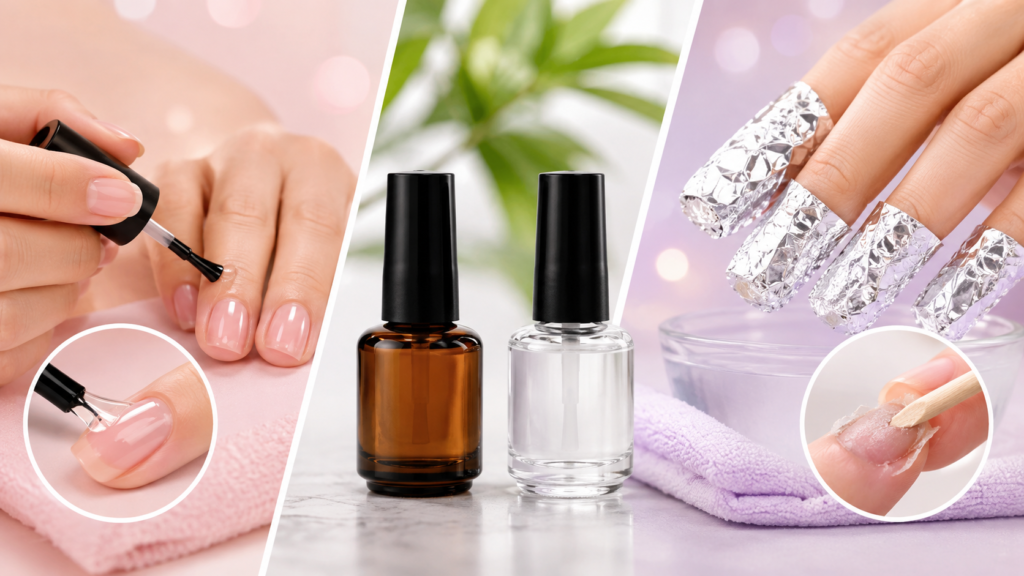
Getting the best results from HEMA free gel polish is not dramatically different from working with traditional gel, but a few habits make a noticeable difference.
- Keep application confined to the nail plate and avoid letting product touch the surrounding skin, since minimizing skin contact reduces sensitization risk regardless of formula.
- Cure each layer fully according to the product instructions. Under curing leaves any gel formula, HEMA free included, more reactive and less durable.
- Use a proper base and top coat from a compatible system rather than mixing brands, since adhesion chemistry can vary between manufacturers.
- Remove with the standard acetone soak off method, though some HEMA free formulas may need a slightly longer soak or gentle filing beforehand for a clean release.
- Moisturize cuticles regularly between manicures to support overall nail health and reduce the chance of irritation from any product.
Common Myths About HEMA Free Gel Polish
A lot of confusion still surrounds this category, so it helps to clear up a few misconceptions directly.
Myth: HEMA free means completely natural or chemical free. In reality, HEMA free gel polish is still a synthetic, UV cured product. It simply excludes one specific sensitizing ingredient.
Myth: HEMA free formulas do not last as long. This was true for early generation products several years ago, but modern HEMA free gels from established brands now match traditional gel polish on wear time and chip resistance.
Myth: If you are not allergic yet, HEMA free does not matter. Sensitization can develop gradually after years of exposure with no prior symptoms, so choosing HEMA free proactively can reduce the odds of developing an allergy in the first place.
Myth: All HEMA free products are equally safe. Formulation quality varies between brands, and some products marketed as HEMA free still contain related sensitizers like Di HEMA TMHDC, which is why checking ingredients directly still matters.
Conclusion
HEMA free gel polish is not a passing trend. It is a practical response to a documented allergy risk that has affected a meaningful share of regular gel polish users, and the formulas available today deliver the same shine, durability, and cure time as traditional gel without relying on the ingredient most likely to cause a reaction.
The key takeaways are straightforward. HEMA is a strong adhesive commonly used in gel polish, but it carries a real risk of triggering contact dermatitis with repeated exposure. HEMA free formulas replace it with larger, less penetrating bonding agents while keeping performance on par with regular gel. Choosing the right product comes down to checking full ingredient lists, favoring brands that are transparent about their formulations, and considering whether TPO free matters to you as well.
Whether you are a regular gel manicure client or a nail technician responsible for client safety, taking thirty seconds to check a product’s ingredient list is a small habit that can meaningfully protect your skin and nails for years of manicures to come.
Frequently Asked Questions
What is HEMA free gel polish?
HEMA free gel polish is a gel nail formula made without 2 hydroxyethyl methacrylate, an ingredient linked to allergic contact dermatitis in some users. It uses alternative bonding agents to achieve a similar finish and wear time.
Is HEMA free gel polish as durable as regular gel polish?
Yes, in most cases. Modern HEMA free formulas from reputable brands offer comparable adhesion, shine, and chip resistance to traditional gel polish, with wear time typically lasting two to three weeks.
Can you still have an allergic reaction to HEMA free gel polish?
It is possible but less likely. HEMA free formulas still contain other acrylates and methacrylates, so a small number of highly sensitive individuals could react to those alternatives, though HEMA remains the most common sensitizer by far.
Is HEMA banned in gel polish?
HEMA is not banned outright, but it is increasingly restricted. The European Union limits HEMA concentration in cosmetic nail products and requires clear ingredient labeling, which has pushed many brands toward HEMA free formulations.
How do I know if my gel polish is HEMA free?
Check the full ingredient list for 2 hydroxyethyl methacrylate or HEMA, look for related compounds like Di HEMA TMHDC, and confirm claims directly on the brand’s website or by asking your nail technician which product they use.
