

You open the jar, take a hopeful sniff, and get hit with something sharp and chemical. It smells like nail polish remover, or paint thinner, or the cleaning aisle at the hardware store. Your first thought is that the whole thing has gone bad. If you are asking why does my sourdough starter smell like acetone, here is the good news: that smell almost never means your starter is dead. It means your starter is hungry, and a hungry starter can be fixed in about two days.
This guide explains what is actually happening inside the jar, why the acetone smell shows up, whether it is safe to bake with, and the exact feeding plan that brings a sour, chemical smelling starter back to life. By the end you will know how to rescue it this time and how to stop it from happening again.
Why Does My Sourdough Starter Smell Like Acetone: The Simple Answer
That sharp, chemical smell is ethyl acetate, a compound your starter makes when it runs out of food. Here is what happens. A sourdough starter is a living colony of wild yeast and lactic acid bacteria. The yeast eat the sugars in flour and produce carbon dioxide and alcohol. The bacteria produce acids that give sourdough its tang.
When there is plenty of fresh flour, everything stays in balance. But when the flour runs out, the yeast keep working on whatever is left. The leftover alcohol reacts with the acids building up in the jar, and that reaction creates ethyl acetate. Ethyl acetate happens to be the same compound used in most nail polish removers, which is why your nose reads it as acetone.
Think of it as your starter sending a very clear signal. It has eaten everything you gave it, and it is asking for more. A pungent acetone smell is a feeding problem, not a safety problem. The inside of an active starter is very acidic, with a pH around 3.5, which is far too acidic for the germs that cause food poisoning. The smell means “feed me,” not “throw me out.”
The 3 Real Reasons Your Starter Went Hungry
The acetone smell almost always traces back to one of three causes, and usually it is a mix of all three.
1. You fed it too rarely
A starter kept at room temperature burns through its food fast. A small 1 to 1 to 1 feed, meaning equal parts starter, flour, and water, can be fully eaten in 8 to 12 hours. If you feed once a day, your starter spends half of every cycle with nothing left to eat. During those hungry hours, the chemistry shifts and the acetone compounds build up.
2. You kept it too warm
Warmth speeds up fermentation dramatically. Above about 79°F, your starter can eat through a feed in 4 to 5 hours that would have lasted 10 hours at 70°F. A jar sitting next to a hot oven, on top of the fridge, or in a sunny kitchen in summer goes hungry much sooner than you expect.
3. Your feeding ratio was too low
Feeding ratio means how much fresh flour you give relative to the old starter in the jar. A 1 to 1 to 1 feed gives the microbes very little fresh flour compared with the hungry population already living there. They clear it out quickly and then sit in their own acid. A higher ratio, like 1 to 5 to 5, gives them a much bigger pile of food and a longer runway before hunger sets in.
Is It Safe to Bake With a Starter That Smells Like Acetone
Yes, it is safe. There is nothing toxic about the acetone smell itself. As explained above, the acidity of the culture keeps harmful microbes out, and ethyl acetate is a normal byproduct of fermentation, not a sign of contamination.
But safe and ready are two different things. A starter producing that much ethyl acetate is badly out of balance. The yeast to bacteria ratio is off, the acid load is high, and bread made from it right now will taste sharp and harsh instead of pleasantly sour. The crumb can also be dense, because the acid weakens the gluten structure of the dough.
The smart move is simple: do not bake with it yet. Feed it back to health first, which takes about 48 hours, and then bake. Your bread will taste far better for the wait.
How to Fix It: The 48 Hour Rescue Feed
Recovery takes 2 to 3 feedings and about 24 to 48 hours. The key change is feeding a bigger ratio, not just feeding more often. A starving starter given another small 1 to 1 to 1 feed will burn through it in a few hours and the smell will be back by evening. Give it a big meal instead.

Here are the 5 steps.
Step 1: Discard down to a small amount
Scrape out most of the old starter until only about 25 grams remain, roughly 1 heaping tablespoon. You are not trying to save the acidity soaked culture. You only need the living population, and a small seed is enough.
Step 2: Feed at a high ratio
To that 25 grams of starter, add 125 grams of flour and 125 grams of water. That is a 1 to 5 to 5 feed. In cup measures, that is about 1 cup of flour and 1/2 cup of water. Use all purpose or bread flour, and room temperature water that is not heavily chlorinated. The big pile of fresh flour is what buys your starter time.
Step 3: Keep it at 68 to 72°F
Set the jar somewhere cool and steady, around 68 to 72°F. Cooler than a hot kitchen counter slows the acid making bacteria and shifts the balance back toward mild, pleasant flavors. Do not put it in the fridge for this step. The fridge is too cold for active recovery.
Step 4: Repeat every 12 hours
Feed on a strict 12 hour clock for the next 2 to 3 cycles. Discard back down to 25 grams each time and repeat the same 1 to 5 to 5 feed. By the second or third feed, the acetone smell should be gone or nearly gone.
Step 5: Watch for the signs of recovery
You will know it worked when the smell turns from chemical to pleasantly yeasty and slightly tangy, the starter reliably doubles in size within 6 to 8 hours of feeding, and no dark liquid collects on top. Once you see all three, your starter is ready to bake with again.
Hooch on Top: Pour It Off or Stir It In
Alongside the acetone smell, you will often see a thin layer of gray or brown liquid sitting on top of the starter. That is called hooch. It is a weak alcohol that separates out when a starter is underfed, and it is completely harmless.
Pour it off if you want a milder, sweeter starter, because you are physically removing some of the built up acid and alcohol. Stir it back in if you like a stronger sour tang in your bread, because those acids carry flavor. Either way, the hooch itself is not the problem. It is a symptom. Once you resume regular feeding at a good ratio, it stops forming.
One warning: if the liquid is pink, orange, or streaked with red, that is a different story. Those colors signal unwanted bacteria, and the starter should be thrown away. More on that below.
When to Throw Your Starter Away and Begin Again
Almost every acetone smelling starter can be saved. These are the only situations where you should start over.
- Fuzzy mold. Any fuzzy growth, whether white, green, blue, or black, means contamination. Discard the whole jar.
- Pink or orange streaks. Pink or orange discoloration is a sign of harmful bacteria that feeding will not fix.
- A truly rotten smell. Acetone, vinegar, and beer smells are normal points on the acidity scale. A smell like garbage or vomit is not, and means the culture is contaminated.
- No recovery after a week. If you feed properly for 7 days and see no bubbles, no rise, and no improvement in smell, the culture is not viable.
If none of those apply, keep feeding. A sharp chemical smell on its own is the most common and most harmless complaint in sourdough baking.
Bake Something Great With Your Recovered Starter
Once your starter is doubling reliably and smells yeasty and tangy again, it is time for the fun part. Bake a loaf and taste the difference a balanced culture makes. Bread from a healthy starter has a clean, mild sourness and a tall, open crumb, while bread from a starving starter tastes harsh and bakes up flat.
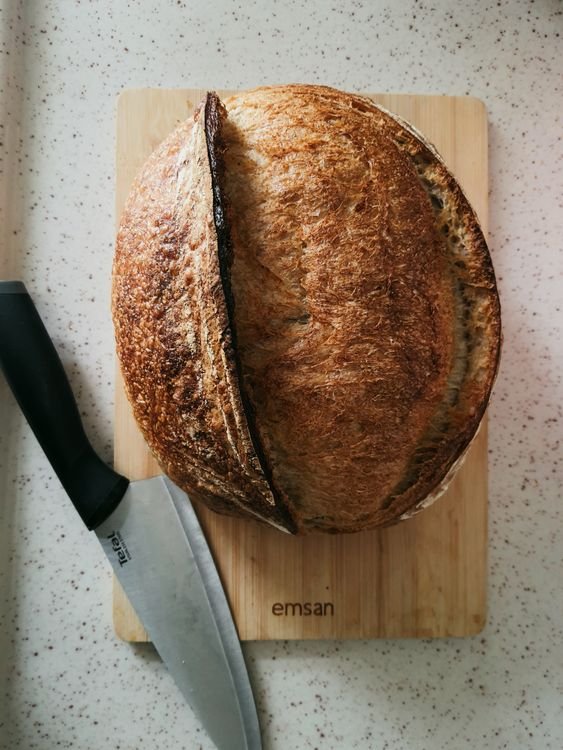
After all that work bringing your starter back, you will want the loaf to stay fresh as long as possible. Sourdough keeps better than most breads thanks to its natural acidity, but storage still matters. Read our guide on how to keep bread fresh for longer for the best storage methods, including why the fridge is the worst place for your loaf.
Keep the Smell From Coming Back
Once the acetone smell is gone, the goal is a feeding rhythm you can actually keep. There are two proven options.
Option 1: Counter storage for frequent bakers
If you bake most weeks, keep the starter on the counter at 68 to 72°F and feed it 1 to 5 to 5 every 12 hours, or 1 to 10 to 10 once a day. The higher ratio gives you a longer window, so a once a day feed can work if the ratio is big enough.
Option 2: Fridge storage for occasional bakers
If you bake once a week or less, park the starter in the fridge at about 39°F and feed it once a week. The cold slows fermentation so much that a well fed starter coasts for 7 days without going hungry.

Fair warning: a fridge starter will greet you with a strong acetone whiff and a layer of hooch every time you open it after a long rest. That is expected and does not mean anything is wrong. Give it 2 to 3 room temperature feeds at 12 hour intervals before you plan to bake, and it climbs right back to full strength.
Frequently Asked Questions
Why does my sourdough starter smell like acetone after only one day?
Your kitchen is probably warm, or your feeding ratio is low. Above 79°F, a starter can eat through a small feed in 4 to 5 hours. Switch to a 1 to 5 to 5 ratio and move the jar to a cooler spot around 70°F.
Can I still bake with a starter that smells like acetone?
It is safe, but not recommended. The imbalance that causes the smell will make your bread taste harsh and can give you a dense crumb. Feed it back to health first, which takes about 48 hours, and then bake.
Will the acetone smell come back after feeding?
Only if you go back to the old routine. If you return to small, infrequent feeds, the smell will return within a day or two. Keep the higher ratio and steady schedule, or move the starter to the fridge with a weekly feed.
Should I pour off the hooch or stir it in?
Pour it off for a milder starter, stir it in for more sour tang. Both are fine. The hooch is harmless either way, and it stops forming once regular feeding resumes.
How long does it take for the acetone smell to go away?
With consistent 12 hour feeds at a 1 to 5 to 5 ratio, most starters lose the sharp chemical smell within 24 to 48 hours. Starters neglected for weeks may need 3 or 4 feeding cycles to fully recover.
Final Takeaways
The next time you catch yourself asking why does my sourdough starter smell like acetone, you will know the answer: it is hungry, not dead. That nail polish remover smell is ethyl acetate, made when the yeast run out of flour and start working on leftovers. Feed it big, not just often, with a 1 to 5 to 5 ratio every 12 hours at 68 to 72°F, and the smell clears in about 48 hours.
Remember the three habits that prevent it: feed a high enough ratio, keep the jar cool, and match your schedule to how often you bake, with the fridge as your friend for quiet weeks. And if you ever see mold, pink streaks, or smell something truly rotten, that is the one time to start over. Everything else is fixable with flour, water, and a little patience.
