

You pull a tray of roasted vegetables from the oven and the kitchen smells wonderful. Then you look at the pan. The bottom is brown, the corners are sticky, and a dark film coats the metal even after a wash with hot soapy water. If that scene feels familiar, you are not alone, and you are not doing anything wrong. Learning how to clean a burnt baking sheet without scrubbing is mostly about understanding what that brown layer really is, because once you know what you are dealing with, the fix is simple and it takes almost no effort from you at all.
Last winter I roasted a big tray of sweet potatoes and carrots for a family dinner. The vegetables turned out perfectly, caramelized at the edges and soft in the middle. The pan did not fare so well. I soaked it, I soaped it, and I stood at the sink rubbing at the corners with a sponge until my arm ached. The brown marks barely moved. That night I almost threw the pan away and bought a new one. Instead I tried a paste made from baking soda and hydrogen peroxide, left it alone for a few hours, and wiped it away with a paper towel. The pan looked nearly new. That one experiment changed how I treat every sheet pan in my kitchen, and it is the reason this guide exists.
This guide covers three methods that actually work, and each one does the hard work while you do something else. You will learn why soap fails on that brown layer, which method fits your type of pan, what to avoid so you do not damage a good tray, and how to keep your pans clean with a few small habits. No elbow grease required.
Why Your Baking Sheet Looks Burnt Even After Washing
The brown layer on your baking sheet is probably not burnt food. In most cases it is polymerized oil. When cooking oil gets very hot in the oven, it changes at a chemical level and bonds to the metal in a thin, hard layer. That layer is similar to the seasoning on a cast iron skillet. It is tough, it resists water, and ordinary dish soap cannot break it down. That is why a pan can feel clean to the touch after washing and still look stained.
This explains a common frustration. You scrub harder and the marks stay put. You soak the pan overnight in soapy water and the marks stay put. You run it through the dishwasher and the marks stay put. The problem is not your effort. Soap is made to lift grease and food, not to dissolve a hardened layer of oil that has bonded to metal. Scrubbing at it with force only wears out your sponge and risks scratching the pan.
Heat makes the layer worse over time. Every time you roast vegetables, bake cookies, or cook bacon on the same pan at high heat, a little more oil bakes on. Thin layers stack up into the dark brown coating that many home cooks accept as normal. It is normal in the sense that it happens to almost everyone, but it is not permanent. The methods in this guide break that layer down with chemistry instead of force, which is why they work where scrubbing fails.
There is one more thing worth knowing. A stained pan is not a dirty pan. If you wash it with hot soapy water after each use, it is clean enough to cook on. The brown layer is mostly a cosmetic problem, and it does not make your food taste bad. You might notice a faint stale smell when the pan heats up, though, and that smell can hang around in the kitchen. That same stale cooking smell can settle in other parts of the kitchen too, and if your fridge has picked up an odor, here is why your fridge still smells after cleaning. Knowing the stain is harmless takes the pressure off, but if you want the pan to look good again, the methods below will get you there.
What You Need Before You Start
All three methods use cheap supplies you may already have at home. You do not need a special cleaner, and you do not need to order anything unusual. Here is the full list.
- Baking soda, the plain box from the baking aisle
- Hydrogen peroxide at 3 percent strength, the brown bottle from the drugstore
- Dishwasher tablets, any standard brand
- Washing soda, sold near the laundry detergent at most grocery stores
- White vinegar
- Hot water
- Paper towels or a soft cloth
- A plastic scraper or an old credit card for lifting softened residue
- Rubber gloves, useful if you have sensitive skin
Baking soda and washing soda are not the same product, so keep them in separate containers and label them if they look alike.
How to Clean a Burnt Baking Sheet Without Scrubbing
These three methods all follow the same idea: put a cleaning agent on the stain, give it time to work, and wipe the loosened residue away. The difference is in the active ingredient and the wait time. Read all three, then pick the one that fits your pan and your schedule. If one method does not fully clear a very old stain, you can repeat it or try another one. Layered stains built up over years may need two rounds, and that is normal.
Method 1: Baking Soda and Hydrogen Peroxide Paste
This is the best all round method for most home cooks, and it is the one I reach for first. It works on aluminum and stainless steel pans, it costs almost nothing, and it handles even dark, built up stains if you give it enough time.
Start with a dry pan. Mix about a quarter cup of baking soda with enough hydrogen peroxide to form a thick paste, roughly the texture of frosting. You will need around two to three tablespoons of liquid, but add it slowly and stir as you go. Spread the paste over the stained areas with a spoon or a soft cloth, making a layer about as thick as a coin. Pay extra attention to the corners and the rim, where oil tends to collect.
Now leave the pan alone for at least two hours. For a lightly stained pan, two hours is enough. For a pan with dark, years old buildup, leave the paste on overnight. The hydrogen peroxide helps the baking soda break down the polymerized oil, and time does the work that your arm used to do. You will see the paste darken as it lifts the stain, which is a good sign.
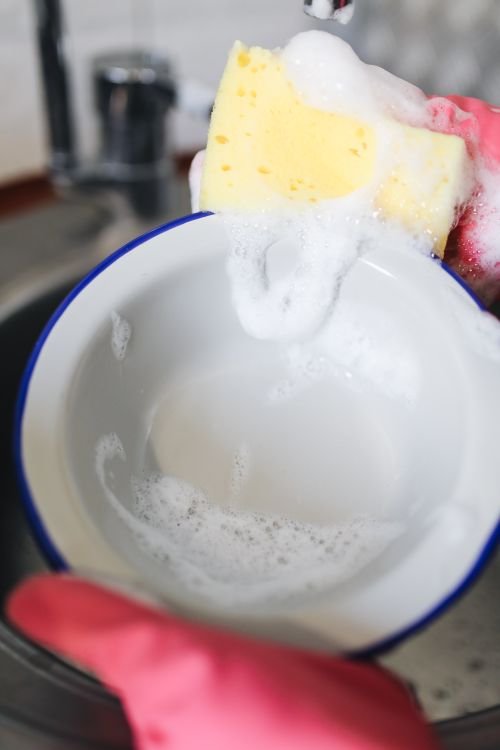
When the time is up, wipe the paste away with paper towels. Most of the brown layer will come off with the paste. For any spots that remain, rub gently with a soft cloth or a plastic scraper. The residue should lift easily. If a stubborn patch stays behind, spread a fresh layer of paste on that spot only and give it another hour. Then wash the pan as usual with hot soapy water and dry it right away.
A few practical tips make this method work better. Warm the pan slightly in a low oven for a few minutes before you apply the paste, and let it cool until it is just warm to the touch. Warm metal helps the paste work faster. Also, mix the paste fresh each time. Hydrogen peroxide loses strength once the bottle has been open for a long time, so if your bottle has sat in the cabinet for a year, buy a new one. It costs about a dollar at most drugstores.
Method 2: Dishwasher Tablet Overnight Soak
This is the easiest method of the three, and it is the best choice when the whole pan is stained, not just a few spots. It takes almost no effort at all, but it needs a full night.
Place the pan in your sink or in a large tub and fill it with very hot water. Drop in one dishwasher tablet and let it dissolve. If your pan is too large for the sink, set it on the counter and lay a damp towel soaked in the same solution across the surface. The goal is to keep the stained metal in contact with the dissolved tablet for hours.
The enzymes and oxygen based cleaners in the tablet are designed to break down baked on food inside a dishwasher, and they do the same job on a sheet pan. Leave the pan to soak overnight, or for at least eight hours. The long soak is what makes this method work.
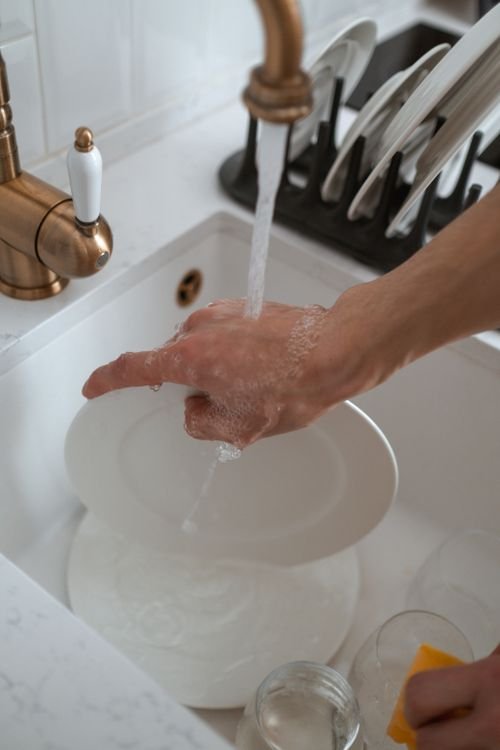
In the morning, lift the pan out of the water and wipe it with a soft cloth. The brown layer should slide off in soft sheets. Wash the pan with dish soap and hot water to remove any tablet residue, then rinse it well and dry it. If your tap water is hard, you may see a light film after drying. A quick wipe with a cloth dampened with white vinegar removes it.
This method is safe for aluminum and stainless steel pans, and it is the gentlest option for pans with a lot of surface area to cover. Do not use it on a nonstick pan unless the tablet maker says it is safe for nonstick surfaces, and never use it on a pan with a damaged coating. Also, keep the soaking water away from children and pets, and wash your hands after handling the solution.
Method 3: Washing Soda Soak
Washing soda is the strongest cleaner in this guide, and it is the right pick for the worst pans, the ones that have been brown for years and have resisted everything else. It is also the method that needs the most care, so read the safety notes before you start.
Put on rubber gloves. Dissolve about a quarter cup of washing soda in a sink full of hot water, and stir until it is fully mixed in. Lower the pan into the water so the stained surface is covered. If the pan is too big for the sink, use a large plastic tub or a roasting pan. Leave it to soak for four to six hours, or overnight for a very dark pan.
Washing soda cuts through polymerized oil faster than baking soda because it is more alkaline. After the soak, the brown layer will feel soft and loose. Wipe it away with a cloth, then wash the pan with dish soap and rinse it well. Dry the pan at once so water spots do not form.
Handle washing soda with respect. It can irritate skin and eyes, so wear gloves and avoid splashing it. Do not use it on aluminum pans if you plan to leave them soaking for a very long time, because long exposure can dull the finish. For aluminum, keep the soak under four hours and check the pan halfway through. For stainless steel, an overnight soak is fine. Never mix washing soda with vinegar or other acids in a closed container, and store it out of reach of children.
If you cannot find washing soda, a paste of baking soda and water left on the pan overnight is a weaker but workable substitute.
Which Method Works Best for Each Type of Baking Sheet
Not every pan is made the same way, and the right method depends on what your pan is made of. Using the wrong approach can dull a finish or damage a coating, so check your pan before you start.
Plain aluminum pans are the workhorses of most home kitchens. They are cheap, they heat evenly, and they are the most forgiving. The baking soda and hydrogen peroxide paste is the best choice for aluminum, and the dishwasher tablet soak is a close second. Keep a washing soda soak short on aluminum, no more than four hours, and check the pan halfway through so the finish stays bright.
Stainless steel pans can handle all three methods. The metal is tougher and resists dulling, so an overnight soak in any of the three solutions is safe. If you own a stainless steel sheet pan, the dishwasher tablet soak is a great fit because it covers the whole surface with no effort. Stainless steel is also the easiest type to keep looking good, because it does not discolor as fast as aluminum.
Nonstick pans need the gentlest touch. The coating is a thin layer, and once it is scratched or damaged it cannot be fixed. Use only the baking soda paste on a nonstick pan, and apply it with a soft cloth, never with anything rough. Never soak a nonstick pan in washing soda, and do not use a dishwasher tablet soak unless the pan maker clearly says it is safe. If the coating is already peeling or flaking, it is time to replace the pan rather than clean it. A damaged nonstick surface can flake into food, and no cleaning method will restore it.
Dark coated steel pans, the kind sold as nonstick or as bakeware sets, follow the same rules as nonstick. Be gentle, skip the harsh soaks, and accept that some discoloration may stay. The pan is still fine to cook on as long as the coating is intact and the pan is washed well after each use.
What Not to Do to a Burnt Baking Sheet
Some popular cleaning advice does more harm than good. Avoid these mistakes and your pans will last much longer.
Do not use steel wool or a metal scouring pad. Steel wool scratches aluminum and strips nonstick coatings. Those scratches then catch more oil the next time you bake, so the pan stains faster. A plastic scraper or a soft cloth is all you need once the stain has been softened by a soak or a paste.
Do not spray oven cleaner on a baking sheet. Oven cleaner is made for oven walls, not for pans you cook food on. It is very caustic, it can damage aluminum, and it is hard to rinse off completely. There is no reason to use it when a paste made from baking soda does the job safely.
Do not put a nonstick pan in the dishwasher as a cleaning shortcut. Many nonstick pans say they are safe for the dishwasher, but the high heat and harsh detergent wear the coating down over time. Hand washing takes two minutes and adds years to the life of the pan.
Do not use a knife or a metal spatula to chip at a stain. It feels satisfying in the moment, but it gouges the metal and leaves grooves that trap oil and food. Let the cleaner do the work instead. If a spot will not move after a full soak and a second round of paste, that spot is part of the pan now, and it is harmless.
Do not pour boiling water into a cold glass pan or a pan with a warped base. Sudden heat can crack glass and warp thin metal. Use hot tap water for soaks, and let a hot pan cool for a few minutes before you put it in water.
How to Keep Your Baking Sheets Clean Going Forward
Cleaning a burnt pan is satisfying, but keeping it clean is better. A few small habits will stop the brown layer from building up again, and none of them take more than a minute.
Line the pan every time. Parchment paper is the single best habit for clean sheet pans. It stops oil and food from touching the metal, it makes cleanup a matter of throwing the paper away, and it costs only a few cents per use. Aluminum foil works too, and it is a good choice for roasting meat or vegetables with a lot of juice. If you bake cookies often, a reusable silicone baking mat is a smart buy and it pays for itself within a few months.
Let the pan cool before you wash it, but do not leave it sitting overnight with food on it. A short rest of ten minutes is enough. Then wash it with hot soapy water while the residue is still soft. Food that dries on the pan overnight is much harder to remove, and it gives oil more time to bake onto the surface the next time the pan goes in the oven.
Dry the pan right away with a clean towel instead of leaving it to air dry in the rack. Standing water leaves spots on aluminum and can lead to rust on steel rims. If your towels have picked up a musty smell from sitting damp, here is how to stop towels smelling musty after washing, because a fresh dry towel makes this small job much more pleasant.

Store pans flat or upright with a layer of parchment between them. Stacking bare metal pans together scratches the surfaces and traps moisture. A sheet of parchment or a thin towel between pans keeps them in good shape and stops that faint stale smell that comes from stored pans.
Finally, give your pans a deep clean every month or two, even if they look fine. A quick baking soda paste on a lightly stained pan takes five minutes of hands on time and stops small stains from turning into the dark layer that needs an overnight soak. Think of it as routine care, like sharpening a knife or descaling a coffee maker.
Good habits extend to your ingredients too. If you bake with fresh ginger for cookies or cakes, it pays to keep it fresh, so learn how to store fresh ginger root longer before your next batch. Fresh ingredients and clean pans are the two simplest ways to make home baking taste better.
Conclusion
Now you know how to clean a burnt baking sheet without scrubbing, and the key idea is simple. The brown layer is polymerized oil, not burnt food, so soap and force will not remove it. A baking soda and hydrogen peroxide paste is the best choice for most pans. A dishwasher tablet soak is the easiest choice when the whole pan needs attention. A washing soda soak is the strongest choice for the worst stains. Match the method to your pan, give it time to work, and wipe the stain away instead of fighting it.
Start with the pan that bothers you most. Mix up a paste tonight, spread it on, and check it in the morning. You will probably be surprised at how little effort it takes. Then line your pans with parchment from now on, wash them while the residue is still soft, and dry them right away. Your sheet pans will stay cleaner, your baking will taste better, and you will never have to stand at the sink scrubbing a stubborn brown stain again.
Frequently Asked Questions
Can I use baking soda and vinegar to clean a burnt baking sheet?
Yes, and it works well for light stains. Sprinkle baking soda over the pan, spray it with white vinegar, and let it fizz for thirty minutes before wiping. The fizzing action lifts loose residue. For dark, built up stains, the baking soda and hydrogen peroxide paste in this guide works better because it stays wet and active for hours.
Is the brown stain on my baking sheet harmful?
No. The brown layer is polymerized oil, which is the same kind of coating that seasons a cast iron skillet. It is not harmful as long as you wash the pan with hot soapy water after each use. Clean the stain for looks and for smell, not because it makes your food unsafe.
How long should I leave the paste on a burnt baking sheet?
Leave it for at least two hours for a light stain and overnight for a dark stain. Time matters more than the amount of paste you use. If the stain is still there after one round, apply a fresh layer and give it another few hours rather than scrubbing harder.
Can I put a burnt baking sheet in the dishwasher to clean it?
A dishwasher will wash the pan but it will not remove the brown polymerized oil layer. Dishwasher detergent is not strong enough on its own, and the short hot cycle does not give it enough time. Use an overnight soak with a dishwasher tablet instead, which gives the same cleaner hours to work.
What is the best way to stop baking sheets from staining again?
Line the pan with parchment paper or foil every time you bake or roast. Wash the pan with hot soapy water soon after it cools, dry it right away, and give it a quick baking soda paste treatment every month or two. These small habits stop oil from building up into a dark stain.
