
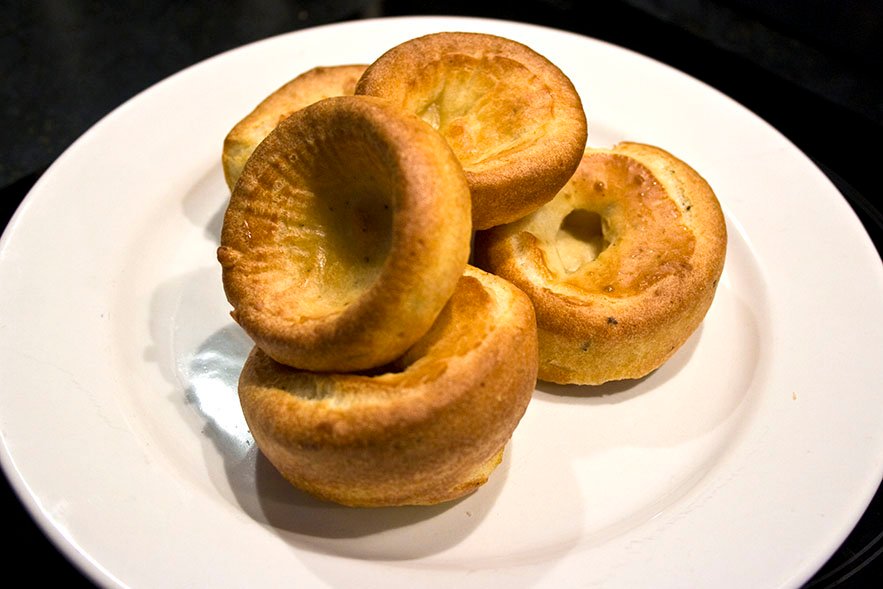
It was a Sunday in Leeds and the roast had gone well. The beef was pink in the middle, the potatoes were crisp, and the Yorkshire puddings had risen so high they looked too good to eat. There were twelve puddings and only four of us at the table, so eight went into a container for later. By Monday lunchtime they looked like a different food altogether. They were soft, flat, and slightly damp, and the crisp edges that made them worth eating had gone completely. That is the moment most people ask how to reheat Yorkshire puddings without them going soggy, and it is a fair question, because the answer is not obvious. The microwave seems like the easy choice and it is the worst one. The oven works, the air fryer works, and the difference between a crisp pudding and a sad one comes down to a few small habits that take almost no extra time.
This guide covers the whole journey, from why Yorkshire puddings go soft in the first place to how to store them, how to reheat them in the oven and the air fryer, what to do with the ones that will not crisp again, and the mistakes that ruin them. Everything here uses Celsius and Gas Mark, and the timings suit the puddings most British cooks make at home, whether they are small individual ones from a muffin tin or big ones baked in a roasting tin.
Why Yorkshire puddings go soggy so fast
A Yorkshire pudding is mostly air held together by a thin shell of baked batter. When it comes out of the oven that shell is crisp because the heat has driven the moisture out of it. The moment it starts to cool, two things work against it. First, the steam inside the pudding has nowhere to go, so it settles back into the crumb and softens it from the inside. Second, the air in a fridge is damp, and a cold pudding pulls that moisture onto its surface like a cold glass pulls condensation on a warm day. Put a warm pudding in a sealed container and you have built a small steam room around it. Leave it in the fridge uncovered and it dries out at the edges while the middle stays soft. Either way the crispness is gone within hours.
Gravy makes the problem worse. A Yorkshire pudding is designed to hold gravy, and the batter soaks it up happily, which is exactly what you want at the table. But a pudding that has sat in gravy overnight will never crisp again, because the liquid has soaked right through the shell. That is why the storage advice in this guide matters as much as the reheating advice. If you store the puddings dry and reheat them hot and uncovered, you are working with the pudding instead of against it.
There is also a simple point about expectations. A reheated Yorkshire pudding will never be quite as good as one that has just come out of the oven. The rise will be a little lower and the shell a little less shattering. What you can get back is a genuinely crisp edge and a hot, soft middle, and that is a big improvement on a cold, damp pudding eaten straight from the fridge. The methods below aim for that, and they do it without any special equipment beyond an oven or an air fryer.
The 5 golden rules for reheating Yorkshire puddings
Every method in this guide follows the same five rules. Learn them once and you can reheat Yorkshire puddings well in any kitchen, with any oven, for years.
- Cool them fast and store them dry. Lift the puddings out of the tin as soon as they are cool enough to handle and put them on a wire rack. Let the steam escape for at least 20 minutes before they go anywhere near a container. A warm pudding sealed in a box will steam itself soft.
- Keep them uncovered in the reheat. Foil and lids trap steam, and steam is the enemy of crispness. Reheat Yorkshire puddings in a single layer with nothing over them, so the hot air can reach every surface.
- Use short, hot heat. A Yorkshire pudding wants a hot oven for a few minutes, not a warm oven for a long time. Gentle heat warms the middle while the outside stays soft. Hot heat crisps the outside before the inside has time to dry out.
- Give them space. Crowding the tray traps steam between the puddings. Leave a gap around each one so the hot air can move. A full tray takes a little longer than a half empty one, and that is normal.
- Reheat only once. The Food Standards Agency says to reheat leftovers only once, until they are steaming hot all the way through. A pudding that has been reheated, cooled and reheated again will be dry on the outside and tired in the middle, and it is not worth the food safety risk.
Follow those five rules and the method you choose matters less. Break them and even the best oven will give you a soft result. The most common failure is the first rule. People put warm puddings straight into a container because they are in a hurry to clear the table, and by the time they come back the damage is done. Let them cool on the rack while you eat. It costs nothing and it saves the puddings.
How to reheat Yorkshire puddings without them going soggy in the oven
The oven is the best way to reheat Yorkshire puddings, and it is the method to use when you have a full tray or a family to feed. It gives the most even heat, it handles a big batch without crowding, and it is the closest you will get to the texture of a freshly baked pudding. Use it whenever you have more than four puddings to reheat.
Take the puddings out of the fridge about 15 minutes before you reheat them. Cold puddings straight from the fridge need longer in the oven, and the extra time in the heat dries them out. Letting them lose the fridge chill first means they crisp in 3 to 5 minutes instead of 6 to 8. While they warm up on the side, preheat the oven to 220°C, which is 200°C for a fan oven and Gas Mark 7. A properly hot oven matters more than the exact number on the dial, so give it a full 10 minutes to reach temperature before the puddings go in.
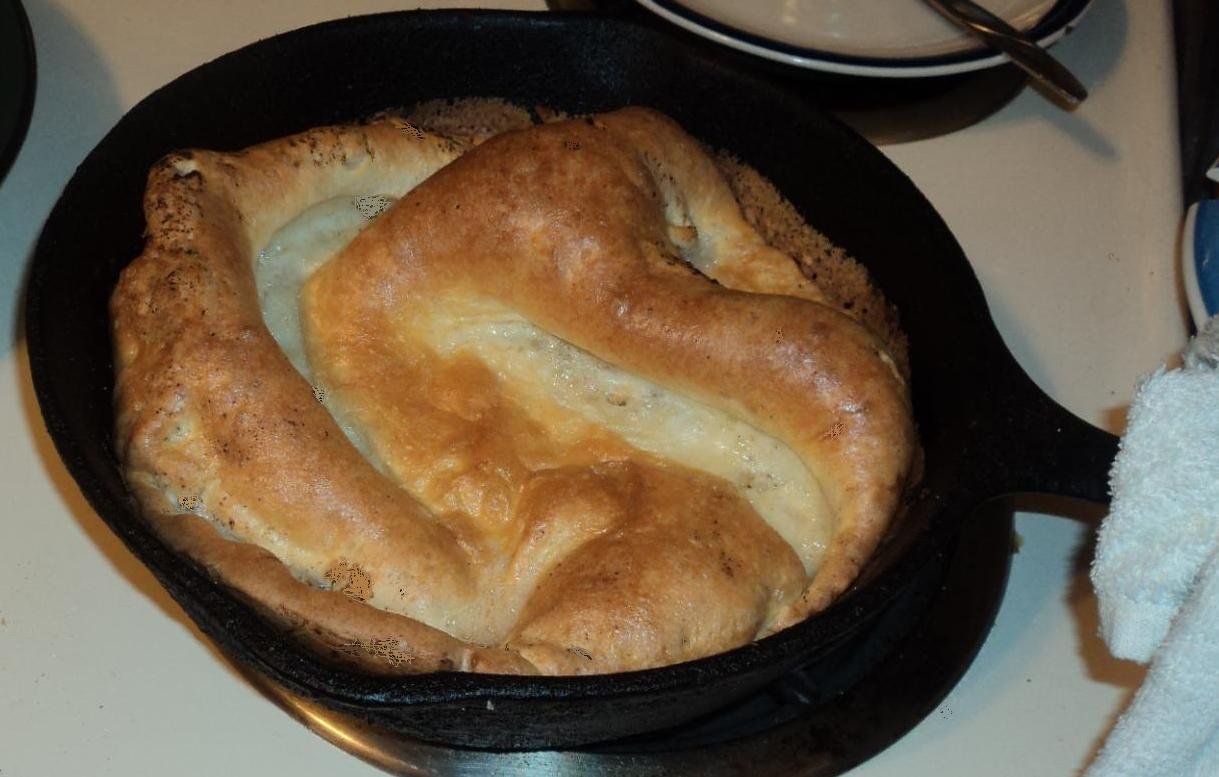
Put the puddings on a wire rack set over a baking tray if you have one. The rack lets hot air reach the bases, which is where sogginess hides. If you do not have a wire rack, use the baking tray on its own and turn the puddings over halfway through. Arrange them in a single layer with space between each one. Do not add extra oil or dripping. The fat from the first bake is still in the pudding, and more fat will only make the base greasy.
Slide the tray into the middle of the oven and set a timer for 3 minutes. Check them at 3 minutes and take them out as soon as the edges look crisp and the tops are golden brown again. Most chilled puddings need 3 to 5 minutes in total. Frozen puddings need 5 to 8 minutes. Big puddings take a minute or two longer than small ones, and a crowded tray takes longer than a half empty one. The tops can go from golden to burnt very quickly, so watch them through the oven door rather than walking away. Serve them straight away, while they are still hot and the edges are still crisp. A reheated pudding left waiting on the side will soften again within minutes.
One more practical point. The roasting tin will need a wash after the roast, and if fat has baked on hard it can feel like a lost cause. If that happens, here is how to clean a burnt saucepan without scrubbing, and the same soaking method works well on a roasting tin. A clean tin also matters for the next batch, because old burnt fat smokes and can give the next puddings a bitter taste.
How to reheat Yorkshire puddings in the air fryer
The air fryer is the best choice for a small batch, usually two to four puddings. The fast moving hot air reaches the curved edges of a Yorkshire pudding better than still oven air, and it works in about half the time. It is the method to use when you only want a few puddings for one plate and you do not want to heat the whole oven.
Preheat the air fryer to 180°C if your model benefits from preheating. Put the puddings in the basket in a single layer, with space around each one. Do not stack them and do not crowd the basket. A single layer matters even more in an air fryer than in an oven, because the heat comes from above and the puddings at the bottom of a pile will stay soft. No extra oil is needed. The fat already in the pudding is enough.
Heat chilled puddings for 2 to 4 minutes and check them at 2 minutes. The tops can brown fast in a small air fryer, so lift the basket and look early. Frozen puddings need 3 to 5 minutes. Take them out as soon as they are crisp at the edges and steaming hot in the middle. If your air fryer runs hot, drop the temperature to 170°C and add a minute rather than letting the tops burn. Serve them at once, straight from the basket to the plate.
The air fryer has one weakness. It is poor for a large batch, because cooking in rounds means the first puddings have gone soft by the time the last ones are ready. If you have more than four puddings, use the oven instead. The air fryer also dries puddings out if you leave them in too long, so the rule is the same as with the oven: short and hot, then serve at once.
How to reheat Yorkshire puddings from frozen
Yorkshire puddings freeze well, and a batch made for Christmas can be reheated straight from the freezer without thawing. In fact, thawing them first is a mistake. A thawed pudding goes soft and damp as the ice melts into the crumb, and it is very hard to crisp it again after that. Go straight from the freezer to the hot oven or air fryer.
In the oven, preheat to 220°C, which is 200°C for a fan oven and Gas Mark 7. Put the frozen puddings on a wire rack over a baking tray in a single layer and heat for 5 to 8 minutes, checking at 5 minutes. In the air fryer, preheat to 180°C and heat for 3 to 5 minutes, checking at 3 minutes. In both cases, take them out when the edges are crisp and the middles are steaming hot. A food thermometer is useful here if you have one, but the steam test works well enough: break one open and check that the middle is hot, not just warm.
For freezing in the first place, cool the puddings completely on a wire rack, then freeze them in a single layer on a tray. Once they are solid, move them into a freezer bag or a rigid container. They keep well for up to one month. Label the bag with the date so you know what you are dealing with in January. Frozen puddings bought from a shop follow the same method, but check the pack for its own timings, because shop puddings vary in size and thickness.
Can you reheat Yorkshire puddings in the microwave?
You can, but you should not if you care about crispness. A microwave heats the water inside food, and a Yorkshire pudding is mostly air and starch, so the microwave turns it soft and slightly chewy within seconds. The shell loses its crispness, the pudding shrinks a little, and the middle can go rubbery while the edges stay cool. Every tested guide agrees on this point, and the ones that tested it side by side with the oven all reached the same conclusion.
If the microwave is genuinely your only option, there are two things that help a little. First, heat one or two puddings at a time on a plate lined with kitchen paper, which soaks up some of the moisture. Second, heat them in short bursts of 10 seconds and stop as soon as they are warm, not hot. The longer they stay in the microwave, the softer they get. Eat them at once. Even with those tricks, expect a soft pudding, not a crisp one.
A better fallback if you have no oven or air fryer is a dry frying pan on the hob. Put the pan over a medium heat, add the puddings in a single layer, and heat them for 2 to 3 minutes, turning once. The direct heat from the pan crisps the base, which is the part that suffers most. It will not be as good as the oven, but it is a clear improvement on the microwave, and it needs no special equipment.
How to store Yorkshire puddings so they reheat well
Good reheating starts at the table, not at the oven. The way you cool and store Yorkshire puddings decides how well they will reheat, and the difference is large. A pudding stored well will crisp up in 3 minutes. A pudding stored badly may never crisp again.
Start by cooling them properly. Lift the puddings out of the tin as soon as they are cool enough to handle and put them on a wire rack. Do not leave them sitting in the tin, where the trapped steam softens the bases. Do not pile them into a bowl while they are still warm. Let them cool for at least 20 minutes, until they feel dry to the touch. Once they are cool, put them in an airtight container in a single layer if you can. If you need to stack them, put a sheet of baking parchment between the layers so they do not stick together. Keep gravy in a separate container. A pudding stored in gravy is a pudding you have already decided to eat soft.
In the fridge, Yorkshire puddings keep for up to 48 hours. Get them into the fridge within 2 hours of cooking, and do not leave them sitting on the side overnight. In the freezer they keep for up to one month, and the single layer freeze described above stops them sticking together in a solid block. When you take them out of the fridge, let them come to room temperature for about 15 minutes before reheating. That short rest is one of the easiest wins in this whole guide.
One habit to avoid is wrapping warm puddings in cling film. The film traps steam against the surface and the puddings come out damp and slightly sticky. If you must cover them in the fridge, use a container with a lid and let them cool fully first. A dry pudding in a dry box is the goal, every time.
Mistakes that turn Yorkshire puddings soggy
Most soggy Yorkshire puddings are not a recipe problem. They are a handling problem, and the same few mistakes come up again and again. Here are the ones to watch for.
- Covering them with foil in the oven. Foil traps steam, and steam softens the shell you are trying to crisp. Reheat uncovered, every time.
- Stacking them while they are warm. Warm puddings piled in a bowl steam each other soft. Cool them in a single layer on a rack.
- Reheating them in gravy. Gravy belongs on the plate at serving time, not in the oven during the reheat. A pudding reheated in gravy will be soft through and through.
- Using a cool oven. A warm oven dries a pudding out slowly without ever crisping it. Wait until the oven is fully hot before the puddings go in.
- Thawing frozen puddings first. Thawing lets melt water soak into the crumb. Reheat frozen puddings straight from the freezer.
- Reheating them twice. Every reheat dries the pudding a little more and the crispness never fully comes back. Reheat only what you will eat.
- Leaving them waiting after reheating. A crisp pudding softens again within minutes on the side. Time the reheat so the puddings come out as the rest of the meal is ready to serve.
If a batch has already gone badly soft and no method will crisp it, do not throw it away. The next section has better uses for it than the bin.
What to do with leftover Yorkshire puddings
Not every leftover pudding is worth reheating as a side dish. The ones that have gone very soft, or the ones that sat in gravy overnight, will not crisp again no matter how hot the oven is. They still make good food, just in a different shape.

The best use is to fill them. A large Yorkshire pudding makes a natural bowl, and it holds stew, beef and gravy, or bangers and mash without falling apart. Warm the filling separately, spoon it into the pudding, and serve at once. The pudding will soften a little under the filling, but that is the point here. It is supposed to soak up the gravy. This is the traditional way Yorkshire puddings were served in the first place, as a first course with gravy, long before they became a roast dinner side dish.
Small leftover puddings work well torn into pieces and warmed through in a pan with a little butter, then served with jam or golden syrup for a sweet finish. In parts of the Midlands, Yorkshire puddings have always been eaten sweet as well as savoury, and a crisped piece with jam is a proper pudding in its own right. If the puddings are too soft even for that, tear them up and use them to thicken a stew, or toast the pieces in the oven until crisp and scatter them over soup like croutons. None of these uses wastes food, and all of them are better than a disappointing reheated side dish.
How to serve reheated Yorkshire puddings
Timing is the last skill in reheating Yorkshire puddings. The puddings should be the last thing to come out of the oven, not the first. A roast dinner has many moving parts, and it is tempting to reheat the puddings early and keep them warm while the meat rests. That is exactly how they go soft again. Reheat them while the meat rests and the gravy heats, then put them on the table the moment they are crisp.

Serve them on warm plates, not cold ones. A cold plate pulls heat out of a crisp pudding in seconds. Put the gravy in a jug on the table and let people pour their own, rather than drowning the puddings before they reach the table. That way the people who like a crisp pudding get one, and the people who like it soaked in gravy can have that too. Roast potatoes deserve the same care, so keep your potatoes from sprouting before roast day and cook them crisp alongside. A roast is a team effort, and the Yorkshire puddings are only one part of it.
A hot oven also fills the house with the smell of a roast, and if that smell lingers into the next day it can outstay its welcome. If it does, here is how to remove cooking smells from the house fast, so the kitchen smells fresh again before the next meal.
Frequently asked questions
Can you reheat Yorkshire puddings without them going soggy?
Yes. Reheat them uncovered in a hot oven at 220°C for 3 to 5 minutes, or in an air fryer at 180°C for 2 to 4 minutes. Keep them in a single layer, do not cover them, and serve them straight away.
How long do Yorkshire puddings last in the fridge?
Up to 48 hours in an airtight container, stored dry and away from gravy. Get them into the fridge within 2 hours of cooking, and reheat them only once.
Can you freeze cooked Yorkshire puddings?
Yes. Cool them fully on a wire rack, freeze them in a single layer on a tray, then move them into a freezer bag. They keep for up to one month. Reheat them straight from frozen, without thawing, in a hot oven for 5 to 8 minutes.
Why do my Yorkshire puddings go flat when I reheat them?
They were probably stored warm or covered, so steam softened the shell, or they were reheated in a cool oven that dried them out without crisping them. Cool them on a rack, store them dry, and use a fully hot oven.
Can you reheat Yorkshire puddings in the microwave?
You can, but they will go soft and slightly chewy, and the crisp edges will not come back. Use the oven or the air fryer if you have one. If the microwave is your only option, heat one or two at a time in 10 second bursts on kitchen paper and eat them at once.
Conclusion
Learning how to reheat Yorkshire puddings without them going soggy comes down to three habits. Cool them fast on a rack and store them dry, away from gravy. Reheat them hot and uncovered, in the oven at 220°C for 3 to 5 minutes or in the air fryer at 180°C for 2 to 4 minutes. Serve them at once, on warm plates, with the gravy in a jug on the table. Avoid the microwave, never reheat them twice, and do not thaw frozen puddings before they go in the oven.
Those habits cost almost no extra time, and they turn Monday leftovers back into something worth eating. Make a double batch on purpose next Sunday, freeze half of them in a single layer, and you will have crisp Yorkshire puddings ready for a quick midweek roast with almost no work at all. That is the real win here: not just saving leftovers, but planning for them.
